Why Ketamine Therapy is Redefining the Future of Mental Health Treatment
Mental health treatment has come a long way in recent years, but many individuals still struggle to find lasting relief from conditions like depression, anxiety, and PTSD. For those who haven’t had success with traditional treatments, Ketamine Therapy is emerging as a promising alternative. Fast-acting, transformative, and highly effective, Ketamine Therapy is changing the way we approach mental health. So, why is this treatment gaining so much attention? Here’s why Ketamine Therapy is quickly becoming a game-changer in mental health care.
What Makes Ketamine Therapy Stand Out in Mental Health Care
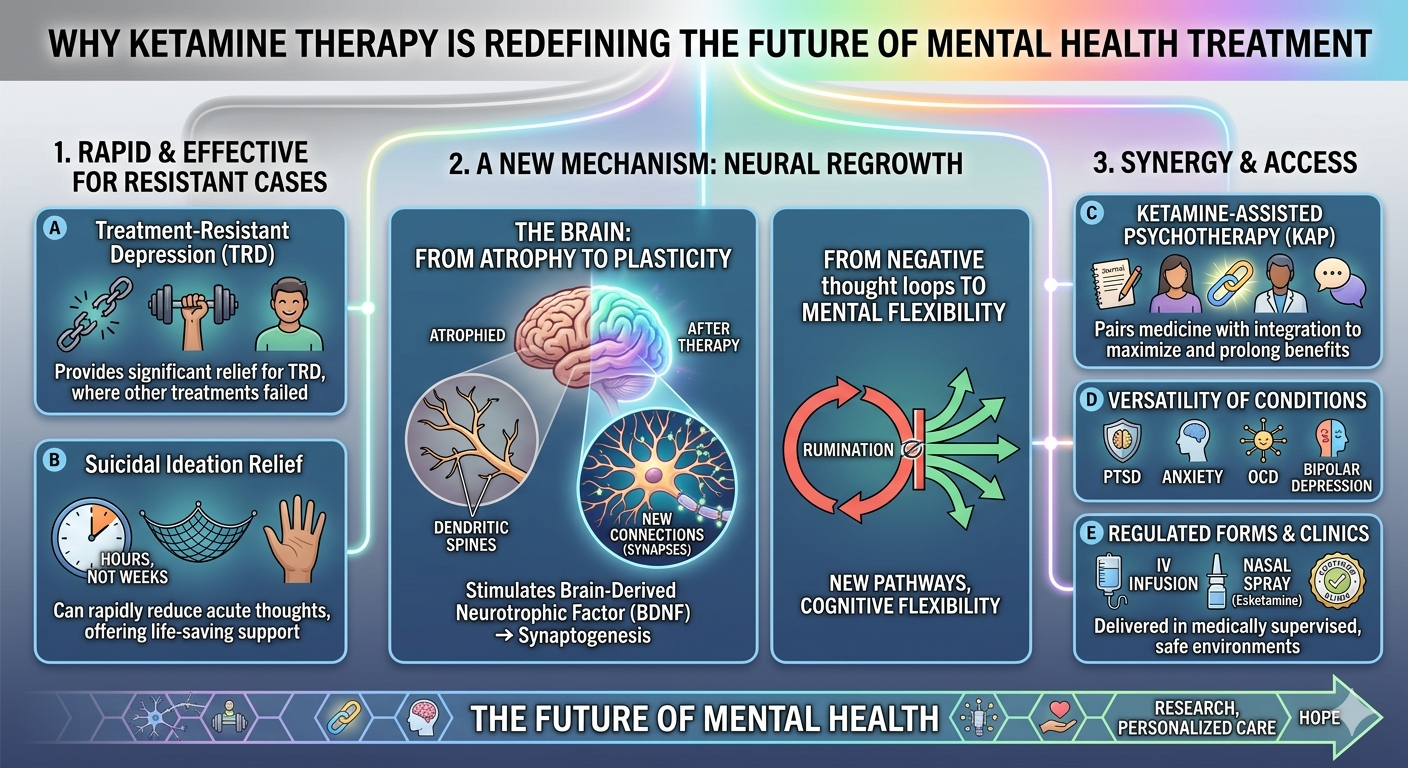
Ketamine Therapy is a unique treatment that uses low doses of ketamine originally an anesthetic to treat various mental health conditions. Traditionally used for anesthesia in surgery, ketamine has been repurposed in recent years as a fast-acting treatment for treatment-resistant depression (TRD), anxiety, and post-traumatic stress disorder (PTSD). Unlike traditional antidepressants, which often take weeks to work, Ketamine Therapy provides almost immediate relief, offering an entirely different approach to managing mental health disorders.
The key difference is that Ketamine Therapy works on the brain’s glutamate system, which is involved in mood regulation and cognitive function. Traditional antidepressants typically target neurotransmitters like serotonin and norepinephrine, but Ketamine Therapy activates NMDA receptors, leading to a rapid shift in brain chemistry and mood.
How Ketamine Therapy Works: Unlocking the Brain’s Potential
The science behind Ketamine Therapy is rooted in its ability to stimulate neuroplasticity, which refers to the brain’s capacity to form new neural connections. When ketamine is administered, it activates NMDA receptors, encouraging the growth of new neurons and enhancing communication between brain cells. This rewiring of the brain helps break the patterns of negative thinking associated with conditions like depression and anxiety.
In addition to stimulating neuroplasticity, Ketamine Therapy has been shown to increase the production of brain-derived neurotrophic factor (BDNF), a protein crucial for brain health. The increased levels of BDNF promote brain cell survival and aid in the recovery of brain function, making it a powerful tool for people struggling with chronic mental health conditions.
Immediate Relief: The Speed That Sets Ketamine Therapy Apart
One of the most remarkable features of Ketamine Therapy is its speed. While most antidepressants take weeks or even months to show any significant results, Ketamine Therapy provides relief within hours or days. For people experiencing acute depressive episodes or severe anxiety, this rapid response is crucial.
Clinical studies have shown that Ketamine Therapy can reduce depressive symptoms by up to 70% in patients who have not responded to other forms of treatment. The speed at which relief is felt can make a life-changing difference for individuals who need immediate help. In fact, many people experience significant improvements after their very first session, making Ketamine Therapy one of the fastest-acting treatments for severe depression and anxiety available today.
Ketamine Therapy’s Role in Treating Treatment-Resistant Depression
For people with treatment-resistant depression, Ketamine Therapy has become a lifeline. Approximately 30% of people with depression do not respond to traditional antidepressants. For these individuals, treatment options are often limited, and they are left feeling hopeless as they continue to try medications that don’t work.
This is where Ketamine Therapy comes in. Studies have found that Ketamine Therapy can provide relief for those who have tried multiple antidepressants without success. In fact, research indicates that 70% of people with treatment-resistant depression show improvement after undergoing Ketamine Therapy. This success rate is a significant breakthrough for individuals who have otherwise been left without effective treatment options.
The Broad Range of Benefits: Beyond Depression
While Ketamine Therapy is often associated with treatment-resistant depression, it also has a broader application in the treatment of various mental health conditions. In addition to depression, Ketamine Therapy has been shown to be highly effective in treating:
-
Anxiety: Ketamine Therapy helps regulate brain activity, providing relief for individuals suffering from chronic anxiety disorders.
-
PTSD: People with post-traumatic stress disorder have reported feeling a significant reduction in symptoms after Ketamine Therapy.
-
Chronic Pain: Ketamine is also used in the treatment of certain pain conditions, particularly those that are linked to depression or PTSD.
Ketamine Therapy vs. Traditional Treatments: Why It’s a Game Changer
When compared to traditional treatments like antidepressants or psychotherapy, Ketamine Therapy offers several key advantages:
-
Speed: Traditional antidepressants often take weeks or months to show results, whereas Ketamine Therapy works in hours or days.
-
Effectiveness for Treatment-Resistant Conditions: Unlike conventional treatments, Ketamine Therapy is highly effective for treatment-resistant depression, helping people who have not found relief with other methods.
-
Non-Addictive: Unlike some fast-acting treatments like benzodiazepines, which carry the risk of addiction, Ketamine Therapy is non-addictive and has a low potential for misuse when used correctly.
Potential Side Effects of Ketamine Therapy
While Ketamine Therapy is generally considered safe, like any medical treatment, it comes with potential side effects. Some of the common side effects include:
-
Dissociation: Patients may feel detached from reality or have out-of-body experiences during or after treatment. This sensation is temporary and typically fades shortly after the session ends.
-
Dizziness: Lightheadedness or dizziness is a common side effect, especially during the first few treatments.
-
Nausea: Some patients experience nausea, though it generally subsides after the session.
-
Temporary Increased Blood Pressure: Ketamine can cause a short-term rise in blood pressure, so it’s important for patients to be monitored during treatment.
These side effects are typically mild and temporary, and most people find that they subside shortly after treatment. Healthcare providers carefully monitor patients throughout the treatment process to ensure safety.
Is Ketamine Therapy Right for You?
If traditional treatments have not worked for you, Ketamine Therapy could be an excellent option to consider. It is particularly effective for individuals with treatment-resistant depression, anxiety, PTSD, or chronic pain. However, it’s crucial to consult with a healthcare provider to see if Ketamine Therapy is right for your specific condition.
Ketamine Therapy is typically administered in a healthcare setting under the supervision of trained professionals, so it is safe and well-monitored. Your healthcare provider will help you determine the best course of treatment based on your needs.
Conclusion:
Ketamine Therapy is undoubtedly transforming the landscape of mental health care. By offering rapid relief, addressing the underlying causes of depression and anxiety, and providing a viable solution for treatment-resistant conditions, Ketamine Therapy is reshaping how we treat mental health disorders. If you’ve been struggling to find an effective treatment, Ketamine Therapy could be the breakthrough you need to finally reclaim your mental wellness.
Categories
Read More
In modern healthcare, Medical Packaging Made Of Tyvek has become an important component in maintaining hygiene and functionality. Among providers in this sector, Hopeway AMD presents packaging solutions designed to address professional needs, offering materials that support daily workflows while ensuring consistency. For medical facilities, the choice of packaging has a direct influence on both...

In today’s fast-paced world, our bodies are constantly exposed to pollution, processed foods, and stress. Over time, these factors can lead to fatigue, low energy, and a feeling of heaviness. This is where the concept of Detox becomes important. A proper detox is not about extreme diets or starvation. It’s about supporting your body’s natural ability to...

In the foundry industry, metal surface quality plays a critical role in ensuring product strength, durability, and performance. Cast components often come with surface impurities such as sand, scale, rust, and oxides after casting. To achieve clean, uniform, and defect-free surfaces, shot blasting machines have become an essential part of modern foundry operations. Shot blasting is a mechanical...
When you're looking for Polyolefin shrink film for sale , it's essential to find the right product that aligns with your packaging needs and production requirements. The right choice can improve operational efficiency, reduce costs, and enhance the visual appeal of your products on the shelf. At jtpackage, we understand how critical it is to make an informed decision when purchasing shrink...

Get ready to revolutionize your entertainment routine in Saudi Arabia with iTunes. This platform offers an extensive library of music, movies, TV series, and podcasts, providing a rich variety of digital content to suit every taste. Enjoy access to over 60 million songs along with countless multimedia options, all easily accessible from your device. Whether you're at home or on the go, you can...