


How 3D Real Estate Software Is Redefining Modern Home Buying & Design in 2026
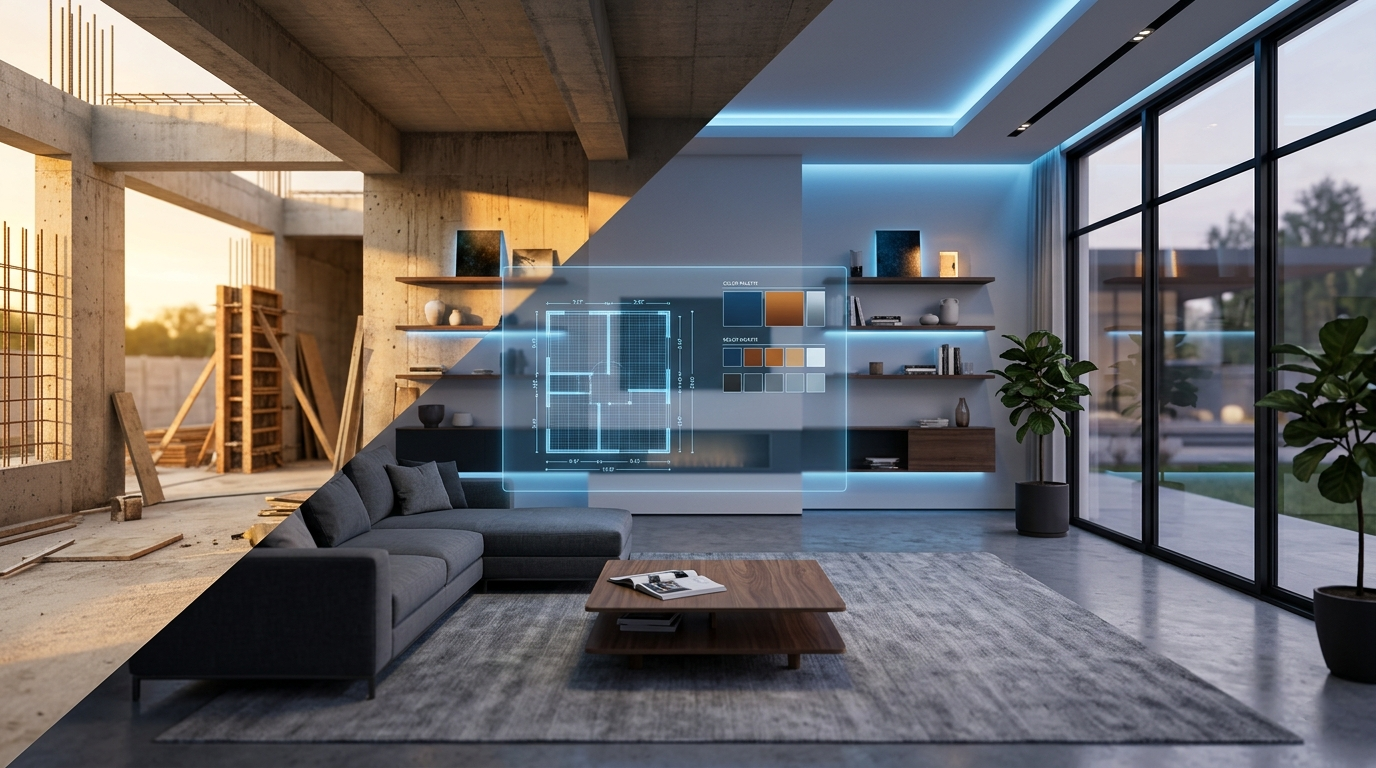
The way people buy, sell, and design homes has undergone a dramatic transformation. What once required a physical visit, a stack of floor plan printouts, and a vivid imagination is now handled in immersive digital environments where buyers can walk through a property before a single brick is laid. At the center of this revolution is a new generation of spatial technology that is reshaping every stage of the real estate journey from the first online listing to the final interior design decision.
The Problem With Traditional Home Buying
For decades, home buyers relied on static photographs, two-dimensional floor plans, and in-person walkthroughs to evaluate properties. Each of these methods came with inherent limitations.
Photos can be staged and misleading. Floor plans require spatial reasoning that most people don't naturally possess. In-person visits are time-consuming, geographically restricted, and emotionally difficult to replicate across multiple properties. For off-plan purchases where the home doesn't yet exist buyers were essentially asked to commit hundreds of thousands of dollars to a rendered image and a promise.
This friction created anxiety, delayed decisions, and led to buyer's remorse. The industry needed a better way to communicate space, scale, and possibility. That better way has arrived.
What 3D Real Estate Software Actually Does
Modern 3D real estate tools are not simply fancy renderings. They are end-to-end platforms that combine spatial modeling, real-time rendering, virtual reality, augmented reality, and AI-driven customization into a single experience.
At their core, these platforms allow:
- Developers and architects can build fully navigable 3D models of properties at any stage of construction.
- Real estate agents to offer virtual walkthroughs to buyers anywhere in the world.
- Home buyers to interact with space-changing wall colors, swapping furniture, and testing lighting in real time.
- Interior designers to collaborate with clients inside the actual digital twin of their future home.
The result is a complete collapse of the gap between imagination and reality.
Key Technologies Driving the Shift in 2026
Photorealistic Real-Time Rendering
Rendering engines have matured to the point where virtual spaces are nearly indistinguishable from photographs. With GPU acceleration and cloud-based rendering pipelines, buyers can explore a property with cinematic lighting, accurate material textures, and true-to-scale proportions all in a browser, without downloading any software.
The shift from pre-rendered images to real-time rendering is significant. It means buyers can change the time of day to see how natural light moves through a space, switch between material finishes instantly, and get an honest representation of the property rather than a curated snapshot.
Digital Twins and BIM Integration
Building Information Modeling (BIM) has long been a tool for architects and engineers. In 2026, BIM data is increasingly feeding directly into consumer-facing 3D platforms, creating digital twins precise virtual replicas of physical or planned properties.
These twins are not static. They update as construction progresses, track changes in the design, and can even integrate with smart home systems post-purchase. For buyers, a digital twin means their understanding of the property is always current and accurate.
AI-Powered Personalization
Artificial intelligence is no longer a background feature in real estate software it is the engine of personalization.
Buyers can now describe their aesthetic preferences in plain language and watch an AI system reconfigure a room's design in seconds. Platforms are learning from browsing patterns, saved preferences, and demographic data to proactively suggest layouts and finishes that align with individual tastes.
AI also assists on the developer side. Generative design tools can produce dozens of optimized floor plan variations based on lot constraints, building codes, and buyer preference data dramatically reducing design cycle times.
Augmented Reality for In-Person Layers
While virtual reality delivers fully immersive property tours, augmented reality is transforming the physical site visit. Buyers can point a tablet or smartphone at an empty lot or bare room and see a fully furnished, decorated version overlaid on the real world.
This is especially powerful for new developments, where buyers visiting a construction site can visualize the finished property in full scale, standing in the actual location where their home will be built.
VR Walkthroughs and Global Reach
Headset-based virtual reality has become a mainstream tool for luxury and international real estate. A buyer in Mumbai can walk through a penthouse in Dubai, examine the quality of finishes at eye level, step out onto the virtual balcony, and get a genuine sense of the space all without boarding a plane.
VR walkthroughs have extended the geographic reach of property marketing in ways that no amount of photography could achieve. They have become a standard expectation in the premium segment and are rapidly moving into the mid-market.
How the Home Buying Journey Has Changed
Discovery
Property listings have evolved from galleries of photographs to interactive 3D experiences. Platforms now embed virtual tours directly into listing pages, and buyers filter searches not just by price and location but by design style and spatial configuration.
First impressions are no longer formed from a thumbnail. They are formed from a five-minute immersive walk through the property.
Evaluation
Where buyers once needed multiple site visits to truly understand a space, they can now spend hours inside a digital version of the property. They can measure rooms virtually, test furniture placement, explore every corner, and share the experience with family members who are thousands of miles away.
This has compressed decision timelines. Buyers arrive at their first physical visit already deeply familiar with the property, making conversations with agents more focused and productive.
Customization and Off-Plan Sales
For new developments, 3D real estate software has completely transformed the off-plan sales process. Buyers are no longer asked to imagine a finished product. They are invited to build it.
They select from kitchen finishes, bathroom tiles, flooring materials, and cabinetry options within the virtual environment and see the result update in real time. The emotional investment in the customization process creates stronger purchase intent and significantly reduces cancellation rates for developers.
Post-Purchase Design
The relationship between buyer and software does not end at contract signing. Several platforms now offer digital design environments that persist through construction and into move-in, allowing homeowners to plan furniture purchases, experiment with paint colors, and work with interior designers entirely within the digital twin of their actual home.
This continuity from browsing through to living represents a fundamentally new kind of customer relationship for real estate platforms.
Impact on Real Estate Professionals
Agents and Brokers
For agents, 3D tools have eliminated geographic limitations. A single agent can now manage serious buyer relationships across multiple cities simultaneously, conducting personalized virtual tours, presenting customization options, and closing deals without either party needing to be in the same room.
Agents who have embraced these tools report shorter sales cycles, higher buyer confidence at the point of offer, and fewer deals falling through during the due diligence phase.
Developers and Builders
Developers are seeing measurable returns on investment in 3D platforms. Off-plan sales velocity has increased significantly when buyers can interact with a realistic model of the development rather than a static rendering. Customization portals reduce post-sale change orders by giving buyers a clear visual understanding of what they are selecting.
Marketing costs are also shifting. A single, high-quality 3D model can serve as a listing asset, a sales tool, a customization platform, and a construction communication resource reducing the need for multiple separate content productions.
Interior Designers and Architects
Design professionals are using these platforms to present concepts in ways that clients genuinely understand. Rather than asking clients to interpret a mood board or technical drawing, designers can invite them into a fully realized version of the proposed space.
Collaboration has also become more fluid. Multiple stakeholders architect, interior designer, client, contractor, can interact with the same digital model simultaneously, leaving annotations, flagging concerns, and approving decisions in a shared environment.
Leading Platforms Shaping the Market in 2026
The 3D real estate software market has matured considerably. A range of platforms now serve different segments and use cases:
- Matterport remains a dominant force in 3D property scanning and digital twin creation, with millions of properties captured on its platform.
- Foyr Neo and Homestyler continue to serve interior design and visualization workflows, with strong AI integration for automated furniture staging.
- Autodesk Forma bridges the gap between architectural BIM and consumer-facing visualization, particularly for large-scale residential developments.
- Renderfly and Cedreo serve the homebuilder and renovation market with fast, accessible 3D design tools aimed at non-technical users.
- Emerging players are focusing on AI-native platforms that generate entire property designs from text prompts, with photorealistic output in minutes rather than days.
Challenges and Considerations
Despite the momentum, the widespread adoption of 3D real estate software comes with genuine challenges that the industry is still working through.
Data Accuracy and Trust
A virtual tour is only as trustworthy as the data behind it. Buyers who make decisions based on a 3D model and then find discrepancies in the physical property face serious disappointment and potential legal disputes. Maintaining accuracy between the digital twin and built reality is an ongoing operational challenge for developers.
Accessibility and the Digital Divide
Not all buyers have equal access to high-speed internet, VR hardware, or the digital literacy to navigate immersive platforms comfortably. As these tools become more central to the buying process, there is a real risk of excluding segments of the market, particularly older buyers and those in lower-income brackets.
Platforms that prioritize accessible, browser-based experiences with low hardware requirements are better positioned to serve a broad audience.
Cost of Implementation
For smaller developers, independent agents, and boutique design firms, the cost of producing high-quality 3D content can still be a barrier. As the technology matures and competition increases, production costs are falling but they have not yet reached the level where every property listing can realistically include a full interactive model.
Privacy in Digital Twins
When a property is scanned to create a digital twin, detailed data about the interior layout, contents, and sometimes the personal belongings of current occupants is captured. Ensuring this data is handled responsibly, stored securely, and not repurposed without consent is an area of growing regulatory attention.
What the Future Holds
The trajectory of 3D real estate software points toward deeper integration, greater intelligence, and more seamless experiences across the entire property lifecycle.
Several developments are likely to shape the next phase:
Spatial computing is becoming mainstream. As devices like mixed-reality headsets move from niche to everyday consumer products, the barrier between digital and physical property experience will continue to dissolve. A buyer might walk through a digital twin of a property overlaid onto their current living room, comparing scale and layout in real time.
AI is moving from assistant to collaborator. Rather than simply responding to buyer inputs, AI systems will begin proactively proposing design changes, flagging potential issues with layout choices, and negotiating trade-offs between competing preferences functioning more like an experienced design consultant than a configuration tool.
The digital twin as a property asset. As 3D models become richer and more accurate, the digital twin of a property may itself carry financial value. Comprehensive models that include construction data, material specifications, smart home integration history, and spatial analytics could become a standard part of property documentation shared during transactions, referenced during renovations, and updated throughout the life of the building.
Sustainability integration. Environmental performance data energy efficiency ratings, natural light exposure analysis, and material carbon footprints will be embedded into 3D environments, giving buyers a complete picture of both the aesthetic and ecological dimensions of a property.
Conclusion
The home-buying and design experience of 2026 bears little resemblance to what it was a decade ago. The combination of photorealistic visualization, real-time customization, AI-driven personalization, and immersive virtual access has transformed a process that was once defined by friction, uncertainty, and geographic limitation into one that is faster, more transparent, and more emotionally engaging.
For buyers, this means making one of the most significant financial decisions of their lives with far greater confidence and clarity. For the industry, it means a fundamental rethinking of how properties are marketed, sold, and designed.
The platforms and tools driving this shift are not finished products. They are evolving rapidly, and the gap between the digital and physical property experience will continue to narrow. What is clear is that spatial technology is no longer a feature of the premium real estate market. It is becoming the baseline expectation for everyone.
Categorii
Citeste mai mult
LA 28 budget concerns continue to grow as city leaders study major financial risks tied to the coming Olympic event. Public officials want stronger oversight before large contracts move ahead. Security plans remain under review across several agencies. Experts say cost growth may place pressure on local resources. Council offices now request deeper reports and wider financial checks....

The Golden Region Warriors comprise simply just 4 online games staying, and the very first of individuals 4 will take Room tonight upon TNT any time the Dubs thoughts in direction of the desert in the direction of check out the Phoenix 's a crucial sport for the Warriors, who uncover by themselves inside an just about comical site visitors jam inside the Western Meeting standings. It's far too...

Are you hitting a wall trying to access Netflix with your VPN? Streaming libraries vary by country, and Netflix actively tries to prevent VPN access to uphold regional licensing agreements. This can lead to frustrating error messages—or sometimes just silent failures. Here’s what you can try to get things working again: Clear your browser cookies and cache Netflix stores location...

Finding a peaceful getaway that combines comfort, nature, and authentic wildlife experiences can often be challenging. Satpura resorts like Denwa Backwater Escape offer the perfect balance of luxury, relaxation, and adventure in the heart of Madhya Pradesh. Located near Satpura National Park, the resort features well-appointed cottages, breathtaking backwater views, guided jungle safaris,...

According to the latest report published by Data Bridge Market Research, the Logistics Network Market CAGR Value The global logistics network market size was valued at USD 38.96 billion in 2024 and is expected to reach USD 115.11 billion by 2032, at a CAGR of 14.5% during the forecast period An international Logistics Network Market report...
