


Track Every Move: Enhance Equipment Visibility with Tracking Software
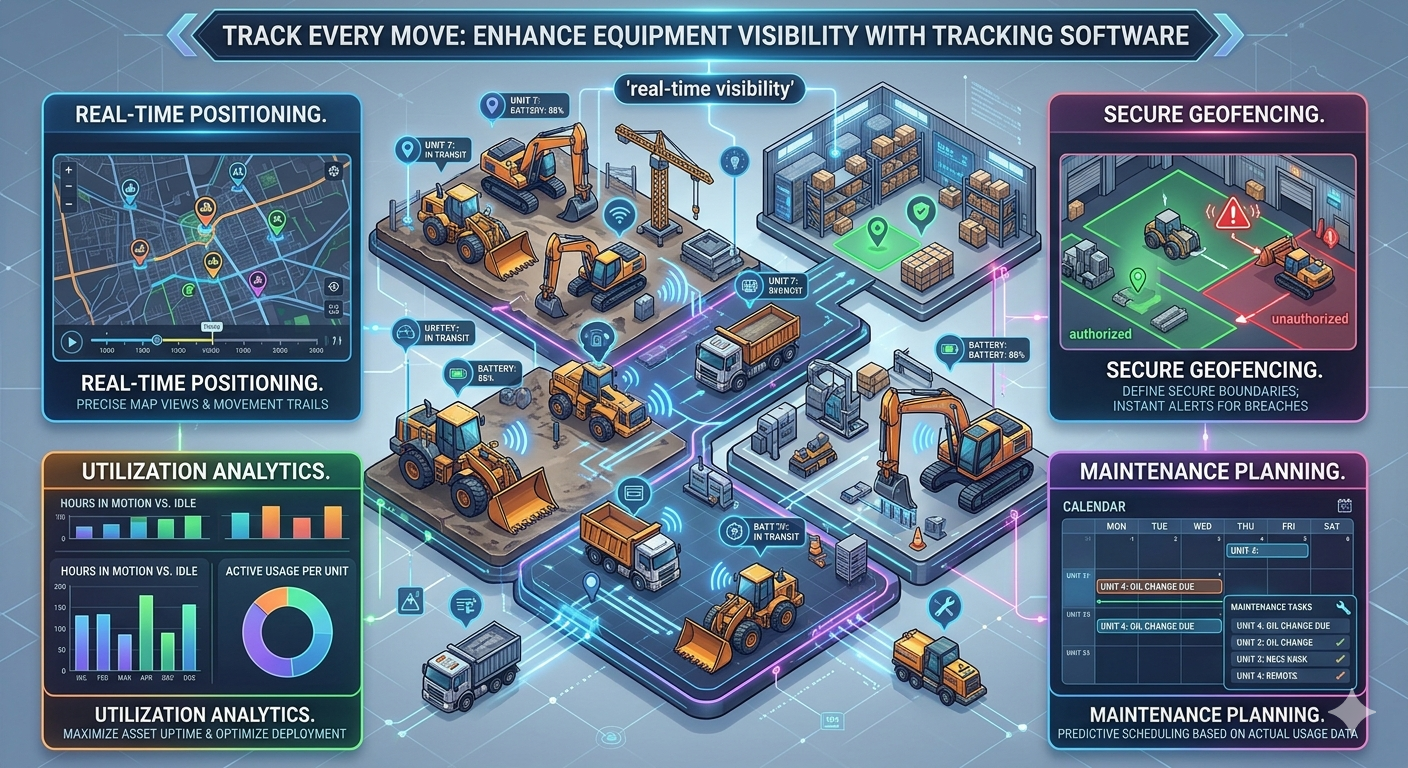
Construction jobsites are busy, spread out, and constantly changing. Equipment moves from yard to jobsite, from one crew to another, and sometimes across multiple projects in the same week. Without clear visibility, assets can be misplaced, underused, overbooked, or rented unnecessarily. Construction Equipment Tracking Software helps contractors track location, usage, and availability so teams can make better decisions with less guesswork.
Equipment tracking is more than knowing where an asset is parked. It is about understanding how equipment moves through the business. When tracking is done properly, contractors gain better control over scheduling, utilization, maintenance, security, and cost management.
The Visibility Problem in Construction
Many construction companies lose time because equipment information is scattered. One supervisor may know where a loader is. Another may have the last update on a generator. The office may have a spreadsheet that is already outdated. The shop may not know an asset moved to another site.
This creates operational friction. Crews wait for equipment. Managers approve rentals even when owned assets are available elsewhere. Maintenance teams lose track of which equipment needs service. Small tracking gaps turn into real costs.
Construction equipment tracking software solves this by creating a centralized view of asset location and status. It gives teams a clearer picture of where equipment is, who is using it, and whether it is available.
Why Location Tracking Matters
Location tracking is one of the most obvious benefits. Contractors need to know where assets are at any given time, especially when managing equipment across multiple jobsites.
When location data is accessible, dispatchers and managers can make faster decisions. They can move nearby equipment to the next job, reduce transport delays, and avoid unnecessary rentals. This helps improve utilization and keeps projects moving.
Location visibility also supports theft prevention and recovery. Construction equipment is expensive, and jobsites are often vulnerable after hours. Tracking tools can help identify unauthorized movement and improve asset security.
Availability Is Just as Important as Location
Knowing where equipment is located is useful, but knowing whether it is available is even more important. An excavator may be on a jobsite, but it may already be assigned to another crew. A trailer may be in the yard, but it may need repairs before use.
Tracking software helps show asset status, such as available, assigned, in maintenance, idle, or out of service. This prevents scheduling confusion and helps teams plan work more accurately.
When availability is clear, project managers can request equipment with confidence. Fleet managers can assign assets based on actual readiness instead of assumptions.
Reducing Idle Equipment and Unnecessary Rentals
Idle equipment is expensive. It still carries ownership costs even when it is not producing value. At the same time, many companies rent equipment because they cannot easily see what they already have available.
Better tracking helps solve both problems. If an owned asset is sitting unused at one jobsite, managers can move it to another project instead of approving a rental. This improves fleet utilization and reduces avoidable spending.
Over time, tracking data can also show which assets are consistently underused. That helps companies decide whether to keep, sell, relocate, or rent similar equipment in the future.
Helping Maintenance Teams Work Smarter
Equipment tracking also supports maintenance. Maintenance teams need to know where assets are before they can inspect, service, or repair them. If equipment location is unclear, technicians lose time.
Tracking software can help maintenance teams locate assets quickly and plan service more effectively. If a piece of equipment is due for maintenance, the team can see where it is located and coordinate service with the project schedule.
This is especially useful for companies with mobile mechanics or field service teams. Instead of wasting time finding equipment, technicians can focus on completing the work.
Improving Dispatch and Jobsite Planning
Dispatching equipment is one of the hardest parts of construction operations. Managers must balance jobsite demand, equipment availability, transport timing, maintenance status, and project priorities.
Construction Equipment Tracking Software gives dispatch teams better information. They can see where equipment is located, which assets are available, and which ones are already committed. This makes assignments cleaner and reduces scheduling conflicts.
Better dispatch also improves communication with field teams. Instead of multiple calls to confirm asset status, teams can work from a shared system. That saves time and reduces confusion.
Tracking Smaller Assets and Attachments
Large equipment often gets attention, but smaller assets also matter. Attachments, compact tools, generators, trailers, pumps, light towers, and specialty equipment can be difficult to track. These assets may move frequently and get overlooked in manual systems.
Tracking software can help companies manage these items more consistently. Better records reduce loss, improve accountability, and make it easier to find the right tool or attachment when needed.
For many contractors, small asset tracking delivers quick wins because these items are often the easiest to misplace.
Better Data for Better Decisions
Tracking data helps leaders understand how equipment is being used across the business. They can review movement patterns, idle time, jobsite demand, asset availability, and utilization trends.
This helps with future planning. If certain equipment is always moving between sites, the company may need another unit. If another asset stays idle for long periods, it may be better to sell or avoid replacing it.
Tracking turns daily movement into useful business intelligence.
Why Tracking Software Is Becoming Essential
Construction operations are becoming more complex. More jobsites, tighter schedules, higher equipment costs, and greater pressure on margins all make visibility more important.
Companies that rely on manual tracking are often reacting late. Companies using digital tracking can act earlier, plan better, and reduce waste.
Construction Equipment Tracking Software gives contractors a practical way to control equipment movement and improve operational visibility.
Conclusion
Equipment visibility is a core part of construction efficiency. When teams know where assets are, whether they are available, and how they are being used, they can reduce delays, cut unnecessary rentals, improve maintenance planning, and protect equipment value.
Tracking every move is not about micromanaging the fleet. It is about giving construction teams the information they need to work smarter and avoid expensive surprises.
Categorie
Leggi tutto
Kamagra Oral Jelly can be a merchandise which is frequently reviewed on the web as a replacement therapy regarding impotence problems (ED). It really is generally invented together with sildenafil citrate, the identical ingredient within several well-known MALE IMPOTENCE drugs. As it will come in any flavoring for jelly kind rather than a standard gadget, many individuals believe it is easier...

According to the latest report published by Data Bridge Market Research, the AI-Integrated Surgical Navigation Systems Market CAGR Value The global AI-Integrated Surgical Navigation Systems market size was valued at USD 1.93 billion in 2025 and is expected to reach USD 6.45 billion by 2033, at a CAGR of 16.30% during the forecast period An...
Proper gutter maintenance is one of the most important parts of protecting a home or commercial property from water damage. Gutters are designed to direct rainwater safely away from roofs, walls, and foundations, but when they become blocked with leaves, dirt, and debris, serious structural problems can develop. Gold Coast Gutter Cleaning proudly provides reliable Gutter Cleaners Tweed Coast...

Accidents can happen at any moment, leaving victims with medical bills, emotional stress, lost wages, and uncertainty about what to do next. Whether you have been injured in a car accident, a rideshare collision, or another incident caused by negligence, finding reliable personal injury law firms near me is one of the most important steps toward protecting your rights. The right legal team can...

The interventional cardiology devices market is expanding significantly, driven by the rising prevalence of cardiovascular diseases, increasing adoption of minimally invasive procedures, technological advancements in catheter-based therapies, and growing geriatric population. According to Business Market Insights, the market was valued at USD 18.41 billion in 2024 and is...