How to Build a Winning Digital Marketing Strategy
A digital marketing strategy is a comprehensive plan that outlines how businesses can use online channels to achieve their marketing goals. It helps connect a brand with the right audience at the right time, ensuring that marketing efforts are not wasted. Without a clear, strategic approach, businesses risk ineffective campaigns that fail to reach or engage their target market.
A strong digital marketing strategy is essential for driving growth in today’s competitive landscape. By focusing on key elements like content creation, SEO, and social media engagement, businesses can increase brand visibility, build customer trust, and ultimately convert visitors into loyal customers. A well-crafted strategy ensures consistent results and allows companies to measure their progress, making it easier to optimize efforts for long-term success.
What Is a Digital Marketing Strategy and Why Does It Matter?
A digital marketing strategy is a detailed plan that outlines how your business will achieve its marketing goals using online channels. It connects your brand message with the right audience at the right time.
Without a clear strategy, your marketing efforts can become scattered, ineffective, and costly.
Key Components of a Digital Marketing Strategy
A successful strategy usually includes:
-
Clear business goals
-
Defined target audience
-
Content planning
-
Channel selection (SEO, social media, email, etc.)
-
Performance tracking
Why It Is Important
-
Helps you stay focused and consistent
-
Improves ROI by reducing wasted efforts
-
Builds brand awareness and trust
-
Enables data-driven decisions
How Do You Define Your Goals and Objectives?
Before jumping into tools and tactics, you need to know what you're trying to achieve. Goals act as the foundation of your digital marketing strategy.
Setting unclear or unrealistic goals can lead to confusion and poor results.
Use SMART Goals
Your goals should be:
-
Specific
-
Measurable
-
Achievable
-
Relevant
-
Time-bound
Example:
Instead of saying “increase website traffic,” say “increase website traffic by 30% in 3 months through SEO and content marketing.”
Align Goals with Business Objectives
Your marketing goals should directly support your business goals. For example:
-
Increase sales → focus on conversion optimization
-
Build awareness → focus on social media marketing and branding
-
Generate leads → focus on landing pages and email marketing
Who Is Your Target Audience and How Do You Identify Them?
Understanding your audience is one of the most critical steps in building a winning strategy. If you don’t know who you’re targeting, your efforts won’t deliver results.
Knowing your audience helps you create personalized and effective campaigns.
Create Buyer Personas
A buyer persona is a semi-fictional representation of your ideal customer.
Include details like:
-
Age, gender, and location
-
Interests and behaviors
-
Pain points and challenges
-
Buying motivations
Use Data to Understand Audience
Leverage tools like:
-
Google Analytics
-
Social media insights
-
Customer feedback
This helps you understand what your audience wants and how they behave online.
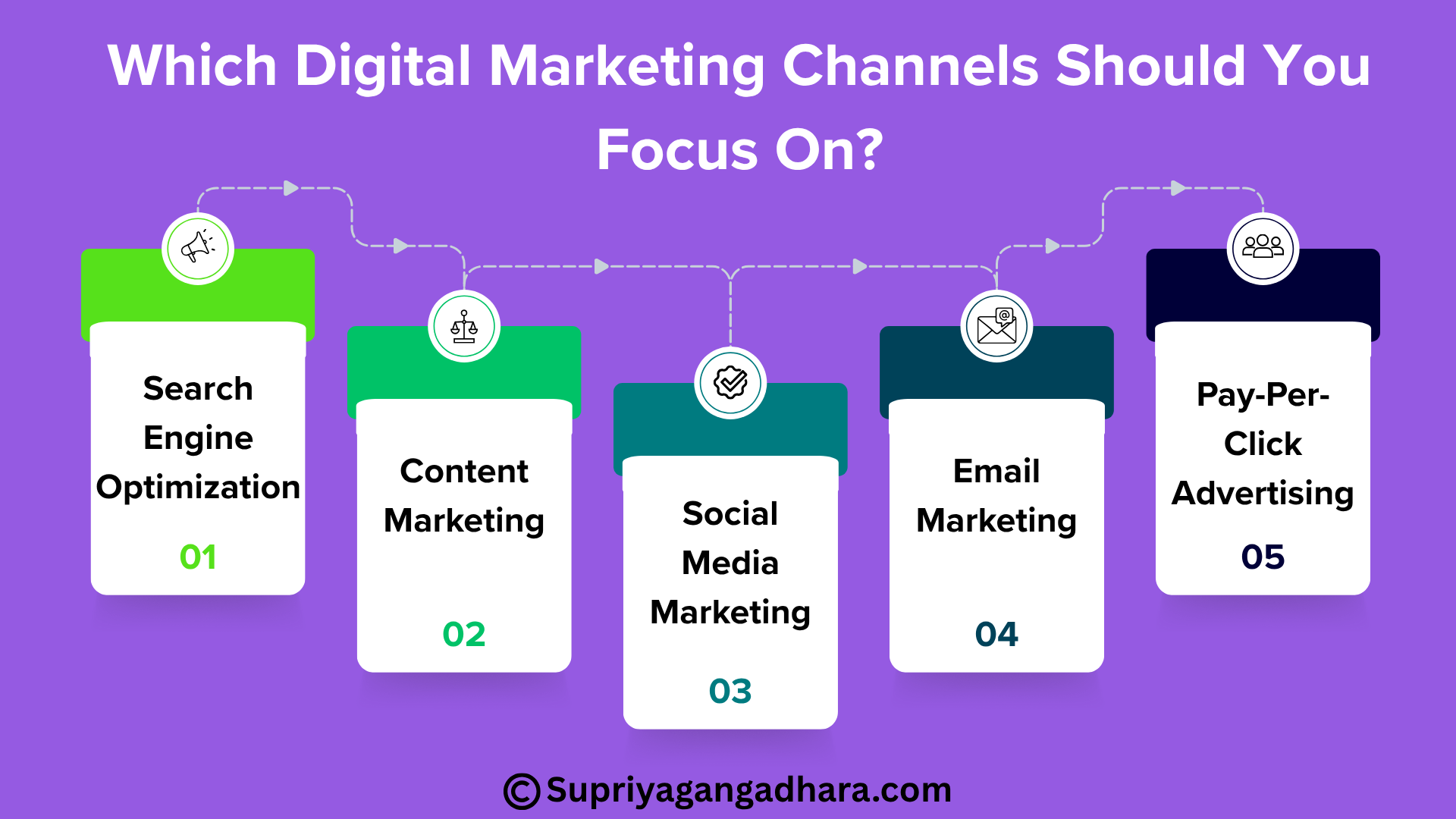
Which Digital Marketing Channels Should You Focus On?
Not all channels work for every business. Choosing the right mix is essential for success. Your choice should depend on your goals, audience, and industry.
Popular Digital Marketing Channels
Search Engine Optimization (SEO)
SEO helps your website rank higher on search engines. It brings organic (free) traffic over time.
Focus on:
-
Keyword research
-
On-page optimization
-
High-quality content
Content Marketing
Content marketing builds trust and authority.
Examples include:
-
Blog posts
-
Videos
-
Infographics
-
Guides
Social Media Marketing
Platforms like Instagram, LinkedIn, and Facebook help you connect with your audience.
Best for:
-
Brand awareness
-
Engagement
-
Community building
Email Marketing
Email marketing remains one of the highest ROI channels.
Use it for:
-
Lead nurturing
-
Promotions
-
Customer retention
Pay-Per-Click Advertising (PPC)
PPC delivers fast results through paid ads.
Examples:
-
Google Ads
-
Social media ads
How Do You Create High-Quality Content That Converts?
Content is the backbone of any digital marketing strategy. Without valuable content, your efforts won’t attract or retain users.
Great content solves problems, answers questions, and builds trust.
Focus on Value
Ask yourself:
-
Does this content help my audience?
-
Is it informative and easy to understand?
Use Different Content Formats
Mix different types of content:
-
Blog posts for SEO
-
Videos for engagement
-
Case studies for trust
Optimize for SEO
Include keyword research, on-page SEO, and internal linking.
Tips:
-
Use keywords naturally
-
Write clear headings
-
Keep paragraphs short
How Can You Use SEO to Boost Your Strategy?
SEO is one of the most powerful long-term strategies for online growth. It helps your website appear in search results when users look for relevant information.
A strong SEO foundation can drive consistent traffic without ongoing ad costs.
Key SEO Elements
On-Page SEO
-
Title tags and meta descriptions
-
Keyword placement
-
Content quality
Technical SEO
-
Fast loading speed
-
Mobile-friendly design
-
Secure website (HTTPS)
Off-Page SEO
-
Backlinks from trusted websites
-
Brand mentions
Benefits of SEO
-
Long-term traffic growth
-
Increased credibility
-
Better user experience
What Role Does Social Media Play in Your Strategy?
Social media is not just for posting updates it’s a powerful tool for building relationships and brand identity.
When used correctly, it can drive traffic, engagement, and conversions.
Choose the Right Platform
Focus on platforms where your audience spends time:
-
LinkedIn for B2B
-
Instagram for visual brands
-
Facebook for broad audiences
Engage With Your Audience
-
Reply to comments and messages
-
Run polls and Q&A sessions
-
Share user-generated content
Maintain Consistency
Posting regularly keeps your audience engaged and your brand visible.
How Do You Measure and Improve Your Performance?
Tracking your performance is essential to understand what works and what doesn’t.
Without data, you’re just guessing.
Key Metrics to Track
-
Website traffic
-
Conversion rate
-
Bounce rate
-
Engagement rate
-
ROI
Use Analytics Tools
Tools like Google Analytics and social media dashboards provide valuable insights.
Continuous Improvement
-
Test different strategies
-
Analyze results
-
Optimize campaigns
What Are Common Mistakes to Avoid in Digital Marketing Strategy?
Even experienced marketers make mistakes. Avoiding common errors can save time and money.
Common Mistakes
-
Not defining clear goals
-
Ignoring audience research
-
Focusing on too many channels
-
Inconsistent branding
-
Neglecting SEO
How to Avoid Them
-
Plan before executing
-
Stay consistent
-
Focus on quality over quantity
-
Monitor results regularly
How Can You Build a Long-Term Sustainable Strategy?
A winning digital marketing strategy is not about quick wins it’s about long-term growth.
Sustainability ensures consistent success over time.
Focus on Building Trust
-
Provide value consistently
-
Be transparent and authentic
Invest in Quality Content
Evergreen content continues to generate traffic over time.
Adapt to Changes
Digital trends evolve quickly. Stay updated and flexible.
Conclusion
Building a winning digital marketing strategy requires careful planning, consistent effort, and continuous improvement. By focusing on clear goals, understanding your audience, and using the right mix of channels like SEO optimization, content marketing, and social media marketing, you can create a powerful online presence.
Remember, success doesn’t happen overnight. It comes from testing, learning, and refining your approach over time. Start small, stay consistent, and keep improving your results will follow.
Categorias
Leia mais
Businesses involved in transportation, logistics, construction, agriculture, and distribution require dependable commercial vehicles to keep operations running efficiently. If you are searching for trucks in Sarona, choosing a trusted brand with a proven track record can make a significant difference in productivity and long-term operating costs. EICHER has established itself as one of the...

Siliguri, often referred to as the gateway to Northeast India, is a bustling city where cultures, cuisines, and traditions intersect. Nestled at the foothills of the Himalayas, this vibrant destination has evolved into more than just a transit point—it is now a thriving hub for food lovers seeking memorable dining experiences. Among its many culinary offerings, there exists a standout...

If you’re looking for a way to enter the property market at a competitive price, distressed properties in Dubai could be the opportunity you’ve been waiting for. These properties are typically sold below market value due to urgent financial situations, offering buyers the chance to secure premium real estate at attractive prices. In a city known for luxury living and strong...

Trong thời đại công nghệ số phát triển mạnh mẽ, nhu cầu giải trí trực tuyến ngày càng được nhiều người quan tâm. 68gamebai là cổng game đổi thưởng hiện đại được đông đảo người chơi yêu thích nhờ hệ thống trò chơi đa dạng, giao diện thân thiện và trải nghiệm ổn định trên nhiều thiết bị...

The professional football world loves a good story about a classic Rams Vs 49ers matchup. Many experts like to talk about two specific teams in the West. They focus on the big matchup. Most media stories point to one major division rivalry. They look at past games to guess the future. People look at the Los Angeles Rams vs the San Francisco 49ers showdown. The global football expansion is...