


Transform Product Development with Model Based Design
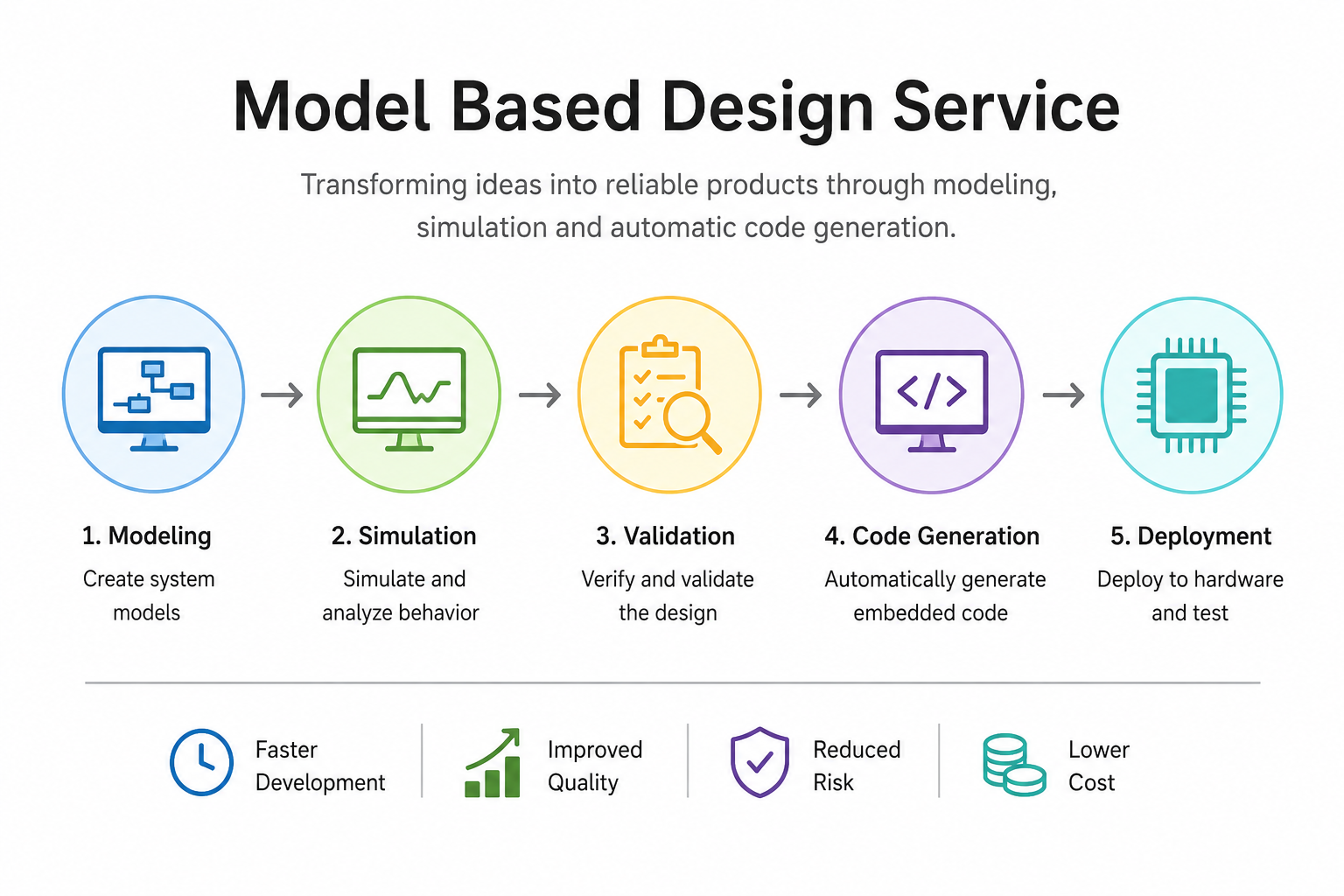
Model Based Design (MBD) is a modern engineering approach that transforms the way complex systems are developed, tested, and implemented. It uses graphical models as the foundation of the development process, enabling engineers to design, simulate, validate, and automatically generate code for embedded systems and control applications. Instead of relying on traditional development methods that involve extensive manual coding and late-stage testing, Model Based Design creates a streamlined process where development begins with a digital model of the system.
Model Based Design services help organizations improve product quality, shorten development cycles, reduce costs, and increase efficiency. Industries such as automotive, aerospace, industrial automation, medical devices, robotics, and consumer electronics widely use MBD to accelerate product innovation and ensure reliable performance.
Understanding Model Based Design
Traditional development processes often separate system design, software implementation, and testing into different stages. This approach can lead to communication gaps, longer development times, and increased risk of errors. Model Based Design eliminates many of these challenges by creating an integrated workflow where the model becomes the central element of the entire process.
Using graphical environments and simulation platforms, engineers can visualize system behavior before hardware implementation begins. Design modifications can be made quickly, allowing teams to validate functionality at an early stage and reduce costly redesign efforts.
Model Based Design supports the complete product development lifecycle, including:
-
System requirement analysis
-
Algorithm development
-
Dynamic system modeling
-
Simulation and validation
-
Embedded software generation
-
Testing and verification
-
Hardware integration
This integrated approach helps ensure that all development stages remain connected and efficient.
Key Components of Model Based Design Services
System Modeling
System modeling forms the foundation of Model Based Design. Engineers create mathematical and graphical representations of system behavior using specialized software tools. These models replicate real-world conditions and allow designers to understand how the system responds under different operating scenarios.
Models may include:
-
Mechanical systems
-
Electrical systems
-
Hydraulic systems
-
Control systems
-
Signal processing systems
-
Embedded software systems
Creating accurate system models enables engineers to analyze performance before physical implementation begins.
Simulation and Analysis
Simulation is one of the most valuable aspects of Model Based Design services. Engineers can simulate system behavior under various operating conditions without creating physical prototypes.
Simulation helps teams:
-
Detect design flaws early
-
Evaluate system performance
-
Compare multiple design options
-
Optimize system parameters
-
Reduce development risks
Engineers can test multiple operating environments and edge cases that may be difficult or expensive to reproduce in real-world testing.
Control Algorithm Development
Modern systems often rely on sophisticated control algorithms to perform accurately and efficiently. Model Based Design services support the development of advanced control strategies for various applications.
Examples include:
-
Motor control systems
-
Autonomous vehicle systems
-
Industrial automation systems
-
Robotics applications
-
Power management systems
Control algorithms can be designed, simulated, and validated directly within the model before deployment.
Automatic Code Generation
One of the most powerful capabilities of Model Based Design is automatic code generation. Once a system model has been validated, development tools can automatically convert the model into production-ready embedded software code.
Automatic code generation offers several advantages:
-
Reduced manual coding effort
-
Fewer human errors
-
Faster development cycles
-
Improved software consistency
-
Easier maintenance
Generated code can be deployed directly to microcontrollers, processors, and embedded systems.
Verification and Validation
Testing and validation are essential for ensuring product reliability and safety. Model Based Design services include comprehensive verification processes throughout development.
Verification activities may include:
-
Model testing
-
Software-in-the-loop testing
-
Processor-in-the-loop testing
-
Hardware-in-the-loop testing
-
System-level validation
Continuous testing throughout development allows engineers to identify and resolve issues earlier in the process.
Benefits of Model Based Design Services
Reduced Development Time
By integrating design, simulation, and testing into a unified process, Model Based Design significantly shortens development cycles. Teams can identify and solve issues earlier rather than waiting until later project stages.
Improved Product Quality
Continuous validation and testing improve product performance and reliability. Engineers can detect design errors before hardware implementation, resulting in more robust systems.
Lower Development Costs
Developing multiple physical prototypes can be expensive and time-consuming. Simulation-based development reduces prototype requirements and minimizes redesign efforts.
Enhanced Collaboration
Model Based Design creates a common platform where engineers from different disciplines can collaborate more effectively. Mechanical, electrical, and software teams can work together using a shared model.
Faster Innovation
Rapid modeling and simulation allow organizations to experiment with new ideas quickly. Teams can evaluate alternative designs and optimize performance without significant delays.
Applications of Model Based Design Services
Model Based Design is widely used across numerous industries and applications.
Automotive Industry
Automotive manufacturers use MBD for:
-
Engine control systems
-
Battery management systems
-
Advanced driver assistance systems
-
Autonomous vehicle control
-
Electric vehicle technologies
Aerospace Industry
Aerospace applications include:
-
Flight control systems
-
Navigation systems
-
Radar systems
-
Aircraft simulation
Industrial Automation
Industrial systems use Model Based Design for:
-
PLC programming
-
Factory automation
-
Motion control systems
-
Process automation
Medical Devices
Medical equipment manufacturers apply MBD in:
-
Diagnostic systems
-
Patient monitoring devices
-
Imaging equipment
-
Surgical systems
Conclusion
Model Based Design services provide a smarter and more efficient approach to developing complex systems. By combining system modeling, simulation, automatic code generation, and continuous validation into a unified workflow, organizations can reduce development time, improve product quality, and lower overall costs.
As industries continue adopting intelligent systems and advanced automation technologies, Model Based Design remains an essential solution for accelerating innovation and delivering reliable products to the market. Its ability to simplify complex development processes makes it a valuable strategy for modern engineering projects.
Categorie
Leggi tutto
A new growth forecast report titled Omega 3 Market Share, Size, Trends, Industry Analysis Report By Information By Type (DHA (Docosahexaenoic Acid), ALA (Alpha Linolenic Acid), and EPA (Eicosapentaenoic Acid)), By Source, By Application And By Region – Market Forecast, 2025 - 2034 introduced by Polaris Market Research represents conclusive data on the overall market. It majorly...

Pearlescent Pigment Market Set for Strong Growth Across Multiple Industries The Pearlescent Pigment Market is witnessing significant growth as industries increasingly adopt pigments for decorative, functional, and protective applications. The Pearlescent Pigment Market size was valued at USD 2.30 billion in 2024 and is expected to reach USD 3.82 billion by...

Polaris Market Research has introduced the latest market research report titled U.S. Tools Plastic Market Size, Share, Trends, Industry Analysis Report By Functionality (Power Tools, Mechanical Tools), By Application, By Type, By End Use – Market Forecast, 2025–2034 that highlights the major revenue stream for the forecast period. The report contains clear, reliable, and...

Vegetable Powders Market Outlook from 2025 to 2035 The global vegetable powders market is poised for steady expansion between 2025 and 2035, driven by increasing consumer demand for convenient, nutrient-rich food ingredients and the growing popularity of clean-label and plant-based diets. As modern lifestyles continue to favor quick and healthy meal solutions, vegetable powders are emerging as...

According to the latest report published by Data Bridge Market Research, the Energy Management Market The global energy management market size was valued at USD 60.61 billion in 2025 and is expected to reach USD 158.55 billion by 2033, at a CAGR of 12.7% during the forecast period. The market growth is primarily driven by increasing demand for...