


Why India’s Passenger Vehicle Sector Eyes a Strong Future
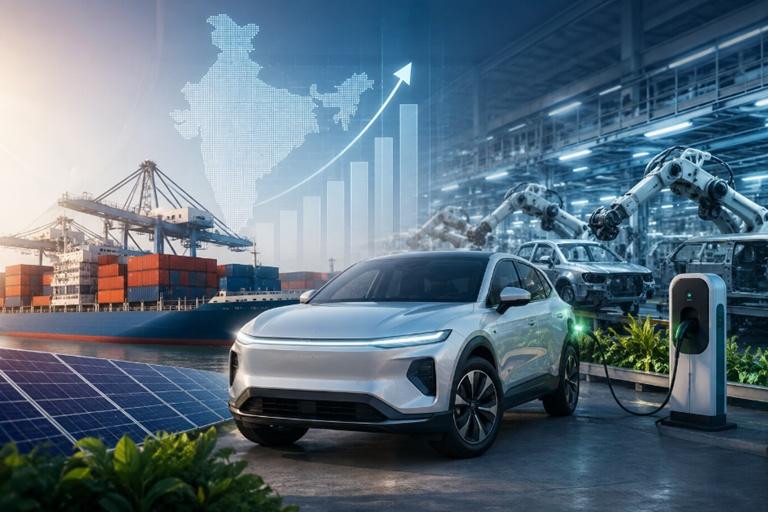
The Indian auto market is changing fast. That shift is exactly why India’s passenger vehicle sector eyes a fresh phase of growth.
You can feel it on the roads already. Bigger SUVs, smarter cars, electric models, and packed showrooms during festive months. The thing is, buyers today think differently than they did five years ago. They want comfort, tech, mileage, and status — all in one package.For years, the industry moved in cycles. Sales went up, then slowed down because of fuel prices, inflation, or supply chain issues. But now, there’s a different mood in the market. Carmakers seem more confident. Dealers are expanding. Buyers are returning. And honestly, the demand isn’t coming only from metro cities anymore.
Smaller towns are driving a huge part of this story.
India’s Passenger Vehicle Sector Eyes Strong Rural Demand
A few years ago, rural buyers mostly looked at entry-level hatchbacks. That trend is fading slowly. Families now want safer and roomier vehicles. You’ve probably seen this yourself. Compact SUVs are everywhere now, even in tier-2 and tier-3 cities.
Companies like Maruti Suzuki, Hyundai Motor India, and Tata Motors are focusing heavily on these regions. Better roads and easier financing are helping buyers make faster decisions.
Banks and NBFCs are also approving loans quicker than before. That matters a lot in India. Many buyers still depend on monthly EMI affordability before choosing a vehicle.
The festive season usually gives the market a push, but lately, demand has stayed steady even outside those months. That’s a good sign for the industry.
SUVs Continue to Rule Indian Roads
Here’s the funny thing. Indian families once loved small cars because parking was easier and fuel costs stayed low. But today, buyers want presence. They want higher seating, more space, and better road visibility.
That’s why SUVs are dominating sales charts.
Compact SUVs Are Winning the Battle
Models like the Tata Nexon, Hyundai Creta, and Maruti Suzuki Brezza continue to attract buyers across age groups.
Young professionals like them for styling and features. Families prefer them because they feel safer on highways. In many ways, SUVs have become the default choice now.
The demand is so strong that manufacturers keep launching newer variants almost every quarter. Sunroofs, connected dashboards, ADAS features, ventilated seats — things that once belonged to luxury cars are now entering mid-range vehicles.
And people are paying for them.
Electric Vehicles Are Slowly Finding Their Space
EVs are still a small part of total sales, but interest is growing. That’s impossible to ignore.
Charging infrastructure remains a challenge, especially outside big cities. But buyers are becoming curious. Rising fuel prices are pushing people to at least consider electric options.
Carmakers Are Betting Big on EV Expansion
Companies like Mahindra & Mahindra and Tata Motors are investing heavily in electric mobility.
The Tata Punch EV and Mahindra XUV400 have already created buzz among urban buyers.
But to be fair, mass EV adoption will take time in India. Charging anxiety still exists. Many apartment owners don’t have proper charging points yet.
Still, the direction is clear. Carmakers know EVs are part of the future, even if the transition feels gradual today.
Premium Cars Are Seeing Better Demand
Middle-class aspirations have changed a lot. People are spending more on lifestyle products, and cars fall into that category too.
Earlier, many buyers looked at a car simply as transportation. Now, it’s also about comfort and image.
That’s one reason premium variants are selling better than expected. Customers willingly pay extra for larger touchscreens, automatic transmissions, and connected features.
Trust me, this happens a lot now. Buyers walk into showrooms planning to purchase a base model and leave booking a higher variant after seeing feature comparisons.
The rise in disposable income among younger professionals is helping this trend continue.
Supply Chain Problems Have Eased
Not long ago, waiting periods stretched for months. Semiconductor shortages created chaos across the industry. Buyers became frustrated because deliveries kept getting delayed.
Thankfully, the situation has improved.
Manufacturers now have better inventory planning and stronger supplier networks. Waiting periods still exist for popular models, but they’re nowhere near as painful as before.
This stability helps dealers too. Faster deliveries improve customer confidence and reduce cancellations.
That matters more than many people realize.
Export Opportunities Could Help the Industry
India is slowly becoming a manufacturing hub for global carmakers. Several companies now export vehicles from Indian plants to other markets.
This creates jobs and strengthens the local auto ecosystem.
The government’s push toward “Make in India” has also encouraged investments in production facilities and auto components. Over time, this could make Indian-made vehicles more competitive globally.
And honestly, that’s a huge opportunity.
Challenges Still Exist for the Sector
Even with strong momentum, the industry faces real concerns.
Fuel prices remain unpredictable. Interest rates can affect loan affordability. Raw material costs also fluctuate often. Steel and semiconductor prices still create pressure on manufacturers.
Then there’s competition.
Almost every company is launching SUVs and EVs aggressively. Standing out is becoming harder. Buyers now compare features online before even entering a showroom.
One weak product launch can hurt a brand quickly.
Environmental regulations are another factor. Stricter emission norms mean companies must keep investing in cleaner technologies, which raises production costs.
So yes, growth is happening, but it’s not effortless.
India’s Passenger Vehicle Sector Eyes Long-Term Expansion
Despite the hurdles, the mood in the market feels optimistic. The Indian economy continues to grow, infrastructure projects are improving road networks, and personal mobility remains important for families.
Public transport is improving in many cities, but people still value the freedom of owning a car. That emotional connection isn’t fading anytime soon.
The next few years could reshape the industry completely. EV adoption may rise faster. Hybrid technology could become more common. Smaller cities may drive the next sales boom.
And if income levels continue rising, India could become one of the world’s strongest passenger vehicle markets.
That’s why analysts, investors, and automakers are watching this space closely.
The story isn’t only about selling cars anymore. It’s about changing lifestyles, shifting aspirations, and evolving consumer habits.
At MoneyMansion, we believe the auto sector often reflects the wider economy. When people feel financially confident, vehicle demand usually grows too. Right now, that confidence seems to be building again.
Conclusion
The road ahead for the Indian automobile industry looks promising, though not perfectly smooth. India’s passenger vehicle sector eyes stronger demand, bigger innovation, and deeper market expansion over the coming years.
SUVs are dominating buyer interest. EVs are gaining attention. Rural markets are becoming more valuable than ever before. At the same time, rising competition and economic uncertainty will keep companies on their toes.
Still, one thing feels clear. Indian consumers are ready for the next generation of mobility, and automakers know it.The coming years should be interesting to watch.
Kategoriler
Read More
Formulated with carefully sourced hemp extract and quality ingredients, Vital Hemp Gummies aim to help promote calmness, mental clarity, emotional balance, and improved nighttime rest so you can feel more focused, refreshed, and energized throughout the day. Official Facebook>> https://www.facebook.com/VitalHempGummiesAustralia.AU/...

Italy's new regulations requiring proof of age for accessing adult websites have sparked a notable uptick in VPN searches. This comes after the announcement on October 31, 2025, and enforcement began on November 12. Despite claims of "double anonymity" by the AGCOM authority to safeguard user privacy, many are turning to virtual private networks for bypassing restrictions. Such heightened...

Living in Bulla offers a peaceful, semi‑rural lifestyle just north of Melbourne. But when a toothache strikes or it’s time for a routine check‑up, locals often ask the same question: Where can I find a reliable Dentist Bulla families actually recommend? While Bulla itself is a small, charming suburb without a high street full of dental clinics, the good news is that exceptional...

According to the latest report published by Data Bridge Market Research, the Artificial Intelligence Operations Platform Market CAGR Value The global artificial intelligence operations platform market size was valued at USD 19.78 billion in 2025 and is expected to reach USD 171.56 billion by 2033, at a CAGR of 31.00% during the forecast...

Automotive Silicone Market Summary “The global Automotive Silicone Market is expected to reach to USD 24.8 billion by 2032, growing at a CAGR of 8.4% during 2025 to 2032” The TrendBridge Insights Research report, “Global Automotive Silicone Market Report 2025 – Future Opportunities, Latest Trends, In-depth Analysis, and Forecast To 2032”, delivers...