How to Test Rexine Quality Before Buying: 5 Simple Checks Every Buyer Should Know
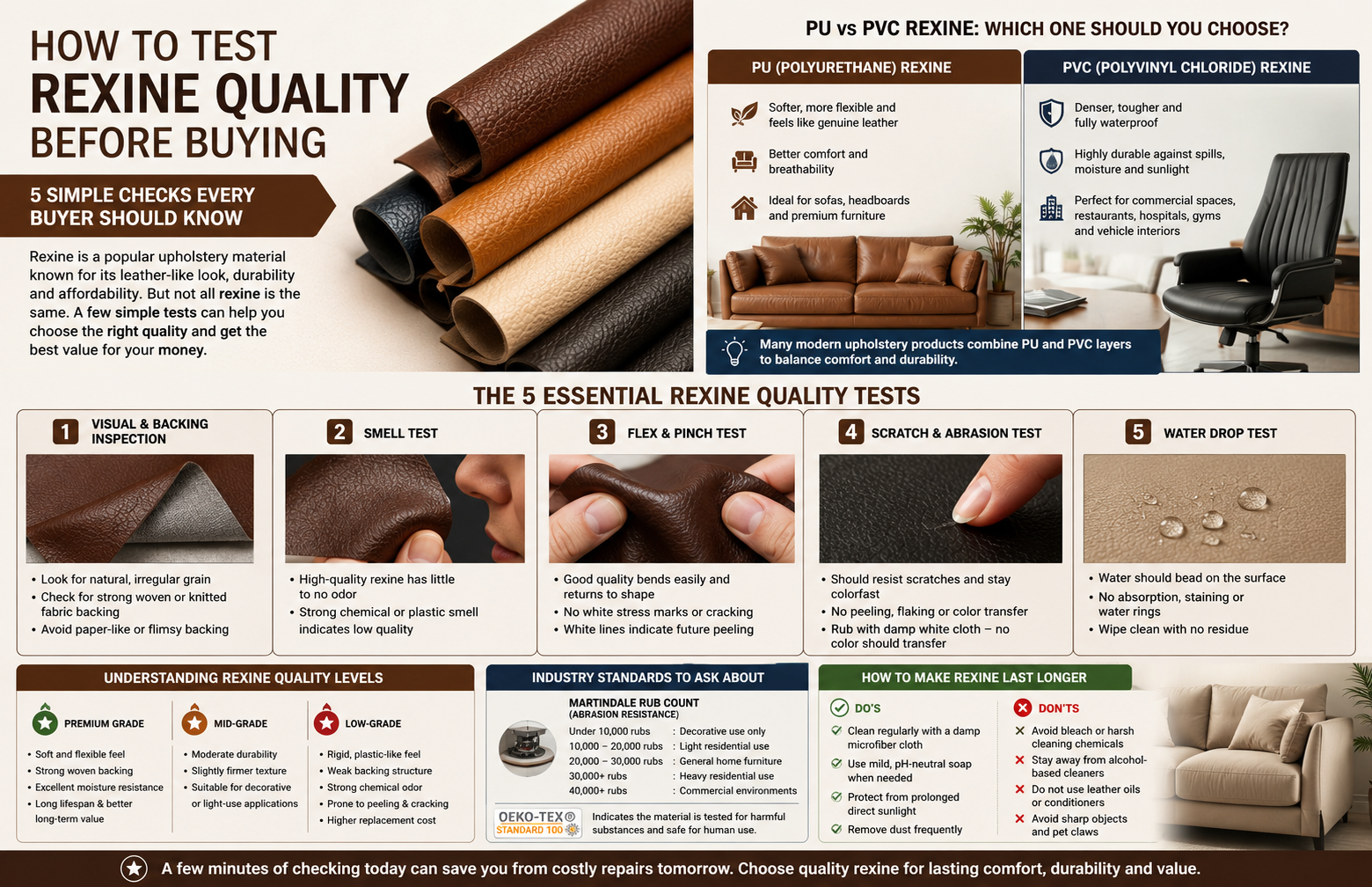
Rexine has become one of the most popular upholstery materials for sofas, chairs, car interiors, headboards, and commercial furniture. Its leather-like appearance, affordability, and versatility make it a preferred choice for homeowners and businesses alike. However, not all rexine is manufactured to the same standard. While premium-grade rexine can last for many years, low-quality material may crack, peel, or fade within a short period.
The good news is that you do not need specialized equipment or laboratory testing to identify quality rexine. With a small sample and a few simple inspections, you can make a more informed buying decision.
What Is Rexine?
Rexine is a synthetic upholstery material made from two main components:
-
A fabric backing, typically cotton or polyester
-
A synthetic coating that provides a leather-like appearance
Modern rexine is generally available in two primary types:
PU (Polyurethane) Rexine
PU rexine is softer, more flexible, and closely resembles genuine leather. It offers better comfort and breathability, making it suitable for sofas, headboards, and premium furniture.
PVC (Polyvinyl Chloride) Rexine
PVC rexine is denser, tougher, and fully waterproof. It performs exceptionally well in high-traffic and commercial environments such as restaurants, hospitals, gyms, and vehicle interiors.
The durability of rexine depends largely on the quality of its coating, backing fabric, and manufacturing process. Premium products use stronger backing materials and better bonding techniques, while low-grade rexine often relies on thin coatings and weak backing layers that fail prematurely.
PU vs PVC Rexine: Which One Should You Choose?
Both materials serve different purposes.
Choose PU Rexine if:
-
Comfort is a priority
-
You want a premium leather-like feel
-
The furniture will be used in living rooms, bedrooms, or residential settings
Choose PVC Rexine if:
-
Durability is more important than softness
-
The material will face spills, moisture, sunlight, or heavy usage
-
It will be installed in commercial spaces or vehicle interiors
Many modern upholstery products combine PU and PVC layers to balance comfort and durability.
The 5 Essential Rexine Quality Tests
1. Visual and Backing Inspection
Start by examining the surface grain.
Premium rexine typically features an irregular, natural-looking texture similar to genuine leather. Low-grade material often displays a repetitive pattern that looks artificially stamped.
Next, inspect the backing fabric.
A quality product should have:
-
Strong woven or knitted fabric backing
-
Firm construction
-
Good tear resistance
Avoid materials with paper-like or flimsy backing because the strength of the backing directly influences the product's lifespan.
2. Smell Test
A simple smell test can reveal a great deal about the material's quality.
High-quality rexine usually has:
-
Little to no odor
-
A mild new-product scent that fades quickly
Low-quality rexine may emit:
-
Strong chemical smells
-
Solvent-like odors
-
Persistent plastic odors
Strong odors can indicate unstable compounds or poor manufacturing standards and may continue to linger long after installation.
3. Flex and Pinch Test
Fold the sample sharply and observe how it reacts.
Good-quality rexine should:
-
Bend easily
-
Return to its original shape
-
Show no white stress marks
Poor-quality rexine often:
-
Feels stiff
-
Develops white lines when folded
-
Shows signs of cracking
White stress marks are often early indicators of future peeling and surface failure.
4. Scratch and Abrasion Test
Use your fingernail to lightly scratch the surface.
Premium rexine typically:
-
Resists visible scratches
-
Maintains its finish
-
Keeps color intact
Low-grade materials may:
-
Develop permanent marks
-
Show color transfer
-
Begin peeling or flaking under pressure
You can also rub the surface with a damp white cloth. Quality rexine should not transfer color to the cloth.
5. Water Drop Test
One of the advantages of rexine is its moisture resistance.
Place a small drop of water on the surface and wait for about a minute.
A quality product will:
-
Allow water to bead on the surface
-
Show no staining
-
Leave no residue after wiping
Low-quality rexine may:
-
Absorb moisture
-
Leave dark marks
-
Develop visible water rings
This test is particularly important in humid climates and high-use households.
Understanding Rexine Quality Levels
Premium Grade
-
Soft and flexible feel
-
Strong woven backing
-
Excellent moisture resistance
-
Long lifespan with regular use
-
Better long-term value
Mid-Grade
-
Moderate durability
-
Slightly firmer texture
-
Suitable for decorative or light-use applications
Low-Grade
-
Rigid, plastic-like feel
-
Weak backing structure
-
Strong chemical odor
-
Prone to peeling and cracking
-
Higher replacement costs over time
While premium rexine may cost more initially, it often proves more economical because it lasts significantly longer.
Industry Standards Worth Asking About
Before purchasing, ask suppliers about recognized performance standards.
Martindale Rub Count
This test measures abrasion resistance.
General guidelines:
-
Under 10,000 rubs: Decorative use only
-
10,000–20,000 rubs: Light residential use
-
20,000–30,000 rubs: General home furniture
-
30,000+ rubs: Heavy residential use
-
40,000+ rubs: Commercial environments
OEKO-TEX® Standard 100
This certification indicates that the material has been tested for harmful substances and is considered safe for human contact.
How to Make Rexine Last Longer
Proper maintenance significantly extends the life of rexine furniture.
Recommended Care
-
Clean regularly with a damp microfiber cloth
-
Use mild, pH-neutral soap when needed
-
Protect furniture from prolonged direct sunlight
-
Remove dust frequently
Avoid
-
Bleach or harsh cleaning chemicals
-
Alcohol-based cleaners
-
Leather oils and conditioners
-
Sharp objects and pet claws
Using the wrong cleaning products can damage the protective coating and shorten the lifespan of the material.
Final Thoughts
Buying quality rexine does not require expert knowledge. By performing five simple checks—visual inspection, smell test, flex test, scratch test, and water test—you can quickly identify whether a material is built to last.
Always request a sample, examine the backing carefully, ask for technical specifications, and verify performance standards whenever possible. A few minutes of evaluation today can help you avoid costly repairs, reupholstery, and disappointment in the future.
When it comes to rexine, the smartest purchase is not necessarily the cheapest one—it is the one that delivers lasting performance, comfort, and value.
Categorie
Leggi tutto
In today's digital marketplace, businesses compete for attention in an environment where customers have endless choices. Consumers can compare products, read reviews, research companies, and evaluate alternatives within minutes. Because of this, success is no longer determined solely by the quality of a product or service. A business must also earn customer confidence and establish a reputation...

"Detailed Analysis of Executive Summary Middle East and Africa Geosynthetics Market Size and Share CAGR Value Data Bridge Market Research analyses that the Middle East and Africa geosynthetics market is expected to reach USD 1,746.25 million by 2031 from USD 965.72 million in 2023, growing with a substantial CAGR of 7.8% in the forecast period of 2024 to 2031. In the universal...

The engine that powers the modern, dynamic in-game advertising ecosystem is a sophisticated technological stack often referred to as an In-Game Advertising Market Platform. This platform is not a single piece of software but a complex, multi-sided network that acts as the central nervous system connecting advertisers' demands with the available ad inventory inside billions of gaming...

As per Market Research Future, the Nickel Manganese Cobalt Battery Market Share is poised for substantial growth in the coming years, driven by increasing demand for electric vehicles (EVs) and energy storage solutions. Nickel Manganese Cobalt (NMC) batteries have emerged as a preferred choice in the energy storage and automotive sectors due to their high energy density, long lifespan, and...
Political drama enthusiasts facing a Diplomat drought have reason to rejoice this December. Netflix is bridging the gap with a legendary television masterpiece. Prepare for the long-awaited US Netflix arrival of the critically adored The West Wing. Its timing couldn't be more perfect for fans anxiously awaiting The Diplomat season 4. Though renewed, The Diplomat season 4 started filming in...