Why the Air Inside Your Building May Be More Polluted Than the Air Outside And How ERVs Fix It
Breathe Better, Spend Less: How Energy Recovery Ventilators Are Redefining Indoor Air Quality and Building Efficiency
There is a quiet revolution happening inside the walls, ceilings, and ductwork of modern buildings. It does not generate headlines the way solar panels or electric vehicles do, but its impact on how we breathe, how much energy we consume, and how we design the spaces where we spend 90% of our lives is profound. The technology at the center of this shift is the energy recovery ventilator and the industry behind it is accelerating faster than most people realize.
The Energy Recovery Ventilator Market was valued at USD 4.27 billion in 2025 and is projected to more than double, reaching USD 9.33 billion by 2034, growing at a CAGR of 9.08% during the forecast period. Behind that growth trajectory lies a convergence of three powerful forces: rising energy costs, post-pandemic awareness of indoor air quality, and a global construction industry pivoting toward green building standards.
What an ERV Actually Does and Why It Matters
Understanding the appeal of energy recovery ventilators starts with a simple problem: modern buildings are sealed tight for energy efficiency, but that same tightness traps stale, polluted air inside. Opening windows is not a solution for a climate-controlled office tower or a hospital ward. Traditional ventilation exhausts conditioned air and pulls in untreated outdoor air, wasting the energy already spent heating or cooling the interior.
An ERV solves this elegantly. Energy recovery ventilation systems use a heat exchange core to transfer heat and moisture between outgoing exhaust air and incoming fresh outdoor air, ensuring no energy is lost during ventilation while maintaining constant temperature and humidity levels. The result is continuous fresh air circulation without continuous energy waste a combination that is increasingly non-negotiable in both green building design and regulatory compliance frameworks.
The Indoor Air Quality Imperative
If there was one lasting infrastructure lesson from the COVID-19 pandemic, it was that indoor air quality is a public health issue, not just a comfort one. Post-pandemic building management guidelines have increased the focus on continuous fresh air circulation in schools, hospitals, and office buildings, with energy recovery ventilators supporting controlled indoor air quality ventilation while maintaining building energy efficiency.
This shift in awareness has been particularly pronounced in commercial real estate. The commercial buildings segment accounted for approximately 65% of the global market share in 2025, driven by strong demand for controlled ventilation across offices, hospitals, and institutions requiring continuous fresh air circulation. For building owners and facility managers, ERV systems now represent both a health investment and a liability management tool facilities that cannot demonstrate adequate ventilation face increasing scrutiny from tenants, insurers, and regulators alike.
𝐄𝐱𝐩𝐥𝐨𝐫𝐞 𝐓𝐡𝐞 𝐂𝐨𝐦𝐩𝐥𝐞𝐭𝐞 𝐂𝐨𝐦𝐩𝐫𝐞𝐡𝐞𝐧𝐬𝐢𝐯𝐞 𝐑𝐞𝐩𝐨𝐫𝐭 𝐇𝐞𝐫𝐞:
https://www.polarismarketresearch.com/industry-analysis/energy-recovery-ventilator-market
Green Buildings Are Driving the Next Wave
Beyond health mandates, the green building movement is providing structural long-term momentum for ERV adoption. According to the International Finance Corporation, green investment in cities of emerging markets has the potential to reach USD 24 trillion by 2030, with green building standards such as LEED certification increasing the demand for energy-efficient ventilation solutions in residential and commercial infrastructure.
New construction accounted for nearly 61% of the market share in 2025, driven by integration of energy recovery ventilation systems in modern building designs focused on energy efficiency and sustainability. Architects and mechanical engineers are now routinely specifying ERV systems at the design stage rather than retrofitting them later a shift that reflects how fundamental efficient ventilation has become to green building certification.
Yet the retrofit opportunity is equally compelling and growing fast. The retrofit installations segment is projected to grow at the fastest CAGR during the forecast period, as building owners increasingly upgrade existing HVAC systems to improve air quality and meet rising energy efficiency mandates for older buildings.
Technology Innovation Is Pushing Performance Higher
Two technologies are shaping the competitive landscape of the ERV sector. Plate heat exchangers led the technology segment in 2025, driven by efficient energy recovery capacity and compact design, enabling effective air-to-air energy recovery in modern building ventilation systems. Meanwhile, rotary heat exchangers are projected to register the fastest growth, owing to their efficiency in simultaneous heat and moisture transfer using a rotating thermal wheel.
Innovation from leading manufacturers is raising the performance bar continuously. In January 2026, Panasonic unveiled its new Intelli-Balance Elite and Elite+ Energy Recovery Ventilators at AHR Expo 2026, providing up to 90% sensible recovery efficiency and reliable heat exchange in temperatures as low as -22°F, supporting high-efficiency ventilation in residential spaces. In June 2025, Greenheck introduced the Model IVE energy recovery ventilator, an indoor-mounted HVAC solution delivering up to 85% energy recovery efficiency and 100% outdoor air ventilation for commercial buildings with space-constrained installations.
Regional Dynamics: Asia Pacific Emerges as the Growth Engine
North America currently leads the global landscape. The region accounted for over 38% of global market share in 2025, driven by strict energy efficiency regulations, advanced building codes, and high adoption of HVAC systems across residential and commercial infrastructure.
But the fastest growth is coming from Asia Pacific. Rapid urbanization and expanding construction activity across China, India, and Japan are increasing demand for modern building ventilation systems, with the UN-ESCAP reporting that the Asia-Pacific region hosts over 2.2 billion urban residents and its urban population is projected to grow 50% by 2050. Every new apartment tower, hospital, or commercial complex built to satisfy that urban growth creates demand for the kind of efficient, health-protective ventilation that ERV systems deliver.
The Smart Building Frontier
The future of ERV technology extends well beyond simple heat exchange. The HVAC industry is incorporating sensors, automated ventilation airflow controls, and digital monitoring systems to enhance the effectiveness of ventilation systems, with AI-based building management systems analyzing indoor air conditions in real time to optimize ventilation performance and energy management.
This convergence of Energy Recovery Ventilator technology with smart building infrastructure positions these systems not just as mechanical equipment but as intelligent nodes in a broader ecosystem of building automation continuously adapting, continuously optimizing, and continuously protecting the health of the people inside.
For building owners, facility managers, architects, and sustainability officers, the message is clear: energy recovery ventilators are no longer optional upgrades. They are foundational infrastructure for the buildings the world is building today and upgrading for tomorrow.
More Trending Latest Reports By Polaris Market Research:
Medical Imaging Equipment Market
5G Fixed Wireless Access (FWA) Market
Chatbot-Based Mental Health Apps Market
Categorii
Citeste mai mult
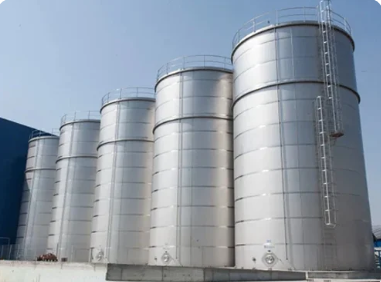
Industrial operations across manufacturing, agriculture, food processing, chemicals, and energy sectors rely heavily on efficient storage systems for smooth production and safe material handling. As trusted Industrial Storage Tank Manufacturers, businesses play a vital role in delivering durable, high-capacity storage solutions that meet industry-specific requirements....
In 2025, online gaming and digital exchange platforms are growing faster than ever, and one name that continues to gain massive attention is DiamondExch99. Thousands of users search every day for the easiest way to create a secure account, understand the registration process, and explore all the latest features available on the platform. Whether you are new to online exchange platforms or...

When it comes to bathroom remodeling in Des Moines, homeowners want a combination of quality craftsmanship, functional design, and long-lasting style. At A1 Basement Finishing Company, we specialize in delivering beautiful bathroom transformations that elevate both the comfort and value of your home. Serving Des Moines, Ankeny, and surrounding areas, our team is committed to...

The global Automotive Current Sensing Precision Resistors Market is on a trajectory of rapid expansion, projected to grow at a compound annual growth rate (CAGR) of 11.1% through 2032. The acceleration is driven by the electrification of powertrains, the proliferation of high‑voltage architectures, and mounting regulatory pressure for safety and efficiency across passenger‑car,...

hey my name is Inaya. The lights of Dubai are dazzling, but I cherish these quiet moments when we are alone, body against body, our hearts pounding. I am Soumya, your enchanting Indian haven. I don't appear suddenly; I create a unique atmosphere. Soft music, dim lighting, my body draped in silk… I approach you like a dream. Sophisticated, cultured, and intensely sensual, I know how...