


Essential Steps for a Successful Google Business Profile Audit in 2026
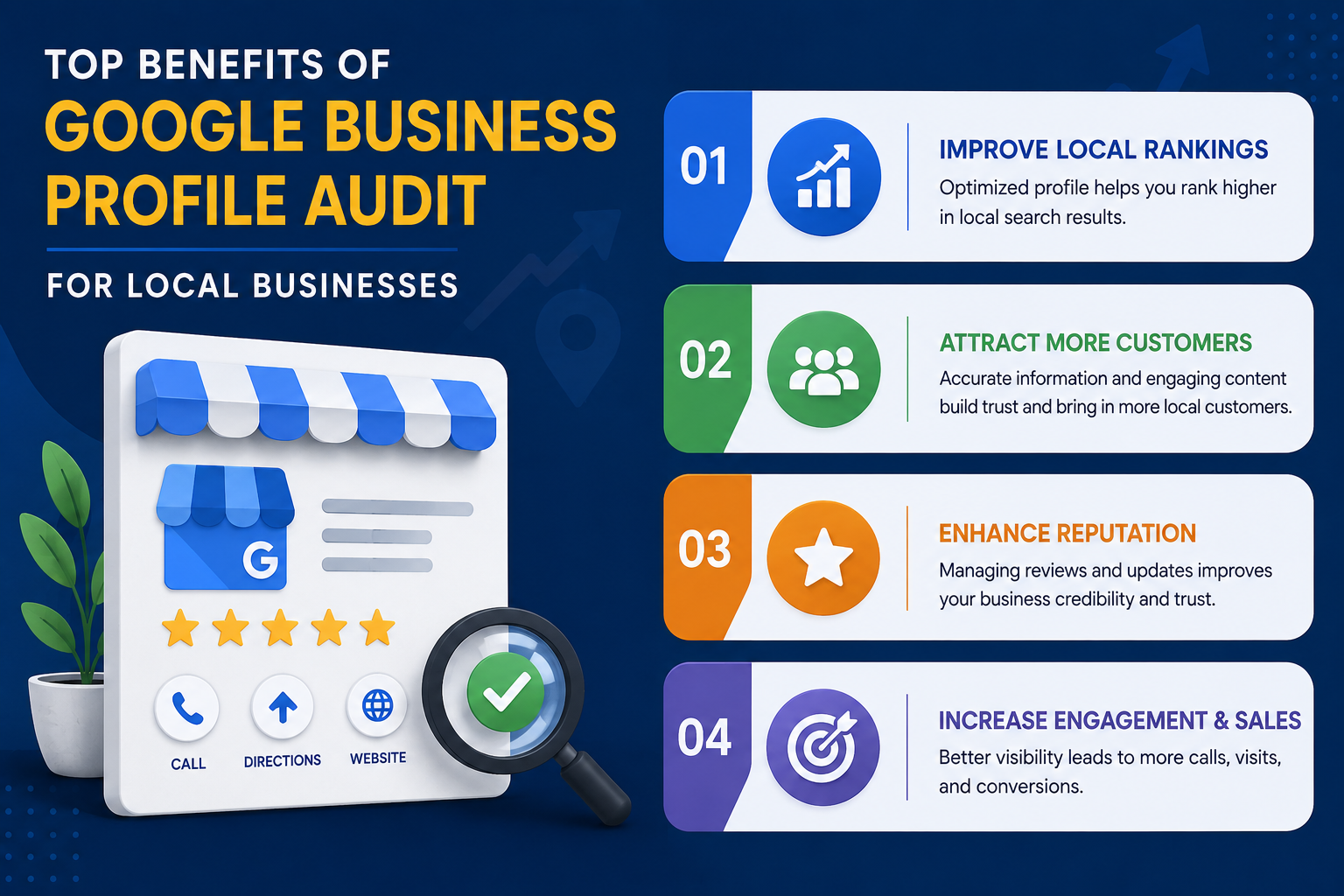
As local search continues to evolve, businesses must ensure their Google Business Profiles remain accurate, optimized, and competitive. Consumers increasingly rely on Google Search and Google Maps to discover local businesses, compare options, and make purchasing decisions.
A Google Business Profile can significantly influence online visibility, customer trust, and lead generation. However, profiles that are outdated, incomplete, or poorly optimized may struggle to perform well in local search results.
A successful Google Business Profile Audit helps businesses identify issues, improve profile quality, and maximize opportunities for customer acquisition. In 2026, with growing competition and changing search behaviors, regular profile audits have become more important than ever.
Following a structured audit process helps businesses maintain strong local visibility and achieve better results from their local SEO efforts.
Step 1: Verify Business Information
The foundation of every successful audit is accurate business information.
Review and verify:
- Business name
- Address
- Phone number
- Website URL
- Operating hours
All information should be consistent across:
- Google Business Profile
- Business website
- Online directories
- Social media profiles
Accurate information improves customer trust and supports local search performance.
Step 2: Review Profile Completeness
A complete profile provides more value to customers and helps Google understand the business.
Check whether the profile includes:
- Business description
- Services
- Products
- Contact information
- Attributes
- Photos
Incomplete profiles often miss opportunities to improve visibility and customer engagement.
A fully completed profile creates a stronger customer experience.
Step 3: Evaluate Primary and Secondary Categories
Categories are among the most important local ranking factors.
Review:
- Primary category relevance
- Secondary category selection
- Category alignment with services
Businesses should ensure their categories accurately reflect current offerings.
Proper category optimization helps improve search relevance and visibility.
Step 4: Analyze Business Description
The business description should clearly communicate what the company offers.
Review whether the description:
- Explains services effectively
- Reflects business expertise
- Highlights unique value
- Remains up to date
A well-written description improves customer understanding and profile quality.
Step 5: Review Services and Products
Many businesses fail to fully utilize service and product sections.
Check:
- Service listings
- Product information
- Description quality
- Information accuracy
Detailed service information helps customers quickly understand what a business offers.
It also strengthens local search relevance.
Step 6: Audit Customer Reviews
Reviews influence both rankings and customer decisions.
Evaluate:
- Review volume
- Average rating
- Recent feedback
- Customer sentiment
- Review growth trends
Strong review activity contributes to greater trust and visibility.
Regular review monitoring helps businesses maintain a positive online reputation.
Step 7: Examine Review Responses
Customer engagement extends beyond collecting reviews.
Review:
- Response frequency
- Response quality
- Customer interaction patterns
Responding to reviews demonstrates professionalism and customer care.
Active engagement often creates a stronger impression on potential customers.
Step 8: Assess Photos and Visual Content
Photos play an important role in profile engagement.
Review:
- Logo quality
- Cover photo
- Team photos
- Service photos
- Location images
High-quality visuals help attract customer attention and create a positive first impression.
Businesses should regularly update visual content to keep profiles fresh.
Step 9: Evaluate Google Maps Performance
Google Maps continues to be a major source of local business discovery.
Assess:
- Maps visibility
- Location accuracy
- Search appearance
- Customer interactions
Improved Maps performance can increase:
- Profile views
- Direction requests
- Customer inquiries
Strong Maps visibility remains an important local SEO objective in 2026.
Step 10: Check Business Attributes
Attributes provide additional details that help customers make decisions.
Examples include:
- Appointment availability
- Accessibility options
- Service features
- Payment methods
Ensure relevant attributes are selected and updated.
Accurate attributes improve customer experience and profile relevance.
Step 11: Review Questions and Answers
The Questions and Answers section often contains valuable customer insights.
Check whether:
- Questions have been answered
- Information remains accurate
- Common customer concerns are addressed
Managing this section helps improve engagement and customer trust.
Step 12: Analyze Engagement Metrics
Customer engagement metrics reveal how users interact with the profile.
Important metrics include:
- Calls
- Website clicks
- Direction requests
- Messages
- Profile views
Reviewing these metrics helps businesses identify strengths and improvement opportunities.
Understanding engagement patterns supports better decision-making.
Step 13: Evaluate Posting Activity
Google Business Profile posts help keep profiles active and informative.
Review:
- Posting frequency
- Content relevance
- Promotional updates
- Business announcements
Regular posting demonstrates activity and encourages customer engagement.
An active profile often creates a stronger impression than a neglected one.
Step 14: Verify Citation Consistency
Business information should remain consistent across all online platforms.
Review:
- Business directories
- Industry listings
- Local citations
- Social media profiles
Consistency supports trust and strengthens local SEO performance.
Step 15: Compare Competitor Profiles
Competitor analysis is an important part of a successful audit.
Evaluate competitor profiles based on:
- Reviews
- Categories
- Photos
- Services
- Engagement activity
Competitive insights can reveal opportunities for improvement and growth.
Step 16: Identify Optimization Opportunities
Once the audit is complete, create a list of recommended improvements.
Common opportunities include:
- Updating information
- Improving descriptions
- Adding services
- Increasing review activity
- Uploading new photos
Prioritizing these actions helps maximize audit value.
Step 17: Create an Ongoing Audit Schedule
A successful audit is not a one-time activity.
Businesses should establish a regular review schedule.
Recommended frequency:
- Monthly profile checks
- Quarterly optimization reviews
- Annual comprehensive audits
Consistent monitoring helps maintain strong performance.
Why Audits Matter More in 2026
Local search competition continues to increase.
Customers expect:
- Accurate information
- Fast responses
- Strong reviews
- Professional profiles
Businesses that regularly audit and optimize their profiles are better positioned to attract customers and maintain visibility.
As Google continues evolving local search experiences, proactive profile management becomes increasingly important.
Audit Your Google Business Profile Today
A detailed audit can uncover opportunities to improve visibility, customer engagement, and local search performance. Understanding profile strengths and weaknesses is the first step toward stronger results.
👉 Analyze your Google Business Profile and discover optimization opportunities here:
https://www.fly-social.com/tools/gmb-audit
Conclusion
A successful Google Business Profile Audit in 2026 requires a structured approach that evaluates every aspect of profile performance. From verifying business information and categories to analyzing reviews, photos, engagement metrics, and Google Maps visibility, each step contributes to stronger local search performance.
Regular audits help businesses maintain accuracy, improve customer experiences, increase visibility, and support long-term growth. As local search continues to shape customer behavior, ongoing profile optimization remains a critical component of business success.
Kategoriler
Read More
According to the latest report published by Data Bridge Market Research, the Asthma Device Market The global asthma device market size was valued at USD 4.65 billion in 2025 and is expected to reach USD 6.68 billion by 2033, at a CAGR of 4.65% during the forecast period This Asthma Device Market document provides with CAGR value fluctuation during...

Rising Demand for Targeted Cancer Therapies Drives the Global Antibody Drug Conjugates [ADC] Market Toward Strong Double-Digit Growth The Antibody Drug Conjugates [ADC] Market is witnessing remarkable momentum as the global healthcare industry increasingly shifts toward precision medicine and advanced oncology solutions. Valued at USD 12.95 billion in 2025, the market is...

Giới Thiệu: Đỉnh Cao Thách Thức Dự Đoán Tỷ Số Kèo tỷ số chính xác (Correct Score) luôn là loại kèo mang lại tỷ lệ lợi nhuận (Odds) hấp dẫn nhất trong thế giới cá cược bóng đá trực tuyến tại Vegas79. Tuy nhiên, đây không phải là trò chơi của sự may rủi. Để ăn được kèo tỷ số...

"According to the latest report published by Data Bridge Market Research, the U.S. Mug Market The U.S. Mug Market size was valued at USD 8.53 Billion in 2025 and is expected to reach USD 12.38 Billion by 2033, at a CAGR of 4.8% during the forecast period This world-wide U.S. Mug Market report is generated by a team of multilingual researchers who are...

Broadly, there are two ways to play the linebacker position: On the round, and off the sphere. An on-ball linebacker is just a standup edge rusher, similar to the traditional 3-4 outside linebackers, while off-ball linebackers are the 2nd degree defenders you believe of when you think about the position. With real 3-4 and 4-3 largely disappearing, on-ball linebackers play the side in all...