Using a Shelf Company for Real Estate Holding to Establish Credibility

In the world of real estate investing, perception often precedes opportunity. Whether you are negotiating with lenders, courting private capital, or leasing commercial space to a national tenant, the entity you use to hold title matters. A brand-new LLC formed last week may raise eyebrows, while an established corporation signals stability, experience, and financial seriousness. This is precisely why using a shelf company for real estate holding to establish credibility has become a strategic move among savvy investors. If you are evaluating different entity structures for your next acquisition, access our complete guide to real estate asset protection here.
A shelf company—sometimes called an aged corporation or aged LLC—is a legal entity that was formed months or years ago but remained inactive. When you acquire it and transfer ownership, you inherit its original formation date. For real estate holding purposes, that older filing date can help you appear as an established player from day one, potentially unlocking better financing terms, smoother lease negotiations, and increased trust from joint venture partners.
Why Credibility Matters in Real Estate Transactions
Real estate is a relationship-driven industry. Sellers, brokers, lenders, and tenants all perform background checks. A newly formed holding entity raises natural questions: "Are they undercapitalized? Will they disappear after the deal? Do they understand property management?" An aged corporation addresses these concerns before they are even voiced. Specific advantages include:
-
Improved lender perception – Banks and hard money lenders often view companies with a multi-year operating history as lower default risk.
-
Stronger negotiation position – When leasing to credit tenants (e.g., CVS, Starbucks, or regional medical groups), an older entity suggests long-term commitment.
-
Easier vendor onboarding – Property management firms, insurance carriers, and utility companies frequently require proof of business existence. A shelf company satisfies this instantly.
-
Privacy and separation – You can hold multiple properties in different aged entities, making it harder for plaintiffs or competitors to connect all your assets.
How a Shelf Company Enhances Real Estate Holding
1. Appearing Established to Commercial Lenders
Many portfolio lenders require the borrowing entity to have been in existence for at least two years. With a shelf company, you meet that requirement immediately after the legal transfer of ownership. This is especially valuable for investors seeking lines of credit or blanket loans on multiple rental properties.
2. Building Trust with Tenants
Commercial tenants and high-end residential renters often research the landlord entity. A formation date of 2021 rather than 2025 signals that you are not a fly-by-night operator. This can lead to longer lease terms and lower vacancy rates.
3. Simplifying 1031 Exchange Qualifications
While a 1031 exchange requires the same taxpayer to sell and buy, using an aged holding company that has been properly maintained avoids issues with the IRS questioning whether the entity was "newly created" solely for the exchange.
4. Achieving Faster Business Credit
Vendors like building supply companies, equipment lessors, and repair services often extend trade credit based partly on the age of the entity. An aged corporation can qualify for net-30 or net-60 terms faster than a startup LLC.
Critical Steps Before Using a Shelf Company for Real Estate
To legally and effectively use a shelf company as a real estate holding vehicle, follow these steps:
-
Perform due diligence on the shelf company – Obtain a Certificate of Good Standing from the Secretary of State. Review any past tax filings, liens, or legal judgments through the company's registered agent.
-
Transfer ownership properly – Execute a membership interest or stock purchase agreement. Update the registered agent records. File necessary amendments with the state (e.g., change of officers, managers, or members).
-
Obtain a new EIN from the IRS – While the shelf company has an existing EIN, it is wise to apply for a fresh one to avoid any tax liability inherited from previous owners.
-
Open a dedicated business bank account – Use the company's new EIN and your ownership documents to establish a bank account. Do not commingle personal or other entity funds.
-
Transfer the property title – Record a new deed from you (or the seller) into the name of the aged corporation. Ensure title insurance is updated to reflect the current owner.
-
Maintain corporate formalities – Hold annual meetings, keep minutes, file annual reports on time, and pay state franchise taxes. Losing good standing eliminates the credibility advantage.
Risks and Considerations
Using a shelf company is not a shortcut without consequences. Be aware of:
-
Hidden liabilities – The previous owner may have incurred debts, lawsuits, or tax obligations. A thorough lien search and indemnification clause in the purchase agreement are essential.
-
Bank scrutiny of ownership changes – Some lenders may ask when the current owner took control. If you acquired the shelf company three weeks ago, the formation date alone may not fool an underwriter who requests a full ownership history.
-
State-specific transfer rules – A few states (e.g., Nevada and Wyoming) have special requirements for changing ownership of aged entities. Consult a business attorney.
-
No substitute for operating history – A shelf company gives you an old birth certificate, but it does not provide financial statements or prior real estate experience. You will still need to build an actual track record.
Frequently Asked Questions (FAQs)
Q1: Is it legal to use a shelf company to hold real estate?
Yes. Purchasing and transferring ownership of an existing corporation or LLC is legal in all 50 states. The entity continues to exist under its original formation date. However, you must truthfully answer any lender or government form that asks how long the current owners have controlled the entity.
Q2: Will a bank automatically approve a loan just because my holding company is aged?
No. Lenders still evaluate credit scores, debt-to-income ratios, property cash flow, and your personal guarantee. An aged corporation helps with time-in-business requirements but does not replace financial qualifications.
Q3: Can I hold multiple rental properties in one aged shelf company?
Technically yes, but it is not recommended. Combining properties in one entity exposes all of them to a single lawsuit. Most real estate attorneys advise creating separate aged LLCs for each property to limit liability.
Q4: How old should the shelf company be for real estate credibility purposes?
Three to five years is generally sufficient. Two years meets most lender minimums. Companies older than ten years may carry higher risk of unknown historical issues (e.g., old tax liens or dissolved status that was reinstated).
Q5: What is the difference between a shelf corporation and a shelf LLC for real estate?
The choice depends on your tax and ownership structure. Corporations (C-corp or S-corp) have stricter formalities but may offer certain tax advantages. LLCs are more flexible and commonly used for real estate holding. Both can be aged. Consult a CPA before deciding.
Q6: Do I need to tell tenants that I acquired the shelf company after it was formed?
No. The lease is between the tenant and the legal entity. As long as the entity remains in good standing and you are the authorized representative, there is no requirement to disclose the ownership transfer date to tenants.
Q7: Can I transfer an existing property I already own into a newly purchased shelf company?
Yes, but be aware of the due-on-sale clause in your mortgage. Transferring title to a different entity may trigger full loan acceleration. Check with your lender first. For properties owned free and clear, transfer is straightforward via a new deed.
Q8: How much does it typically cost to acquire a shelf company for real estate holding?
Prices vary by state and age. A two-year-old Wyoming LLC might cost $1,500–$3,000. A five-year-old Delaware corporation could range from $4,000–$10,000. Plus, you must pay state filing fees for the ownership transfer (typically $100–$500) and registered agent renewal fees annually.
Q9: What happens if the shelf company I buy has unpaid state taxes?
You become responsible for those taxes unless the purchase agreement explicitly states otherwise and indemnifies you. Always request a tax clearance letter from the state before completing the purchase. Walk away if the seller cannot provide clean records.
Q10: Does using a shelf company help with asset protection beyond credibility?
Yes, but only if you maintain the entity properly. Commingling funds, failing to hold annual meetings, or personally guaranteeing debts without corporate authorization can pierce the corporate veil. The age of the company does not matter if you treat it as an alter ego.
Categorias
Leia Mais
Dental Implants in Mumbai – Permanent & Natural Tooth Replacement Missing teeth can affect your smile, confidence, and oral health. Dental implants are the most advanced and reliable solution to replace missing teeth. They look, feel, and function like natural teeth. This detailed guide explains everything you need to know about dental implant treatment in Mumbai —...

Entdecken Sie die neuesten Updates für Zenless Zone Zero im Januar 2025, inklusive frischer Codes für spannende In-Game-Bower! Das innovative RPG, entwickelt von den Machern von Genshin Impact, entführt Sie in die gefährliche Welt von New Eridu, einer postapokalyptischen Stadt voller Bedrohungen durch finstere Kreaturen. Nutzen Sie die exklusiven Codes, um sich einen...

Intravenous fluid therapies exceeding one hundred milliliters represent a fundamental cornerstone of acute patient stabilization, rehydration, and systemic drug delivery. In emergency care and intensive care units, these sterile formulations provide rapid blood volume restoration, correct severe electrolyte imbalances, and serve as vehicles for continuous intravenous medication administration....
The online gaming industry has experienced tremendous growth over the past few years, attracting millions of users from around the world. kubeti8.com As players seek reliable and engaging platforms, websites that offer convenience, entertainment, and user-friendly features continue to gain popularity. Among these platforms, kubeti8.com has emerged as a recognized destination for individuals...
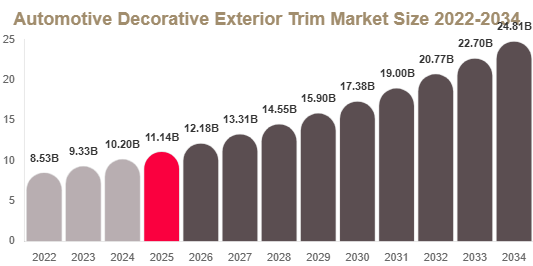
Automotive Decorative Exterior Trim Market Market Size The Automotive Decorative Exterior Trim Market was valued at USD [Insert 2025 Market Size] in 2025.The market is projected to reach USD [Insert 2034 Market Size] by 2034, growing at a CAGR of [Insert CAGR]% during the forecast period. Get Your Sample Report Here:...