Hyper-Personalization in Digital Marketing
Hyper-Personalization in Digital Marketing
In today’s competitive online marketplace, customers expect more than generic advertisements and mass marketing messages. They want personalized experiences that match their interests, preferences, and behaviors. This shift in consumer expectations has led to the rise of hyper-personalization, one of the most powerful trends in modern digital marketing.
Hyper-personalization goes beyond traditional personalization by using real-time data, Artificial Intelligence (AI), customer behavior insights, and advanced analytics to deliver highly relevant content, recommendations, and experiences. Businesses that adopt hyper-personalization can improve customer engagement, increase conversions, and build stronger long-term relationships.
If you want to create exceptional customer experiences and drive sustainable business growth, this guide will explain how hyper-personalization is transforming digital marketing.
What Is Hyper-Personalization?
Hyper-personalization is an advanced marketing approach that uses customer data, AI, and automation to deliver highly targeted and individualized experiences.
Unlike basic personalization, which may only include a customer’s name in an email, hyper-personalization considers:
-
Browsing behavior
-
Purchase history
-
Real-time interactions
-
Customer preferences
-
Demographic information
The goal is to provide the right message to the right person at the right time.
Why Is Hyper-Personalization Important?
Modern consumers are exposed to thousands of marketing messages every day. Generic content often gets ignored because it lacks relevance.
Key benefits of hyper-personalization include:
-
Higher customer engagement
-
Improved conversion rates
-
Better customer experiences
-
Increased customer loyalty
-
Stronger brand relationships
Businesses that deliver personalized experiences often outperform competitors in customer satisfaction and retention.
How Has Customer Behavior Changed?
Customers now expect brands to understand their needs and provide relevant recommendations.
Modern consumer expectations include:
-
Personalized product suggestions
-
Relevant content recommendations
-
Customized offers and promotions
-
Faster customer support
-
Seamless omnichannel experiences
Businesses that fail to meet these expectations risk losing customers to competitors.
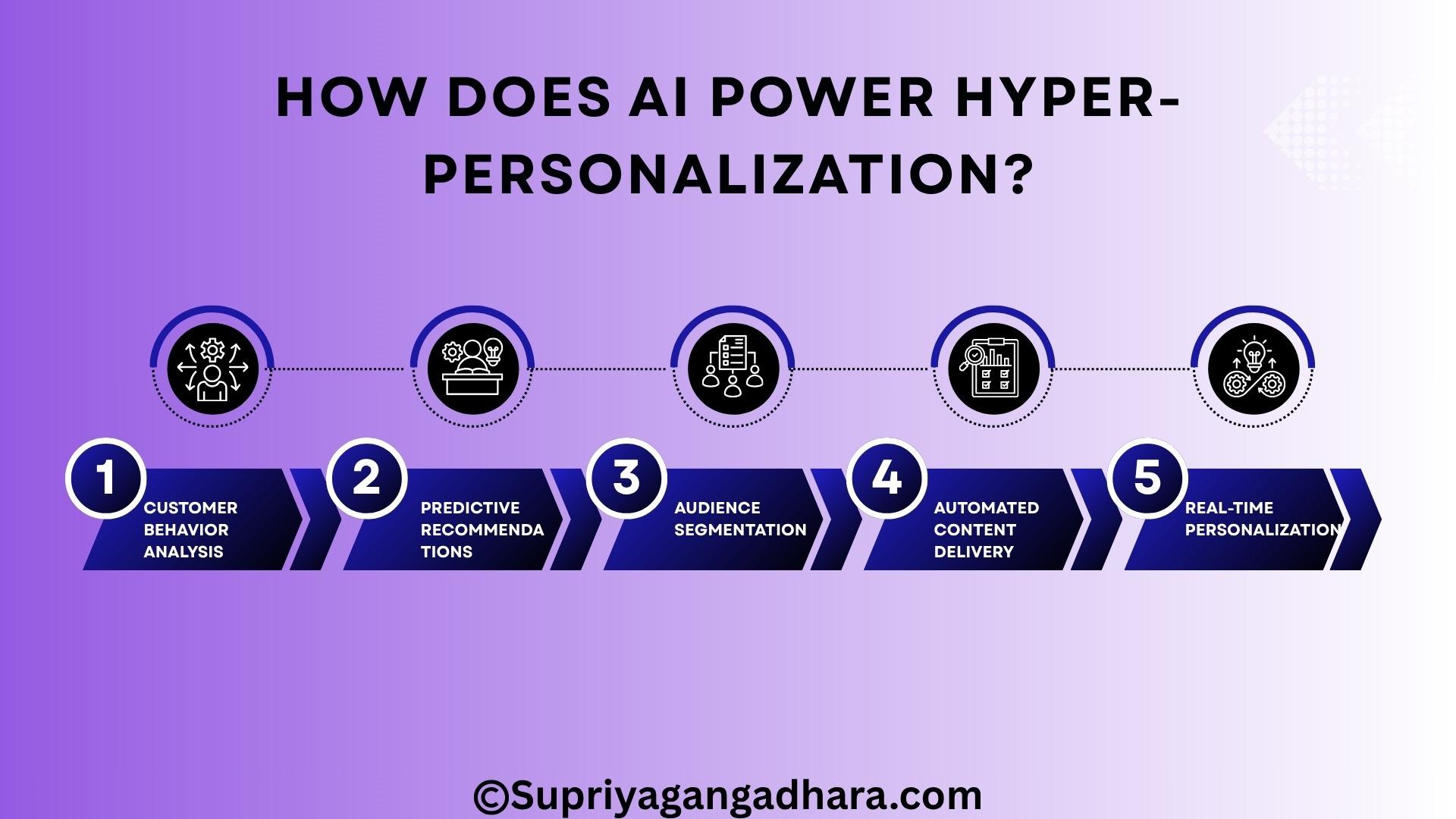
How Does AI Power Hyper-Personalization?
Artificial Intelligence plays a crucial role in making hyper-personalization possible at scale.
AI-powered capabilities include:
-
Customer behavior analysis
-
Predictive recommendations
-
Audience segmentation
-
Automated content delivery
-
Real-time personalization
AI helps businesses process large amounts of customer data and deliver personalized experiences instantly.
Why Is Data the Foundation of Hyper-Personalization?
Effective personalization depends on understanding customer behavior and preferences.
Important data sources include:
-
Website interactions
-
Purchase history
-
Social media engagement
-
Email marketing performance
-
Customer support interactions
The more relevant data a business collects, the more accurate its personalization efforts become.
How Does Hyper-Personalization Improve Email Marketing?
Email marketing is one of the most effective channels for implementing hyper-personalization.
Benefits include:
-
Personalized product recommendations
-
Behavior-based email campaigns
-
Dynamic email content
-
Automated customer journeys
-
Higher open and click-through rates
Hyper-personalized email campaigns often generate significantly better results than generic email blasts.
Why Is Content Marketing Important for Hyper-Personalization?
Content marketing helps businesses deliver valuable information tailored to specific audience needs.
Personalized content marketing includes:
-
Industry-specific articles
-
Customized educational resources
-
Personalized video content
-
Targeted case studies
-
Behavior-based content recommendations
Businesses that create relevant content often achieve stronger customer engagement and trust.
How Does SEO Support Hyper-Personalization?
SEO helps businesses attract the right audience while supporting personalized user experiences.
SEO benefits include:
-
Better audience targeting
-
Improved search intent matching
-
Higher organic traffic quality
-
Increased content discoverability
-
Enhanced user experiences
Combining SEO with hyper-personalization helps businesses deliver more relevant content to potential customers.
How Can Social Media Marketing Benefit from Hyper-Personalization?
Social media platforms provide valuable customer data that supports personalized marketing efforts.
Benefits include:
-
Better audience segmentation
-
Personalized ad targeting
-
Customized content delivery
-
Improved engagement rates
-
Higher conversion opportunities
Social media algorithms already use personalization to determine what users see, making it an ideal channel for targeted marketing.
Why Is Customer Segmentation Essential?
Customer segmentation allows businesses to group audiences based on shared characteristics and behaviors.
Common segmentation criteria include:
-
Demographics
-
Purchase history
-
Interests and preferences
-
Geographic location
-
Engagement behavior
Segmentation helps businesses create more relevant and effective marketing campaigns.
Can Hyper-Personalization Increase Sales?
One of the biggest advantages of hyper-personalization is its ability to improve conversion rates.
Sales-related benefits include:
-
More relevant product recommendations
-
Better customer experiences
-
Increased trust and credibility
-
Higher average order values
-
Improved customer retention
Customers are more likely to purchase when they receive offers and recommendations that match their needs.
How Does Hyper-Personalization Improve Customer Loyalty?
Loyal customers are often created through consistent positive experiences.
Benefits for customer loyalty include:
-
Stronger emotional connections
-
Better customer satisfaction
-
Increased repeat purchases
-
Improved brand advocacy
-
Higher customer lifetime value
Personalized experiences make customers feel valued and understood.
What Are the Challenges of Hyper-Personalization?
While highly effective, hyper-personalization requires careful planning and execution.
Common challenges include:
-
Data privacy concerns
-
Managing large data volumes
-
Technology implementation costs
-
Maintaining data accuracy
-
Balancing personalization and privacy
Businesses must ensure they use customer data responsibly and transparently.
How Can Businesses Implement Hyper-Personalization Successfully?
Successful implementation requires a combination of technology, strategy, and customer understanding.
Best practices include:
-
Investing in AI-powered tools
-
Collecting relevant customer data
-
Creating audience segments
-
Personalizing content and offers
-
Continuously testing and optimizing campaigns
Businesses should start with simple personalization strategies and expand gradually.
Why Is Hyper-Personalization the Future of Digital Marketing?
As technology continues to evolve, customers will increasingly expect personalized experiences across every touchpoint.
Future trends include:
-
Real-time content customization
-
AI-driven customer journeys
-
Predictive product recommendations
-
Personalized search experiences
-
Enhanced omnichannel marketing strategies
Businesses that adopt hyper-personalization early will be better positioned to meet future customer expectations.
Conclusion
Hyper-personalization is transforming digital marketing by enabling businesses to deliver highly relevant and individualized customer experiences. By leveraging AI, customer data, SEO, content marketing, and advanced analytics, businesses can improve engagement, increase conversions, and build stronger customer relationships.
As consumer expectations continue to rise, hyper-personalization will become a critical component of successful marketing strategies. Businesses that embrace this approach can create meaningful customer experiences, strengthen brand loyalty, and achieve sustainable growth in an increasingly competitive digital marketplace.
Κατηγορίες
Διαβάζω περισσότερα
Polaris Market Research has introduced the latest market research report titled Blower Market Size, Share, Trends, & Industry Analysis Report By Product, By Pressure (Up to 15 Psi, 15-20 Psi, and Above 20 Psi), By Distribution Channels, By End Use, and By Region -Segment Forecast, 2025 – 2034 that highlights the major revenue stream for the forecast period. The report...

The pediatric extracorporeal blood pumps industry in the United States is experiencing steady expansion, supported by advancements in pediatric cardiac care and increasing demand for life-support technologies. These devices are critical in maintaining blood circulation and oxygenation during complex surgical procedures and intensive care treatments for infants and children. The growing focus on...
Real estate investing rarely starts with spreadsheets. It usually starts with uncertainty. The moment someone searches for an investment mortgage, they are no longer asking whether real estate works in theory, but whether it works for them. Income may be irregular, properties may already exist, and traditional approval paths may feel out of reach. This question-driven...

Finding reliable domestic help in a busy city like Hyderabad can be challenging. With hectic work schedules, family responsibilities, and daily chores, managing everything alone becomes stressful. This is where a professional housemaid agency in Hyderabad becomes a lifesaver. If you are looking for trusted, verified, and experienced maids, platforms like Goodmaid India offer complete home...

Năm 2025 đánh dấu một giai đoạn quan trọng trong hoạt động thương mại của Việt Nam khi chuỗi cung ứng toàn cầu đang dần ổn định trở lại sau nhiều biến động. Với vị thế là một trong những trung tâm sản xuất và xuất nhập khẩu lớn của châu Á, dữ liệu vận chuyển và dữ liệu hải quan nhập khẩu của Việt Nam trở thành...