How Timezone Apps Are Making Global Collaboration Easier Than Ever
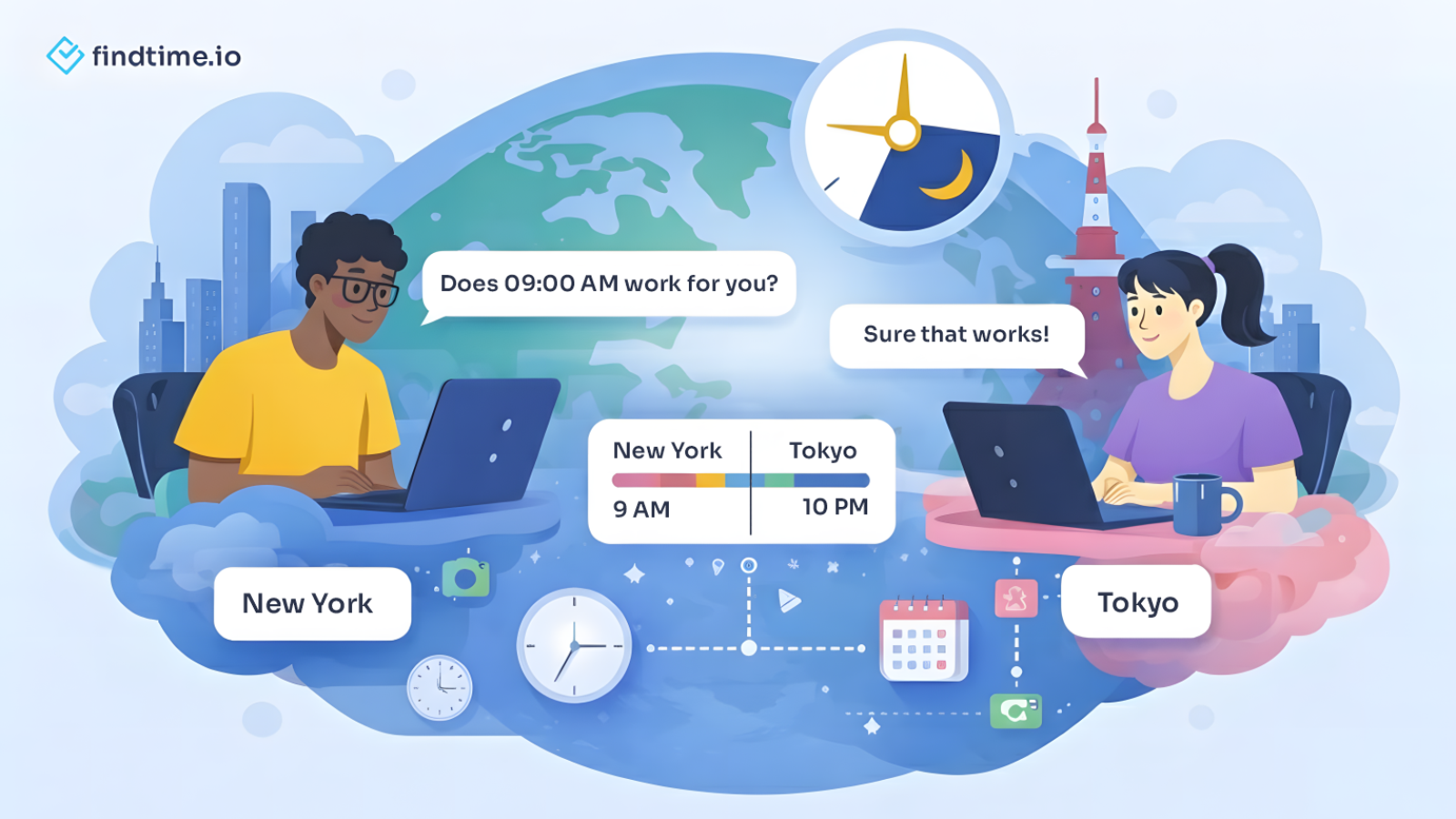
The modern workplace is no longer limited by geography. Teams collaborate across continents, freelancers work with international clients, and online communities connect people from different time zones every day. While this global connectivity creates new opportunities, it also introduces one persistent challenge: managing time across multiple locations.
Coordinating meetings, converting time zones, checking daylight saving changes, and ensuring everyone joins at the right hour can quickly become complicated. This is why timezone-focused productivity tools and integrations have become increasingly valuable for remote teams, businesses, and online communities.
Platforms like findtime.io are helping simplify these challenges by bringing time conversion and scheduling capabilities directly into the findtime.io's apps people use every day.
Why Timezone Management Is Still a Major Challenge
Despite advances in communication technology, time coordination remains one of the most common sources of confusion in global collaboration. A meeting invitation that seems straightforward for one participant may require mental calculations for several others located in different countries.
The problem becomes even more complex when daylight saving time changes occur. A meeting that worked perfectly last month may suddenly create scheduling conflicts because one region adjusted its clocks while another did not.
For distributed teams, even a small scheduling mistake can lead to missed meetings, delayed decisions, and reduced productivity. As organizations continue embracing remote and hybrid work models, the need for accurate and accessible timezone tools continues to grow.
Bringing Time Intelligence Directly Into Daily Workflows
One of the biggest improvements in recent years has been the integration of time-related tools into communication platforms rather than forcing users to switch between multiple websites and applications.
Instead of opening a separate converter, users can now perform time calculations inside the platforms where conversations already happen. This approach reduces friction and makes scheduling significantly faster.
Whether a team is discussing project deadlines in a chat channel or organizing a community event across multiple regions, embedded timezone tools help provide immediate answers without interrupting workflow.
This shift toward integrated productivity solutions has become an important trend in remote collaboration technology.
The Growing Role of Chat-Based Time Conversion
Messaging platforms have become central hubs for workplace communication. As a result, bots and integrations capable of handling timezone questions have become increasingly useful.
Users can quickly convert a specific time from one city to another, compare current times between locations, or determine the best overlap for a meeting involving several participants. Natural language processing has made these interactions even simpler, allowing users to ask questions conversationally rather than using complex commands.
This approach helps eliminate manual calculations while making scheduling more accessible for non-technical users.
How Browser Extensions Improve Productivity
Another growing category of productivity tools is browser-based time management.
People often encounter time references while reading emails, project documents, event invitations, online forums, and collaboration platforms. Instead of copying information into a separate converter, browser extensions allow users to interact with time data directly on the page they are viewing.
This creates a smoother experience and reduces context switching, which can have a meaningful impact on productivity throughout the workday.
Extensions can also help users verify meeting times, compare locations, and access scheduling information without leaving their current workflow.
Supporting Remote Teams Across Multiple Regions
Global organizations frequently need to coordinate employees located in North America, Europe, Asia, Australia, and other regions simultaneously.
Finding a meeting time that works fairly for everyone can be difficult, especially when multiple time zones are involved. Modern scheduling tools help solve this issue by identifying overlapping availability and highlighting suitable meeting windows.
Instead of relying on spreadsheets or manual calculations, teams can quickly evaluate options and select times that minimize inconvenience for participants.
As remote work continues evolving, these capabilities are becoming essential rather than optional.
The Future of Timezone Technology
The next generation of timezone applications is expected to become even more intelligent. Artificial intelligence can help recommend ideal meeting times, identify scheduling conflicts before they occur, and adapt recommendations based on user preferences.
Mobile applications, browser integrations, collaboration platform bots, and web-based tools will likely become increasingly connected, creating a seamless scheduling experience across devices.
Solutions such as findtime.io demonstrate how modern platforms are moving beyond simple time conversion to provide comprehensive scheduling and coordination support for individuals, businesses, and online communities.
As global collaboration continues expanding, these technologies will play an increasingly important role in helping people work together effectively regardless of location.
Frequently Asked Questions
Why are timezone tools important for remote teams?
Timezone tools help remote teams coordinate meetings, avoid scheduling conflicts, and ensure participants across different regions have accurate timing information.
What is the benefit of using integrated timezone apps?
Integrated apps allow users to perform time conversions and scheduling tasks directly within communication platforms, reducing workflow interruptions.
How do timezone tools help with daylight saving time changes?
They automatically account for daylight saving adjustments and provide accurate conversions without requiring users to manually calculate offset changes.
Can timezone apps improve productivity?
Yes. By eliminating manual calculations and reducing scheduling errors, timezone tools save time and help teams focus on their actual work.
How does findtime.io help users manage global schedules?
findtime.io provides tools and integrations that simplify time conversion, meeting planning, timezone comparisons, and scheduling across multiple locations and platforms.
Final Thoughts
Managing time across different regions has become a critical part of modern communication. As businesses, freelancers, and online communities continue operating on a global scale, efficient timezone management is no longer a convenience it is a necessity. Integrated solutions that provide instant conversions, scheduling assistance, and timezone intelligence help reduce confusion and improve collaboration. Platforms such as findtime.io represent the growing movement toward smarter, more accessible tools that make global coordination easier for everyone.
Catégories
Lire la suite
📍 Engineering Admissions Open in Navi Mumbai! Join one of the region's trusted engineering colleges and shape your future with industry-ready skills. 🔗 Enquire Now for Admission 2026-27: https://ternaengg.ac.in/contact/ Choosing the right engineering discipline is one of the most important decisions for students aspiring to build a successful future. Civil Engineering continues to be one of the...

Introduction As modern homes and commercial properties continue to evolve, property owners in Hyderabad are increasingly choosing smarter and more secure entrance solutions. One of the most popular upgrades today is the Automatic Sliding Gate in Hyderabad System. These advanced gate systems combine security, convenience, space efficiency, automation, and modern aesthetics, making them ideal for...

The North American cinematography cameras industry is experiencing steady expansion, driven by the region's leadership in film production, television broadcasting, digital content creation, and commercial advertising. The United States remains the largest contributor, supported by Hollywood studios, independent filmmakers, streaming platforms, and advanced production facilities. Growing...

Die Industrie steht heutzutage vor der Herausforderung, Produkte schneller, präziser und kosteneffizienter herzustellen. LaserShop hat sich in diesem Bereich als zuverlässiger Partner etabliert, der innovative Lösungen für das Schweißen und Bearbeiten von Materialien bietet. Besonders hervorzuheben sind die handgeführte laserschweißgeräte, die sowohl...

The global financial markets are facing intense volatility as geopolitical tensions escalate into a potential conflict. The rising concerns around Iran war panic market crash lockdown rumors are creating fear among investors across India and global markets. With crude oil prices surging and uncertainty around supply chains, many investors are unsure how to react. At Finowings, we break down the...