EV Charging Station Controller: The Small Logic Box Turning Parking Lots, Highways and Depots into Grid-Connected Energy Infrastructure
The electric mobility story is often told through batteries, cars, chargers and public networks, but the real operational intelligence sits inside the EV charging station controller. A 60 kW DC charger may look like a metal cabinet with cables, screens and payment hardware, but every charging session is actually a controlled transaction involving 8–12 decisions per minute: vehicle detection, connector locking, insulation monitoring, current request, voltage ramping, meter reading, payment authentication, backend communication, fault detection, thermal response, and session termination. In a four-gun public charging site, the EV charging station controller can easily coordinate more than 1,000 micro-decisions during a single high-traffic day.
The infrastructure scale explains why this component has become strategic. Global public charging stock moved from roughly 4 million public charging points in 2023 to more than 5 million in 2024, with over 1.3 million public points added in one year. Fast and ultra-fast charging capacity is growing faster than basic AC charging because fleet operators, highway users and urban taxi drivers do not buy charging access; they buy time compression. A 7 kW AC point may serve 1–2 vehicles per day in a residential or workplace setting, while a 150 kW DC point at 12% utilization can deliver 430–450 kWh daily, enough for 10–15 passenger EV top-ups. The EV charging station controller is the difference between this being a metal asset and a monetizable infrastructure node.
At site level, the controller performs the role that a station manager performs in a fuel outlet, except it does it digitally, continuously and with lower tolerance for error. In an AC charger, the EV charging station controller manages pilot signaling, relay operation, RFID or app-based user authorization, energy metering, LED or display output, and backend connectivity. In a DC charger, the same controller architecture expands into power module coordination, high-voltage communication, emergency shutdown logic, cooling triggers, payment routing, and protocol management. A 180 kW charger using six 30 kW power modules requires the controller to distribute power dynamically; if two vehicles are plugged in, the controller can split output as 90:90 kW, 120:60 kW, or 150:30 kW depending on battery state, vehicle acceptance rate and operator rules.
This is why the EV charging station controller is now an infrastructure product, not just an embedded board. A residential wallbox may use a controller costing below USD 50–90 in bill-of-material terms, but a networked public AC charger may require a USD 120–250 controller package once modem, metering interface, display interface, OCPP stack, protection interface and enclosure-grade electronics are included. For DC fast chargers, the controller subsystem can represent USD 700–3,500 depending on architecture, redundancy, connector count, power level and software certification. In a 10-charger highway hub with 8 ultra-fast DC dispensers and 2 AC chargers, the controller layer alone can represent USD 20,000–45,000 of embedded electronics and commissioning value.
The use-case map is widening. In malls and offices, the EV charging station controller is optimized for access control, tariff rules, parking integration and session visibility. In highway corridors, it is optimized for uptime, load balancing, remote diagnostics and payment speed. In bus depots, the controller becomes a fleet scheduler: 50 buses returning between 9 p.m. and midnight cannot be charged randomly; the controller must sequence energy delivery based on route departure time, battery state and feeder capacity. A depot with 40 chargers rated at 120 kW each has a theoretical connected load of 4.8 MW, but the local transformer may permit only 2.5–3.0 MW at night. The EV charging station controller makes that constraint operational by throttling, sequencing and prioritizing.
According to DataVagyanik, the global EV charging station controller market is valued at USD 1.42 billion in 2026 and is forecast to reach USD 3.87 billion by 2032, expanding at a compound annual growth rate of 18.2% between 2026 and 2032. The forecast is driven by three measurable shifts: public charging point expansion, rising DC fast-charger penetration, and the movement from stand-alone chargers to software-connected, grid-responsive charging assets. In 2026, AC charger controllers still account for higher unit volume, but DC charger controllers account for a larger value pool because a multi-output DC charging cabinet requires advanced communication, power allocation, safety logic, payment integration and remote firmware management.
The investment story is equally practical. A single public AC charger installed in a commercial parking space may cost USD 1,000–3,000 for hardware and USD 1,000–5,000 for installation depending on wiring distance and civil work. A DC fast-charging port can require USD 35,000–150,000 when power electronics, transformer upgrades, switchgear, construction, networking and commissioning are included. Inside this spend, the EV charging station controller is a small share of capital expenditure but a large share of operational reliability. A failed screen is inconvenient, a failed cable is visible, but a failed controller can make the full charger unavailable, stop payment authorization, interrupt backend communication, misread metering data or block connector release.
Manufacturers have responded by turning controller design into a platform business. Charger makers such as ABB E-mobility, Siemens, Delta Electronics, Kempower, Alpitronic, ChargePoint, Wallbox, Tritium, Star Charge, Autel, Phihong, Circontrol and several India- and China-based charger manufacturers do not compete only on kilowatt rating. They compete on controller intelligence, OCPP compatibility, firmware update stability, cybersecurity, energy-metering accuracy, uptime analytics and service diagnostics. A charger that delivers 97% uptime instead of 90% uptime gives an operator 25 extra available days per year per charging point. For a 150 kW charger earning USD 40–120 gross revenue per active day, controller-driven reliability can influence USD 1,000–3,000 annual revenue per port before accounting for customer retention.
The technical architecture is moving from simple relay logic to edge computing. A modern EV charging station controller usually includes a microcontroller or industrial processor, communication module, secure element, metering interface, CAN or PLC interface, isolation monitoring interface, display interface, contactor control, thermal inputs, digital I/O, and protocol software. In DC charging, ISO 15118 support enables vehicle-to-charger communication for Plug & Charge, while OCPP enables charger-to-network communication for remote control, diagnostics, firmware updates and smart charging. OCPP 2.0.1 is particularly important because it strengthens device management, transaction handling, security, smart charging and ISO 15118 support. That makes the EV charging station controller a translation layer between vehicle, charger, user, operator and grid.
The revenue logic becomes clear when utilization is quantified. A charger used 5% of the time is active for 1.2 hours per day; at 150 kW, that is 180 kWh of daily throughput if operated near rated power. At 15% utilization, daily active time becomes 3.6 hours and energy throughput rises to 540 kWh. The same physical charger can therefore generate 3 times more energy sales without adding a second cabinet. The EV charging station controller supports this by reducing failed sessions, enabling dynamic pricing, managing reservations, reporting availability to apps, and allowing remote resets before technicians are dispatched. In a network of 1,000 chargers, avoiding just one truck roll per charger per year at USD 100–250 per visit protects USD 100,000–250,000 in service cost.
The deeper infrastructure theme is that charging is no longer a plug-and-power service. It is a controlled energy transaction. Every connector needs identity, every kilowatt-hour needs measurement, every tariff needs logic, every fault needs traceability, and every asset needs a digital twin in the operator backend. The EV charging station controller is where those requirements converge. As EV adoption shifts from early homeowners to apartment residents, taxi fleets, delivery vans, buses, highway travelers and corporate fleets, charging infrastructure must behave like telecom infrastructure: distributed, monitored, remotely updated, cyber-secured and commercially measurable. In that shift, the EV charging station controller becomes the silent operating system of the public charging economy.
The manufacturing story behind the EV charging station controller is now moving from custom engineering to repeatable platform production. In the first wave of charger deployment, many manufacturers built controller logic around project-specific hardware, local firmware and limited backend features. That worked when networks had 50–500 chargers. It becomes inefficient when operators manage 10,000–100,000 charging points across cities, highways, depots and commercial buildings. At that scale, even a 1% failure rate translates into 100–1,000 assets needing intervention. Standardized controller platforms reduce engineering variation, simplify certification, shorten service diagnosis and improve parts availability.
The controller supply chain has 6–8 critical layers. The processor or microcontroller handles core logic. The communication module connects the charger through Ethernet, 4G, 5G, Wi-Fi or Bluetooth. The metering interface captures certified energy data. The relay or contactor interface manages power switching. The safety circuit monitors ground fault, insulation failure, overcurrent and emergency stop. The user-interface layer supports display, RFID, QR code or card payment hardware. The protocol stack connects the charger to vehicles and networks. The enclosure and thermal design protect the electronics across outdoor temperature swings from minus 25°C to above 50°C. A durable EV charging station controller is therefore an industrial control product, not consumer electronics.
Outdoor infrastructure makes reliability difficult. A charger installed at a coastal highway station faces humidity, salt exposure, voltage fluctuation, dust, insects, vandalism risk and thermal cycling. A charger in a snow region may face condensation, freezing temperatures and connector stress. A charger in a hot urban parking lot can sit inside a metal enclosure where internal temperature exceeds ambient temperature by 10–20°C. The EV charging station controller must remain stable across these conditions because one moisture-triggered fault can shut down a port during peak traffic. This is why conformal coating, surge protection, watchdog circuits, industrial-grade components and remote recovery features are becoming standard in higher-quality designs.
The economics of uptime are central to procurement. A public charger with 95% uptime is unavailable for about 18 days per year. At 98% uptime, downtime falls to about 7 days. At 99% uptime, it falls to less than 4 days. For a high-traffic DC charger generating USD 20,000–50,000 annual gross charging revenue, the difference between 95% and 99% uptime can protect USD 800–2,000 per year per charger, before including customer loss and field-service cost. This is why charger buyers increasingly evaluate the EV charging station controller through service logs, remote reset capability, firmware stability and error-code clarity, not only through hardware price.
Payment infrastructure is another area where controller sophistication matters. In many markets, public charging must support mobile apps, RFID cards, credit cards, QR codes, fleet accounts and roaming networks. A single charging session can involve three commercial confirmations before energy flows: user authentication, price acceptance and payment authorization. After the session, the controller must capture energy delivered, session duration, connector used, tariff applied, tax logic and payment status. The EV charging station controller therefore acts as a transactional gateway. In a busy urban charger handling 25 sessions per day, it may process more than 9,000 commercial events per year from one port.
The software update cycle is becoming as important as the hardware lifecycle. A charger may remain installed for 7–10 years, but payment rules, communication standards, utility tariffs, vehicle protocols and cybersecurity expectations change much faster. If the controller cannot receive secure remote firmware updates, the charger begins aging digitally after installation. A connected EV charging station controller can receive bug fixes, protocol upgrades, tariff changes, security patches and backend modifications without replacing hardware. This reduces maintenance cost and allows operators to respond to new vehicle models entering the road fleet.
In fleet charging, the controller also becomes a planning instrument. A city bus depot with 100 electric buses may need 20–40 high-power chargers instead of 100 individual chargers if scheduling is optimized. If each bus needs 180–250 kWh daily, the depot may need 18–25 MWh of electricity per day. The EV charging station controller can coordinate with depot management software to prioritize buses by next route, battery state and charger availability. This prevents a low-priority bus from occupying a high-power charger while a bus scheduled for a 5 a.m. route waits. For transit operators, the business value is measured in avoided service disruption, not only kilowatt-hours delivered.
Retail and hospitality use cases are more revenue-driven. A supermarket may install 4–8 AC chargers to increase dwell time by 20–40 minutes and improve customer retention. A hotel may install 6–20 chargers because overnight charging converts parking into a guest service. A restaurant on a highway may install 2–4 DC chargers because a 25-minute charging stop can create food and beverage sales. In these settings, the EV charging station controller links charging to customer experience: app visibility, charger availability, payment success and receipt accuracy all influence whether the user returns to that property.
The controller also determines how easily a charger participates in demand response. A utility may ask charging networks to reduce load by 20–50% during peak grid stress. Without controller-level communication, this is difficult to execute. With smart controllers, a network operator can reduce power across 1,000 chargers from 7 kW to 3.5 kW, or delay non-urgent fleet charging by 2 hours. That can remove several megawatts of load without switching chargers off completely. The EV charging station controller becomes the actuator that turns grid signals into site-level electrical behavior.
The competitive landscape is therefore splitting into two groups. The first group treats controllers as embedded hardware built into chargers, where value is captured through the final charging unit. The second group treats controller capability as a software-defined platform, where value comes from firmware, cloud integration, analytics, service tools and grid features. Charger manufacturers that control their own controller stack can optimize performance tightly, but third-party controller specialists can help smaller charger assemblers enter the market faster. This is visible in regional markets where local charger makers source boards, modules and software stacks from electronics suppliers to meet domestic content, certification and cost requirements.
The India story shows how localization can reshape controller demand. As electric two-wheelers, three-wheelers, buses and fleet cars expand, charging infrastructure is being deployed across homes, offices, petrol pumps, metro stations, malls, logistics hubs and public parking sites. A large share of early public charging was AC or moderate-power DC, but bus depots and highway corridors are creating demand for more advanced controller systems. A 240 kW DC charger used for buses or highway charging requires different controller capability than a 3.3 kW or 7.4 kW AC socket. The EV charging station controller market therefore grows not only with charger count but also with average charger complexity.
The most important theme is that controller intelligence compounds over time. A charger installed today will face new vehicles, new payment methods, new cyber rules, new tariff structures and new grid requirements within 3–5 years. The EV charging station controller is the only part of the charger designed to interpret all of these changes. Cables carry current, power modules convert electricity, enclosures protect components, but the controller decides how the charger behaves. As charging infrastructure shifts from scattered installations to dense, monitored, revenue-producing energy networks, the controller becomes the component that determines whether the asset remains commercially useful or becomes stranded hardware.
By the end of this decade, investors will judge charging infrastructure less by installed charger count and more by productive charger hours. A network with 5,000 chargers at 99% uptime and 12% utilization can outperform a network with 8,000 chargers at 90% uptime and 5% utilization. The EV charging station controller is central to that difference because it governs uptime, utilization, payment reliability, power sharing, diagnostics and energy optimization. In the EV economy, the charging cable touches the car, but the controller touches the business model.
Nach Verein filtern
Read More
https://www.xchangetickets.com/sports-tickets/rugby-tickets/rugby-world-cup-tickets/ Scotland targets Rugby World Cup 2027 success with strong squad plans, player development, and a thrilling Scotland vs Uruguay battle. https://blog.xchangetickets.com/rugby-world-cup-scotland-vs-uruguay-plan-for-peak-performance/ #RugbyWorldCupTickets, #RugbyWorldCup2027Tickets, #NewZealandVsAustraliaTickets,...

"India Produced Water Treatment Market Summary: According to the latest report published by Data Bridge Market Research, the India Produced Water Treatment Market Data Bridge Market Research analyzes that the India produced water treatment market is expected to reach the value of USD 1,131.71 million by 2030, at a CAGR of 7.2% during the forecast period. This India Produced Water...
The landscape of the Italy Automotive Logistics Market is evolving swiftly, presenting both challenges and opportunities for key stakeholders. With a projected market size expanding from USD 10.13 billion in 2024 to USD 22.48 billion by 2035, this sector is set to grow at a CAGR of 7.52%. As consumer preferences shift towards electric vehicles, logistics companies are compelled to innovate and...
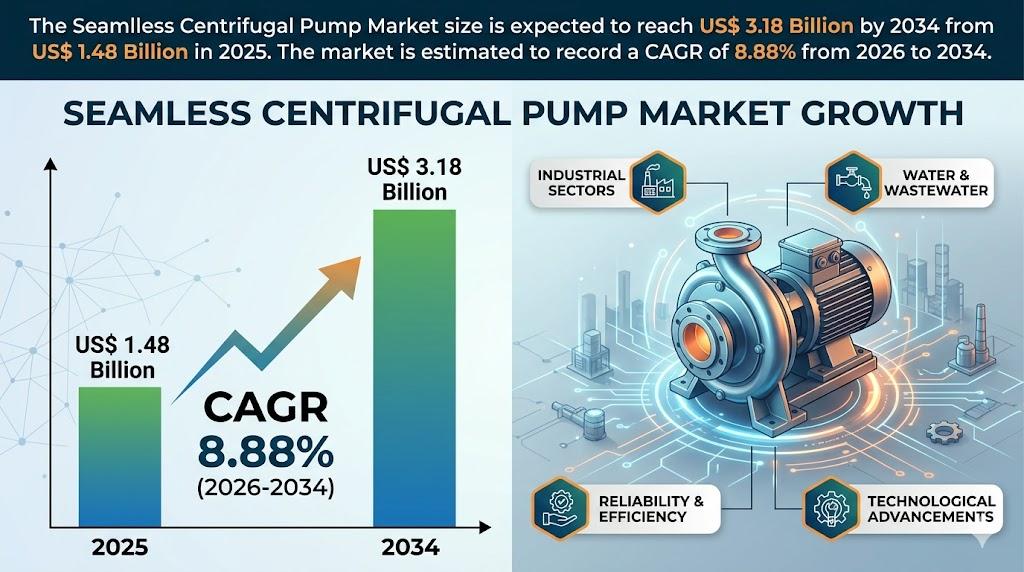
The global industrial landscape is undergoing a significant transformation as safety regulations and environmental concerns drive the adoption of more reliable fluid handling solutions. At the forefront of this shift is the seamless centrifugal pump, a critical component in modern engineering. These pumps, often referred to as sealless or mag-drive pumps, are designed to eliminate the...
Choosing a reliable Motor Wheelbarrow Manufacturer is essential when it comes to improving transport efficiency in construction, landscaping, agriculture, and other labor-intensive industries that demand both power and precision. Motor wheelbarrows have become increasingly popular in various fields due to their ability to reduce manual labor and enhance productivity. These machines are...