Slewing Gearbox as the Silent Infrastructure Behind the World’s Rotational Economy

Slewing Gearbox as the Silent Infrastructure Behind the World’s Rotational Economy
Every modern economy depends on movement. Yet some of the most valuable movements are not linear—they rotate. Cranes swing loads across construction sites, wind turbines align with changing wind directions, excavators pivot through 360 degrees, and solar trackers follow the sun across the horizon. At the center of these rotational systems sits one of industrial engineering’s least visible but most critical components: the Slewing Gearbox.
A single Slewing Gearbox rarely attracts attention during project announcements, infrastructure inaugurations, or equipment procurements. However, without a properly engineered Slewing Gearbox, rotational assets worth millions of dollars can lose positioning accuracy, operating efficiency, and service life. This makes the Slewing Gearbox not merely a transmission component but a strategic infrastructure enabler.
The scale of rotational infrastructure is enormous. More than 70% of heavy mobile construction equipment worldwide relies on some form of rotational motion. In sectors such as renewable energy, mining, ports, defense, and material handling, rotational positioning systems account for between 15% and 40% of total mechanical functionality. The Slewing Gearbox forms the torque multiplication and motion-control layer that makes these systems commercially viable.
The Infrastructure Story: Why Rotation Became a Global Economic Theme
Industrial development historically focused on speed and power. During the last two decades, however, precision has become equally important. A port crane handling 50 containers per hour gains value not merely from lifting capacity but from rotational positioning accuracy measured in millimeters.
This trend has transformed demand for the Slewing Gearbox.
A modern container terminal can deploy hundreds of rotational drives across ship-to-shore cranes, rubber-tired gantries, automated stacking cranes, and bulk handling equipment. A single large crane may require rotational systems capable of handling loads exceeding several hundred tons while maintaining positioning tolerances within fractions of a degree.
The same infrastructure trend appears in renewable energy. Utility-scale solar farms increasingly use single-axis and dual-axis tracking systems. Compared with fixed installations, tracking systems can increase annual energy capture by approximately 15%–30%. That performance improvement is possible because a Slewing Gearbox continuously adjusts panel orientation throughout the day.
The result is straightforward: every percentage point of tracking efficiency translates into additional electricity generation, making the Slewing Gearbox directly linked to energy economics rather than merely machinery performance.
Quantifying the Mechanical Value of a Slewing Gearbox
The engineering purpose of a Slewing Gearbox is deceptively simple. It converts input power into controlled rotational movement while managing enormous torque loads.
Consider a construction crane operating with a boom radius of 30 meters. Even a modest load variation can generate substantial rotational moments. Without torque multiplication, motor sizing requirements would increase dramatically, raising energy consumption and equipment costs.
A typical Slewing Gearbox can deliver gear reduction ratios ranging from approximately 20:1 to more than 15,000:1 depending on application requirements. This means motors can remain compact while producing controlled movement of extremely heavy structures.
In practical terms, this can reduce drive system energy requirements by 10%–25% compared with less optimized rotational architectures.
When multiplied across fleets containing hundreds or thousands of machines, the infrastructure savings become significant.
Mapping the Use Cases: Where the Slewing Gearbox Creates Economic Output
The most visible application of the Slewing Gearbox remains construction equipment.
Excavators account for a substantial share of global demand. Modern hydraulic excavators rely on rotational systems thousands of times per operating day. On large mining sites, excavators may perform rotational cycles every few seconds during loading operations.
Assuming 20 operating hours per day and rotational movement every 30 seconds, a machine can complete more than 2,000 rotational events daily. Over a ten-year service life, the Slewing Gearbox may support millions of operating cycles.
Beyond construction, the Slewing Gearbox has become increasingly important in renewable energy infrastructure.
Wind turbines continuously reposition nacelles to optimize wind capture. Even a 5-degree misalignment can reduce power generation efficiency. Consequently, the Slewing Gearbox becomes a revenue protection mechanism rather than simply a mechanical component.
In solar energy projects, tracker-equipped installations continue gaining market share. Industry deployment trends indicate that utility-scale projects increasingly favor tracking architectures because additional energy yield can improve project economics across the entire operating lifecycle.
Every solar tracker row contains rotational assemblies where the Slewing Gearbox serves as the core motion-control element.
The Defense and Security Dimension
Another emerging theme is strategic infrastructure resilience.
Military radar systems, surveillance platforms, missile tracking equipment, and naval observation systems all depend on controlled rotational movement. Unlike commercial machinery, these systems often require positioning accuracy under harsh environmental conditions.
In such applications, the Slewing Gearbox must withstand vibration, temperature extremes, dust intrusion, salt exposure, and shock loads.
Defense procurement increasingly emphasizes lifecycle reliability. Extending component service intervals by even 20% can reduce maintenance deployments, spare parts inventories, and operational disruptions.
This transforms the Slewing Gearbox from a mechanical subsystem into a readiness asset.
Staticker View: Market Expansion Through Infrastructure Multiplication
According to Staticker, the Slewing Gearbox market in 2026 is being shaped less by replacement demand and more by infrastructure multiplication across renewable energy, automated material handling, construction modernization, and industrial robotics. Staticker projects sustained market expansion through the forecast period as rotational automation penetrates a broader range of assets. The growth trajectory is supported by rising deployment volumes of solar trackers, smart cranes, port automation systems, mining equipment, and precision positioning platforms, with infrastructure-linked installations expected to contribute a growing share of overall Slewing Gearbox demand.
The Port Modernization Theme
Global trade continues to increase pressure on ports to improve throughput efficiency.
Large ports increasingly pursue automation programs designed to reduce vessel turnaround times. Every hour saved can generate measurable economic benefits across shipping networks.
Rotational machinery plays a central role in these modernization efforts.
Automated cranes rely on precision movement to position containers efficiently. A positioning error of even a few centimeters can interrupt operational flow. Therefore, rotational accuracy becomes a throughput metric.
The Slewing Gearbox contributes directly to this outcome by ensuring controlled rotation under varying load conditions.
In high-volume terminals handling millions of containers annually, even a 2% improvement in equipment utilization can produce substantial operational gains. Consequently, investments in higher-performance Slewing Gearbox systems increasingly align with broader logistics optimization strategies.
From Heavy Industry to Robotics
Perhaps the most interesting evolution of the Slewing Gearbox is its migration toward smaller, smarter systems.
Historically associated with cranes and excavators, the technology is now appearing in robotics, automated warehouses, satellite communication systems, and intelligent manufacturing equipment.
Industrial facilities pursuing automation often require precise rotational positioning combined with compact footprints. This requirement has encouraged development of advanced Slewing Gearbox designs incorporating higher torque density, improved backlash control, and enhanced durability.
The result is a technology that now serves both mega-infrastructure projects and precision automation environments, connecting two of the strongest industrial investment themes of the decade.
Request for customization: https://staticker.com/reports/slewing-gearbox-market/
Categorías
Read More
Data Bridge Market Research analyses that the blow-fill-seal equipment market was valued at USD 9133.64 million in 2022 and is expected to reach USD 15344.73 million by 2030, registering a CAGR of 6.70% during the forecast period of 2023 to 2030. The global business landscape is undergoing a transformation, with industries increasingly leaning on deep research and actionable insights to make...

В ближайшие дни ожидается первое крупное обновление для PlayerUnknown's Battlegrounds, которое принесет ряд важных нововведений. Среди них — внедрение нового вида транспорта в виде мотоцикла с коляской, а также появление нового оружия для игроков. Кроме того, разработчики подготовили тестовый сервер, запуск которого запланирован на среду, 19 апреля. Это позволит предварительно...
" According to the latest report published by Data Bridge Market Research, the Plant Based Creamers Market Data Bridge Market Research analyses that the plant based creamers market was valued at 3.73 billion in 2021 is expected to reach the value of USD 5.18 billion by 2029, at aw CAGR of 4.20% during the forecast period.Credible Plant Based Creamers Market business report...
Join the top online casino Malaysia at Iwin88 and claim exclusive bonuses. Enjoy slots, live dealers, secure payments, and fast payouts. Sign up now to win real money! The online gaming industry in Malaysia has grown rapidly over the past few years, with more players seeking safe, rewarding, and mobile-friendly platforms. As competition increases, choosing the Top Online Casino Malaysia is no...

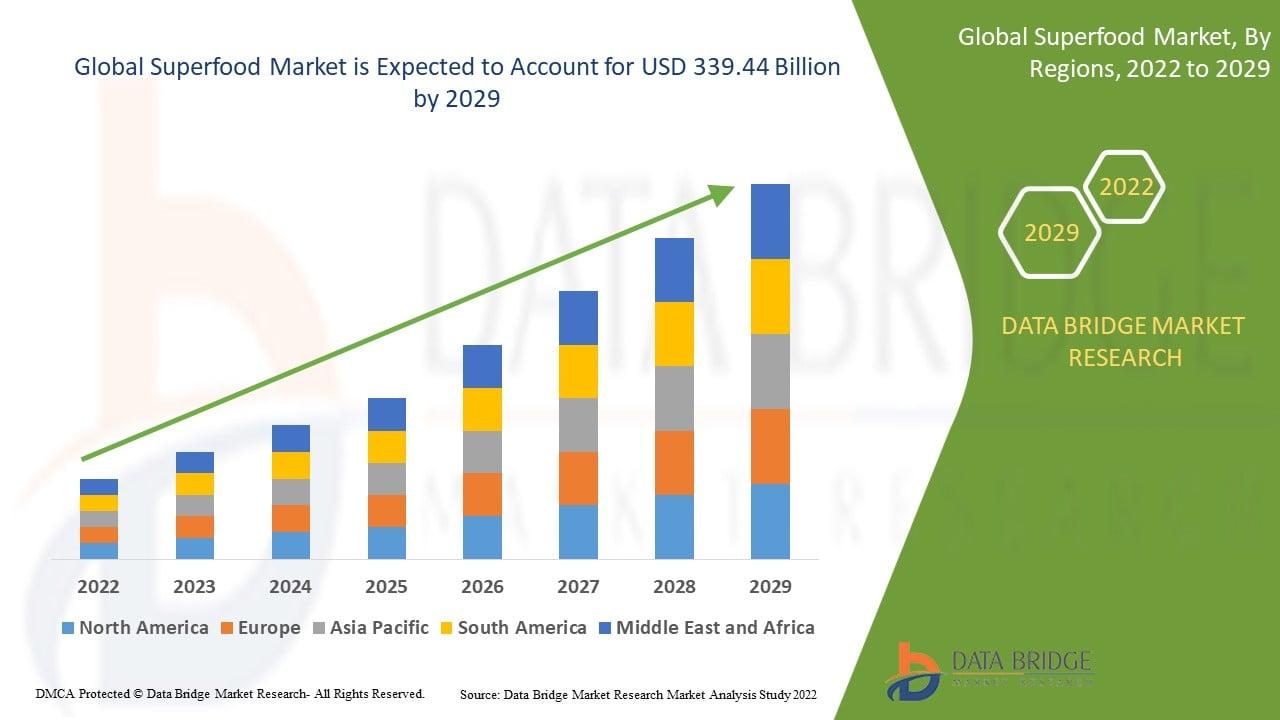
Superfood Market: According to the latest report published by Data Bridge Market Research, the Superfood Market Data Bridge Market Research analyses that the superfood market was valued at USD 152.71 billion in 2021 and is expected to reach the value of USD 339.44 billion by 2029, at a CAGR of 10.50% during the forecast period. SWOT analysis and Porter’s Five Forces analysis are...