Revenue Marketing Strategy and Benefits Guide

Revenue Marketing: Definition, Strategy, and Key Benefits
Revenue Marketing has become a critical approach for businesses seeking measurable growth. Unlike traditional marketing, it focuses directly on revenue generation. It aligns marketing activities with sales objectives to create stronger business outcomes.
Companies now expect marketing teams to contribute to pipeline growth and revenue performance. As a result, revenue-focused strategies continue gaining importance across industries.
What Is Revenue Marketing?
Revenue marketing is a strategy that connects marketing efforts with revenue objectives. It measures success through revenue contribution rather than awareness metrics.
This approach helps organizations understand how marketing activities influence sales outcomes. Teams track customer interactions across the buying journey and optimize campaigns accordingly.
Revenue marketing encourages collaboration between sales and marketing departments. Both teams work toward common business goals and revenue targets.
Why Revenue Marketing Matters
Modern buyers interact with brands through multiple channels before making decisions. Businesses need a clear understanding of these interactions.
Revenue marketing provides visibility into every stage of the customer journey. It helps companies identify which campaigns generate qualified leads and conversions.
Organizations that adopt revenue-focused strategies often experience:
-
Better sales and marketing alignment
-
Improved lead quality
-
Increased conversion rates
-
Higher return on investment
-
More predictable revenue growth
How Revenue Marketing Works
Revenue marketing combines data, technology, and strategic planning. Teams analyze customer behavior and engagement across different channels.
The process generally includes:
Data Collection and Analysis
Organizations gather data from websites, emails, social media, events, and sales interactions.
This information reveals customer interests and buying intent. Teams use these insights to improve campaign performance.
Lead Management
Marketing teams attract and nurture prospects through targeted content and engagement programs.
Qualified leads move through the funnel based on their level of interest and readiness to buy.
Sales and Marketing Alignment
Successful revenue programs require strong collaboration between departments.
Marketing and sales teams share goals, metrics, and performance expectations. This alignment improves efficiency and revenue outcomes.
Performance Measurement
Revenue marketers track metrics connected directly to business growth.
Common measurements include:
-
Pipeline contribution
-
Customer acquisition cost
-
Conversion rates
-
Revenue attribution
-
Customer lifetime value
Building an Effective Revenue Marketing Strategy
Organizations need a structured approach to maximize results.
Define Revenue Goals
Start with clear business objectives. Revenue targets should guide all marketing activities.
Teams should establish measurable goals that support company growth plans.
Understand the Customer Journey
Businesses must identify every touchpoint customer's experience before purchasing.
Understanding the journey helps marketers create relevant content and personalized experiences.
Use Data-Driven Decision Making
Data should guide campaign planning and optimization.
Regular analysis helps teams identify successful tactics and eliminate ineffective activities.
Invest in Marketing Technology
Modern revenue marketing depends on technology platforms.
Automation, analytics, and customer relationship management tools improve efficiency and visibility.
Align Teams Around Shared Metrics
Sales and marketing teams should track common performance indicators.
Shared accountability encourages collaboration and improves business outcomes.
Benefits of Revenue Marketing
Revenue-focused strategies offer advantages beyond lead generation.
Increased Revenue Growth
Organizations can identify the activities that generate the greatest financial impact.
This focus helps maximize marketing investments and accelerate growth.
Improved Marketing ROI
Teams gain a better understanding of campaign effectiveness.
Resources can be allocated toward initiatives that produce measurable returns.
Better Customer Experiences
Revenue marketing relies on customer insights and personalization.
Relevant messaging creates stronger engagement throughout the buying process.
Stronger Sales and Marketing Collaboration
Shared objectives reduce departmental silos.
Teams work together to improve lead quality and conversion performance.
Greater Forecasting Accuracy
Revenue data provides better visibility into future opportunities.
Organizations can make more informed business decisions.
Common Revenue Marketing Challenges
Many organizations face obstacles when implementing revenue-focused programs.
Data Silos
Information often exists across multiple systems.
Disconnected data can limit visibility and reduce effectiveness.
Attribution Complexity
Customers engage through several channels before purchasing.
Determining which touchpoints influence revenue can be challenging.
Organizational Alignment
Sales and account based marketing teams may operate with different priorities.
Strong leadership and communication help overcome these barriers.
The Future of Revenue Marketing
Businesses continue shifting toward measurable performance strategies.
Advanced analytics, automation, and artificial intelligence are improving revenue visibility.
Organizations increasingly expect marketing teams to demonstrate direct business impact.
As competition grows, companies that embrace Revenue Marketing will gain stronger insights and better outcomes. Furthermore, Marketing ROI will remain a key factor in evaluating long-term success.
Conclusion
Revenue marketing connects marketing activities directly to business growth. It focuses on measurable outcomes rather than vanity metrics.
By aligning sales and marketing teams, organizations can improve efficiency, increase conversions, and drive sustainable revenue growth. Companies that adopt this approach position themselves for stronger performance in a competitive marketplace.
Catégories
Lire la suite
Polaris Market Research has published a brand-new report titled Power Electronic Testing Market Size, Share, Industry Analysis Report By Provision Type (Test Instruments and Equipment, Professional Testing Services), By Device Type, By End Use, By Region – Market Forecast, 2025–2034 that includes extensive information and analysis of the industry dynamics. The...

"Future of Executive Summary Office-Based Labs Market: Size and Share Dynamics CAGR Value The global Office-Based Labs market size was valued at USD 55.16 billion in 2025 and is expected to reach USD 114.00 billion by 2033, at a CAGR of9.50% during the forecast period This Office-Based Labs Market research report serves the determination of businesses to...
"Nitric Acid Market Summary: According to the latest report published by Data Bridge Market Research, the Nitric Acid Market Global nitric acid market size was valued at USD 29.69 billion in 2024 and is projected to reach USD 52.57 billion by 2032, with a CAGR of 7.40% during the forecast period of 2025 to 2032. Getting thoughtful about competitive landscape is another significant...
Any business wants customers to locate it on the Internet. It is also true for a small family store as well as a thriving organization. A website is often the initial point of contact. It brings visitors with an impression of the firm. For that reason web design Adelaide services are required by many local companies. Adelaide business owners love working with websites that give people a fun...
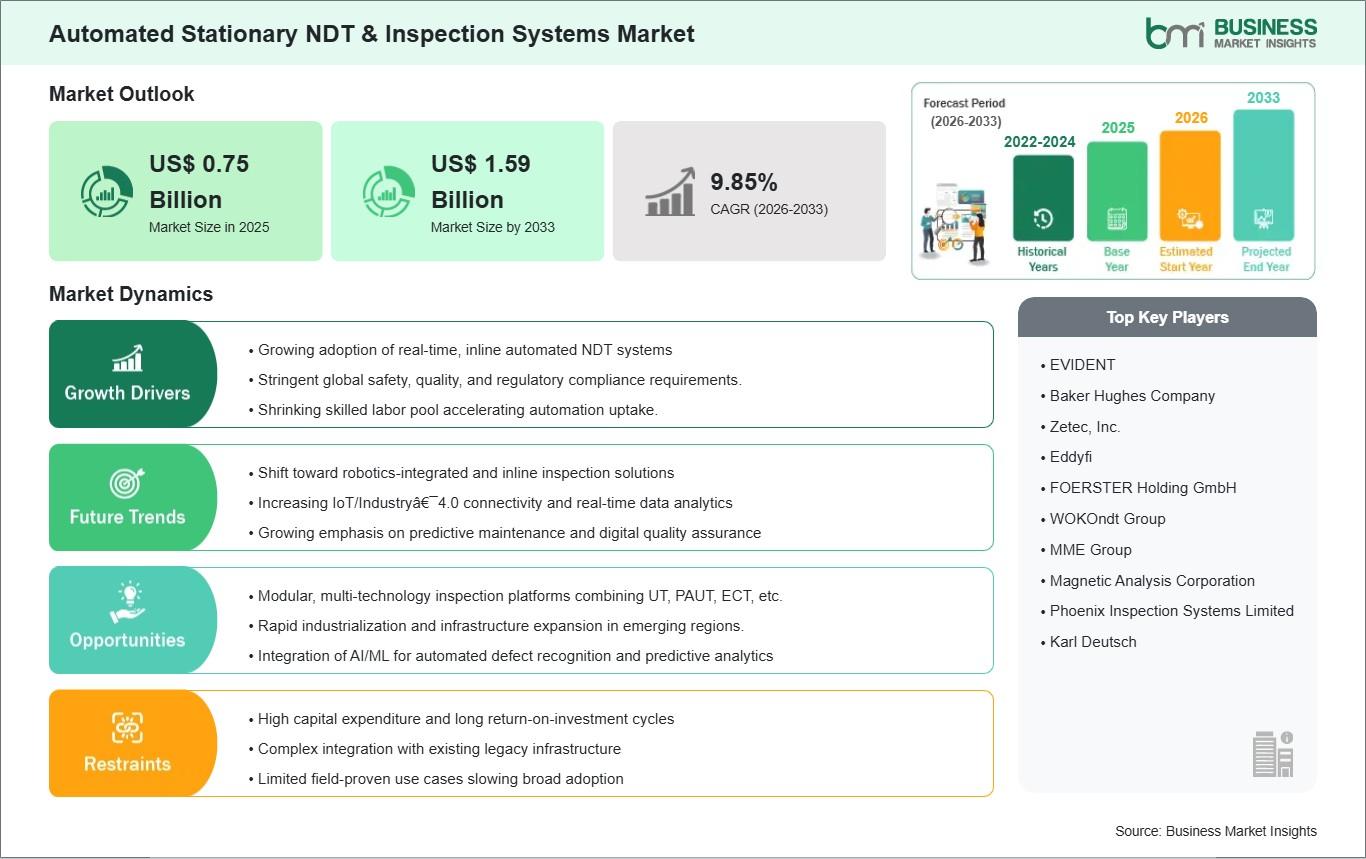
The Automated Stationary NDT and Inspection Systems Industry is undergoing a rapid technological evolution globally, driven by the escalating demand for flawless quality control, stringent safety regulations in critical infrastructure, and the continuous push toward fully automated, high-throughput manufacturing. As sectors such as aerospace, automotive, and heavy metals scale up production...