


SEO Digital Marketing: Complete Strategy Guide for 2026| Marketing Bugs

SEO Digital Marketing: The Complete Strategy for Sustainable Online Growth
SEO and digital marketing are not separate disciplines — they are inseparable. The most successful digital marketing strategies are built on an SEO foundation. Without search visibility, your content goes unread, your brand goes undiscovered, and your competitors capture the customers you should be winning. This guide explains how SEO and digital marketing work together as a unified growth system.
What Is SEO Digital Marketing?
SEO digital marketing is the strategic integration of search engine optimization into the broader digital marketing mix. Rather than treating SEO as a standalone technical exercise, SEO digital marketing treats organic search as a primary traffic and lead generation channel — one that informs and amplifies every other digital marketing activity.
A business practicing SEO digital marketing doesn't just optimize individual web pages. It builds content clusters that dominate entire topic areas, earns backlinks through digital PR and outreach, aligns its social media and email content with the same keywords its target audience searches for, and tracks how organic search contributes to revenue — not just rankings.
Why SEO Must Be at the Center of Your Digital Strategy
Search intent is the clearest signal of buyer motivation available to marketers. When someone types 'best accounting software for small business in India' into Google, they have already identified their problem and are actively looking for a solution. No other marketing channel captures buyers at this stage of the decision process as precisely as search.
Compare this to social media or display advertising, where you're interrupting users who may or may not be interested in what you offer. SEO delivers you to users who are already looking for you — you just need to ensure they find your business rather than your competitor's.
This intent-matching quality makes SEO the highest-converting traffic source for most B2B and B2C businesses. Organic search traffic consistently converts at 2–5x the rate of social media traffic across most industries.
The SEO-Content Marketing Connection
Content marketing and SEO are symbiotic. Content marketing without SEO produces content that no one finds. SEO without content marketing leaves search engines with nothing worth ranking. Together, they form the most powerful organic growth engine in digital marketing.
An SEO-driven content strategy works as follows:
1. Identify high-value keywords your target audience is searching for
2. Map keywords to specific content types based on search intent
3. Create comprehensive, expert-level content that matches that intent
4. Optimize on-page elements (titles, headings, meta descriptions, internal links)
5. Promote the content to earn backlinks and social sharing
6. Track rankings, traffic, and conversions — then improve
This loop compounds over time. Each piece of content that earns strong rankings becomes a permanent traffic asset. A library of 50–100 well-ranked pages can generate thousands of organic visitors per month on autopilot.
Keyword Research: The Foundation of SEO Digital Marketing
Effective SEO digital marketing starts with understanding exactly what your potential customers are searching for. Keyword research is the process of discovering these queries, assessing their search volume and competition, and prioritizing which ones to target.
Short-head keywords (1–2 words, e.g., 'digital marketing') have enormous search volume but brutal competition. These are appropriate targets once you've built significant domain authority — not for new or small websites.
Long-tail keywords (3–5+ words, e.g., 'digital marketing agency for startups in Bangalore') have lower individual search volume but much lower competition, higher specificity, and — critically — much higher conversion intent. Long-tail keywords should be the primary focus for most growing businesses.
Question keywords ('how to', 'what is', 'why does') represent informational intent. Answering these questions with high-quality content builds topical authority, earns featured snippets, and feeds the top of your marketing funnel.
Tools like Ahrefs, Semrush, Google Keyword Planner, and Google Search Console provide keyword data. But the most valuable keyword insights often come from listening to your customers: what language do they use when describing their problems? What questions do they ask your sales team? These real-world signals reveal keyword opportunities that no tool will surface directly.
Technical SEO: The Infrastructure Beneath Your Digital Marketing
Technical SEO ensures that the infrastructure of your website supports — rather than undermines — your digital marketing efforts. The best content strategy in the world produces zero results if search engines can't crawl your pages, your site loads slowly, or your mobile experience is broken.
Key technical SEO elements that every digital marketer should understand include:
• Site speed and Core Web Vitals (Google's measure of page experience)
• Mobile-first indexing (Google primarily uses the mobile version of your site for ranking)
• HTTPS security (a confirmed ranking signal and trust prerequisite)
• XML sitemaps (guides search engines to your most important pages)
• Structured data / Schema markup (helps search engines understand your content)
• Canonical tags (prevents duplicate content from diluting your authority)
• Crawl accessibility (no critical pages blocked by robots.txt or noindex tags)
For most small to medium websites, technical SEO issues can be identified and resolved through tools like Google Search Console (free), Screaming Frog, or a comprehensive SEO audit. Resolving critical technical issues often produces ranking improvements faster than any content work.
Link Building as a Digital PR Discipline
Backlinks — links from other websites pointing to yours — remain one of the strongest ranking signals in Google's algorithm. Earning high-quality backlinks requires treating link building as a digital PR discipline rather than a technical task.
The most sustainable link building approaches include:
• Creating original research, data studies, or industry reports that journalists and bloggers reference
• Publishing genuinely useful tools, calculators, or templates that others link to as resources
• Earning media coverage through newsworthy business stories, case studies, or expert commentary
• Guest posting on respected industry publications (with a focus on adding value, not just link placement)
• Building relationships with complementary businesses for natural cross-linking
Shortcuts — buying links, participating in link schemes, building private blog networks — remain common but carry significant risk. Google's SpamBrain and manual review teams actively target manipulative link patterns. A penalty resulting from black-hat link building can cost more in recovery effort than building links legitimately would have taken in the first place.
Measuring SEO Digital Marketing ROI
One of the most common failures in SEO digital marketing is measurement. Many businesses track rankings and traffic but fail to connect organic search to actual business outcomes. Here's how to measure SEO's contribution to revenue:
Attribution setup: Configure Google Analytics 4 to properly attribute conversions by channel. Ensure your contact forms, phone tracking, e-commerce transactions, and lead magnet downloads all trigger conversion events.
Organic conversion tracking: Segment your conversion data by traffic source. What percentage of your leads, signups, or sales originate from organic search? How does the conversion rate of organic traffic compare to paid and social?
Revenue per keyword: Advanced practitioners track which keywords drive not just traffic but qualified leads and revenue. This allows you to prioritize content investment where it generates the most business value.
Share of voice: Track your organic visibility against competitors for your target keyword set. Growing share of voice is a leading indicator of future traffic and revenue growth.
GEO — Optimizing for AI-Powered Search
The rise of AI-powered search features — Google's AI Overviews, Perplexity, ChatGPT Search — is creating a new optimization discipline called Generative Engine Optimization (GEO). When a user asks an AI search tool a question, the AI generates a response and cites sources. Being cited as a source in these AI-generated answers is the new 'position zero' — and it requires specific content strategies.
GEO-optimized content is structured for clarity: clear definitions, direct answers to common questions, well-organized lists and tables, and authoritative statements that AI systems can extract and attribute. The same content quality that earns Google's trust also earns AI citation — E-E-A-T is as relevant for GEO as it is for traditional SEO.
Frequently Asked Questions About SEO Digital Marketing
Is SEO part of digital marketing?
Yes. SEO is one of the most important components of digital marketing. It refers specifically to the practice of optimizing a website to rank in organic search results, while digital marketing is the broader discipline that includes SEO, paid advertising, social media, email marketing, content marketing, and more.
How does SEO help digital marketing?
SEO provides organic, compounding traffic to a digital marketing program. It improves the visibility of all other content marketing assets — blog posts, landing pages, case studies, product pages — by ensuring they appear in search results when potential customers are actively looking. SEO also reduces long-term dependence on paid advertising by building an owned traffic channel.
What is the best SEO strategy for 2025?
The highest-ROI SEO strategy in 2025 focuses on: creating comprehensive, experience-backed content that genuinely helps users; building topical authority through content clusters rather than isolated pages; earning high-quality backlinks through digital PR; maintaining excellent technical foundations (especially Core Web Vitals and mobile usability); and structuring content for both traditional search and AI-powered search (GEO).
Marketing Bugs (marketingbugs.in) — Digital Marketing & SEO specialists helping businesses achieve sustainable organic growth.F
Categorie
Leggi tutto
The Telestroke Services Market is experiencing robust growth, driven by rising stroke prevalence, expanding telemedicine adoption, and ongoing technological advancements.The Telestroke services have become an essential component of modern healthcare systems, especially in remote and underserved areas where access to neurologists is limited. These services enable healthcare providers to diagnose...

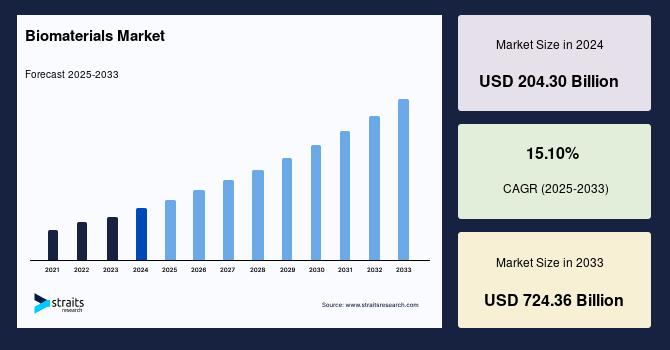
Biomaterials Industry Insights: Straits Research recently introduced the latest update on the Biomaterials Market that provides an extensive outlook of the market, analyzing key growth opportunities, challenges, risk factors, and emerging trends across diverse geographic regions. The report offers a definitive and meticulous analysis of the Biomaterials industry size, share,...
According to the latest report published by Data Bridge Market Research, the Human Machine Interface (HMI) Market CAGR Value The global Human Machine Interface (HMI) market size was valued at USD 5.48 billion in 2024 and is expected to reach USD 10.24 billion by 2032, at a CAGR of 8.12% during the forecast period A number of aspects that...

Industrial development continues to create demand for durable and application-specific metal products, and Steel Pipe Fabrication has become an essential manufacturing process supporting industries such as construction, transportation, machinery, agricultural equipment, energy systems, and commercial facilities. Producing dependable pipe components requires much more than shaping metal....

In today’s fast-paced digital world, users are constantly searching for platforms that offer reliability, performance, and a smooth experience. With increasing online activity, the demand for secure and efficient systems has grown significantly. People now expect more than just basic functionality; they want platforms that are intuitive, responsive, and capable of meeting their evolving...
