


The Steel Plant Engineer's Guide to Pulse Jet Bag Filters: What Most Suppliers Won't Tell You

Key Takeaways
-
Application characterisation, specifically knowing the actual gas temperature, moisture content, chemical composition, particle size distribution, and inlet dust concentration at each collection point, must precede any equipment specification. Suppliers who skip this step cannot produce a reliable design.
-
Gas-to-cloth ratio must be calculated for each specific application. It is not a standard number from a table. An incorrectly sized ratio is the most common root cause of pulse jet system underperformance.
-
PTFE membrane filter media delivers substantially better filtration efficiency and longer bag life than woven fibreglass in most steel plant applications. The economics favour it in almost every case when total cost of ownership is calculated correctly.
-
Differential pressure-controlled cleaning sequences significantly reduce compressed air consumption and extend valve and bag life compared to fixed-timer systems. This is a specification decision, not a standard feature.
-
India's regulatory trajectory is consistently toward tighter particulate emission limits. Systems designed with meaningful performance margin below current thresholds provide protection against foreseeable regulatory changes.
-
Long-term system performance depends heavily on bag accessibility design, local spare parts availability, and installed monitoring capability. These should be evaluated as core requirements, not optional extras, before a purchase decision is made.
Ask any senior engineer at an Indian steel plant what keeps them up at night, and the answers cluster around a familiar set of concerns. Production targets. Equipment reliability. Input costs. Regulatory scrutiny. Rarely does dust collection make the list, and that is exactly the problem.
Dust collection infrastructure in steel plants tends to occupy a strange middle ground in operational thinking. It is too important to ignore completely, but not urgent enough to get serious engineering attention until something goes wrong. The result is a sector where a large proportion of installed pulse jet bag filter systems are operating below their design capacity, consuming more compressed air than they should, cycling through filter bags faster than expected, and delivering outlet emission concentrations that are closer to the regulatory limit than the plant's management realises.
This guide is written for the engineers and operations managers who want to change that. Not through a procurement checklist or a product catalogue, but through a clearer understanding of what actually drives performance in a pulse jet bag filter system, where that performance breaks down, and what asking the right questions of a supplier looks like in practice.
Start With the Dust, Not the Equipment
The most common mistake in steel plant filtration procurement is starting the conversation with equipment specifications. Flow rate, housing dimensions, number of bags, compressed air consumption figures. These matter, but they are outputs of a design process that should begin somewhere else entirely: with a rigorous characterisation of the dust itself.
Steel plant dust is not a uniform material. It is a collection of different particle populations with different physical and chemical properties depending on where in the production process they originate.
Blast furnace dust contains a high proportion of carbon and iron oxide particles, is generated at high temperatures, and carries significant moisture in the gas stream due to the blast air humidification process. Sinter plant dust is coarser, more abrasive, and generated in very high volumes. Electric arc furnace fume is fine, with a significant proportion of sub-micron particles that require genuinely efficient filtration to capture. Rolling mill scale and oxide dust is relatively coarse but highly abrasive. Material handling dust from conveyor transfer points varies widely depending on what is being conveyed.
Each of these profiles drives different design requirements. A system optimised for blast furnace duty is not appropriate for electric arc furnace fume collection. A media selection that works well in a dry sinter plant application will fail prematurely in a moisture-laden blast furnace application. A compressed air system designed for the dust load at one point in the plant will over or under-specify the cleaning requirements at another.
Before any equipment discussion begins, the engineer responsible for a filtration project should be able to answer: what is the actual gas temperature at this collection point? What is the moisture content and dew point? What is the chemical composition of the gas stream? What is the particle size distribution of the dust? What is the inlet dust concentration under normal operating conditions and under upset conditions?
A supplier who does not ask these questions before presenting a specification is not doing proper application engineering. That is the first test worth applying for.
Understanding What Actually Controls Performance
Once the application has been properly characterised, the engineering decisions that determine system performance can be made on a rational basis. There are four that matter most.
Gas-to-cloth ratio is the ratio of the actual gas volume being filtered to the total area of filter fabric in the system. It is typically expressed in metres per minute and is the foundational sizing parameter for any pulse jet system. Getting it right for the specific dust and gas conditions at each collection point determines whether the system will maintain stable differential pressure, clean effectively, and deliver consistent outlet concentrations over the service life of the bags.
A ratio that is too high means the bags are being asked to filter more air per unit area than the cleaning system can handle. Differential pressure rises progressively. Cleaning pulses cannot restore bag permeability fast enough between cycles. Outlet concentration drifts upward as bag condition deteriorates. Bag life is shortened.
A ratio that is too low means the system is oversized, with higher capital cost and larger physical footprint than the application requires. This is a lesser problem than being too high, but it is still a specification failure.
The correct ratio for a given application is not a single number from a table. It depends on the dust load, the particle characteristics, the operating temperature, and the type of filter media being used. It requires calculation, not assumption.
Filter media selection is the decision with the longest-lasting consequences because it determines bag service life, cleaning energy requirements, and filtration efficiency simultaneously. The options relevant to steel plant applications fall into a few main categories.
Woven fibreglass is the conventional choice for high-temperature, dry applications. It handles continuous gas temperatures up to approximately 260 degrees Celsius and performs reliably in those conditions. Its weaknesses are brittleness under mechanical stress, poor performance in wet or condensing gas streams, and relatively modest filtration efficiency for very fine particles.
PTFE membrane laminates bonded to a fibreglass or polyester substrate represent a significant step forward in performance. The PTFE layer provides a smooth surface from which dust releases cleanly during pulse cleaning, reducing the energy required to restore bag permeability and extending bag life. Filtration efficiency improves substantially, with outlet concentrations routinely below 5 mg per normal cubic metre achievable. For applications where bag replacement is expensive due to system access or where downtime for bag changes is operationally disruptive, the economics of PTFE membrane media almost always favour the higher initial cost.
Meta-aramid and polyphenylene sulphide fabrics are used where the gas stream contains chemically aggressive components alongside elevated temperatures. Electric arc furnace applications frequently require this level of chemical resistance. Specifying woven fibreglass in those conditions is a recurring cause of premature bag failure that gets attributed to the supplier rather than to the specification.
Compressed air system design is the component most frequently underengineered in installed pulse jet systems in India. The cleaning pulse delivered to each row of bags needs to be sharp, of correct pressure, and timed correctly relative to the differential pressure across the bags. When any of these parameters drift, cleaning effectiveness degrades.
The most common failure modes are undersized compressed air headers that cannot sustain supply pressure when multiple pulse valves fire in sequence, diaphragm valve wear that softens the pulse profile over time, and fixed-timer cleaning controllers that fire pulses on a schedule regardless of actual differential pressure conditions.
A properly designed compressed air system uses differential pressure-controlled sequencing, meaning pulses fire when and where they are needed rather than on a fixed cycle. This approach reduces compressed air consumption, extends diaphragm valve life, and maintains more consistent bag condition across the filter array. The difference in compressed air consumption between a fixed-timer system and a differential pressure-controlled system on the same application can be substantial over an annual operating period.
Structural design of the housing matters in steel plant applications because these systems operate continuously in demanding conditions. Thermal cycling, vibration from nearby heavy equipment, and the mechanical forces from repeated pulse cleaning all place demands on the housing structure. Inadequately designed housings develop leaks at seam welds and door seals. Tubesheet deflection under differential pressure allows bags to contact each other, causing premature wear. Hopper geometry that does not promote reliable dust flow causes buildup that eventually bridges and disrupts the dust disposal system.
These are not minor details. They are the difference between a system that runs reliably for a decade and one that requires constant intervention.
The CPCB Reality and What Is Actually Achievable
India's Central Pollution Control Board currently sets particulate emission limits for steel plant stack applications at levels that vary by process type but commonly sit around 50 mg per normal cubic metre for general industrial applications. Specific processes and locations may face tighter requirements.
What is less commonly understood is how wide the gap is between this regulatory threshold and what a well-engineered modern pulse jet bag filter system actually delivers. Systems using PTFE membrane filter media with properly designed compressed air systems routinely achieve outlet concentrations of 5 to 10 mg per normal cubic metre in steel plant service. That is five to ten times better than the current regulatory requirement.
This gap matters for two reasons. First, regulatory thresholds in India have been moving consistently downward over the past decade, and the direction is not changing. Plants operating with minimal margin above the current limit face real regulatory exposure as norms tighten. Plants already operating well below the limit are insulated from that risk for the foreseeable future.
Second, Indian steel producers with export exposure are increasingly being evaluated against international environmental benchmarks rather than domestic ones. European buyers, in particular, are applying environmental supply chain criteria that look at actual emission performance data rather than just certification documents. The EU Carbon Border Adjustment Mechanism adds a direct financial dimension to this pressure for exporters.
A filtration system specified to meet today's Indian regulatory minimum is not necessarily adequate for the commercial environment that Indian steel exporters are navigating right now.
The Maintenance Reality Nobody Discusses at the Specification Stage
Pulse jet bag filter systems are specified, sold, and installed based on design performance. The conversation about what happens after commissioning is often much shorter than it should be.
In practice, the performance of a pulse jet system in its third, fifth, and eighth year of operation depends heavily on decisions made before the purchase order was placed.
Bag accessibility determines how long a bag change actually takes in service. Systems where bag access requires scaffolding, confined space entry, or extended production shutdowns accumulate deferred maintenance because the operational cost of bag changes is prohibitive. Designs that allow row-by-row bag replacement with the system operating at reduced capacity are significantly better in practice.
Spare parts availability is a real operational risk for plants using imported proprietary components. Pulse valve diaphragms and controllers are wear items that need to be replaced on a regular cycle. A system that requires four to six weeks lead time on those components is a liability. Suppliers who manufacture and stock critical spare parts locally provide meaningfully better operational security.
Monitoring capability determines how quickly problems are identified before they become serious. Modern pulse jet installations should include differential pressure monitoring across the filter array, compressed air pressure monitoring at the manifold, and ideally continuous outlet opacity or particulate monitoring. Without this instrumentation, degradation in system performance goes undetected until it has already caused significant bag wear or emission exceedances.
Organisations like Techflow, which design and manufacture pulse jet bag filter systems specifically for heavy industrial applications including steel, build these operational considerations into the system design from the outset rather than treating them as optional features. That distinction between what is sold as standard and what requires an upgrade conversation later is worth clarifying before a purchase decision is made.
Questions Worth Asking Before You Sign a Purchase Order
The supplier evaluation process for industrial filtration equipment in India tends to focus heavily on price and delivery timeline. Both matter, but neither tells you much about whether the system will actually perform as specified in service.
The following questions shift the conversation to where it should be:
What gas stream characterisation data did you use to establish the gas-to-cloth ratio for this application, and can you show the calculation?
What is the basis for your filter media recommendation, and what failure mode does that media selection protect against in this specific application?
What differential pressure range is this system designed to operate within, and how does the cleaning sequence controller maintain operation within that range?
What is your documented bag life expectation for this application, and what warranty or performance guarantee reflects that expectation?
What is the lead time on replacement diaphragm valves and filter bags, and do you stock these items locally?
What monitoring and instrumentation is included as standard, and what does the system alert on?
Can you provide references from comparable steel plant installations where we can speak with the operations team about long-term performance?
A supplier with the engineering depth to answer these questions specifically and with documented evidence is demonstrating something important. A supplier who deflects to catalogue specifications and general claims about quality is demonstrating something equally important.
Conclusion
Pulse jet bag filtration is not a complicated technology in principle. In practice, making it perform reliably over a decade of continuous operation in a steel plant environment requires engineering rigour at every level of the design, from gas stream characterisation and media selection through to compressed air system sizing and structural design.
The plants that have gotten this right are not paying dramatically more for their filtration infrastructure than those that have not. They are specifying differently, asking better questions, and evaluating suppliers on engineering capability rather than price alone. The performance difference in service is significant, and the operational cost difference over the life of the installation is still larger.
The dust problem in Indian steel is not going to reduce itself, and the regulatory and commercial pressure to manage it properly is only going in one direction. The question is whether that pressure drives better engineering decisions or just more of the same procurement approach that produced the current landscape of underperforming installed systems. That choice is made before the purchase order is signed.
Kategoriler
Read More
Exhibitions remain one of the most expensive line items in the B2B marketing budget. Booth space, fabrication, logistics, staffing, travel, and sponsorships quickly add up. Yet when leadership asks a simple question—“How much revenue did this exhibition generate?”—the answer is often unclear, delayed, or incomplete. This gap exists not because exhibitions fail to deliver...
The Global Personal Care Specialty Ingredients Market Report presents an in-depth analysis, merging qualitative and quantitative insights to provide a holistic understanding of the market's dynamics. The report evaluates growth drivers, challenges, and constraints while forecasting revenue trends across key segments. It offers both historical and projected data, giving stakeholders a clear view...

Due to its factory installation in some of the most recognizable muscle vehicles, such as the Ford Mustang Cobra, Chevrolet Camaro, and Dodge Viper, the Tremec T56 transmission is adored by auto aficionados. It is one of the most sought-after transmissions in the aftermarket industry due to its reputation for heavy-duty performance and seamless gear engagement. The pleasure of...
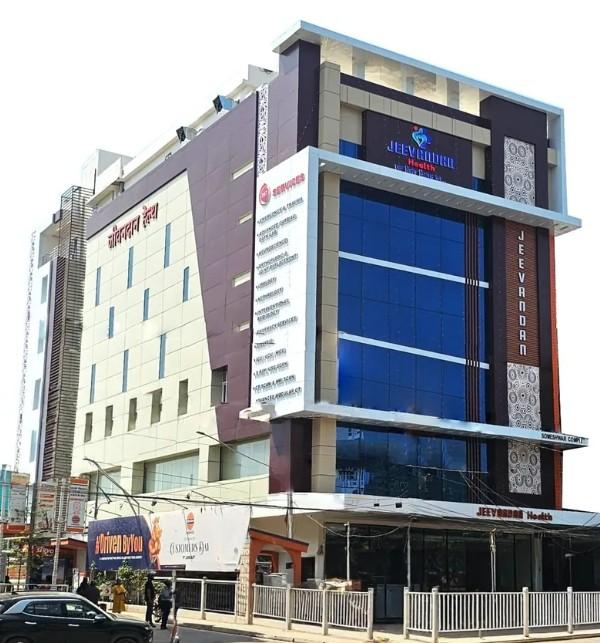
When it comes to neurological and spine-related health concerns, choosing the right healthcare facility is essential. Jeevandan Health has earned a reputation as a leading Brain Surgery Hospital in Patna, offering comprehensive treatment for complex neurological disorders. With experienced specialists, modern medical technology, and patient-centered care, the hospital has become a preferred...
" According to the latest report published by Data Bridge Market Research, the Leak Test Equipment Market The global leak test equipment market size was valued at USD 7.31 billion in 2025 and is expected to reach USD 13.47 billion by 2033, at a CAGR of 7.95% during the forecast period. This Leak Test Equipment Market report is a verified and reliable source of information...