


How India's Laundry Habits Have Changed From Dhobi Ghats to Laundry Apps
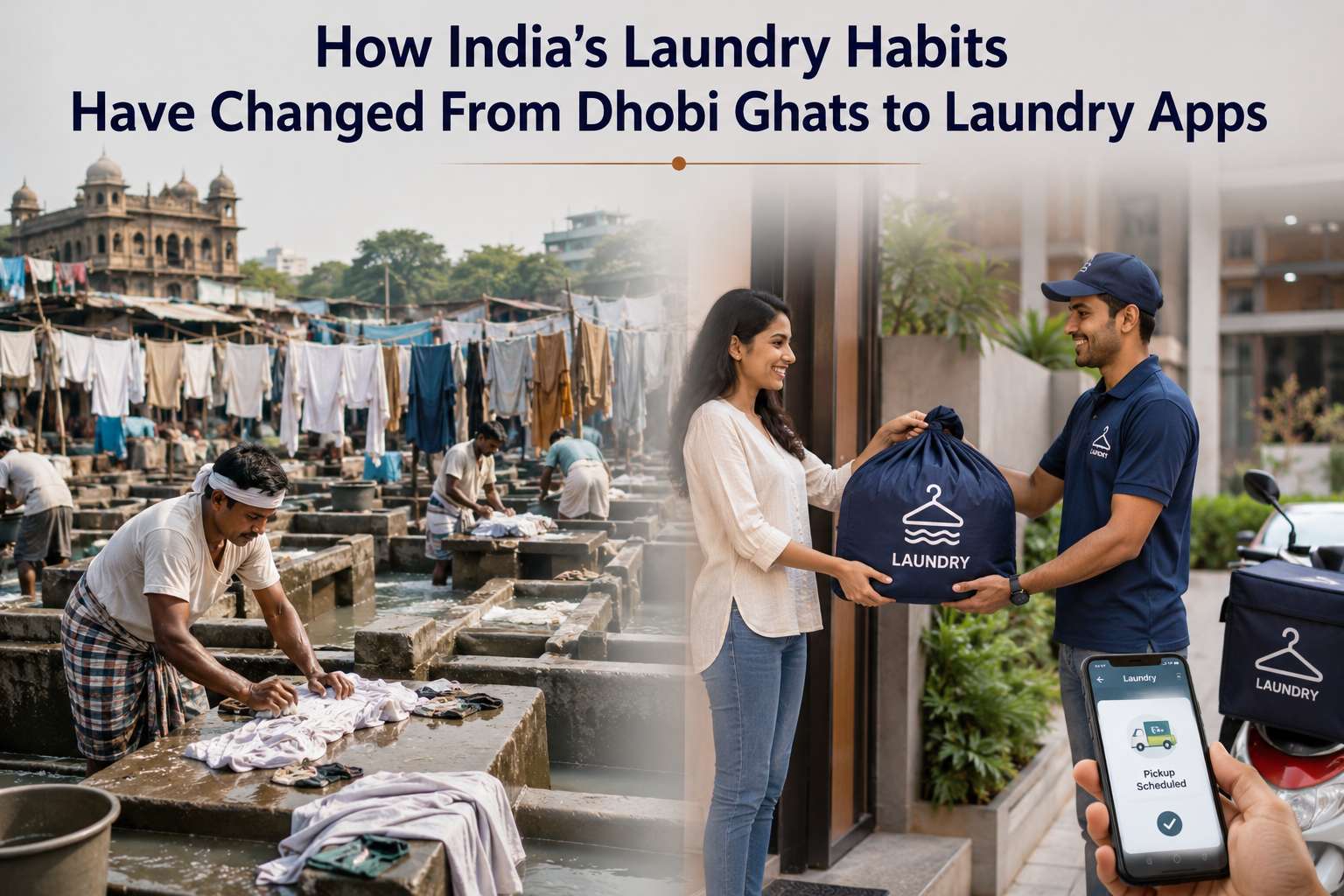
India's relationship with laundry has always been deeply connected to culture, tradition, and daily life. For generations, washing clothes wasn't just a household chore—it was a routine built around families, communities, and the trusted neighborhood dhobi.
But over the last two decades, something fascinating has happened.
The country that once relied on riverside washing stones and hand-ironed clothes is now embracing smartphone bookings, digital payments, and doorstep pickup services. Today, Laundry Service in India is experiencing a transformation similar to what food delivery and ride-hailing industries witnessed years ago.
The journey from dhobi ghats to modern Laundry App in India reflects changing lifestyles, urbanization, and one simple truth: people value convenience more than ever before.
The Era of Dhobi Ghats and Traditional Laundry
Long before washing machines became common, India had its own efficient laundry ecosystem.
Every neighborhood had a trusted dhobi. Families handed over bundles of clothes, and skilled washers cleaned them manually before delivering neatly ironed garments back home.
Large dhobi ghats in cities like Mumbai, Kolkata, and Chennai became symbols of India's traditional laundry culture.
Interestingly, this system was sustainable and community-driven. Relationships mattered more than technology.
Most people didn't think of laundry as a service industry.
It was simply part of life.
Why the Dhobi System Worked for Decades
Traditional dhobis understood fabrics without reading labels.
Years of experience helped them identify:
- Cotton and linen garments.
- Delicate fabrics.
- School uniforms.
- Sarees and bedsheets.
Customers trusted them because of familiarity rather than branding.
But this model depended heavily on manual labor and personal relationships.
As India began urbanizing rapidly, these habits slowly started changing.
The Washing Machine Revolution Changed Indian Homes
The 1990s and early 2000s brought a major shift.
Washing machines entered middle-class households.
For many families, owning a washing machine represented progress.
People believed that washing clothes at home was more economical and convenient.
Suddenly, dependence on local dhobis started declining.
However, washing machines solved only part of the problem.
People still had to:
- Sort clothes.
- Add detergent.
- Dry garments.
- Iron clothes.
- Fold and arrange them.
The machine reduced effort, but laundry still demanded time.
And time was becoming increasingly valuable.
Urbanization Changed Laundry Habits
India's cities grew rapidly.
Millions moved away from hometowns for education and careers.
Young professionals started living in:
- PG accommodations.
- Apartments.
- Hostels.
- Shared flats.
Unlike previous generations, they had less free time and smaller support systems.
Weekends were no longer dedicated to household chores.
Instead, people wanted to:
- Travel.
- Socialize.
- Relax.
- Focus on fitness.
- Spend time with family.
This shift created a new demand for professional Laundry Service in India.
People weren't looking for someone to wash clothes.
They were looking to reclaim their time.
From Chore to Convenience
One of the biggest changes in modern India is that consumers no longer see laundry as a necessity.
They see it as something that can be outsourced.
The same trend changed:
| Earlier | Today |
|---|---|
| Cooking every day | Food delivery apps |
| Grocery shopping | Quick commerce |
| Driving everywhere | Ride-sharing apps |
| Washing clothes at home | Doorstep Laundry Service in India |
People are increasingly willing to pay for convenience.
This phenomenon is often called the "Convenience Economy."
And laundry is becoming an important part of it.
The Rise of Organized Laundry Service in India
Until a few years ago, most laundry businesses operated locally.
There was little standardization.
Today, organized Laundry Service in India offers:
- Pickup and delivery.
- Dry cleaning.
- Wash and fold services.
- Steam ironing.
- Shoe cleaning.
- Curtain cleaning.
- Subscription plans.
Professional equipment and quality control have improved customer confidence.
Consumers no longer need to depend solely on nearby laundry shops.
Smartphones Gave Birth to Online Laundry in India
Smartphones changed everything.
Consumers became accustomed to ordering food, booking taxis, and paying digitally.
Naturally, laundry followed the same path.
The emergence of Online Laundry in India transformed customer expectations.
Instead of visiting stores, users could schedule pickups in seconds.
This gave rise to a completely new category—the Laundry App in India.
Modern apps allow customers to:
- Book orders instantly.
- Select services.
- Track order status.
- Make cashless payments.
- Receive delivery notifications.
What once required physical visits can now be managed through a smartphone.
Why Millennials and Gen Z Think Differently
Previous generations focused on saving money.
Today's consumers focus on saving time.
Young professionals understand that weekends are limited.
Many would rather spend time with friends or family instead of ironing clothes.
They are not buying laundry services.
They are buying convenience.
This explains why Doorstep Laundry Service in India is becoming increasingly popular among Millennials and Gen Z.
The psychology behind this shift is simple:
People don't dislike laundry.
They dislike repetitive chores.
Social Media Has Changed Clothing Habits
Instagram, LinkedIn, and workplace culture have increased awareness about appearance.
People now invest more in:
- Premium shirts.
- Designer dresses.
- Sneakers.
- Formal wear.
Expensive garments require proper maintenance.
Frequent home washing often damages fabrics.
Professional Laundry Service in India helps preserve clothing quality and prolong garment life.
For many people, laundry is no longer cleaning.
It is clothing care.
Sustainability Is Influencing Consumer Choices
Environmental awareness is rising.
Modern consumers are paying attention to:
- Water consumption.
- Energy efficiency.
- Eco-friendly detergents.
- Reduced wastage.
Large-scale professional laundries often optimize resources more efficiently than individual home washing.
This trend is encouraging the growth of sustainable Online Laundry in India.
Consumers increasingly prefer brands that combine convenience with environmental responsibility.
How Technology Is Transforming Laundry in India
Technology is changing the industry faster than ever.
Emerging innovations include:
AI-Based Order Management
Smart systems improve efficiency and reduce delays.
Hyperlocal Delivery
Customers expect same-day service.
Subscription Models
Monthly plans are becoming popular.
Real-Time Tracking
Users want visibility and transparency.
Contactless Pickup and Delivery
Convenience and hygiene have become priorities.
As these innovations continue, Laundry App in India solutions are expected to become smarter and more personalized.
What the Future Looks Like
Experts believe the next phase of Laundry in India will focus on convenience, automation, and customer experience.
Future trends may include:
- AI-powered sorting.
- Eco-friendly operations.
- Smart lockers for pickup.
- Subscription-based plans.
- Express two-hour delivery.
- Personalized garment care recommendations.
Just as food delivery transformed dining habits, organized Laundry Service in India is redefining how Indians manage everyday chores.
Final Thoughts
India's laundry journey is a story of changing priorities.
From traditional dhobi ghats to washing machines and now app-based services, each generation has adapted to new lifestyles.
What began as a community-based occupation has evolved into a technology-driven service industry.
The rise of Online Laundry in India, Doorstep Laundry Service in India, and the growing popularity of every modern Laundry App in India show that consumers no longer value effort—they value time.
And perhaps that's the biggest transformation of all.
Today, people are not just outsourcing laundry.
They are outsourcing stress, buying convenience, and gaining back something priceless—their time.

Categorías
Read More
Looking for the “best architects in Noida and Greater Noida” to bring your vision to life? InceptionDesignCell is a trusted name among leading architects and architecture firms, offering innovative, functional, and future-ready architectural solutions for residential, commercial, and institutional projects. The rapid urban development of Noida and Greater Noida has positioned...

Unlocking Corpeso Weapon Strategy Mastering the Corpeso weapon for Gustave/Verso can redefine your entire approach to the later stages of the expedition. Its true power is unlocked by fully embracing the Burn ailment. Begin by utilizing its first skill to consistently apply extra Burn stacks to your foes. The strategic depth comes from its scaling damage enhancements. You initially gain a 50%...

The online gaming industry has transformed dramatically over the past decade, offering players countless opportunities to enjoy their favorite casino and poker games from virtually anywhere. As technology continues to improve, gaming platforms are becoming faster, more secure, and more engaging than ever before. Among the names that frequently attract attention in the online poker community is...
Three-Wheeler Industry Outlook: Straits Research has introduced a detailed analytical study on the Three-Wheeler Market, offering insights into market valuation, segmentation framework, and long-term growth trajectory. The publication delivers a structured overview of market drivers, constraints, technological advancements, and strategic developments shaping the industry. In addition, it...
According to the latest report published by Data Bridge Market Research, the Topical Dispenser Market The global Topical Dispenser market was valued at USD 1.36 billion in 2025 and is projected to reach USD 2.94 billion by 2033, growing at a CAGR of 10.15% from 2026 to 2033. The market is experiencing consistent growth driven by rising demand for safe and precise...