


Five Specific Reasons Teams Switch From Postman and What Each One Points To
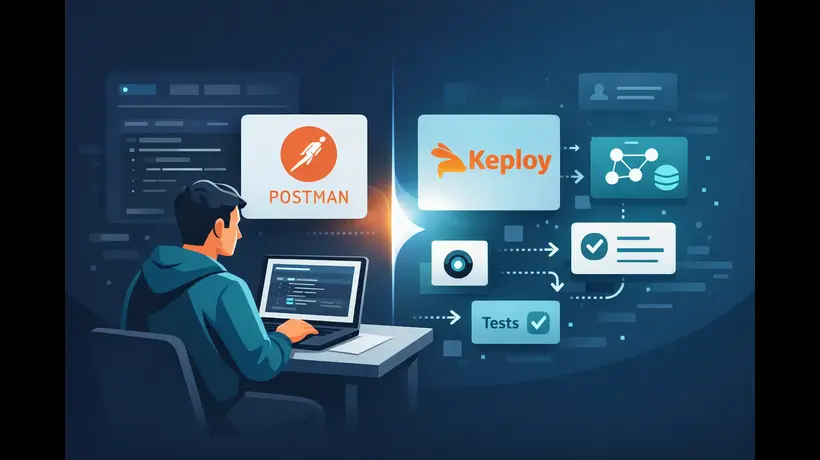
The postman alternative decision rarely comes from a single clear reason. It comes from an accumulation of friction that eventually tips past a threshold. But looking at the accumulation closely, the specific frictions tend to cluster into recognizable patterns. Each pattern points toward a different solution, and knowing which pattern applies to your team is what makes the difference between a switch that solves the problem and one that trades one set of frustrations for another.
Reason One: The Pricing Conversation Keeps Coming Up
The immediate translation of this problem is "find something cheaper." The better translation is "find something where the value is clear enough that the price is never questioned."
The pricing conversation happens when the tool's cost is visible but the tool's value is hard to articulate. Postman costs per seat per month. The benefit of each seat is... some combination of request management, test running, and API documentation that's hard to quantify. When someone from finance or leadership asks what the team is getting for that cost, the answer is vague in ways that make the line item feel vulnerable.
The tools that eliminate the pricing conversation are the ones that eliminate the price itself. Hoppscotch, Bruno, and Keploy are all fully free and open source for the core functionality. The conversation about whether the tool is worth its cost doesn't happen because there's no cost to justify. For teams where the pricing conversation has become a recurring friction rather than a one-time decision, switching to free tooling closes the conversation permanently.
The caveat is that free tooling still has a cost in engineering time for setup, maintenance, and onboarding. That cost is real but it's typically lower than the licensing cost it replaces and it's categorized differently in budget conversations.
Reason Two: New Team Members Take Too Long to Get Up to Speed
When onboarding a new developer to a team's API testing workflow takes more than an hour, something is wrong with how the knowledge is stored.
The Postman-specific version of this problem is the workspace explanation. The new developer gets access to the shared workspace. Someone explains which collections are relevant, which environments to use for which purposes, how the pre-request scripts work, why certain things are configured the way they are. Some of this explanation is in documentation. Most of it is in someone's head.
This problem points toward Git-native storage. When everything lives in the repository, the new developer's onboarding to API testing is the same as their onboarding to the rest of the codebase: clone the repo, look at the files, read the README. Bruno collections in the repository are discoverable the same way any other file in the repository is discoverable.
The teams that have solved the onboarding problem most cleanly typically have a README in the collections directory that explains the structure, the environment conventions, and any non-obvious configuration. That documentation gets updated alongside the collections when things change because it's in the same repository under the same review process.
Reason Three: Tests Pass but Production Incidents Keep Happening
This is the most expensive Postman problem and the one that's hardest to attribute directly to the tool. If tests are passing and production is breaking, the tests are wrong. They're either testing the wrong things or testing the right things in the wrong conditions.
The Postman-specific version of this problem is mocks and environments. Tests that run against mocked dependencies or against a test environment that doesn't accurately represent production will pass even when the production behavior is incorrect. The mock was written based on what the developer thought the dependency would return, not what it actually returns. The test passes against the mock. Production fails against the real thing.
This problem points toward behavior-based test generation. Keploy's mocks are built from real recorded responses, not from developer predictions. Tests generated from real traffic reflect actual system behavior in a way that manually-mocked tests don't. The gap between test environment and production environment shrinks because the tests are derived from real interactions rather than from approximations of real interactions.
Switching from Postman to Bruno doesn't solve this problem because the problem isn't about which client you're using. It's about how test expectations are established. Solving it requires changing the approach to test generation, not just the interface for managing collections.
Reason Four: The Test Suite Takes Too Long to Maintain
A test suite that requires significant ongoing maintenance to stay current with the API is a test suite whose maintenance cost will eventually exceed its value. Teams hit this point at different API surface areas depending on how much the API changes and how much time is available for test maintenance, but the pattern is consistent: the test suite grows, the API evolves, keeping the two in sync becomes a significant ongoing investment, and eventually something gives.
This problem points in two directions simultaneously. The first is toward better conventions for how tests are stored and updated. When tests live in the repository and are updated in the same pull requests as the code changes that necessitate them, the maintenance cost is lower because the update is part of the same workflow rather than a separate task that gets deferred.
The second direction is toward reducing the proportion of tests that require manual maintenance at all. Traffic-based generation produces tests that are accurate by construction rather than by maintenance. When the API behavior changes intentionally, re-recording the affected interactions produces updated tests without manually hunting down and rewriting assertions. The maintenance task is smaller because the tests are derived from current behavior rather than from a historical model that needs to be kept current manually.
Reason Five: The CI Integration Is Unreliable
When the CI pipeline regularly produces test failures that aren't caused by actual bugs, the test suite has lost its signal value. Developers learn to ignore failures, or spend time investigating failures before determining they're spurious, or merge with failing tests because past experience suggests the failures are unrelated to their changes.
The Postman-specific version of this is the Newman integration. Newman runs Postman collections in CI, but the translation from Postman's GUI to Newman's headless execution introduces a category of failure that's specific to the translation. Environment variables that work in the GUI context behave differently in the headless context. The collection version in the repository doesn't match the version being developed against in the workspace. Pre-request scripts that work interactively fail in automation.
The solution is eliminating the translation layer. Bruno's CLI runs the same collection files that are in the repository without any translation. What works locally works in CI because there's no conversion step where configuration can get lost. For the automated regression layer, Keploy's tests run identically in development and in CI because they're generated from behavior rather than from a GUI workflow that gets converted to a different format for automation.
The Diagnosis First, Then the Solution
The reason it's worth identifying which of these five patterns applies before switching is that they have different solutions. A team whose primary problem is pricing is best served by Hoppscotch or Bruno as a simple replacement for the client functionality they were paying for. A team whose primary problem is production incidents that tests don't catch needs behavior-based generation more than they need a different client. A team whose primary problem is CI reliability needs to eliminate the GUI-to-automation translation layer.
Switching to a different tool that has the same architectural properties as Postman solves the pricing problem and nothing else. Understanding which of these problems is most acute shapes which tool is actually the solution rather than which tool is the most popular alternative at the moment.
Categories
Read More
Fine jewelry is more than just a beautiful accessory—it is a reflection of your personality, taste, and individuality. The right piece can elevate your confidence, complement your wardrobe, and become a treasured keepsake for years to come. Whether you're investing in your first fine jewelry piece or expanding an existing collection, choosing jewelry that aligns with your personal style...

Il 2026 rappresenta un punto di svolta per il mercato del gioco sportivo in Italia, caratterizzato da una profonda trasformazione guidata dall'integrazione di sistemi digitali avanzati e da un nuovo quadro normativo più rigoroso. La scelta dei migliori siti scommesse non è più legata solo all'offerta di quote, ma alla qualità dell'infrastruttura tecnologica...

Since the rise of social media, a small yet vocal segment of fandoms has unfortunately embraced harassment as an acceptable behavior. Recently, this toxic trend resurfaced in the Pokémon community, sparked by controversy surrounding the new Pokémon TCG Pocket expansion, Wisdom of Sea and Sky. The expansion showcases Ho-Oh, the legendary phoenix, depicted soaring elegantly—a...

Search visibility keeps becoming harder for businesses because every industry now competes aggressively across digital platforms daily. Companies publish content constantly, although many still struggle maintaining steady rankings for important keywords online. Search engines evaluate authority carefully today, and backlinks still influence trust signals more than some marketers openly...

Prostate health is a major concern for many men as they age, particularly after 40. It is common for men to begin experiencing urinary changes such as frequent urination at night, weak urine flow, difficulty starting urination, or a constant feeling of needing to go to the bathroom. These issues are often linked to age-related changes in the prostate gland, including inflammation and...
