


How Payroll Automation Eliminated Our Manual Processing Nightmare (And Cut Costs by 35%)

When I took over payroll responsibilities at our 200-person organization, I inherited a system that was basically organized chaos. Spreadsheets. Email chains. Endless recalculations. Every pay cycle felt like we were rolling dice and hoping for the best.
The numbers told the real story: our HR team spent 120 hours monthly on payroll tasks. We had three major errors the previous year that cost us compliance penalties. And our employees called asking about discrepancies at least twice per pay cycle.
That's when we decided to implement a proper automated payroll solution. What I've learned since then has completely changed how I think about HR operations.
The Real Cost of Manual Payroll (Hint: It's Way Higher Than You Think)
Most companies don't track the true expense of manual payroll management. They see the software cost and assume they can't afford it. They're looking at the wrong numbers.
Let's be honest: spreadsheet payroll is expensive in ways that don't show up on a balance sheet. Your HR team spending 40 hours monthly on data entry isn't "just their job." That's 480 hours annually that could go toward employee development, retention strategy, or recruitment. At an average HR salary of $55,000 annually, that's roughly $12,750 in labor cost dedicated just to pushing numbers around.
Add in the errors. A single misdirected direct deposit, a tax calculation mistake, or a leave balance error can spiral into expensive corrections and employee relations problems. We experienced three significant payroll errors in one year alone, each requiring remediation and creating frustration with employees.
Then there's compliance risk. When your payroll lives in spreadsheets, you lack audit trails. If a labor department inspector asks how you calculated overtime, you're digging through email chains and file versions. When tax authorities question a filing, good luck proving your calculation methodology.
Why We Chose HR and Payroll Software
We needed something that treated HR and payroll as one system, not two disconnected tools. Here's what pushed us over the edge: our attendance was tracked manually, our leave was managed in one spreadsheet, and payroll was calculated in another. Every single month, data had to be manually transferred between systems.
One wrong cell reference, and everything downstream was wrong.
We started evaluating solutions that offered integrated HR and payroll software capabilities. We needed real integration, not just software that "connects" via CSV imports. When we researched options on best HRMS and payroll software India providers, we discovered how far behind our manual processes actually were.
The breakthrough came when we implemented a platform that automatically pulled attendance data into payroll calculations. No manual data entry. No transcription errors. No reconciliation delays.
What Changed in the First Three Months
The transformation was immediate. Payroll processing time dropped from 120 hours to 35 hours monthly. That's 85 hours freed up for actual HR strategy work. Our team finally had breathing room.
Accuracy improved dramatically. Zero payroll errors in the first three months. Zero. Our compliance posture strengthened because every calculation carried an audit trail. When we needed to pull records for a labor audit, the system generated everything in minutes.
But the thing that surprised me most was employee experience. When we implemented the self-service portal where employees could access their payslips, tax documents, and leave balances, support tickets about payroll dropped by 65%. Employees appreciated being able to verify their information without asking HR.
The Specific Features That Mattered Most
When you're evaluating HR software solutions, certain features separate the functional tools from the game-changers. Real-time attendance integration proved invaluable. We implemented biometric clock-in systems that fed directly into our HRMS with payroll system. When an employee clocked in, the system recorded it. That data automatically flowed into payroll calculations. No manual intervention. No delays. We went from estimating hours to knowing them with certainty.
Multi-statutory compliance handling was equally critical. Our team had grown across three states and two countries. Managing different tax codes, statutory deductions, and filing requirements across jurisdictions used to be a nightmare. Now the system handles it automatically. Employees contribute to the correct pension schemes. Tax deductions calculate appropriately by location. Compliance filings generate on schedule.
The reporting capabilities changed how we approached HR planning. Instead of asking "what did payroll cost last month," we could ask "how is labor cost distributed by department," "which teams have highest overtime," and "what's our pay equity across similar roles." This data-driven approach to HR decisions was completely new for us.
Addressing the Implementation Concern
I'll be transparent: the transition wasn't frictionless. Any system change creates some resistance and adjustment period. But here's what we did differently than I'd recommend: we involved the team early. We showed employees exactly what problems the new system would solve and how it would make their jobs easier. During training, we used real examples from their work. We gave them extra support during the first few pay cycles.
More importantly, we didn't try to change everything at once. We started with attendance and basic payroll. Once the team felt confident, we added leave management. Then employee self-service. Each step built on the previous one.
The Numbers Behind the Decision
Looking back, the ROI calculation is straightforward. Labor cost saved equals 85 hours monthly times $27.50 per hour blended HR cost equals $2,337.50 per month. Error cost reduction came to roughly $15,000 annually estimated from previous year penalties and remediation. Compliance risk reduction proved unmeasured but significant.
Against this, our software cost roughly $8,000 annually. The payback period was less than five months. Beyond the financial return, we gained something less quantifiable but equally valuable: confidence. Our payroll runs like clockwork. Employees trust their compensation. Managers have visibility into labor costs and workforce planning. HR finally does strategic work instead of reconciliation work.
What We Still Do Manually (And Why)
Here's an important reality: some HR decisions should never be automated. Leave approvals still require a human manager to review policy and business needs. Bonus calculations still get decided by leadership based on performance conversations. Separation processes still get handled with proper documentation and conversation.
The automation doesn't replace judgment. It eliminates administrative friction so judgment can happen faster and more fairly.
The Conversation We Should All Be Having
If you're still managing payroll in spreadsheets, I'm not here to judge. I was there three years ago. But I'm here to tell you the pain is optional. The manual processing nightmare doesn't have to be your baseline.
When you implement an employee management system in HRMS that integrates attendance, leave, payroll, and compliance, something shifts. Your HR team gets their time back. Your employees get accuracy and transparency. Your business gets data-driven insights into its biggest operating cost: people.
We're five quarters into this system now. I can't imagine going back. If you're evaluating options, look for platforms that treat HRMS with payroll as integrated infrastructure, not disconnected modules. The question isn't really whether you can afford to automate payroll. The question is whether you can afford not to.
Visit us: https://mhcognition.com/connekt
Categories
Read More
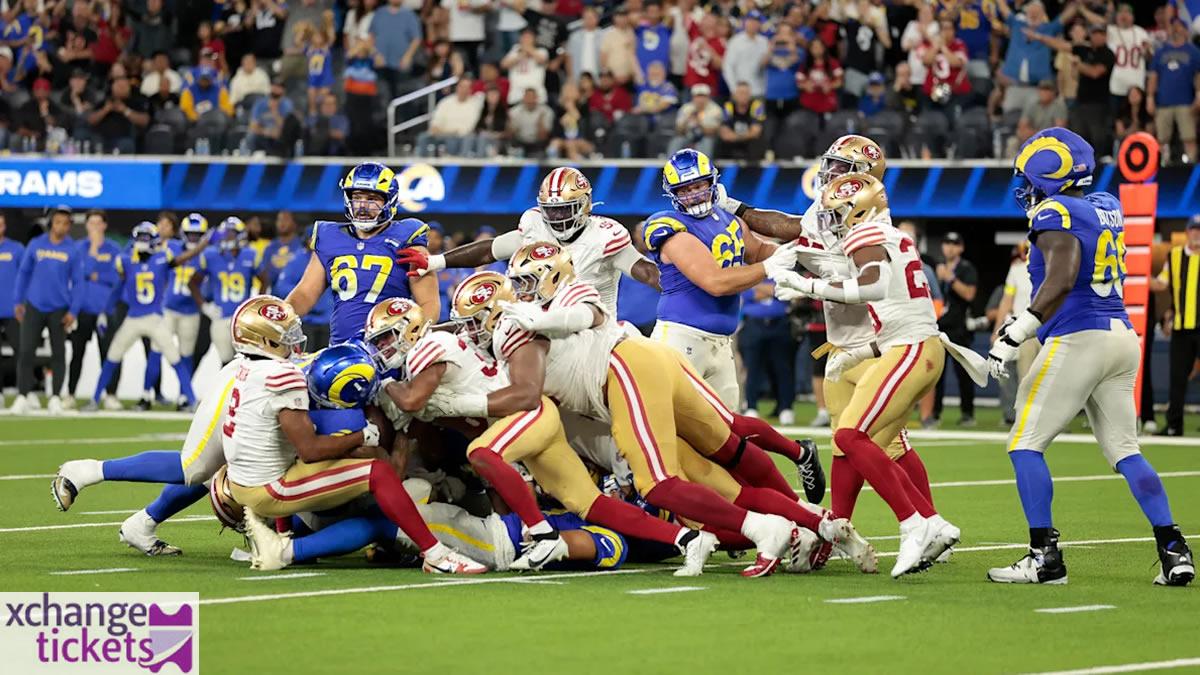
The NFL is ready for a massive leap across the Pacific Ocean with the Los Angeles Rams vs San Francisco 49ers matchup. Officials chose a classic NFC West rivalry to lead this major international push. This choice shows how much the sport wants to grow global interest today. Both teams are very famous and have won championships in recent years. Football fans are searching for thrilling NFL...
The Agriculture Bactericides Industry is witnessing consistent global expansion as agricultural producers increasingly prioritize disease management strategies to enhance crop performance and ensure food supply stability. Rising incidences of bacterial plant diseases, coupled with the need for sustainable and efficient farming practices, are driving demand for innovative bactericidal...

The North America User Provisioning is witnessing significant growth due to the increasing adoption of cloud computing, identity and access management (IAM) solutions, and advanced cybersecurity frameworks across enterprises. Market Size, Share And Trends The global user provisioning market size is projected to reach US$ 16.63 billion by 2034 from US$ 6.2 billion in 2025. The market...
Best Teacher Training Institute in Chennai – Courses, Fees & Career Opportunities (2026 Guide) Are you searching for the Best teacher training institute in Chennai to build a successful teaching career? Chennai is a leading educational hub offering top-notch teacher training programs, including Montessori, NTT, and early childhood education courses. With the...

As online shopping continues to expand, many consumers search for ways to purchase everyday products conveniently, including tobacco products. Terms like buy smokes online and Canada Goose cigarettes are commonly searched by adults looking for information about availability, regulations, and product options. However, purchasing tobacco products online involves...
