Azodicarbonamide (ADC) Blowing Agent and the Hidden Infrastructure Behind Lightweight Shoes, Flexible PVC Foam, Synthetic Leather and Cost-Efficient Polymer Design
A shoe sole that weighs 180 grams instead of 260 grams looks like a design decision. A PVC foam sheet that reduces polymer consumption by 18–35% looks like procurement discipline. A synthetic leather layer that carries cushion, embossing and surface softness at 1.2–2.5 mm thickness looks like process engineering. Behind all three, the quiet workhorse is often Azodicarbonamide (ADC) blowing agent.
The story of Azodicarbonamide (ADC) blowing agent is not a story of one chemical. It is a story of how factories buy weight reduction. Every 1 gram of blowing agent can release roughly 220–300 ml of gas under controlled heating. In a polymer melt, that gas becomes millions of cells. Those cells replace resin, reduce density, soften touch, improve insulation and change unit economics.
In footwear, the arithmetic is immediate. The world produced about 23.9 billion pairs of shoes in 2024, and Asia manufactured nearly 88% of them. Even if only 18–22% of that output uses foamed EVA, PVC or rubber components where chemical blowing is relevant, the addressable production base is still above 4.3–5.2 billion pairs per year. At an average foamed midsole, outsole insert or slipper component weight of 80–220 grams, the foamable polymer mass connected to this value chain runs into hundreds of thousands of tonnes.
That is why Azodicarbonamide (ADC) blowing agent behaves like infrastructure. It sits inside compounding units, footwear clusters, PVC calendaring lines, sponge-rubber plants, artificial leather coaters and plastic masterbatch operations. It does not need visibility. It needs temperature discipline, dispersion quality, particle-size control and repeatable cell formation.
The chemistry is simple enough to explain but difficult enough to master. Standard ADC grades decompose near 200–210°C. Modified grades, when paired with activators, can start reacting near 150–170°C. That range matters because PVC plastisol, EVA, PE, PP, ABS, PS and rubber do not process at the same temperature. A footwear plant running EVA compression moulding at 165–185°C needs a different activation profile from a rigid PVC foam board line running closer to 180–205°C.
This is where Azodicarbonamide (ADC) blowing agent becomes a process-control product rather than a commodity powder. Two factories can buy the same chemical name and get different economics if one uses a 4–6 micron particle size and the other uses a broader particle distribution. Finer dispersion creates more nucleation points. More nucleation points create smaller cells. Smaller cells can improve surface finish, reduce collapse and stabilize density. In practical terms, a plant targeting 0.45 g/cm³ foam density cannot afford uncontrolled cells that push scrap from 2% to 7%.
The largest use-case map begins with EVA footwear. In slippers, sandals, sports soles and casual footwear, foam is not decorative; it is the product’s economics. A solid EVA sole may use 100 units of polymer mass. A controlled foamed sole may deliver the same footprint with 60–75 units of polymer mass. If resin costs US$1.4–2.2/kg, a 25–40% mass saving across millions of pairs becomes a direct margin lever.
The second map is PVC foam. Here Azodicarbonamide (ADC) blowing agent supports PVC foam sheets, profiles, synthetic leather backings, floor mats, wall coverings and coated fabrics. A PVC foam sheet line producing 1,000 kg/hour of compound can turn a 1–2 phr blowing-agent decision into 10–20 kg/hour of additive consumption. Across 24 operating hours, that is 240–480 kg/day of blowing-agent demand from a single line when running foam-heavy grades.
The third map is rubber sponge. EPDM weatherstrips, NBR sponge, shoe-rubber parts, insulation strips and gasket materials use controlled blowing to deliver softness, compressibility and sealing. In this segment, Azodicarbonamide (ADC) blowing agent competes with other chemical blowing systems, but it remains relevant because gas output, cost per unit volume of foam and processing familiarity are powerful procurement arguments.
According to DataVagyanik, the global Azodicarbonamide (ADC) blowing agent market is valued at US$1.18 billion in 2026 and is forecast to reach US$1.72 billion by 2034, reflecting a 4.8% CAGR over 2026–2034. The 2026 value is concentrated in polymer foaming applications, with footwear, PVC foam, synthetic leather, rubber sponge and lightweight plastic components forming the dominant demand pool; Asia accounts for the largest consumption base because China, India, Vietnam, Indonesia and Thailand combine footwear manufacturing, PVC conversion and rubber processing within tight industrial clusters.
The infrastructure is clustered for a reason. A blowing-agent supply chain needs hydrazine chemistry, urea-based intermediates, oxidation systems, filtration, drying, micronization, surface treatment, packaging and controlled storage. A serious producer is not just making powder. It is managing dust, moisture, decomposition safety, particle consistency and batch-to-batch reactivity. A 25 kg bag looks ordinary, but behind it sits a chain of reactors, dryers, mills, classifiers and quality-control labs.
China’s role is structural. The country combines ADC production, PVC conversion, footwear export ecosystems and plastic additive trading. A single integrated Chinese chemical site with 10,000–50,000 tonnes/year of ADC-related capacity can serve dozens of downstream processors. India’s role is more cluster-driven: Rajasthan, Gujarat, Maharashtra, Tamil Nadu and Delhi-NCR connect chemical distribution with footwear, rubber and PVC product manufacturing. Vietnam and Indonesia are consumption-heavy because footwear export factories pull EVA and rubber foam inputs through regional supply chains.
The investment logic is not only capacity expansion. It is grade specialization. A commodity Azodicarbonamide (ADC) blowing agent grade may serve PVC and PE foam. A finer grade may target EVA footwear. A low-dust grade may target better workplace handling. A modified low-temperature grade may target plastisol or synthetic leather. A masterbatch format may reduce weighing error, dust exposure and dispersion risk. Each format can add 8–25% price premium if it reduces scrap, improves cycle time or lowers rework.
For a medium footwear factory producing 50,000 pairs/day, the practical impact is measurable. If each pair uses 120 grams of foamed EVA component, daily foamable mass equals 6 tonnes. At 0.7–1.5% blowing-agent loading, the plant may consume 42–90 kg/day of Azodicarbonamide (ADC) blowing agent. Over 300 operating days, that becomes 12.6–27 tonnes/year from one factory. Multiply that by 500 regional footwear factories and the annual demand pool reaches 6,300–13,500 tonnes before counting PVC foam, synthetic leather or rubber sponge.
The same logic applies to PVC foam boards. A line running 700 kg/hour for 20 hours/day processes 14 tonnes/day. At 1.0–1.8 phr, the daily Azodicarbonamide (ADC) blowing agent requirement sits near 140–252 kg. Over 280 days, one line can absorb 39–71 tonnes/year. A region with 100 active foam-board or foam-sheet lines can therefore create 3,900–7,100 tonnes/year of demand from PVC foam infrastructure alone.
The application map becomes sharper when the product is viewed by density targets. EVA footwear generally aims for 0.18–0.35 g/cm³ depending on hardness and recovery needs. PVC foam sheets may sit between 0.35–0.75 g/cm³. Rubber sponge profiles may range from 0.25–0.65 g/cm³ depending on compression-set requirements. These density windows decide dosage, grade selection and activation package. A 0.05 g/cm³ density miss in a foam article can change material cost by 7–12% and rejection rates by 3–6 percentage points.
That is why processors rarely buy Azodicarbonamide (ADC) blowing agent only on price per kilogram. They buy it on cost per cubic meter of generated foam. If one grade costs US$3.2/kg and another costs US$3.6/kg, the cheaper grade can still be more expensive if it causes 4% extra scrap or requires 0.2 phr higher loading. In foam manufacturing, a 10-cent additive saving can disappear inside a 2-dollar rejected shoe sole.
The technology package has four moving parts: blowing agent, activator, polymer rheology and heat history. Zinc oxide, zinc stearate, urea-based systems and other activator packages can lower decomposition temperature and tune gas release. In EVA footwear, the foaming window may be only 3–6 minutes inside a hot mould. In PVC plastisol, the gelation and blowing sequence must align within a narrow temperature band. If gas forms before melt strength develops, cells rupture. If gas forms too late, the sheet becomes dense, heavy and commercially weak.
For synthetic leather, the use case is visual as much as economic. A coated fabric producer may run a foam layer of 0.2–0.8 mm under a compact skin layer of 0.05–0.2 mm. That foam layer creates hand feel, emboss depth and cushion. A furniture upholstery roll of 1,000 meters can carry 300–800 kg of coated polymer depending on width and construction. Reducing density by 20% can remove 60–160 kg of polymer mass from one production run without changing visible surface coverage.
This is where Azodicarbonamide (ADC) blowing agent becomes linked to consumer affordability. Budget footwear, floor mats, yoga mats, artificial leather goods, insulation tapes, sealing strips and flexible foam components all depend on the same industrial equation: make volume without paying for solid mass. In low-margin products, a 5% weight reduction can matter more than a 15% branding campaign because it repeats across every unit shipped.
The supply-chain story also includes masterbatching. Instead of handling powder directly, many converters prefer ADC masterbatch in EVA, PE or PVC-compatible carriers. A masterbatch may contain 10–40% active blowing agent. It improves feeding accuracy, reduces dust, and allows smaller factories to avoid direct powder handling. For a plant consuming 20 tonnes/year of active ADC, switching to a 20% masterbatch means buying 100 tonnes/year of masterbatch, but it may reduce dosing error from ±8% to ±2%.
The regulatory story is mixed and must be handled clearly. Azodicarbonamide (ADC) blowing agent has faced restrictions in food-contact and food-related use in several markets, especially where decomposition by-products and exposure routes are scrutinized. That does not erase its industrial polymer use. It changes the compliance map. A footwear or PVC foam manufacturer selling into export markets must separate industrial foam applications from sensitive food-contact applications and maintain documentation on grade, formulation, residuals and intended use.
Over the last decade, industry spending has moved in three directions. First, compounders invested in dust-controlled feeding and enclosed weighing systems. A small enclosed dosing station can cost US$15,000–60,000, while a larger automated additive handling system can exceed US$150,000. Second, producers invested in particle-size control, because a narrow PSD can reduce cell defects by 15–30% in demanding foam lines. Third, converters moved toward masterbatch formats, where the higher additive cost is offset by cleaner handling and lower rejection.
The timeline is visible in factory behaviour. Between 2010 and 2015, cost reduction drove adoption in footwear and PVC foam. Between 2016 and 2020, export compliance and workplace handling became larger procurement filters. Between 2021 and 2024, resin price volatility pushed foam processors to defend margins through density optimization. From 2025 onward, the theme is selective use: Azodicarbonamide (ADC) blowing agent remains important where cost, gas yield and processing familiarity dominate, while alternatives gain share in regulated, premium or sensitive applications.
In factory economics, foam is a balance sheet tool. Consider a PVC foam-board manufacturer selling 10,000 tonnes/year of boards. If controlled foaming reduces average density by 12%, the factory saves the equivalent of 1,200 tonnes/year of compound volume-adjusted resin demand. Even at a conservative compound cost of US$1,000/tonne, the gross material lever is US$1.2 million/year. Against that, blowing-agent and activator costs may be US$120,000–250,000/year, creating a strong operating rationale.
Footwear has a similar margin engine. A slipper manufacturer producing 20 million pairs/year with 90 grams of foam per pair handles 1,800 tonnes/year of foamable compound. If foaming cuts material intensity by 25% versus solid design, the avoided polymer mass is around 600 tonnes/year on a solid-equivalent basis. At US$1,500/tonne polymer cost, the theoretical resin saving reaches US$900,000/year, before accounting for energy, scrap and mould-cycle differences.
Energy also enters the equation. Foamed products reduce mass, but chemical blowing requires controlled heating. A compression-moulded EVA line may run at 160–185°C, while PVC foaming may require oven zones above 180°C. Poorly tuned systems increase dwell time by 10–20%, reducing output per mould or per meter of line. A faster activation package that saves 30 seconds on a 5-minute moulding cycle can improve throughput by roughly 10%, provided demoulding and cooling do not become bottlenecks.
That makes technical service a hidden differentiator. Suppliers who can help a customer reduce blowing-agent loading from 1.4 phr to 1.1 phr while keeping the same density create a 21% additive efficiency gain. Suppliers who improve cell uniformity can reduce surface sanding, trimming and rejection. In a plant with US$10 million annual foam-product revenue, even a 2% scrap reduction releases US$200,000 in value.
The competitive behaviour is therefore practical. Manufacturers and distributors win not by selling chemistry alone, but by solving line-level problems: scorch marks, uneven expansion, collapsed edges, poor emboss retention, smell, dusting, storage stability and density drift. Azodicarbonamide (ADC) blowing agent is bought by procurement, but it is approved by production managers.
The next theme is substitution. Endothermic blowing agents, bicarbonate-based systems, OBSH, microspheres and physical foaming can replace ADC in selected applications. Yet substitution is not one-for-one. A plant built around ADC may need new activators, altered mould temperature, longer curing, different cell nucleation and fresh customer validation. For a high-volume footwear exporter, reformulating a sole platform can require 3–6 months of testing across hardness, rebound, shrinkage, compression set and aging.
This is why the market does not flip overnight. Even when alternatives gain premium or regulatory-driven share, Azodicarbonamide (ADC) blowing agent retains volume in cost-sensitive, non-food, industrial foam applications. The installed base of moulds, compound recipes, technician knowledge and supplier networks acts like an invisible switching cost. In industrial foaming, familiarity is not laziness; it is risk control.
The infrastructure lens reveals the core message. A blowing agent is small in formulation percentage, often below 2% by weight, but it can control 20–50% of product volume. That asymmetry explains why a minor additive has an outsized role in polymer economics. It decides whether a sole feels light, whether a mat rolls easily, whether a PVC board meets weight specification and whether a synthetic leather surface looks premium at mass-market cost.
By the time the finished product reaches a store, nobody sees the gas cells. A buyer sees a pair of sandals under US$10, a foam mat under US$20, a coated bag panel with soft touch, or a sealing strip that compresses cleanly. The factory sees something more precise: grams removed, seconds saved, density stabilized and rejection contained. That is the real story of Azodicarbonamide (ADC) blowing agent — a low-visibility material converting chemistry into lighter products, lower resin bills and scalable foam infrastructure.
الأقسام
إقرأ المزيد
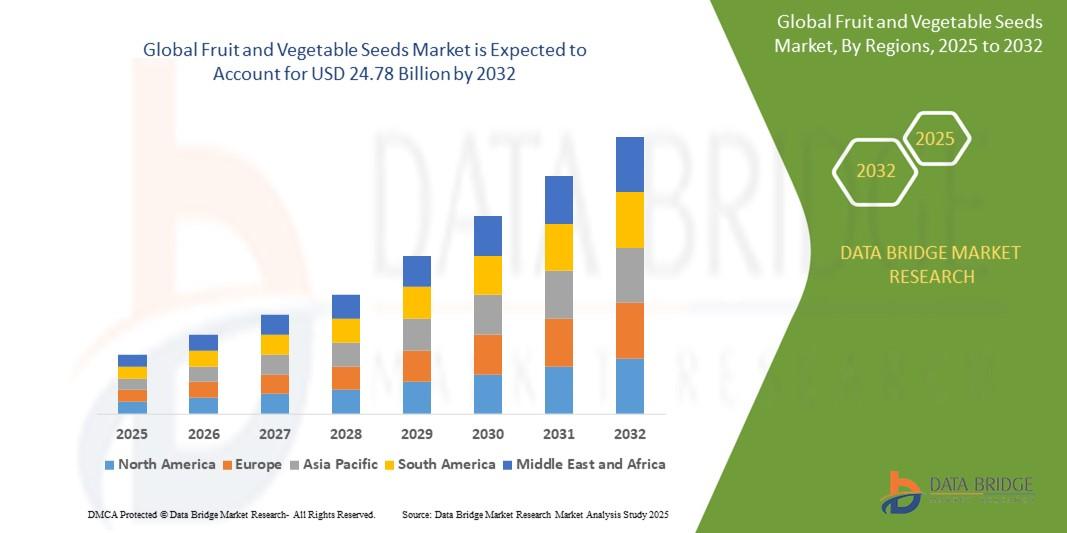
"Competitive Analysis of Executive Summary Fruit and Vegetable Seeds Market Size and Share The global fruit and vegetable seeds market size was valued at USD 12.62 billion in 2024 and is expected to reach USD 24.78 billion by 2032, at a CAGR of8.80% during the forecast period A competition that is getting higher day by day has kept many...
GA179 is quickly becoming one of the most talked-about online betting platforms in 2025. With a strong reputation, a growing user base, and a wide variety of exciting games, Ga179 has captured the attention of players who are looking for quality, trust, and entertainment in one place. Its steady rise is driven by a focus on user satisfaction, smooth performance, and engaging betting...

Le casino en ligne france s’impose comme un modèle de convergence entre innovation technologique, réglementation stricte et immersion ludique. Contrairement aux casinos terrestres situés dans des destinations emblématiques comme Las Vegas ou Monte-Carlo, le casino en ligne France offre un accès permanent et sécurisé à une large...
"According to the latest report published by Data Bridge Market Research, the Healthcare Business Process Outsourcing (BPO) Market Data Bridge Market Research analyses that the global healthcare business process outsourcing (BPO) market, which was USD 293.25 billion in 2023, is expected to reach USD 713.20 billion by 2031 and is expected to undergo a CAGR of 11.75 % during the...

Poker is more than just a game—it’s a blend of instinct, calculation, and character. Every card tells a story, and every decision shapes the outcome. With Skyexch, this classic game gets a modern twist. Whether you're an experienced player or just discovering the world of poker, Skyexch Poker gives you the platform to play confidently, compete fairly, and enjoy the full thrill...