Why Release Liners Have Quietly Become the Infrastructure Behind Precision Manufacturing and Sustainable Converting

Why Release Liners Have Quietly Become the Infrastructure Behind Precision Manufacturing and Sustainable Converting
Every modern manufacturing revolution has an invisible layer that determines whether production runs at 70% efficiency or above 95%. In pressure-sensitive labels, medical tapes, hygiene products, industrial adhesives, electronics assembly, automotive bonding, and graphic films, that invisible layer is Release Liners. They rarely appear in product advertisements, yet billions of square meters of adhesive materials would never reach production lines without them. The story of Release Liners is therefore not about packaging alone; it is about manufacturing infrastructure that supports speed, accuracy, automation, and waste reduction across industries.
The scale is remarkable when viewed through industrial operations. A typical label converting facility may process between 40 and 150 million square meters of adhesive materials annually. Nearly every meter requires Release Liners before application. Across large packaging economies, automated production lines often run continuously for 20 to 22 hours per day, where even a one-minute interruption can affect thousands of finished labels. This explains why manufacturers invest heavily in higher-quality Release Liners capable of maintaining dimensional stability under high-speed converting conditions exceeding 250–350 meters per minute.
The infrastructure surrounding Release Liners extends far beyond paper manufacturing. It includes silicone coating facilities, specialty polymer processing plants, precision calendaring equipment, coating stations, quality inspection systems, logistics warehouses, slitting operations, and recycling networks. A single production site may integrate multiple coating lines producing widths exceeding two meters while maintaining coating uniformity measured in microns. Such precision allows adhesive materials to separate cleanly without damaging either the adhesive layer or the final substrate.
One of the strongest indicators of infrastructure investment is automation. During the past decade, converters have steadily shifted toward digital inspection systems capable of detecting coating defects below 100 microns. Machine vision, laser edge monitoring, and tension-control systems now reduce waste by several percentage points compared with conventional manual inspection. When multiplied across hundreds of millions of square meters processed annually, these efficiency improvements represent substantial operational savings while supporting consistent product quality.
The healthcare sector illustrates why Release Liners have become mission-critical rather than merely supportive materials. Medical wound dressings, transdermal drug delivery patches, surgical drapes, diagnostic electrodes, and wearable biosensors all depend on controlled adhesive release. Hospitals cannot tolerate inconsistent adhesive performance because even minor defects may affect patient comfort, sterility, or device reliability. Manufacturers therefore engineer Release Liners with carefully controlled release force, allowing adhesives to separate consistently during application while protecting sensitive formulations during transportation and storage.
Another compelling use case comes from electric vehicles. Modern battery assembly involves hundreds of adhesive components used for thermal management, insulation, vibration control, and structural bonding. Many of these adhesive films remain protected by Release Liners until automated robotic systems remove them immediately before placement. Since robotic assembly operates with minimal tolerance for material variation, liner dimensional stability becomes a production requirement rather than a convenience. As battery manufacturing capacity expands globally, supporting infrastructure for specialty liner production continues to grow alongside it.
According to Staticker, the Release Liners market in 2026 is positioned for continued expansion through the forecast period as demand strengthens across pressure-sensitive labels, medical applications, electronics, industrial tapes, and sustainable packaging. Rather than being driven by a single industry, growth reflects diversified adoption supported by automation, premium adhesive technologies, and circular material management. The forecast indicates that investment priorities increasingly favor recyclable liner technologies, lightweight substrates, and silicone coating innovations, reinforcing Release Liners as a strategic manufacturing material instead of a commodity.
Perhaps nowhere is the evolution of Release Liners more visible than in the global packaging industry. Consumer goods manufacturers now launch thousands of new stock-keeping units every year. Every new label format requires reliable adhesive protection during printing, transportation, and automated dispensing. High-speed packaging lines frequently exceed 500 packaged products per minute, meaning liner failures can quickly multiply into significant production losses. Consequently, converters increasingly specify premium release materials capable of delivering stable performance across varying temperatures, humidity conditions, and transportation environments.
Sustainability has become another defining theme. Traditionally, spent liners were treated as industrial waste because silicone coatings complicated conventional paper recycling. Over recent years, however, manufacturers have invested in dedicated collection programs, liner recovery systems, and specialized recycling infrastructure capable of converting used Release Liners into paper products, composite materials, or new industrial inputs. Some industrial collection programs now recover thousands of tonnes of used liners annually, reducing landfill dependence while supporting corporate environmental targets.
Material science continues reshaping the industry. Paper-based Release Liners remain dominant across numerous applications because they combine stiffness with printability. However, polyethylene-coated papers, polyethylene terephthalate films, polypropylene films, and specialty polymer liners are gaining importance where moisture resistance, transparency, or dimensional precision becomes essential. Engineers increasingly select liner materials according to application-specific requirements rather than relying on standardized formats. This shift enables improved production efficiency while reducing material overengineering.
The electronics industry presents another fascinating example of application mapping. Smartphones, displays, semiconductors, flexible circuits, sensors, and wearable electronics rely extensively on precision adhesive films protected by Release Liners. During assembly, microscopic contamination can compromise device performance. Manufacturers therefore produce liners in tightly controlled cleanroom environments where airborne particle concentrations remain dramatically below conventional industrial settings. Such infrastructure investments reflect the increasing value placed on manufacturing precision rather than simple material production.
Industrial tapes provide an equally strong example of quantified adoption. Construction projects, aerospace assemblies, renewable energy installations, and transportation equipment increasingly replace mechanical fasteners with engineered adhesive systems. Every adhesive tape requires protective handling before installation, creating sustained demand for reliable Release Liners capable of surviving transportation, warehousing, automated die-cutting, and final application without compromising adhesive performance. As infrastructure projects continue emphasizing lightweight construction and faster assembly methods, liner performance becomes directly linked with installation productivity rather than merely packaging convenience.
Behind every roll of adhesive tape or pressure-sensitive label lies an ecosystem measured not only in square meters produced but also in coating precision, machine uptime, recycling efficiency, automation capability, and manufacturing reliability. That ecosystem explains why Release Liners continue evolving from supporting materials into strategic industrial infrastructure supporting global manufacturing competitiveness.
Request for customization: https://staticker.com/reports/release-liners-market/
Категории
Больше
"Executive Summary Tietze Syndrome Market Size and Share Forecast The global Tietze Syndrome market size was valued at USD 340.00 million in 2025 and is expected to reach USD 447.71 million by 2033, at a CAGR of 3.50% during the forecast period By considering a definite base year and historic year, calculations in the Tietze Syndrome report have been...

Wuling, the next major region on Talos II after Valley IV, introduces a host of new mechanics and challenges in Arknights: Endfield. Divided into the misty southern islands of Jingyu Valley and the more structured Wuling City, this area demands a different approach to exploration and resource management. An interactive map is available to help players locate every crate, rare ore, delta bot,...
Understanding the Importance of Data China Pools In the world of online number games and result analysis, accuracy plays a vital role. Many players rely on data china pools to study past results, predict trends, and make better decisions. As online platforms continue to grow, the demand for reliable and well-structured result data has increased significantly. Having access to updated...
Polaris Market Research has introduced the latest market research report titled Form Fill and Sealing (FFS) Equipment Market Share, Size, Trends, Industry Analysis Report, By Type (Horizontal FFS Equipment and Vertical FFS Equipment); By Packaging Type; By Application; By Region; Segment Forecast, 2023- 2032 that highlights the major revenue stream for the forecast period. The report...

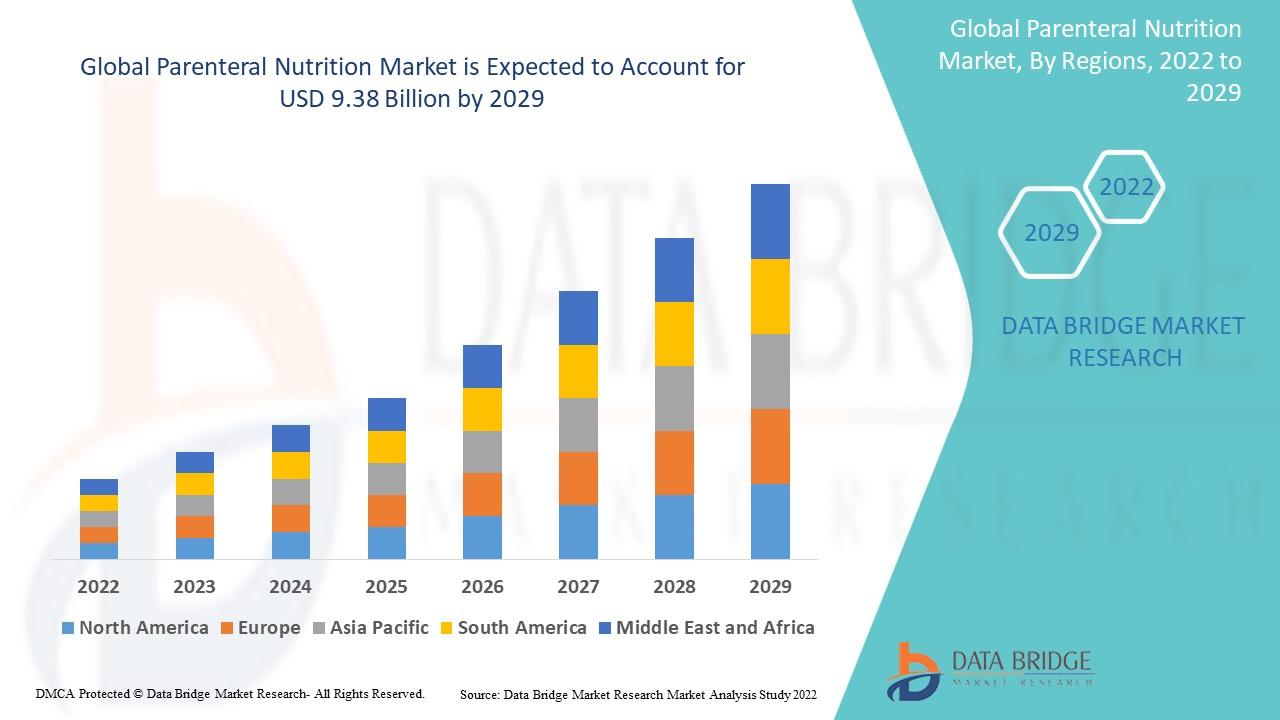
Latest Insights on Executive Summary Parenteral Nutrition Market Share and Size CAGR Value Global parenteral nutrition market size was valued at USD 7.31 billion in 2024 and is projected to reach USD 10.89 billion by 2032, with a CAGR of 5.10% during the forecast period of 2025 to 2032. Parenteral Nutrition Market report presents the best market opportunities available and efficient...