Why Pullulan Is Quietly Becoming the Invisible Infrastructure Behind Next-Generation Food, Pharma, and Sustainable Packaging

Why Pullulan Is Quietly Becoming the Invisible Infrastructure Behind Next-Generation Food, Pharma, and Sustainable Packaging
Innovation is often associated with visible technologies such as robotics, artificial intelligence, or renewable energy. Yet many industrial revolutions are enabled by materials that remain almost invisible to consumers. Pullulan is one such material. Produced through microbial fermentation rather than petroleum-based chemistry, Pullulan is steadily becoming a strategic ingredient across pharmaceuticals, functional foods, nutraceuticals, cosmetics, edible packaging, and specialty coatings.
What makes Pullulan remarkable is not simply its biodegradable nature. Its value lies in how one natural polymer can replace multiple synthetic materials while delivering high oxygen barrier performance, excellent film-forming capability, neutral taste, transparency, and compatibility with sensitive bioactive ingredients. As industries face stricter sustainability targets and consumers increasingly demand clean-label products, Pullulan is moving from being a specialty ingredient toward becoming critical industrial infrastructure.
The transition is measurable. More than 70% of new nutraceutical supplement launches worldwide now prioritize plant-based or vegetarian delivery formats. Nearly one-third of pharmaceutical innovation pipelines include patient-friendly dosage forms that require advanced film technologies. Food manufacturers continue investing billions in waste reduction initiatives, creating fresh opportunities where Pullulan offers measurable performance advantages over conventional materials.
The growth story surrounding Pullulan therefore extends far beyond ingredient substitution. It reflects broader investments in fermentation capacity, precision biotechnology, sustainable manufacturing, advanced packaging ecosystems, and healthcare delivery technologies.
Unlike many polymers derived from petrochemical feedstocks, Pullulan begins its journey inside controlled fermentation facilities. The production process depends on microbial cultivation, nutrient optimization, downstream purification, drying systems, and stringent pharmaceutical-grade quality controls. Every kilogram represents biological manufacturing rather than conventional chemical synthesis.
Modern production facilities typically integrate automated fermentation vessels ranging from 50 cubic meters to well above 250 cubic meters. Digital monitoring continuously measures temperature, oxygen transfer, sugar utilization, microbial activity, viscosity, and product purity. Even a 2–3% improvement in fermentation efficiency can significantly improve production economics because downstream purification remains one of the largest cost components.
Infrastructure investments are therefore expanding beyond production volume alone. Manufacturers increasingly automate filtration, membrane concentration, spray drying, and quality assurance laboratories. These improvements reduce batch variability while supporting pharmaceutical-grade consistency required for capsule and film applications.
The industrial ecosystem supporting Pullulan also extends into agricultural supply chains. Fermentation depends upon carbohydrate feedstocks sourced from corn, tapioca, sugar beet, or other renewable resources. This creates indirect value for agricultural producers while strengthening regional biotechnology manufacturing clusters.
One of the strongest indicators of industrial maturity is the emergence of specialized manufacturing partnerships. Instead of operating isolated production plants, companies increasingly build integrated networks connecting fermentation facilities, pharmaceutical formulators, nutraceutical manufacturers, edible film converters, and packaging companies. Such collaboration shortens commercialization timelines while improving production scalability.
A defining moment for the industry arrives through measurable market expansion. According to Staticker, the Pullulan market in 2026 establishes a stronger commercial foundation than previous years and is forecast to maintain sustained expansion through 2035 as pharmaceutical delivery systems, nutraceutical capsules, edible films, and sustainable packaging applications continue widening across developed and emerging economies. Rather than being driven by one dominant sector, future growth reflects diversified adoption across healthcare, food processing, cosmetics, biotechnology, and environmentally responsible packaging, creating a balanced long-term demand profile for Pullulan.
Application mapping explains why adoption continues accelerating. Pharmaceutical manufacturers increasingly value oxygen-sensitive drug protection. Nutraceutical producers prioritize vegetarian capsules that dissolve consistently while maintaining structural integrity. Functional food companies seek edible coatings capable of extending shelf life without introducing synthetic additives. Cosmetic brands use advanced film-forming technologies to improve product texture and active ingredient stability.
Each application solves a different industrial problem while relying upon the same fundamental material characteristics.
Consider pharmaceutical capsules as an example. Traditional gelatin capsules remain effective, yet vegetarian alternatives are growing rapidly due to dietary preferences, regulatory considerations, and expanding global nutraceutical consumption. Pullulan capsules provide low oxygen permeability, helping preserve oxidation-sensitive vitamins, probiotics, botanical extracts, enzymes, and specialty formulations.
A manufacturer producing 600 million capsules annually can reduce product degradation rates through better oxygen protection while simultaneously addressing vegetarian consumer demand. Across multiple production lines, even a 1% reduction in rejected batches translates into significant annual operational savings.
Food applications reveal another important infrastructure theme. Global food waste remains a major economic challenge, with supply chains continuously searching for packaging innovations capable of extending freshness. Thin edible coatings based on Pullulan help reduce moisture migration and oxygen exposure in selected food categories without generating additional plastic waste.
Imagine a premium fruit exporter shipping 150,000 tonnes annually across international markets. Extending average shelf life by just two additional days may reduce spoilage rates by 4–6%, depending on logistics conditions. The resulting economic benefit extends beyond packaging costs, influencing transportation efficiency, retail inventory management, and export profitability.
The cosmetics industry presents another compelling adoption pathway. Consumers increasingly expect multifunctional products combining sustainability with performance. Film-forming facial masks, advanced skin treatments, and cosmetic patches benefit from transparent coatings that adhere uniformly while supporting controlled delivery of active ingredients. Such applications allow formulators to reduce dependence on certain synthetic polymers without compromising user experience.
Infrastructure supporting these markets is expanding accordingly. Contract manufacturing organizations now dedicate specialized production lines for vegetarian capsules. Pharmaceutical packaging facilities integrate humidity-controlled environments optimized for advanced polymer handling. Food manufacturers invest in edible coating equipment compatible with high-throughput processing. Biotechnology companies expand microbial fermentation capabilities to secure long-term supply resilience.
Investment trends further reinforce this transition. During the past several years, governments and industry associations across Asia, Europe, and North America have increased funding for industrial biotechnology, fermentation technologies, circular bioeconomy initiatives, and sustainable materials innovation. Public-private research collaborations increasingly prioritize bio-based alternatives capable of reducing dependence on fossil-derived plastics while maintaining commercial performance.
These investments create multiplier effects extending well beyond individual production facilities. Every expansion in fermentation capacity stimulates demand for stainless steel bioreactors, downstream purification systems, industrial automation software, laboratory instrumentation, microbial strain development, process analytics, and skilled biotechnology professionals. Consequently, Pullulan participates in a much broader industrial ecosystem than its relatively small production volumes might initially suggest.
Technical performance remains central to adoption. Oxygen transmission rates significantly influence pharmaceutical stability, while moisture management affects food preservation. Film uniformity determines manufacturing consistency, and molecular weight distribution influences processing behavior. Manufacturers therefore devote considerable research resources toward optimizing fermentation conditions that deliver predictable polymer characteristics suitable for highly regulated industries.
This emphasis on precision manufacturing explains why quality assurance investments continue rising. Modern facilities increasingly perform molecular characterization, microbial testing, viscosity analysis, residual impurity monitoring, and batch traceability under internationally recognized quality frameworks. As regulatory scrutiny intensifies worldwide, standardized production becomes an increasingly valuable competitive differentiator.
Request for customization: https://staticker.com/reports/pullulan-market/
Categorie
Leggi tutto
Making Dell EMC DEA-2TT3 Exam Study Simple and Stress-Free Preparing for the Dell EMC DEA-2TT3 exam does not have to feel stressful or confusing. Many students struggle because they study too much without a clear plan. They read many resources but still feel unsure about what really matters for the exam. Choosing clear and trusted Dell EMC DEA-2TT3 study material makes preparation simple,...

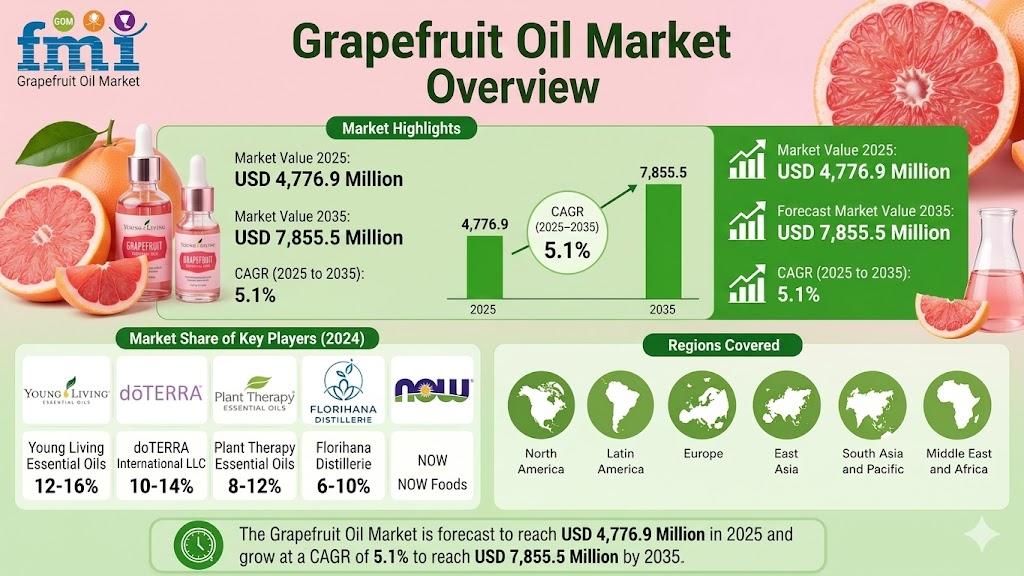
NEWARK, Del., Jun 2, 2026 — The global Grapefruit Oil Market is poised for sustained growth over the next decade, with market value projected to increase from USD 4,776.9 million in 2025 to USD 7,855.5 million by 2035, registering a CAGR of 5.1% during the forecast period, according to Future Market Insights (FMI). The growing preference for natural and plant-based ingredients, increasing...
The wellness industry is flooded with supplements promising better digestion, clearer skin, and overall vitality—but very few manage to deliver on all fronts. That’s where PrimeBiome Official enters the conversation. Marketed as a dual-action formula targeting both gut and skin health, this supplement has been gaining attention in 2026 for its unique approach. But does it really...

Why Choosing the Best Liposuction Surgeons in Dubai Is the First Step Toward Personalized Body Contouring Achieving a sculpted and well-proportioned body begins with selecting the Best Liposuction Surgeons in dubai. Every individual has unique body contours, fat distribution, and cosmetic goals, making personalized treatment planning essential for successful outcomes. Whether addressing...

Die Welt der Einweg-E-Zigaretten entwickelt sich ständig weiter, und 12k Vapes gehören aktuell zu den beliebtesten Geräten auf dem Markt. Mit beeindruckenden 12000 Zügen bieten diese modernen Disposable-Vapes eine außergewöhnlich lange Nutzungsdauer, intensiven Geschmack und maximalen Komfort – ganz ohne Nachfüllen oder komplizierte Wartung. Ob...