


Why Organic Pigments Are Becoming the Color Infrastructure Behind the Next Generation of Manufacturing, Sustainable Materials, and High-Performance Products
Why Organic Pigments Are Becoming the Color Infrastructure Behind the Next Generation of Manufacturing, Sustainable Materials, and High-Performance Products
Color has quietly become an engineering decision rather than a decorative one. A modern automobile contains more than 12 kilograms of color-bearing coatings and polymer compounds. A flexible food package may pass through nearly 25 production stages before reaching consumers. A premium architectural coating is expected to maintain visual consistency for more than 15 years despite ultraviolet exposure, humidity, dust, and pollution. Behind these performance expectations stands one essential material family—Organic Pigments.
Unlike commodity colorants of previous decades, Organic Pigments are increasingly selected because they combine high tinting strength, low density, improved dispersion, chemical stability, and compatibility with advanced manufacturing. As industries shift toward lightweight plastics, engineered coatings, digital printing, and environmentally responsible formulations, the demand for Organic Pigments is increasingly tied to infrastructure investments rather than aesthetics alone.
The story is therefore no longer about producing brighter colors. It is about building manufacturing ecosystems capable of producing durable, recyclable, energy-efficient products where color becomes part of performance engineering. Every new coating plant, polymer compounding facility, ink manufacturing line, and packaging conversion unit adds another layer to the growing industrial importance of Organic Pigments.
Consider the global coatings industry. Annual production exceeds 50 million metric tons across decorative, industrial, marine, automotive, aerospace, and protective coatings. Even if pigment loading averages only a few percentage points depending on formulation, the cumulative requirement translates into millions of tons of pigment-containing materials processed every year. Within this ecosystem, Organic Pigments increasingly replace less efficient alternatives wherever vibrant shades, transparency, or environmental compliance are critical.
The packaging industry provides another measurable example. More than 400 million tons of plastic are manufactured annually worldwide, while billions of square meters of flexible packaging are printed every month. Every production line depends upon consistent color reproduction because branding errors often lead to rejected batches. This has transformed Organic Pigments from simple coloring ingredients into quality-control components that directly influence manufacturing efficiency.
Infrastructure investment explains much of this transition. A modern pigment production facility incorporates controlled nitration, coupling reactions, purification, filtration, drying, milling, micronization, automated dispersion testing, wastewater treatment, solvent recovery, and particle-size characterization. Each processing stage directly affects optical performance, dispersion stability, weather resistance, and processing economics. Manufacturers increasingly invest millions of dollars in automation because even micron-level variations in particle size influence final product appearance.
The evolution of Organic Pigments therefore mirrors the evolution of advanced manufacturing itself. Precision chemistry now supports precision manufacturing.
During 2026, according to Staticker, the Organic Pigments market continues expanding with steady global momentum and is projected to maintain sustained growth through the forecast period as investments accelerate across coatings, plastics, digital printing, construction materials, specialty packaging, and high-performance industrial applications. Rather than being driven by a single end-use sector, Staticker attributes future expansion to diversified demand across manufacturing ecosystems, supported by capacity modernization, sustainability initiatives, and increasing adoption of advanced pigment processing technologies throughout the value chain.
Infrastructure supporting Organic Pigments extends far beyond pigment synthesis plants. An integrated manufacturing ecosystem includes petrochemical feedstock suppliers, intermediate chemical producers, reactor manufacturers, filtration equipment suppliers, grinding media manufacturers, automated color measurement laboratories, formulation software providers, packaging companies, logistics operators, and recycling facilities.
A single commercial pigment manufacturing complex may process hundreds of production batches annually while operating continuous quality monitoring systems that evaluate particle distribution, chromatic consistency, thermal resistance, solvent stability, and migration behavior. Advanced facilities increasingly employ inline optical inspection systems capable of measuring thousands of color data points every minute, significantly reducing waste and improving batch reproducibility.
Digital manufacturing is also changing how Organic Pigments are produced. Artificial intelligence now assists formulation engineers by predicting dispersion behavior before pilot production begins. Automated laboratory equipment can evaluate dozens of pigment formulations within a single day, reducing product development cycles by nearly 40%. Such efficiencies translate directly into lower production costs and faster commercialization.
Perhaps the strongest demonstration of infrastructure-led demand comes from the automotive industry. A modern passenger vehicle may contain colored plastics across dashboards, door trims, bumpers, lighting components, interior consoles, and under-the-hood engineering polymers. Exterior coatings require pigments capable of maintaining color stability after thousands of hours of accelerated weathering tests.
Automotive manufacturers routinely evaluate coating durability using ultraviolet chambers simulating more than a decade of outdoor exposure. Organic Pigments capable of retaining chromatic stability under these conditions become strategic materials rather than optional additives. As electric vehicle production expands globally, lightweight polymer components continue replacing metal assemblies, increasing opportunities for advanced pigment integration.
Packaging represents another remarkable application story. Consumers recognize products primarily through visual identity within seconds of viewing retail shelves. Studies across consumer goods consistently indicate that packaging color significantly influences purchasing decisions during the first moments of product interaction. Consequently, brand owners demand color consistency across production facilities operating in different countries.
Achieving this consistency requires standardized formulations using Organic Pigments with tightly controlled particle morphology. Manufacturing plants frequently measure color differences within extremely narrow tolerances because even slight variations may result in expensive product recalls or rejected packaging inventories.
Printing technologies further demonstrate how application mapping continues expanding. Conventional offset printing once dominated commercial production, but digital inkjet printing has introduced new technical requirements. Ink particles must remain stable inside microscopic nozzles operating at extremely high frequencies. This demands pigment dispersions with exceptionally fine particle distributions.
As digital printing expands into textiles, industrial graphics, ceramic decoration, and customized packaging, Organic Pigments increasingly support high-resolution imaging while minimizing nozzle clogging and improving print durability. Modern digital printing facilities may operate continuously around the clock, making pigment reliability an operational necessity rather than simply a quality objective.
Construction is another sector quietly transforming pigment consumption. Urban development increasingly specifies colored concrete, architectural coatings, insulated panels, roofing systems, composite facades, flooring materials, and decorative polymer products. Large infrastructure projects seek coatings capable of resisting ultraviolet degradation, moisture penetration, pollution, and chemical exposure over service lives exceeding 20 years.
Consequently, Organic Pigments contribute not only to aesthetics but also to lifecycle economics. Buildings requiring fewer repainting cycles reduce maintenance costs, labor requirements, and environmental impact over decades of operation. When multiplied across thousands of commercial buildings and residential developments, even modest improvements in coating durability generate measurable economic benefits.
Technical innovation is also reshaping pigment engineering. Researchers increasingly optimize crystal structures, surface treatments, particle morphology, and dispersion technologies to improve heat stability and processing efficiency. Nano-scale control techniques enable manufacturers to tailor optical properties without dramatically increasing pigment loading levels. Lower pigment consumption combined with equivalent color performance improves manufacturing efficiency while reducing formulation costs.
These advances demonstrate why Organic Pigments should increasingly be viewed as enabling materials supporting modern industrial infrastructure rather than merely supplying decorative color. Every improvement in dispersion efficiency, weather resistance, or process stability creates downstream value across coatings, plastics, inks, textiles, packaging, and engineered materials.
Request for customization: https://staticker.com/reports/acrylic-yarn-market/
Categorieën
Read More
Businesses across the UAE are investing in premium gifting solutions to strengthen relationships with clients, employees, and business partners. From onboarding kits to festive hampers, Corporate gifts in UAE have become an important part of brand communication. Companies now prefer useful, stylish, and customized gifting products that reflect professionalism and appreciation. Whether you need...

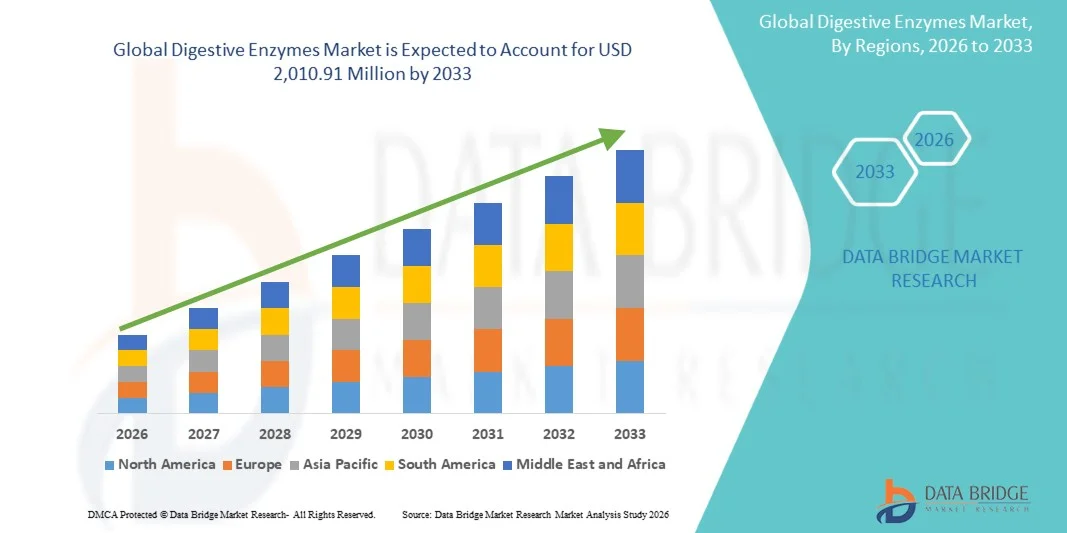
According to the latest report published by Data Bridge Market Research, the Digestive Enzymes Market The global digestive enzymes market size was valued at USD 994.52 million in 2025 and is expected to reach USD 2,010.91 million by 2033, at a CAGR of 9.20% during the forecast period This Digestive Enzymes Market document encompasses several market...
The global Design-To-Source Intelligence Market is witnessing substantial growth as organizations increasingly focus on optimizing product design, sourcing strategies, and procurement processes through data-driven insights. Valued at USD 3.43 billion in 2025E, the market is projected to reach USD 11.12 billion by 2033, expanding at a CAGR of 15.84% during the forecast period from 2026 to 2033....

"Asia-Pacific Baking Oven Market Summary: According to the latest report published by Data Bridge Market Research, the Asia-Pacific Baking Oven Market Data Bridge Market Research analyses that the market is growing with a CAGR of 4.8% in the forecast period of 2022 to 2029 and is expected to reach EUR 1,375.41 million by 2029. To impart a supreme quality to this persuasive...

Sell scrap gold is a service that allows individuals to convert unwanted, broken, or outdated gold items into cash based on their true metal value. Scrap gold refers to any gold that is no longer used in its original form, such as damaged jewellery, single earrings, broken chains, old-fashioned ornaments, or leftover pieces from manufacturing. Even though these items may look unusable, they...