


BIS FMCS Scheme: License, Certificate & Certification Guide
Introduction
For foreign manufacturers planning to export products to India, complying with Indian quality standards is essential. One of the most important certification systems introduced by the Bureau of Indian Standards (BIS) is the BIS FMCS Scheme. This scheme enables overseas manufacturers to obtain certification for products that are covered under mandatory Indian Standards before they enter the Indian market. Whether you are applying for a BIS FMCS License, seeking a BIS FMCS Certificate, or learning about BIS FMCS Certification, understanding the process helps ensure faster compliance and smoother market access.
What is the BIS FMCS Scheme?
The BIS FMCS Scheme stands for the Foreign Manufacturers Certification Scheme operated by the Bureau of Indian Standards. It allows manufacturers located outside India to obtain BIS certification for products that fall under mandatory certification requirements. Under this scheme, foreign manufacturers can receive authorization to use the Standard Mark on eligible products after successfully completing the required evaluation process. The objective of the BIS FMCS Scheme is to ensure that imported products meet the same quality, safety, and performance standards as products manufactured within India.
Who Needs BIS FMCS Certification?
BIS FMCS Certification is generally required for foreign manufacturers whose products are subject to mandatory BIS certification before being imported or sold in India.
Industries that commonly require FMCS certification include:
-
Electrical equipment
-
Household appliances
-
Steel products
-
Construction materials
-
Pressure equipment
-
Chemicals
-
Industrial machinery
-
Consumer products
Manufacturers should verify whether their product is covered under the applicable Indian Standard and Quality Control Order (QCO).
What is a BIS FMCS License?
A BIS FMCS License is an official approval issued to eligible foreign manufacturers after they successfully complete the certification process. The license authorizes the manufacturer to apply the BIS Standard Mark to certified products manufactured at the approved overseas factory. Receiving a BIS FMCS License demonstrates that the manufacturing facility complies with Indian quality requirements and maintains consistent production standards.
What is a BIS FMCS Certificate?
A BIS FMCS Certificate is the document issued after successful approval under the Foreign Manufacturers Certification Scheme.
The certificate confirms that:
-
The product complies with the applicable Indian Standard.
-
The manufacturing facility has been assessed as required.
-
Product testing requirements have been satisfied.
-
The manufacturer is authorized to use the BIS Standard Mark for the approved products.
The certificate is an important document for businesses exporting regulated products to India.
Steps in the BIS FMCS Certification Process
Obtaining BIS FMCS Certification generally involves the following stages:
1. Product Identification
Identify the relevant Indian Standard (IS) applicable to the product.
2. Application Submission
Submit the FMCS application along with technical documents and business information.
3. Documentation Review
BIS examines the submitted documents to verify compliance with scheme requirements.
4. Product Testing
Samples are tested in BIS-recognized laboratories to ensure conformity with the applicable Indian Standard.
5. Factory Inspection
BIS officials inspect the overseas manufacturing facility to evaluate production capability, quality control systems, and manufacturing processes.
6. Grant of License
After satisfactory review of the inspection and testing results, BIS issues the BIS FMCS License and BIS FMCS Certificate.
Documents Required
The documents required for FMCS certification generally include:
-
Company registration documents
-
Factory address details
-
Manufacturing process information
-
Product specifications
-
Quality control procedures
-
Testing reports
-
Calibration records
-
Authorized representative details
-
Trademark documents (if applicable)
Providing complete and accurate documentation helps reduce processing delays.
Benefits of BIS FMCS Certification
Obtaining BIS FMCS Certification offers several advantages:
-
Compliance with Indian regulations
-
Access to the Indian market
-
Higher consumer confidence
-
Recognition of product quality
-
Improved business credibility
-
Competitive advantage
-
Reduced regulatory risks
-
Enhanced international trade opportunities
For many regulated products, certification is mandatory before import and sale in India.
Common Products Covered Under FMCS
The BIS FMCS Scheme applies to various products, including:
-
Electrical appliances
-
Steel products
-
Cement
-
Automotive components
-
Industrial equipment
-
Pressure cookers
-
Construction materials
-
Consumer products
-
Chemical products
-
Engineering goods
Manufacturers should always confirm the applicable certification requirements before exporting products.
Common Challenges During Certification
Applicants may face delays because of:
-
Incomplete documentation
-
Incorrect product classification
-
Non-compliant laboratory reports
-
Quality control deficiencies
-
Factory inspection observations
-
Application errors
Proper planning and documentation can help ensure a smoother certification process.
How Long Does the FMCS Process Take?
The timeline for obtaining a BIS FMCS License depends on several factors, including:
-
Product category
-
Completion of documentation
-
Laboratory testing schedule
-
Factory inspection availability
-
Compliance with Indian Standards
Applicants should begin the certification process well before planning exports to India.
Conclusion
The BIS FMCS Scheme plays a vital role in ensuring that products manufactured outside India comply with Indian quality and safety standards. Obtaining a BIS FMCS License, BIS FMCS Certificate, and completing the BIS FMCS Certification process enables foreign manufacturers to access the Indian market while demonstrating compliance with regulatory requirements. By understanding the certification process, preparing accurate documentation, and meeting applicable Indian Standards, overseas manufacturers can streamline approval and build greater trust with Indian customers and business partners.
Категории
Больше
Define, Shape, and Enhance Your Curves Naturally Achieving a well-shaped and proportionate body is now easier with modern aesthetic treatments. Butt Fillers in Dubai & Abu Dhabi provide a non-surgical solution for enhancing shape, improving symmetry, and adding subtle volume to the buttocks. At Glamorous Clinic in Dubai, advanced injectable techniques are used to sculpt and refine curves...
Polaris Market Research has introduced the latest market research report titled Bearings Market Size, Share, Trends, Industry Analysis Report: By Product Type (Ball Bearings, Roller Bearings, and Plain Bearings), Application, Design, and Region (North America, Europe, Asia Pacific, Latin America, and Middle East & Africa) – Market Forecast, 2025–2034 that highlights...

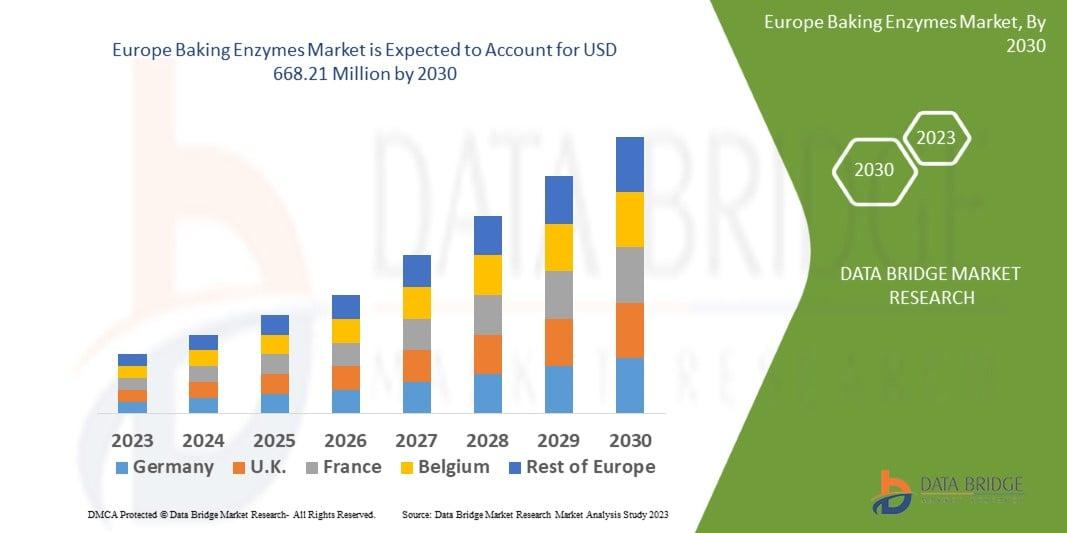
"Executive Summary Europe Baking Enzymes Market Size and Share Across Top Segments CAGR Value Data Bridge Market Research analyses that the baking enzymes market, which was USD 416.09 million in 2022, is expected to reach USD 668.21 million by 2030, at a CAGR of 6.10% during the forecast period 2023 to 2030. To better structure this Europe Baking Enzymes report, a nice blend of...
Introduction About Luís Filipe Madeira Caeiro Figo Luís Figo, widely regarded as one of the finest footballers of his generation, carved out a legendary career defined by his exceptional skill and vision. Operating primarily on the flank, he became synonymous with the role of a world-class right winger, a position he mastered through a blend of technical brilliance and intelligent...
The online world improvements each day, and new systems, solutions, and electronic neighborhoods continue to entice attention. One keyword that has recently gained interest is WDYUK .Many people are trying to find WDYUK to understand what it's, what it gives, and why it is becoming increasingly popular. If you are a first-time visitor or some one looking for more descriptive data, that manual...