


Powder Coating Machine & Equipment Is Quietly Becoming the Factory Infrastructure Behind Cleaner, Faster and More Profitable Metal Finishing
A factory that paints 10,000 metal parts a day is not just buying color. It is buying airflow, heat, conveyor movement, electrostatic charge, powder recovery, labor efficiency and compliance protection. That is why Powder Coating Machine & Equipment has moved from being a finishing-room purchase to a core manufacturing infrastructure decision.
In a medium-sized fabrication plant, one automatic powder coating line can replace 25–40 manual spray stations if the product mix is repetitive. A 6-gun automatic booth running at 2.5 meters per minute can coat nearly 1,200–1,800 small metal components per shift. If the line runs two shifts for 280 days, it can process 6.7–10.1 lakh parts annually. This is where the economics of Powder Coating Machine & Equipment becomes visible: the machine is not a coating accessory; it is a throughput multiplier.
The story starts with steel. Every electrical cabinet, appliance frame, shelving rack, bicycle frame, transformer enclosure, automotive bracket, aluminum profile, agricultural implement and office furniture body needs surface protection. A 1 mm thick powder layer is not used; the commercial coating layer is usually 60–100 microns. That small film decides whether a product survives 500 hours, 1,000 hours or more in salt spray, whether scratches expose metal, and whether warranty claims stay below 1–2% of shipped units.
A basic Powder Coating Machine & Equipment setup has 6 infrastructure blocks: pretreatment, drying oven, powder spray booth, powder guns, recovery system and curing oven. In capital terms, a manual batch line may start with 1 booth, 1 oven and 1–2 guns. A semi-automatic line may add a conveyor, cyclone recovery and 4–8 guns. A fully automated line may include 8–20 guns, reciprocators, dense-phase powder pumps, PLC control, color-change modules and heat recovery. The difference is not cosmetic. It changes labor per part, powder loss per part, energy per square meter and rejection rate.
For a factory coating 2,000 square meters of metal surface per day, powder consumption at 80-micron film thickness may be around 260–300 kg per day depending on density, transfer efficiency and reclaim practice. If first-pass transfer efficiency is 60%, nearly 40% of sprayed powder initially misses the part. With a good recovery booth, most of that overspray can be reclaimed. Without recovery discipline, powder loss can become 20–35 kg per day. At a powder cost of US$3–5 per kg, the leakage becomes US$18,000–44,000 per year for one shift. This is why Powder Coating Machine & Equipment buyers increasingly calculate powder economics before machine price.
The market has also changed because factories now treat coating as a measurable productivity cell. In 2015, many small shops still compared equipment on booth size and oven price. By 2020, they started comparing gun efficiency, color-change time and oven fuel cost. By 2024, the discussion shifted again: manufacturers began asking whether a line can support 10-minute color changes, automatic recipe storage, lower compressed-air use and data logging. By 2026, the winning Powder Coating Machine & Equipment configuration is the one that reduces 4 hidden costs: rework, powder waste, downtime and energy loss.
According to DataVagyanik, the global Powder Coating Machine & Equipment market is valued at US$1,486.3 million in 2026 and is forecast to reach US$2,251.8 million by 2035, expanding at a 4.72% CAGR during 2026–2035. The forecast is supported by three quantifiable adoption engines: conversion of liquid-paint lines to powder systems in metal fabrication, automation upgrades in appliance and automotive component plants, and replacement demand from older booths, ovens and spray-gun systems installed during the 2010–2020 industrial expansion cycle.
Application mapping shows why the market is broad but not random. Appliances account for high-volume repeat parts such as washing machine cabinets, refrigerator panels, oven housings and microwave frames. One appliance coating line can run 500–1,500 panels per hour when part geometry is standardized. Automotive components demand tighter finish repeatability, because brackets, wheels, chassis parts and EV battery trays require corrosion resistance and controlled film build. Architectural aluminum uses long conveyors, vertical or horizontal profile lines and multi-stage pretreatment. Furniture and storage systems need color flexibility, because batches may change from black to white to grey within the same day.
The most infrastructure-heavy use case is architectural aluminum. A single extrusion coating facility may need 7–9 pretreatment stages, deionized water rinsing, drying, powder application, curing and cooling. If the line handles 6-meter profiles at 1.5 meters per minute, it can move roughly 720 linear meters in an 8-hour shift before downtime and handling losses. Here, Powder Coating Machine & Equipment is not bought for one booth; it is bought as an integrated corridor of chemistry, motion and heat.
The most margin-sensitive use case is job coating. A job coater may handle 30–80 customers per month and 5–20 color changes per day. If each color change takes 25 minutes, two hours of productive capacity can disappear daily. If the booth design reduces color change to 10 minutes, the same shop gains 75 minutes per day. Over 250 working days, that is 312 additional production hours. For a shop billing US$80–150 per coating hour, fast-change Powder Coating Machine & Equipment can unlock US$25,000–47,000 in annual revenue capacity without adding a second line.
The technical center of the story is electrostatics. Powder particles are charged by corona or tribo guns, then attracted to grounded metal parts. A well-grounded part can improve deposition consistency and reduce orange peel, thin edges and Faraday cage defects. Poor grounding can reduce transfer efficiency by 10–20 percentage points. That means a factory spraying 100 kg of powder per shift may waste an extra 10–20 kg simply because hooks, racks or earthing points are dirty. The machine matters, but the infrastructure discipline around Powder Coating Machine & Equipment matters just as much.
Curing is the largest energy block. A batch oven may consume 10–30 kW for smaller loads, while a continuous conveyorized oven can cross 100 kW or equivalent gas input depending on size, insulation and metal mass. Heating 1,000 kg of steel from 30°C to 190°C needs roughly 20–22 kWh of theoretical heat before oven losses. If insulation is poor, exhaust is not recovered and the oven idles between batches, actual energy can be 2–4 times the theoretical load. This is why factories now judge Powder Coating Machine & Equipment by oven utilization, not just oven dimensions.
The investment logic is also changing. A manual booth may serve a workshop producing gates, grills and small fabricated parts. A semi-automatic line fits sheet metal, cabinets and furniture. A robotic or reciprocator-based system fits automotive, appliance and export-grade aluminum. At each step, the return calculation changes. Manual coating saves capital but increases labor variance. Automatic coating increases capital but lowers powder waste and stabilizes film thickness. For a plant with annual coating spend of US$300,000, even a 7% reduction in powder, labor and rework can release US$21,000 per year. Over 5 years, that becomes US$105,000 before accounting for capacity gains.
That is why Powder Coating Machine & Equipment is no longer evaluated only by procurement teams. Production managers calculate throughput. Quality teams calculate rejection rates. Finance teams calculate payback. Sustainability teams calculate VOC reduction and waste recovery. Maintenance teams calculate downtime risk. The same machine now touches 5 departments and influences 10 operating metrics: output, film thickness, powder loss, gas use, electricity use, labor hours, rework, color-change time, line stoppage and warranty claims.
The next phase of Powder Coating Machine & Equipment adoption will be shaped by plants that treat coating as a data-driven industrial cell. A booth that records powder flow, gun voltage, air pressure and recipe history can identify drift before defects appear. An oven with temperature profiling can show whether parts are truly reaching cure temperature. A conveyor with controlled speed can balance coating thickness and curing time. The factories that quantify these variables will not only make better finishes; they will turn the coating line into a profit center.
Why Powder Coating Infrastructure Is Becoming a Board-Level Capex Decision
The factory floor tells the real story. In an appliance plant, coating failure is not a surface defect; it is a line-balance problem. If 3% of refrigerator side panels need recoating, a plant producing 2,000 units a day must handle 60 defective panels daily. If each rework cycle consumes 12 minutes of handling, cleaning, recoating and curing time, that is 12 labor-hours lost every day. Over 280 working days, the defect loop consumes 3,360 labor-hours. At US$5–12 per hour in emerging markets and US$20–40 per hour in mature markets, the annual labor leakage alone can range from US$16,800 to US$134,400.
This is why Powder Coating Machine & Equipment is increasingly justified through defect prevention. A modern line can keep film-thickness variation within 10–15 microns for standard panels. Older manual lines often show 25–40 micron variation across edges, corners and recessed areas. On a 100,000-part monthly production base, that difference affects powder consumption, curing uniformity and complaint rate. If a plant overcoats by only 15 microns on average, it may consume 15–20% more powder than needed. In high-volume lines, that excess can equal 3–8 tons of avoidable powder use per month.
The infrastructure around pretreatment is equally important. A powder coating line cannot perform better than the surface it receives. A 5-stage pretreatment system may include degreasing, rinsing, phosphating or conversion coating, second rinse and final rinse. A 7-stage or 9-stage system adds better contamination control and sealing. For export-grade products, especially aluminum profiles, outdoor furniture, electrical enclosures and automotive parts, pretreatment can decide whether coating life is 2 years or 10 years. A coating line worth US$300,000 can underperform if the water quality, chemical dosing and drying stage are poorly controlled.
Use case mapping also shows a clear hierarchy of adoption. General fabrication shops usually enter through manual spray booths and batch ovens. Their typical investment logic is survival: faster turnaround, less liquid paint handling and improved finish consistency. Furniture producers move toward conveyorized lines once batch volume crosses 500–1,000 pieces per shift. Appliance manufacturers need automatic guns because flat panels demand high repeatability. Automotive suppliers adopt controlled reciprocators, robotic arms and oven profiling because parts must pass corrosion, chip resistance and adhesion tests. Architectural aluminum coaters invest in long curing ovens and profile handling because product length, not part count, defines line capacity.
The replacement cycle is now becoming a major demand driver. Many coating lines installed between 2012 and 2018 are entering their first serious modernization window. Guns lose efficiency, booths become harder to clean, filters consume more energy, ovens leak heat and control panels lack data capability. A 10-year-old line may still operate, but if it loses 5% output, wastes 8% more powder and consumes 12% more energy, the economic loss becomes measurable. For a plant spending US$500,000 per year on coating operations, even a 7% inefficiency means US$35,000 per year. That is enough to justify phased upgrades of guns, pumps, recovery systems and oven controls.
A practical example is a metal cabinet plant producing 1,500 cabinets per shift. Each cabinet may carry 1.8–2.5 square meters of coated surface area. At 2,000 cabinets per day, the coating line handles 3,600–5,000 square meters daily. If powder cost is US$4 per kg and the plant improves transfer efficiency from 60% to 72%, it can reduce powder purchase by 12–17% depending on reclaim quality. On 400 kg daily powder use, that is 48–68 kg saved per day. Across 280 days, the saving reaches 13.4–19.0 tons annually, equal to US$53,600–76,000 at US$4 per kg.
Powder Coating Machine & Equipment also supports ESG-driven conversion from solvent-based coating. Liquid paint systems may release VOCs, require solvent handling, generate overspray sludge and need drying zones with emission controls. Powder systems are not impact-free, but they eliminate most solvent evaporation and allow overspray recovery. In plants where 20–30% of liquid paint is lost as overspray and solvent evaporation, conversion to powder can materially reduce waste-handling cost. If a factory previously handled 10 tons of paint sludge annually, even a 60% reduction creates 6 tons less hazardous or semi-hazardous waste to manage.
Spend trends show that buyers are not only purchasing new lines; they are upgrading specific modules. Around 25–35% of capex in mature coating facilities is often directed toward ovens, burners, heat recovery, conveyor upgrades and booth modernization rather than full-line replacement. Another 15–25% may go into guns, pumps, control systems and color-change upgrades. This modular spending behavior matters because it makes the market less cyclical. Even when factories delay greenfield projects, they still invest in parts that reduce operating cost.
The most visible technical shift is automation of powder delivery. Traditional venturi pumps are still widely used because they are simple and affordable. Dense-phase systems are gaining adoption where powder flow control, soft cloud delivery and repeatability matter more. If a dense-phase system reduces powder output fluctuation by 20–30%, the benefit appears in smoother finish, lower film build variation and reduced reclaim contamination. For automotive wheels, appliance panels and premium architectural components, consistency is worth more than the initial equipment premium.
Digital control is another quiet shift. A line with recipe memory can store voltage, current, air pressure, powder flow, conveyor speed and oven temperature for each SKU. In a factory with 50 recurring products, manual setting errors can create frequent quality drift. If digital recipes prevent even 2 major defect events per month, and each event costs US$1,000–3,000 in rework, lost time and scrap, the avoided loss can reach US$24,000–72,000 per year. That is why Powder Coating Machine & Equipment is becoming part of Industry 4.0 infrastructure, especially in export-facing factories.
Regional behavior is also changing. China remains a large equipment producer and user because of its appliance, metal furniture, electrical enclosure, aluminum profile and automotive component base. India is moving fast because MSME fabricators, appliance suppliers, EV component makers and infrastructure product manufacturers are upgrading from wet paint to powder. Europe is focused on energy efficiency, low-emission finishing and automation. The United States has strong demand from job coaters, metal building products, agricultural equipment, industrial machinery and reshoring-related fabrication. Southeast Asia is becoming a capacity expansion zone for appliances, bicycles, office furniture and aluminum products.
The labor angle is underrated. A manual painter may coat 80–150 square meters per shift depending on part complexity. An automatic line with 6–10 guns can coat many multiples of that with fewer operators. But the real gain is not only labor reduction. It is labor standardization. A manual painter’s output changes with fatigue, skill and part geometry. A programmed line can repeat the same spray pattern for every hanger cycle. In high-volume plants, this repeatability reduces dependency on scarce skilled sprayers.
Maintenance discipline creates another layer of quantification. Filters, nozzles, hoses, pumps, hooks, chains and oven seals determine daily performance. If clogged filters reduce booth airflow by 15%, overspray containment declines. If hooks carry coating buildup, grounding weakens. If oven seals leak, energy cost rises. A plant that spends 2–3% of equipment value annually on preventive maintenance can often avoid much larger unplanned losses. For a US$400,000 coating line, that means US$8,000–12,000 annual maintenance discipline protecting far higher production value.
The strongest business case appears where volume, quality and energy overlap. A plant with low volume may buy simple equipment and accept manual flexibility. A plant with high volume but low quality pressure may automate gradually. But a plant with export customers, strict surface standards and rising energy bills has little choice. It must engineer coating as a system. That system includes compressed air quality, humidity control, powder storage, clean hooks, stable grounding, chemical pretreatment, booth airflow, recovery efficiency, oven profiling and operator training.
By 2035, the winners in this space will not be the factories that simply own Powder Coating Machine & Equipment. The winners will be the factories that measure coating cost per square meter, energy per cured part, powder recovery percentage, rejection rate by defect type and line availability by shift. Once these numbers are visible, the coating room stops being a cost center hidden at the back of the plant. It becomes one of the fastest ways to improve margin, compliance and product life.
Κατηγορίες
Διαβάζω περισσότερα
If you think your electric bike is already delivering peak performance, think again. The truth is, without the Best E bike accessories, you’re only scratching the surface of what your ride can truly do. At Concept Electric Bikes, we don’t just sell products—we unlock a completely new riding experience that transforms every journey into something faster, smoother, safer, and...

Embrace the Natural Revolution In a world bustling with chemical-infused hair products, the search for a natural, health-promoting alternative can often feel like a quest. Fortunately, Glory's dye henna stands as a beacon of hope for those dedicated to embracing both the health and aesthetic of their hair. As you explore the benefits of this luxurious yet natural option, discover the...

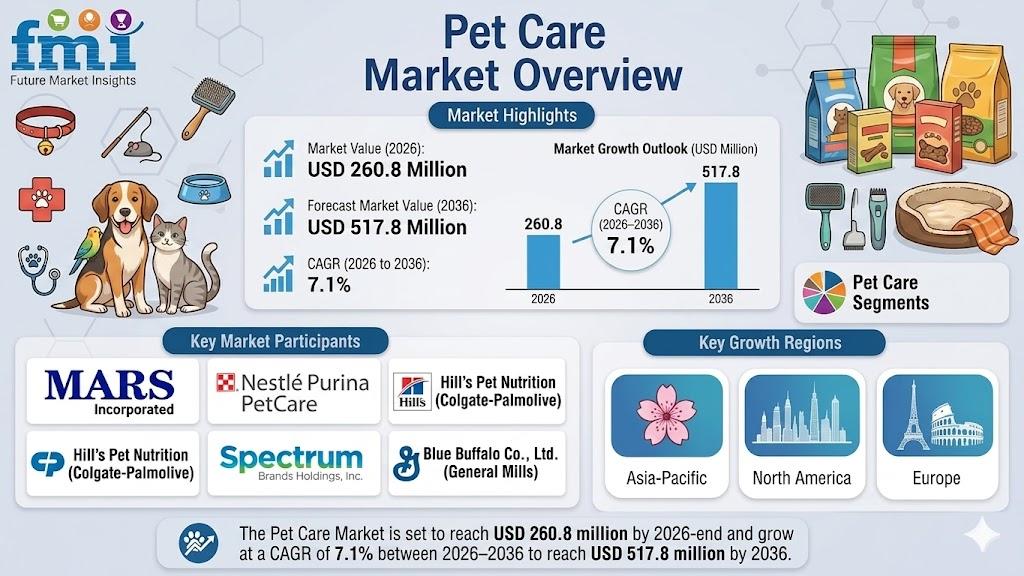
NEWARK, Del., Jun. 4, 2026 — The global Pet Care Market is projected to witness robust growth over the next decade, with market value expected to increase from USD 260.8 million in 2026 to USD 517.8 million by 2036, registering a CAGR of 7.1% during the forecast period, according to Future Market Insights (FMI). Growing pet ownership rates, increasing pet humanization trends, and...
Key Drivers Impacting Executive Summary Europe Healthcare Advertising Market Size and Share Data Bridge Market Research analyses that the healthcare advertising market was valued at USD 10.93 billion and is expected to reach the value of USD 16.15 billion by 2029, at a CAGR of 5.0% during the forecast period. Analysis and discussion of important industry trends, market size,...
"Executive Summary Myofascial Pain Syndrome (MPS) Treatment Market Market Size and Share Forecast The global myofascial pain syndrome (MPS) treatment market size was valued at USD 1.11 billion in 2024 and is projected to reach USD 2.23 billion by 2032, with a CAGR of 8.49% during the forecast period of 2025 to 2032. All the data and information involved in this Myofascial Pain...