


Why Permanent Magnets Are Quietly Becoming the Invisible Infrastructure Behind the World's Electrification Revolution

Why Permanent Magnets Are Quietly Becoming the Invisible Infrastructure Behind the World's Electrification Revolution
Most infrastructure revolutions are recognized by what people can see—bridges, rail corridors, airports, power stations, or skyscrapers. Yet some of the biggest industrial transformations are powered by components that remain completely hidden. Permanent Magnets belong to that category. They are embedded inside electric vehicles, offshore wind turbines, MRI systems, factory robots, elevators, drones, precision machine tools, consumer electronics, and thousands of industrial motors. While largely invisible, Permanent Magnets have become one of the defining materials supporting the transition toward electrification, automation, renewable energy, and digital manufacturing.
The scale explains their importance. A modern battery electric vehicle typically integrates between 2 and 5 kilograms of high-performance Permanent Magnets across traction motors, steering systems, pumps, sensors, and braking mechanisms. A direct-drive offshore wind turbine may require 600 kilograms to more than 2 metric tons of Permanent Magnets, depending on rated capacity and generator architecture. Industrial automation facilities often operate hundreds of servo motors simultaneously, each relying on Permanent Magnets to deliver positioning accuracy measured within fractions of a millimeter. These numbers illustrate why demand is increasingly tied not to consumer preference but to infrastructure expansion.
Consider how manufacturing has changed over the last decade. Modern factories pursue overall equipment effectiveness exceeding 85%, while robotic workstations commonly achieve positioning repeatability better than ±0.03 mm. Such precision is difficult to sustain without motors that deliver high torque density and stable magnetic fields. This is where Permanent Magnets outperform conventional electromagnetic alternatives by eliminating continuous excitation energy, reducing thermal losses, and improving compactness. In facilities operating around the clock, even a 2–5% improvement in motor efficiency translates into meaningful annual electricity savings and lower maintenance requirements.
Energy infrastructure presents an even stronger example. Wind farms continue increasing turbine ratings from 3 MW installations toward 12–18 MW offshore platforms. Larger generators require compact, highly efficient power conversion systems capable of operating under fluctuating wind conditions. Permanent Magnets enable direct-drive generator designs that eliminate complex gearboxes, reducing moving parts, lowering maintenance intervals, and improving turbine availability. Every percentage point gained in operational uptime contributes additional electricity generation over the asset's expected 25- to 30-year operating life, making magnetic material selection an infrastructure decision rather than simply a component choice.
Infrastructure planners are also evaluating transportation differently. Urban rail systems seek lower energy consumption, airport baggage handling systems require uninterrupted motor performance, and logistics warehouses process tens of thousands of packages every hour. Across these environments, Permanent Magnets enable compact motors that occupy less installation space while delivering higher torque. Distribution centers equipped with autonomous mobile robots frequently operate fleets numbering 200 to over 2,000 robots, each dependent on compact magnetic drive systems that minimize battery consumption and maximize operational runtime.
The story becomes even more compelling when healthcare enters the equation. Medical imaging systems rely heavily on magnetic stability. Hospitals expanding diagnostic capacity increasingly invest in equipment capable of higher imaging precision and faster scanning cycles. Although technologies vary, the broader trend demonstrates how Permanent Magnets contribute to equipment reliability, supporting healthcare infrastructure that serves millions of patients annually while minimizing operational interruptions.
The digital economy has also accelerated demand in unexpected ways. Data centers are often associated with servers and semiconductors, yet cooling infrastructure, backup systems, precision pumps, and intelligent airflow management all incorporate motors enhanced by Permanent Magnets. As hyperscale facilities continue expanding globally, supporting infrastructure increasingly emphasizes energy efficiency because electricity represents one of the largest operating costs. Even modest efficiency gains multiplied across thousands of continuously operating motors generate measurable reductions in annual energy consumption.
One important indicator of this transformation comes from investment patterns rather than product shipments. Governments continue expanding renewable electricity capacity, manufacturers are modernizing production lines with robotics, and automotive companies are accelerating electric vehicle manufacturing. Each investment category indirectly expands the ecosystem for Permanent Magnets, making demand increasingly diversified rather than dependent on a single industry. This diversification strengthens long-term industrial resilience because growth originates simultaneously from transportation, healthcare, renewable energy, industrial automation, consumer electronics, and defense manufacturing.
The economic outlook reflects this structural shift. According to Staticker, the Permanent Magnets market size in 2026 represents a strong expansion phase, with continued growth forecast through the next decade as electrification projects, renewable energy installations, industrial automation, and advanced mobility systems continue scaling worldwide. Rather than depending on short-term purchasing cycles, the projected expansion is supported by long-life infrastructure investments, replacement demand, and broader industrial modernization programs, positioning Permanent Magnets as one of the foundational materials underpinning future engineering ecosystems.
Behind these investments lies continuous innovation in magnetic materials themselves. Manufacturers are improving grain alignment, optimizing rare earth utilization, refining sintering processes, and enhancing corrosion resistance through multilayer surface coatings. These engineering improvements extend operating temperatures beyond 180°C for specialized applications while maintaining magnetic performance under demanding industrial environments. Such advances allow Permanent Magnets to operate inside electric drivetrains, aerospace actuators, offshore generators, and industrial robotics where thermal stability directly influences equipment lifespan.
Supply chains have evolved accordingly. Instead of treating Permanent Magnets as simple industrial inputs, manufacturers increasingly integrate them into vertically coordinated production strategies. Mining companies, rare earth refiners, alloy processors, magnet manufacturers, motor producers, and original equipment manufacturers now collaborate more closely to improve material availability, reduce waste, and strengthen production resilience. This shift reflects recognition that magnetic materials have become strategic industrial assets rather than interchangeable commodities.
Perhaps the most fascinating aspect of Permanent Magnets is that their value extends beyond the material itself. Every kilogram installed inside an efficient motor contributes to lower electricity consumption. Every wind turbine using advanced magnetic generators improves renewable energy output. Every automated production line equipped with precision servo systems increases manufacturing productivity. Every electric vehicle replacing internal combustion technology reduces direct operational emissions over its service life. The influence of Permanent Magnets therefore compounds across multiple sectors, creating infrastructure benefits that extend well beyond the factory producing the magnets themselves.
As nations continue investing in cleaner energy, smarter factories, electrified mobility, and intelligent infrastructure, the importance of Permanent Magnets is steadily moving from the background to the center of industrial planning. They may remain unseen by most people, but their contribution can increasingly be measured through greater energy efficiency, higher equipment productivity, longer operational lifecycles, and stronger infrastructure resilience. In many ways, the next generation of global infrastructure will not only be built with steel and concrete—it will also be powered by Permanent Magnets.
Request for customization: https://staticker.com/reports/permanent-magnets-market/
Κατηγορίες
Διαβάζω περισσότερα
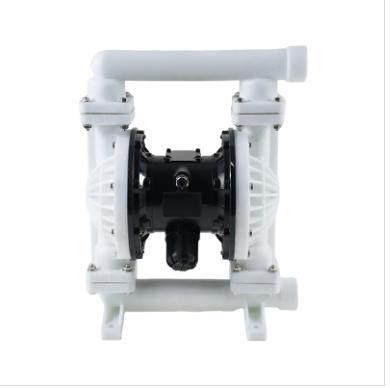
The Polypropylene Pneumatic Diaphragm Pump is designed for handling corrosive and acidic fluids with minimal maintenance. Its chemical resistance comes from polypropylene, which naturally resists hydrochloric acid, sulfuric acid, and other harsh chemicals. Unlike metal pumps that corrode over time, this pump provides durability, reducing downtime and replacement costs. Chemical Resistance...
Global Zinc Fertilizers Market Set for Strong Growth as Awareness of Micronutrient Deficiencies and Sustainable Farming Practices Rise Market Overview Zinc fertilizers are micronutrient inputs applied to soil or crops to correct zinc deficiencies, which are common in many agricultural soils and can limit crop growth and yields. These products include zinc sulfate, zinc chelates, and...

Many adults feel unhappy about crooked teeth, gaps, or bite problems that affect their smile. Some people never had orthodontic treatment when they were younger, while others notice their teeth shifting as they grow older. This is where Invisalign has become a popular option for adults who want a more comfortable and less noticeable way to straighten their teeth. Instead of metal braces,...

" Intercom Devices Market" According to the latest report published by Data Bridge Market Research, the Intercom Devices Market Data Bridge Market Research analyzes that the global intercom devices market is expected to reach a value of USD 58,127.45 million by 2030, growing with a CAGR of 12.7 % during the forecast period. This Intercom Devices Market research report is one of...
Trong thời đại công nghệ phát triển mạnh mẽ, các nền tảng giải trí trực tuyến ngày càng trở nên phổ biến. Người dùng luôn tìm kiếm những hệ thống đáng tin cậy, hoạt động minh bạch và mang lại trải nghiệm thuận tiện. BL555 được biết đến như một nhà cái trực tuyến uy tín, nhận được nhiều...