Submarine Power Cable Market Outlook 2031: Rising Offshore Wind Investments and Cross-Border Grid Connections Fuel Global Growth

The global submarine power cable market is poised for substantial expansion as countries continue to strengthen cross-border electricity networks and accelerate investments in offshore renewable energy infrastructure. The market was valued at over US$ 6.9 Bn in 2021 and is projected to grow at a compound annual growth rate (CAGR) of 12% from 2022 to 2031, reaching more than US$ 21.7 Bn by the end of 2031.
Submarine power cables have become an essential component of modern electricity transmission systems, enabling the efficient transfer of power beneath seas, lakes, and rivers. Their growing deployment in offshore wind farms, inter-country grid connections, and offshore oil and gas operations is expected to create significant opportunities for manufacturers and technology providers over the coming decade.
Offshore Renewable Energy Projects Accelerating Market Growth
One of the primary drivers of the submarine power cable market is the rapid expansion of offshore wind energy projects worldwide. Governments are investing heavily in renewable energy to reduce carbon emissions, improve energy security, and achieve long-term sustainability targets.
Offshore wind farms require high-voltage submarine cables to transmit electricity from offshore generation facilities to onshore transmission networks. These cables are specifically engineered to withstand extreme underwater conditions, including high pressure, temperature variations, and corrosive marine environments while ensuring reliable power transmission over long distances.
Europe continues to lead global offshore wind development, with the United Kingdom and Germany accounting for a significant share of investments. Increasing offshore wind capacity across Asia Pacific and North America is also expected to create sustained demand for advanced submarine cable systems throughout the forecast period.
Growing Cross-Border Grid Interconnections Supporting Market Expansion
The increasing need for secure and reliable electricity supply has encouraged countries to develop cross-border transmission infrastructure. International grid interconnections allow neighboring countries to exchange electricity, optimize power generation resources, and improve energy reliability.
Submarine power cables play a vital role in connecting islands, offshore facilities, and neighboring nations separated by water bodies. They enable efficient energy trading while reducing dependency on localized power generation.
Several large-scale interconnection projects highlight the growing importance of submarine cable technology. One of the world's longest subsea power interconnectors links the Netherlands and Norway across approximately 590 kilometers. Similarly, the United Kingdom maintains multiple submarine cable connections with France, the Netherlands, Ireland, and Northern Ireland, with additional projects currently under development.
The European Commission has also proposed increasing electricity interconnection capacity across member countries to strengthen regional energy security and facilitate cross-border electricity trade. These initiatives are expected to significantly boost demand for submarine power cables during the forecast period.
Expanding Offshore Oil and Gas Activities
In addition to renewable energy, offshore oil and gas operations continue to contribute to market growth. Offshore drilling platforms require dependable electrical infrastructure to support exploration, extraction, and production activities in remote marine environments.
Submarine power cables provide uninterrupted power transmission between offshore installations and mainland power grids while reducing dependence on diesel generators. Their ability to deliver reliable, high-capacity electricity under challenging conditions makes them indispensable for offshore energy operations.
Although the long-term energy transition favors renewable power, investments in offshore oil and gas infrastructure continue to support demand for submarine cable systems across several regions.
Technological Advancements Driving Industry Development
The submarine power cable industry has witnessed significant technological progress in recent years. Manufacturers are developing high-voltage alternating current (HVAC) and high-voltage direct current (HVDC) cable systems capable of transmitting larger amounts of electricity across greater distances with minimal transmission losses.
HVDC submarine cable technology has gained considerable attention due to its superior efficiency for long-distance underwater transmission. As governments invest in national grid modernization and offshore renewable integration, demand for HVDC cable systems is expected to rise substantially.
Manufacturers are also improving insulation materials, cable armoring, corrosion resistance, and installation technologies to enhance operational reliability and extend service life.
Installation Challenges Continue to Restrain Market Growth
Despite strong growth prospects, the submarine power cable market faces several challenges. Installation and maintenance of underwater cable systems require specialized vessels, sophisticated equipment, and highly skilled engineering teams.
Deepwater installations involve complex marine surveys, seabed preparation, cable laying, and continuous monitoring. Repairs can be extremely expensive and time-consuming, particularly when cables are damaged by fishing activities, anchors, or natural disasters.
In addition to high installation costs, submarine cable projects must comply with strict environmental regulations designed to minimize impacts on marine ecosystems. Cable installation may temporarily increase underwater noise, sediment disturbance, and habitat disruption, while operational systems generate electromagnetic fields and heat that require careful environmental assessment.
To address these challenges, manufacturers are increasing investments in research and development aimed at simplifying installation procedures, improving cable durability, and reducing maintenance requirements.
COVID-19 Impact on the Market
The COVID-19 pandemic temporarily slowed the submarine power cable market due to disruptions in global supply chains, project delays, labor shortages, and logistical constraints.
However, government stimulus programs supporting renewable energy development and infrastructure modernization helped revive market activity. Investments in offshore wind farms, electricity transmission networks, and digital infrastructure resumed as economies recovered.
The long-term outlook remains highly positive, supported by increasing global emphasis on clean energy generation, energy independence, and resilient electricity infrastructure.
Segment Analysis
Based on type, the multi-core cable segment dominated the global submarine power cable market with approximately 76.5% market share in 2021. Multi-core cables offer multiple conductors within a single cable structure, making them suitable for applications requiring high transmission capacity without significantly increasing cable diameter. The segment is projected to expand at a CAGR of more than 11.5% through 2031.
By application, the market is segmented into:
- Offshore Wind Power Generation
- Inter-Country and Island Connections
- Offshore Oil Rigs
Among these, offshore wind power generation is expected to remain the fastest-growing application due to continuous investments in renewable energy infrastructure worldwide.
Regional Outlook
Europe accounted for the largest share of the global submarine power cable market in 2021, representing approximately 46.3% of total market volume. The region is projected to maintain its leadership throughout the forecast period, driven by expanding offshore wind installations, strong government support for renewable energy, and increasing inter-country electricity connections.
Germany and the United Kingdom remain the region's largest markets owing to substantial offshore wind investments and advanced transmission infrastructure.
Asia Pacific ranked as the second-largest regional market with 25.4% market share in 2021. Rapid industrialization, growing electricity demand, increasing offshore renewable projects, and expanding interconnection initiatives across China, Japan, India, and ASEAN countries are expected to accelerate regional growth over the coming years.
North America, Latin America, and the Middle East & Africa are also anticipated to witness steady market expansion as governments continue investing in power transmission infrastructure and renewable energy integration.
Competitive Landscape
The global submarine power cable market is relatively consolidated, with a limited number of multinational companies accounting for a significant share of global revenue. Leading manufacturers are focusing on product innovation, expansion of manufacturing capacity, strategic partnerships, mergers and acquisitions, and sustainable cable technologies to strengthen their competitive position.
Major companies operating in the global submarine power cable market include:
- ABB Ltd.
- Nexans SA
- General Cable Corporation
- NKT A/S
- Prysmian Group
- Sumitomo Corporation
- Furukawa Electric Group
- LS Cable & System
- HENGTON GROUP Co., Ltd.
- KEI Industries Ltd.
- Hydro Group plc
Recent industry developments include Indonesia's submarine cable collaboration connecting Indonesia, Singapore, Australia, Japan, and the United States, as well as Cyprus' Arsinoe submarine cable project, reflecting continued investments in global subsea infrastructure.
Future Outlook
The outlook for the submarine power cable market remains highly promising through 2031. Rising offshore wind capacity, increasing cross-border electricity trade, modernization of national transmission grids, and expanding offshore energy infrastructure are expected to generate sustained demand worldwide.
Although installation complexity and maintenance costs remain key challenges, ongoing technological innovations and supportive government policies are expected to improve project efficiency and enhance long-term market growth. As countries continue transitioning toward cleaner and more interconnected energy systems, submarine power cables will play an increasingly critical role in enabling reliable, efficient, and sustainable electricity transmission across the globe.
Kategoriler
Read More
Introduction: First impressions matter, especially in a competitive business environment. Clean, sparkling windows can significantly influence how customers perceive your company. Investing in commercial window cleaning St Joseph services ensures that your property looks professional, welcoming, and well-maintained year-round. Businesses in St. Joseph benefit greatly...

India’s power ecosystem is expanding rapidly, but uninterrupted electricity remains a critical requirement for industries, commercial buildings, healthcare facilities, data centers, construction sites, telecom towers, and residential complexes. Diesel generators continue to serve as backup and standby power systems where grid disruptions, voltage fluctuations, peak-load pressure, and...

Игровые автоматы с фруктами — это не просто развлечение в топ казино , а своеобразное цифровое искусство, в котором сочетаются яркая визуальная эстетика, запоминающиеся звуки и увлекательная интерактивность. Они создают атмосферу, в которую легко погрузиться и из которой не хочется выходить. Сочные вишни, спелые лимоны, арбузы и виноград — эти образы давно стали символами...

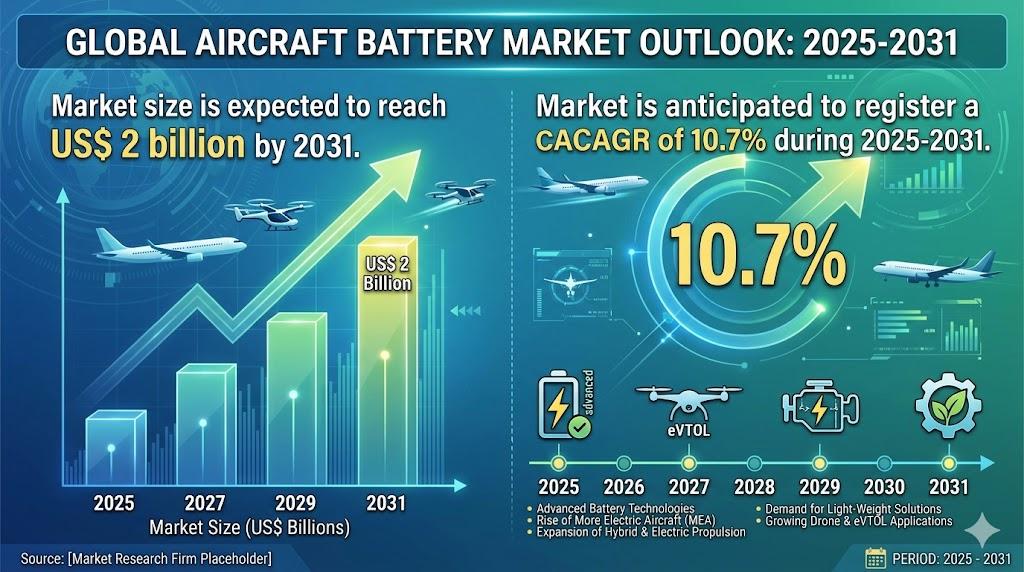
The aviation industry is witnessing a significant transformation, driven by technological innovations, evolving consumer preferences, and a strong global push toward sustainability. A crucial component powering this transition is the aircraft battery system. According to a comprehensive research report by The Insight Partners, the Aircraft Battery Market size is expected to reach US$...
The adult advertising space is not what it used to be. Over the last few years, stricter policies, evolving user behavior, and rising competition have pushed advertisers to rethink how they approach Adult Adverts. If you are trying to scale campaigns today, simply running traffic is not enough. You need the right platform, the right format, and a clear understanding of how this niche works....