


Why Isoprene Rubber (IR) Is Becoming the Silent Infrastructure Material Behind Modern Mobility, Healthcare, and Industrial Manufacturing

Why Isoprene Rubber (IR) Is Becoming the Silent Infrastructure Material Behind Modern Mobility, Healthcare, and Industrial Manufacturing
Infrastructure is often associated with highways, ports, airports, and power plants. Yet every kilometer of road, every aircraft landing, every medical glove used in surgery, and every industrial conveyor operating around the clock depends on advanced materials working quietly behind the scenes. Isoprene Rubber (IR) is one of those hidden enablers. While it rarely appears in headlines, it has become an essential material supporting transportation, healthcare, manufacturing, mining, and consumer industries. As industrial systems become more demanding, Isoprene Rubber (IR) is increasingly valued for delivering natural-rubber-like elasticity with highly controlled manufacturing consistency.
The global industrial economy now operates through millions of moving components where durability matters more than ever. A passenger vehicle contains well over 200 rubber-based parts, while heavy commercial vehicles use substantially more because of larger suspension systems, vibration isolators, hoses, seals, and tire components. Every reduction in premature component failure translates into measurable savings in maintenance costs, downtime, and fuel consumption. This is precisely where Isoprene Rubber (IR) demonstrates its importance. Manufacturers increasingly choose it because production parameters can be tightly controlled, allowing consistent mechanical properties across large production volumes.
Modern manufacturing infrastructure also depends on reliability. A large automotive assembly facility may produce between 800 and 1,500 vehicles every day, operating continuously across multiple shifts. Even a few minutes of conveyor interruption can affect hundreds of downstream processes. Rollers, belts, seals, cushioning systems, and vibration-control components manufactured using Isoprene Rubber (IR) contribute to maintaining uninterrupted operations. Material consistency reduces rejection rates, improves component uniformity, and supports predictive maintenance strategies that factories increasingly rely upon.
The transition toward electric mobility has expanded the importance of Isoprene Rubber (IR) even further. Electric vehicles generate different vibration frequencies than conventional internal combustion vehicles because of instant torque delivery and fewer mechanical moving parts. Engineers therefore redesign mounts, bushings, suspension elements, and sealing systems to improve vibration isolation. Every improvement in vibration management enhances passenger comfort while protecting battery packs and electronic assemblies from long-term mechanical stress. As EV production scales globally, demand for precision-engineered elastomer components continues to rise alongside investments in advanced polymer processing facilities.
According to Staticker, the Isoprene Rubber (IR) market in 2026 represents an important foundation year for long-term industry expansion, with the forecast indicating sustained growth through the coming decade as investments accelerate across automotive manufacturing, medical products, industrial equipment, specialty tires, and engineered elastomer applications. Rather than being driven by a single industry, future expansion reflects diversified demand supported by manufacturing modernization, higher-quality synthetic elastomers, and expanding infrastructure requirements across multiple industrial sectors.
One of the strongest stories surrounding Isoprene Rubber (IR) is its relationship with healthcare infrastructure. Hospitals consume enormous quantities of disposable protective products every day. A large tertiary-care hospital can use tens of thousands of examination gloves weekly, while national healthcare systems collectively consume billions annually. Product consistency becomes critical because even small variations in elasticity or tear resistance can influence performance. Manufacturers therefore continue improving polymer purity, processing precision, and quality assurance systems, making Isoprene Rubber (IR) an increasingly attractive option for premium medical applications requiring dependable physical characteristics.
Industrial resilience is another theme shaping adoption. Mining operations frequently operate twenty-four hours a day in harsh environments where abrasive dust, continuous vibration, and mechanical impacts challenge every machine component. Conveyor seals, protective covers, flexible connectors, shock absorbers, and industrial dampers benefit from materials capable of maintaining elasticity under demanding operating conditions. In these environments, Isoprene Rubber (IR) supports longer maintenance intervals, helping operators improve equipment availability while lowering lifecycle operating costs. Even modest increases in component longevity can generate meaningful savings when hundreds of machines operate simultaneously across large industrial sites.
Tire manufacturing represents another important application landscape. Premium tire producers continuously optimize rolling resistance, grip, wear characteristics, and heat generation. Achieving the right balance requires carefully engineered rubber formulations rather than relying on a single material. Isoprene Rubber (IR) contributes to these formulations by offering predictable molecular characteristics that assist manufacturers in producing tires with consistent performance. For commercial fleets covering hundreds of thousands of kilometers annually, even small improvements in durability or rolling efficiency translate into measurable reductions in fuel use and replacement frequency.
Manufacturing infrastructure supporting Isoprene Rubber (IR) has itself undergone significant modernization. Polymerization reactors now operate with increasingly sophisticated process controls that monitor temperature, pressure, catalyst efficiency, and molecular weight distribution in real time. Automated quality inspection systems analyze batch consistency before downstream processing begins. Digital monitoring reduces production variability while improving energy efficiency across manufacturing plants. As more chemical facilities adopt industrial automation and advanced analytics, production becomes more efficient, supporting both quality improvements and greater operational sustainability.
Another compelling use case emerges from seismic engineering and civil infrastructure. Bridges, elevated highways, metro systems, and industrial structures all experience continuous vibration generated by traffic, machinery, and environmental forces. Elastomeric bearings and vibration isolation systems help distribute loads while absorbing movement caused by temperature changes or structural dynamics. Although multiple elastomer formulations are employed depending on engineering specifications, Isoprene Rubber (IR) continues to attract attention for applications requiring flexibility, resilience, and reliable mechanical performance over extended service periods.
Consumer expectations are quietly influencing industrial demand as well. Modern buyers expect vehicles to be quieter, medical products to be safer, machinery to last longer, and industrial equipment to require less maintenance. Meeting those expectations requires improvements that often remain invisible to end users. Material science therefore becomes a competitive advantage rather than simply a manufacturing input. Every improvement in elasticity retention, fatigue resistance, dimensional stability, or processing consistency enhances product quality across multiple industries. That explains why Isoprene Rubber (IR) has become increasingly integrated into product development strategies rather than treated as a commodity raw material.
Perhaps the most interesting aspect of Isoprene Rubber (IR) is that its influence grows as infrastructure becomes more advanced. Smart factories depend on reliable moving equipment. Electric mobility depends on vibration control. Healthcare depends on dependable protective materials. Heavy industry depends on durable sealing and damping systems. None of these sectors can achieve higher productivity through steel and electronics alone. Advanced elastomers complete the engineering equation, making Isoprene Rubber (IR) one of the quiet but essential materials supporting the next generation of industrial infrastructure.
Request for customization: https://staticker.com/reports/isoprene-rubber-ir-market/
Kategoriler
Read More
What if one small stamp could transform the way your business handles documents, paperwork, packaging, and everyday administration? In a fast-moving business environment, efficiency matters. Every second spent rewriting information, signing repetitive documents, or manually adding company details is time that could be spent growing your business. A professional singapore rubber...

What Is a Newborn Chiropractor? A newborn chiropractor is a specialist who provides gentle chiropractic care for infants, focusing on the spine and nervous system to support early development. A pediatric chiropractor uses light, precise techniques that are safe for newborns. As a child grows, many parents continue care with a chiropractor for kids to help maintain proper alignment and overall...

Antimicrobial Additives: The Invisible Shield Transforming Modern Industries In a world increasingly aware of hygiene, contamination, and microbial threats, antimicrobial additives have emerged as one of the most critical components in modern manufacturing. These chemical compounds are incorporated into a wide range of materials from plastics and textiles to coatings and packaging to inhibit or...

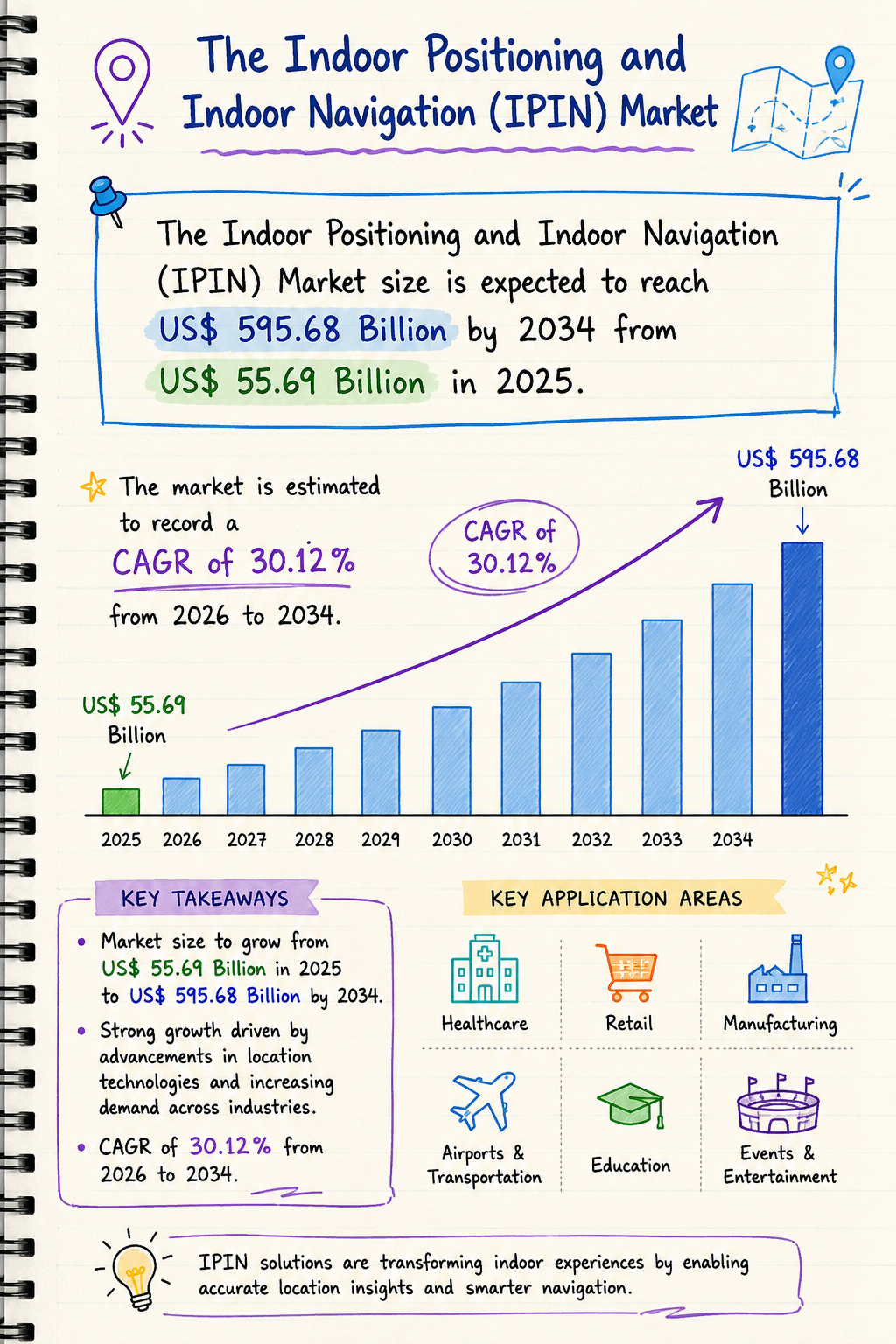
The Indoor Positioning and Indoor Navigation (IPIN) is experiencing remarkable growth as organizations increasingly adopt location-based technologies to improve operational efficiency, customer experience, asset tracking, and workplace safety. According to The insight Partners, The Indoor Positioning and Indoor Navigation (IPIN) Market size is expected to reach US$ 595.68...
Signals Intelligence Market Overview The Signals Intelligence Market report provides an in-depth analysis that is required to make informed industry decisions and develop strategic growth plans. Regardless of the production method or cost structures, the Signals Intelligence market report provides a full understanding of advanced tactics and plans. Global...
