


Phosphate Esters and the Invisible Fire-Safety Infrastructure Behind Aircraft, Steel Mills, Power Plants and High-Performance Materials
A commercial aircraft descending through rain, a steel rolling mill operating beside red-hot slabs, and a turbine control system responding within milliseconds appear to belong to different industrial worlds. Yet each depends on a similar engineering decision: the working fluid or additive must continue performing when heat, pressure and ignition risk rise together. That requirement has turned Phosphate esters from specialty molecules into a hidden layer of global safety infrastructure.
The chemistry is compact but versatile. A phosphorus centre bonded through oxygen to organic groups can be adjusted by changing alkyl, aryl or mixed substituents. That molecular tuning alters viscosity, hydrolytic stability, volatility, lubricity and flame response. In practical terms, one chemistry family can become an aviation hydraulic fluid, an extreme-pressure lubricant additive, a polymer plasticizer, a flame retardant, an antistatic agent or an agrochemical surfactant. The value lies not in tonnes alone, but in how many failure modes one formulation can prevent.
The plant behind the molecule
Consider a quantified production model for a 20,000-tonne-per-year specialty line. Operating for 330 days requires 60.6 tonnes of finished material each day. At 85% utilisation, annual saleable output becomes 17,000 tonnes. Three reactors delivering approximately 15 tonnes per batch, with an 18-hour reaction-and-cleaning cycle, can support roughly 60 tonnes per day. The downstream train needs neutralisation, washing, vacuum stripping, filtration, segregated storage and laboratory release testing.
Phosphate esters therefore require more than a reactor. A credible site needs corrosion-compatible piping, closed transfer systems, scrubbers, nitrogen blanketing, vacuum equipment and separate tanks for different viscosity or purity grades. If 12 saleable grades are produced and each requires two dedicated 50-tonne tanks—one for finished inventory and one for campaign changeover—the storage block alone reaches 1,200 tonnes. That equals about 26 days of production cover, buffering qualification delays and export logistics.
The market value is concentrated in performance, not bulk
According to DataVagyanik, the global Phosphate esters market is valued at US$1.944 billion in 2026 and is forecast to reach US$3.484 billion by 2035, representing a 6.7% compound annual growth rate. The increase of US$1.540 billion over nine years is not simply a volume story: aviation-grade fluids, low-toxicity formulations, high-purity electronics additives and application-specific surfactants earn higher prices because qualification, consistency and liability protection become part of the product sold.
Aviation: litres that protect billion-dollar fleets
Commercial aviation shows why the chemistry commands strategic value. Eastman states that its Skydrol family has served aviation for more than 75 years, while ExxonMobil’s Type IV HyJet fluid lists a fire point of 370°F and autoignition temperature of 800°F. It is approved across major aircraft platforms and protects pumps, servo valves and controls from wear, deposits and corrosion. In this setting, Phosphate esters are not discretionary consumables; they are certified components of flight-control reliability.
Boeing expects the commercial fleet to reach 49,640 aircraft by 2044, supported by 43,600 deliveries and annual fleet growth of 3.1%. Even a conservative service model demonstrates the infrastructure effect. Assume only 150 litres of addressable hydraulic-fluid inventory per aircraft and annual make-up demand equal to 20% of that inventory. A 49,640-aircraft fleet would generate nearly 1.49 million litres of recurring annual requirement, before overhaul flushing, manufacturing fill and safety stock are counted. Widebody aircraft, ground inventories and maintenance events expand the commercial pool further.
Steel mills: protecting motion beside molten metal
The steel industry produced about 1.85 billion tonnes of crude steel in 2025. That scale implies thousands of casting, rolling, pressing and furnace-adjacent hydraulic systems working around extreme heat. Mineral-oil leakage near hot surfaces can convert a seal failure into a fire event; self-extinguishing fluids reduce that escalation pathway. ICL specifically positions its phosphate-based functional fluids for power plants and hot-metal manufacturing, where fire risk determines fluid selection.
A plant-level calculation shows how small fluid volumes protect large output. A 5-million-tonne steel complex producing 15,150 tonnes per operating day loses 630 tonnes of output during one hour of stoppage. At an illustrative steel value of US$650 per tonne, that hour represents about US$410,000 of delayed production. If Phosphate esters help prevent even one eight-hour fire-related shutdown, the protected production value exceeds US$3.2 million—before equipment damage, emergency response and restart losses are included.
Polymers: fire performance measured by formulation percentage
In polymers, the infrastructure is dispersed across insulation boards, wire compounds, coatings, foams, electronics housings and transport interiors. Public-health technical literature records typical phosphate-based flame-retardant loading across a wide 1%–30% range, with many formulations averaging 5%–15%. At a 10% addition rate, every 100,000 tonnes of treated polymer creates 10,000 tonnes of additive demand. The adoption equation is direct: 25 plants each producing 40,000 tonnes of treated compounds would support 100,000 tonnes of annual additive consumption.
The mechanism is equally measurable. During combustion, selected Phosphate esters can alter decomposition chemistry, suppress flammable vapours or promote a protective carbonaceous barrier. The objective is not to make every polymer non-combustible; it is to lengthen ignition time, reduce flame propagation, limit afterglow or lower heat release enough for a product to pass a defined fire test. A few percentage points of additive can determine whether an entire cable, foam panel or electronic enclosure enters a regulated application.
From one plant to thousands of formulations
The infrastructure footprint also extends into formulation laboratories. In 2016, Clariant brought additional Phosphate esters capacity onstream at Gendorf, Germany, supplementing its Knapsack production and targeting emulsification, wetting, dispersion, antistatic performance and extreme-pressure protection. That event illustrates how demand grows: not through one dominant outlet, but through hundreds of customer formulations qualified at kilogram scale and then repeated across tonnes of commercial batches.
For a metalworking-fluid producer making 30,000 tonnes annually, a 3% treat rate translates into 900 tonnes of Phosphate esters. Ten such formulators create 9,000 tonnes of demand without a single consumer seeing the ingredient name. This is the central theme: a relatively small chemical stream can influence the safety, friction, conductivity, wetting and durability performance of industrial assets worth several orders of magnitude more.
Power stations: where a few tonnes protect gigawatts
Inside a thermal or hydroelectric plant, turbine-control fluids operate around hot bearings, steam lines and high-speed equipment. A 1-gigawatt generating unit running at an 85% capacity factor produces about 7.45 terawatt-hours each year. At US$70 per megawatt-hour, the annual output is worth roughly US$521 million. A 12-hour outage therefore represents about US$714,000 of deferred generation. This is why Phosphate esters are evaluated not merely by purchase price, but by their contribution to fire resistance, valve response and equipment availability.
A large turbine electrohydraulic-control system may hold 5,000 litres of fluid. Assume 10% annual replacement and one complete change every seven years. The annualised requirement becomes about 1,214 litres per unit. Across 500 comparable units, recurring consumption approaches 607,000 litres. The volume is modest, yet it supports generating assets with a combined capacity of 500 gigawatts.
Mining: reducing fire exposure underground
Mining creates a different use-case map. Hydraulic power is concentrated in roof supports, conveyors, crushers and mobile equipment, often in enclosed or dust-rich environments. A longwall face producing 4 million tonnes of coal annually at US$80 per tonne supports US$320 million of output. One lost production day equals nearly US$877,000.
Where fire-resistant hydraulic media are appropriate, Phosphate esters can be justified through avoided-loss mathematics. If a mine uses 100,000 litres of specialty fluid at an incremental cost of US$4 per litre, the premium is US$400,000. Avoiding just 11 hours of lost production offsets that premium. The calculation explains why operators focus on total risk cost rather than fluid cost per drum.
Agriculture: a molecule that helps another molecule work
In crop protection, the role shifts from fire resistance to interface control. Active ingredients must disperse in water, wet a waxy leaf and remain stable in storage. Phosphate esters can act as emulsifiers, wetting agents and dispersants in selected formulations.
Assume a formulation contains 500 grams per litre of active ingredient and 30 grams per litre of surfactant package. A 10-million-litre campaign consumes 300 tonnes of surfactants. If Phosphate esters account for one-third of that package, the requirement is 100 tonnes. Across 20 formulation plants, the resulting demand is 2,000 tonnes, created not by the active molecule but by the need to deliver it consistently.
At a spray volume of 150 litres per hectare across 1 million hectares, total diluted spray reaches 150 million litres. At only 0.05% final concentration, the support chemistry represents 75 tonnes. Small concentration, large geography: that is the recurring pattern behind specialty additive demand.
Electronics: purity becomes the product
The electronics use case is smaller in tonnage but higher in specification. Additives used in engineering polymers, coatings or process formulations may face limits on moisture, acidity, colour, ionic contamination and trace metals. Reducing a contaminant from 100 parts per million to 10 means removing 90% of the original impurity burden. Moving from 10 to 1 requires another 90% reduction.
That purification raises cost non-linearly. A producer may add vacuum finishing, fine filtration, dedicated transfer lines and batch-level analytical release. If a standard grade costs US$3 per kilogram and an ultra-clean grade costs US$8, a 20-tonne batch carries US$100,000 of additional revenue. Rejection for one failed parameter can erase the same amount, making quality-control infrastructure as important as reactor capacity.
The economics of qualification
Specialty chemicals are sold through qualification cycles rather than simple spot transactions. A lubricant additive may require bench screening, corrosion tests, seal-compatibility studies, pilot blending, field trials and customer approval. If six sequential stages last eight weeks each, commercialisation takes about 48 weeks. Parallel testing may reduce this to 24–30 weeks, but it doubles laboratory effort.
This creates a commercial moat around Phosphate esters. Once a product is approved in a turbine fluid, aircraft hydraulic formulation, polymer compound or pesticide concentrate, switching requires more than finding a lower quotation. A 5% price saving on a 200-tonne annual contract at US$5,000 per tonne equals US$50,000. One failed campaign costing US$250,000 can eliminate five years of savings.
Supply chains built around phosphorus and precision
The upstream chain begins with phosphorus-based intermediates and selected alcohols or phenols. The downstream chain adds neutralisation agents, filtration media, drums, intermediate bulk containers, analytical services and hazardous-material logistics. A 20,000-tonne plant shipping 80% of output in one-tonne containers requires 16,000 container movements per year, or about 48 per operating day.
If average export transit time is 35 days and monthly exports equal 1,000 tonnes, approximately 1,150 tonnes remain tied up in transit. At US$4,500 per tonne, that inventory represents US$5.18 million of working capital outside the factory gate. For Phosphate esters, logistics discipline directly affects cash conversion.
The substitution challenge
Not every application will grow equally. Some legacy aryl grades face pressure from toxicity, environmental or labelling concerns, while newer formulations compete on lower hazard profiles and improved compatibility.
Suppose a compounder sells 50,000 tonnes of polymer annually and uses a 12% additive loading. Replacing the additive affects 6,000 tonnes of purchasing. If reformulation, testing and certification cost US$300,000 per product family across eight families, the transition budget reaches US$2.4 million before inventory write-offs. Regulation may initiate the change, but engineering economics determine its speed.
The 2035 infrastructure story
The future of Phosphate esters will be shaped by where heat, electrification, automation and material safety intersect. More aircraft create recurring hydraulic-fluid demand. More power electronics increase demand for higher-performing polymers and coatings. Automated factories raise the value of uninterrupted operation. Stricter fire codes increase the economic penalty of inadequate performance.
A useful investment model is protected asset value per tonne. If one tonne of specialty fluid supports a turbine system attached to 100 megawatts of generation, and that generation produces US$52 million of electricity annually, the protected-output ratio is enormous. If one tonne of additive enables 9 tonnes of flame-modified polymer, that tonne influences 10 tonnes of finished material.
That asymmetry is the real story. Phosphate esters occupy a narrow physical footprint but a wide operational one. Their next decade will not be defined only by additional reactors. It will be defined by cleaner grades, safer substitution pathways, faster qualification laboratories, resilient logistics and the number of high-value systems that cannot afford ignition, instability, friction or formulation failure.
Категории
Больше
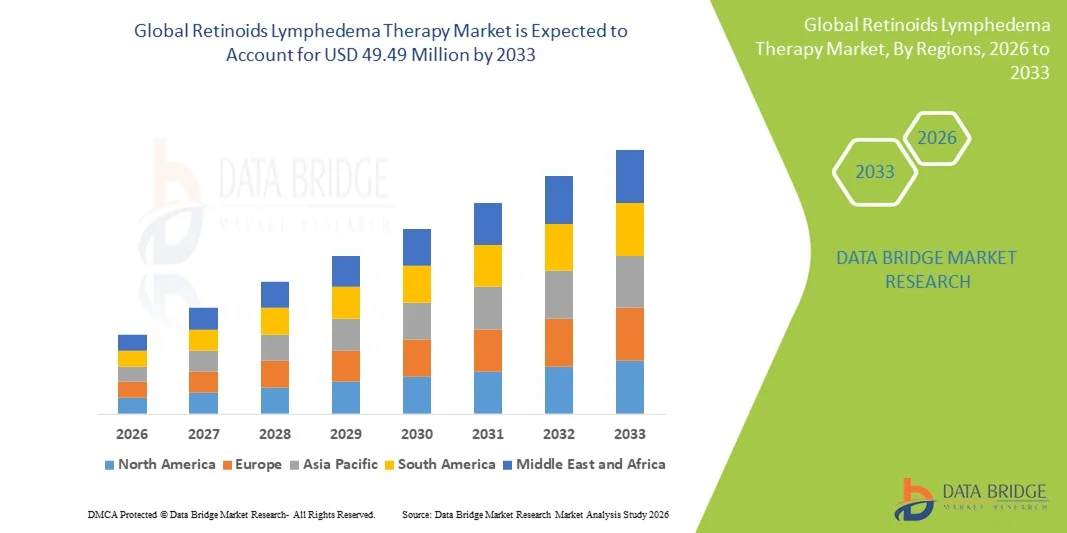
According to the latest report published by Data Bridge Market Research, the Retinoids Lymphedema Therapy Market The global retinoids lymphedema therapy market size was valued at USD 24.53 million in 2025 and is expected to reach USD 49.49 million by 2033, at a CAGR of 9.17% during the forecast period The market growth is largely driven by the increasing...
ACB electrical interlocking is designed to help prevent incorrect switching operations in low-voltage power distribution systems. In facilities with multiple power sources, transfer systems, or interconnected switchgear, operating equipment in the wrong sequence may create undesirable electrical conditions. Interlocking systems are used to reduce this possibility. Many switching operations...

Carbon Negative Packaging Market Size, Share and Growth Report (2025–2034) The Carbon Negative Packaging Market is experiencing significant growth as organizations increasingly prioritize sustainable packaging solutions that go beyond carbon neutrality. Businesses are adopting carbon negative materials and processes to support long-term climate goals while meeting evolving consumer...

A new growth forecast report titled Board Games Market Size, Share, Trends, Industry Analysis Report: By Type (Strategy Games, Card & Dice Games, and Trivia & Puzzle Games), Age Group, Distribution Channel, and Region (North America, Europe, Asia Pacific, Latin America, and Middle East & Africa) – Market Forecast, 2025–2034 introduced by Polaris Market Research...

Competitive Analysis of Executive Summary Hypotonic Drinks Market Size and Share Data Bridge Market Research analyses that the hypotonic drinks was valued at 5.39 billion in 2021 and is expected to reach the value of USD 10.51 billion by 2029, at a CAGR of 8.70% during the forecast period. To stand apart from the competition, a careful idea about the competitive landscape, their...