


Choosing a Bookshelf That Actually Works: A Practical Buyer's Guide
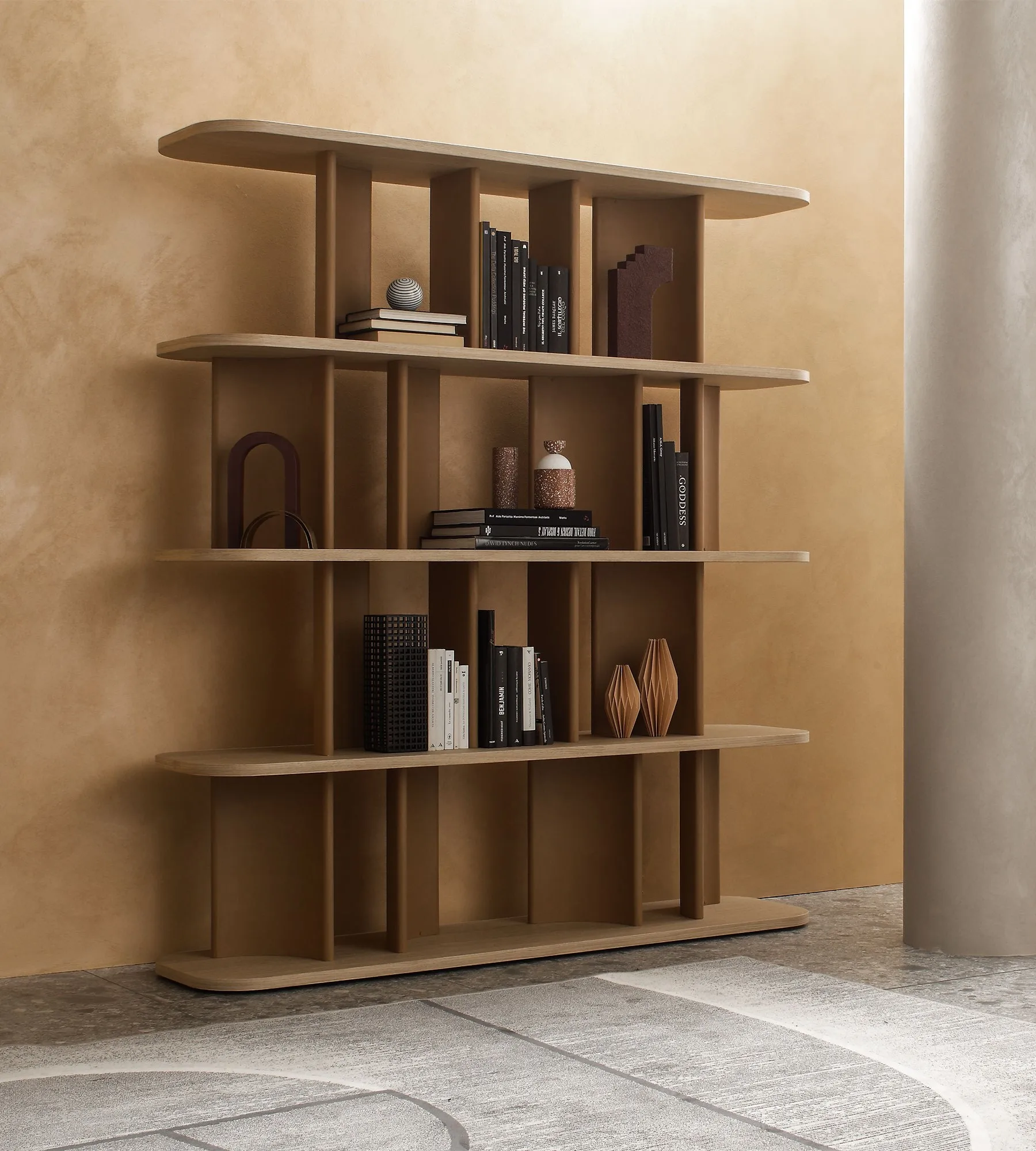
How to choose bookshelf size, shelf spacing, and material for Indian homes ,without wasting money on the wrong one.
Bookshelves are one of those furniture purchases that people assume are simple until they get the wrong one home. A shelf that is too shallow for standard hardcover books, too short for display items, or made from a material that starts sagging within a year of being loaded is a far more frustrating mistake than it sounds ,because a bookshelf full of books is heavy, and replacing it means moving everything off first.
Here is what to actually check before buying one.
Shelf Depth: The Measurement Everyone Forgets
Shelf depth, the distance from the front edge to the back panel, is the most commonly underestimated specification when buying bookshelves. Standard paperback books are about 5 inches deep; standard hardcovers run 8 to 9 inches. A shelf that is only 8 inches deep can technically hold books but leaves no space for any forward overhang, which makes the books look precarious and limits any decorative layering in front of them.
A shelf depth of 10 to 12 inches is the sweet spot for most homes: deep enough to accommodate hardcovers with room to spare, shallow enough not to project significantly into the room. If the bookshelf will also hold framed photos, plants, or decorative objects, 12 inches is a more practical minimum.
Shelf Spacing: Different Heights for Different Uses
Fixed-height shelves set at uniform intervals make sense for a bookshelf used exclusively for same-size books, but most household bookshelves mix books of different heights with decorative items, board games, or display pieces that vary considerably in height. Adjustable shelving, where each shelf rests on movable pins rather than fixed brackets, is worth prioritizing for any bookshelf intended for mixed use, since the ability to reconfigure shelf heights over time is genuinely useful as the collection changes.
As a rough guide: standard paperbacks fit comfortably with 9 to 10 inches of vertical clearance. Hardcovers need 11 to 12 inches. Oversized art books or coffee-table-style books may need 14 inches or more. Allowing at least one tall section in a bookshelf, either a full-height open section or a taller shelf interval, gives flexibility for displaying taller items or storing board games without cramming.
Material and Load Capacity
This is where the cheapest bookshelves fail most visibly. A shelf loaded with books is genuinely heavy; a standard 3-foot shelf of hardcovers can weigh 30 to 40 kilograms ,and shelves made from low-density particle board will sag noticeably in the middle under that load over time, while plywood and solid wood shelves hold their shape far longer.
The key specification to check when buying online is the load rating per shelf, measured in kilograms. A shelf rated for 15 to 20 kilograms per tier is adequate for light use with paperbacks and decor. Anything carrying significant hardcover collections or heavier items should ideally sit on shelves rated for 25 kilograms or more per tier.
Solid wood or high-grade plywood shelves are the most reliable choice for this. Medium-density fiberboard (MDF) is acceptable for lighter loads but requires a thicker board to avoid visible deflection under the weight of a full row of books. Look for at least 18mm MDF shelves if going that route.
Freestanding vs Wall-Anchored
A tall freestanding bookshelf, particularly one that is 6 feet or taller, should always be anchored to the wall with an anti-tip strap or wall bracket, regardless of how stable it seems when empty. A fully loaded bookshelf is top-heavy and can tip forward with considerably less force than expected; this is a safety concern, especially in households with children. Most quality bookshelves ship with a wall anchor kit; if yours does not, this is worth adding as a separate purchase and installing before loading the shelf.
Shorter bookshelves under 4 feet are generally stable enough freestanding under normal conditions, though wall anchoring is still good practice in earthquake-prone regions.
Styling Without Over-Curating
A bookshelf that looks like it belongs in a furniture catalog, every item perfectly spaced, no visible spines, artfully arranged by color, tends to stop being actually used as a bookshelf very quickly. The shelves that work best long-term are ones designed to accommodate real daily use: easy to access, easy to return books to, and flexible enough for the collection to change over time.
A practical styling approach: treat roughly two-thirds of the shelf space as functional book storage and one-third as display space for objects, plants, or framed photos. This ratio gives the shelf a curated look without making it impractical to actually use.
A Reference Point for Build Quality
For a sense of what well-built, properly load-rated bookshelves in solid wood look like, Twigs Direct's bookshelf collection is a useful benchmark for shelf thickness, adjustability, and finish quality, whether or not you buy from them.
Final Thought
A bookshelf that holds its shape under a full load of books, has the right depth for your actual collection, and uses adjustable shelving to accommodate how the collection changes over time will outlast three or four cheaper alternatives. Check depth, load rating, and shelf adjustability before anything else, and the rest of the decision is considerably simpler.
Catégories
Lire la suite
The digital entertainment industry continues to expand as more users look for convenient ways to enjoy their favorite online activities. Among the growing number of platforms available today, Dewatogel has become a recognized name for individuals interested in online lottery-style entertainment. With easy accessibility, user-friendly features, and a growing online presence, Dewatogel is...

The intersection of ecological preservation and industrial expansion has forced maritime industries to radically alter their approach to sub-surface development. Regulatory agencies globally are tightening restrictions on light pollution in marine sanctuaries, forcing engineering firms to innovate rapidly to comply with new conservation standards. This regulatory pressure coincides with an...

"Executive Summary Companion Animal Pharmaceuticals Market Size and Share Across Top Segments CAGR Value The global companion animal pharmaceuticals market size was valued at USD 14.42 billion in 2024 and is projected to reach USD 21.65 billion by 2032, with a CAGR of 5.21% during the forecast period of 2025 to 2032. This global Companion Animal Pharmaceuticals Market report...

Introduction Businesses today operate in a highly competitive and regulated environment where legal guidance is essential for smooth operations. Companies regularly deal with contracts, partnerships, taxation, compliance, and employment matters that require professional legal support. A skilled “corporate lawyer in pakistan” helps businesses manage these legal responsibilities...

According to the latest report published by Data Bridge Market Research, the Asia-Pacific Water Purifier Market CAGR Value The Asia-Pacific water purifier market size was valued at USD 3.40 billion in 2025 and is expected to reach USD 6.58 billion by 2033, at a CAGR of 8.60% during the forecast period An influential Asia-Pacific Water...