Nitroalkanes and the Hidden Industrial Infrastructure Behind Faster Synthesis, Higher-Energy Fuels and Precision Chemical Manufacturing
A modern chemical economy is usually described through visible outputs: medicines, crop-protection products, coatings, adhesives and performance fuels. Yet behind those outputs sits a smaller class of molecules that earns its value by shortening routes rather than increasing tonnage. Nitroalkanes belong to that class. Their commercial importance is not based on one blockbuster application, but on their ability to work as solvents, carbon-building reagents and intermediates across several tightly controlled manufacturing environments.
Semple Request At: https://datavagyanik.com/reports/global-nitroalkanes-market/
The industrial family is built around four principal molecules: nitromethane, nitroethane, 1-nitropropane and 2-nitropropane. Their molecular weights rise from 61 for nitromethane to 89.1 for the two nitropropane isomers, but the economic difference is far larger than the 28.1-gram spread suggests. Each molecule offers a different balance of polarity, boiling behaviour, solvency and chemical reactivity, allowing process chemists to select the smallest input that can create the required carbon skeleton or manage a difficult reaction.
The Plant Is Not a Single Reactor; It Is a Separation System
Commercial Nitroalkanes production begins with gas-phase nitration at temperatures commonly reported in the 350°C–450°C range. The reactor does not produce one clean molecule. It generates a mixture that must be quenched, neutralised, dehydrated and separated into as many as four saleable product streams. This means the capital story is dominated by downstream purification: distillation columns, heat exchangers, condensers, nitrogen blanketing, fire-protection systems, wastewater treatment and continuous analytical controls.
A simplified plant logic therefore contains at least six infrastructure blocks: feed preparation, nitration, rapid cooling, neutralisation, multi-stage fractionation and final storage. Even where one reactor creates the mixed output, four distinct specifications may be sold. Pharmaceutical or synthesis grades can require purity close to 99%, so a one-percentage-point improvement in recovery or off-spec reduction can materially affect plant profitability. The production economics depend not merely on tonnes entering the reactor, but on how efficiently each component is recovered and assigned to its highest-value use.
The infrastructure is also geographically concentrated. Advancion, formerly ANGUS Chemical, describes itself as the only fully integrated manufacturer covering all four basic molecules and their derivatives. Its operating network includes three manufacturing locations, more than 430 employees, six regional application centres and over 570 active, pending or granted patents. That footprint illustrates the real barrier to entry: production hardware is only one layer; process know-how, derivative chemistry, application testing and regulatory support form another four layers around the asset.
A Molecule That Can Delete a Process Step
The highest-value use of Nitroalkanes is often measured in reactions avoided rather than kilograms consumed. These compounds support carbon–carbon bond formation through Henry, Michael and Mannich chemistry, and can be converted into amines, aldehydes, ketones, carboxylic acids and heterocyclic structures. In a multi-step pharmaceutical route, removing one stage from an eight-step process represents a 12.5% reduction in the number of reaction stages before considering the secondary savings in solvent, labour, cleaning and quality testing.
The financial leverage can be much larger. One manufacturer-documented customer project used a nitroalkane-based route to cut raw-material cost by 50% and support a 300% expansion in the customer’s commercial business. That does not mean every process will deliver the same result. It shows why a specialty reagent priced above a commodity solvent can still lower the cost per kilogram of final active ingredient: yield, cycle time and waste generation matter more than the purchase price of one input.
This logic makes Nitroalkanes relevant to pharmaceutical plants that operate batch reactors from laboratory scale through commercial production. A route developed in a 5-litre vessel may eventually run in a 5,000-litre reactor, a 1,000-fold scale increase. At that point, heat removal, dosing rate and impurity control become engineering constraints. The commercial supplier therefore sells more than drums of liquid; it supports reaction design, safe scale-up, impurity mapping and solvent-recovery decisions.
The Quantified Market Bridge
Using DataVagyanik’s published market endpoints, its modeled trajectory places the global Nitroalkanes market at USD 917.36 million in 2026 and USD 1.20 billion by 2030, equivalent to an implied annual growth rate of 6.94%. The value increase of USD 282.64 million over four years reflects demand from pharmaceutical synthesis, agrochemical intermediates, specialty solvents and performance-fuel applications, while concentrated production keeps supply reliability and purification capacity central to pricing.
Where Each Tonne Travels After the Plant Gate
Application mapping shows why demand is resilient. Pharmaceutical synthesis represents the highest-value channel because Nitroalkanes can function as both reaction media and molecular building blocks. Agrochemical manufacturing uses the same chemistry to create intermediates for herbicides, insecticides and other crop-protection molecules. Coatings and resin systems value their solvency and compatibility with reactive chemistry. Motorsports consume a smaller volume but exploit the oxygen-bearing structure of nitromethane to achieve power densities that conventional hydrocarbon fuel cannot match under the same intake-air constraint.
The fuel story is technically dramatic but commercially narrow. Nitromethane contains oxygen inside the molecule, allowing an engine to burn substantially more fuel per cycle than it could with gasoline alone. The resulting use case is concentrated in drag racing, model engines and specialised performance environments, not everyday transport. Even a global shift toward electric vehicles therefore does not erase this demand; it isolates it as a premium recreational and competition segment.
Safety Infrastructure Determines Usable Capacity
Nitroalkanes cannot be treated as ordinary warehouse liquids. Nitromethane has a flash point near 35°C, while nitroethane is reported near 28°C. Vapours can accumulate, contaminated material can decompose violently under severe heating, and 2-nitropropane requires particularly stringent exposure control. NIOSH lists immediately dangerous-to-life-or-health values of 750 ppm for nitromethane, 1,000 ppm for nitroethane and 1-nitropropane, but only 100 ppm for 2-nitropropane.
These numbers translate directly into infrastructure: closed transfer lines, grounded equipment, vapour extraction, temperature monitoring, segregated tanks and trained emergency teams. A plant with 20,000 tonnes of nameplate capacity is not commercially useful if its storage, ventilation or transport approvals constrain dispatch. In this industry, usable capacity equals chemical capacity multiplied by safety availability, quality acceptance and logistics reliability.
The Logistics Equation Begins Before the Tanker Leaves the Gate
The commercial journey of Nitroalkanes is controlled by temperature, compatibility and inventory discipline. Nitromethane has a specific gravity of about 1.14, meaning a 25,000-litre tank can hold roughly 28.5 tonnes before operational ullage is deducted. At a conservative 85% filling level, usable inventory falls to approximately 24.2 tonnes. That 15% empty space is not lost capacity; it provides a pressure-management and thermal-expansion margin for safer handling. NIOSH also classifies nitromethane as a Class IC flammable liquid and identifies incompatibility with strong acids, alkalis, oxidisers, combustible materials and certain metal oxides.
A distributor handling four grades across three pack sizes can quickly create a 12-stock-keeping-unit system before purity, geography or customer qualification is considered. If each stock-keeping unit requires a minimum safety stock of 10 tonnes, the warehouse commitment reaches 120 tonnes. This explains why Nitroalkanes distribution favours technically equipped chemical terminals rather than general-purpose storage yards. The value chain needs compatible pumps, closed loading arms, spill containment, vapour monitoring and batch traceability from the production vessel to the customer reactor.
Purity Converts a Commodity-Like Liquid into a Qualified Input
In pharmaceutical synthesis, changing a supplier is rarely equivalent to changing a conventional fuel or bulk solvent vendor. A new source may require identity testing, impurity profiling, laboratory trials, pilot validation and regulatory documentation. If qualification takes six months and the customer consumes 15 tonnes per month, the buyer may maintain 45–90 tonnes of strategic inventory, equivalent to three to six months of demand. This creates a structural premium for consistency and makes Nitroalkanes a reliability business as much as a chemistry business.
Advancion documents more than 50 years of nitroalkane use in small-molecule pharmaceutical synthesis and identifies nitromethane, nitroethane and 1-nitropropane as both solvents and molecular building blocks. The same portfolio supports carbon–carbon bond formation and conversion into several downstream functional groups. That dual utility matters because a process designer may use one molecule first as a reaction medium and later as a contributor to the product structure, reducing the number of materials requiring separate qualification.
Reaction-Step Compression Is the Strongest Sustainability Case
The environmental case for Nitroalkanes is not based on claiming that the molecules are inherently benign. It is based on process intensification. Consider an eight-stage route in which every stage delivers an 85% yield. The overall theoretical yield is only 27.2%. Removing one stage raises it to 32.1%, representing an 18% relative improvement without improving any individual reaction. At an 80% stage yield, cutting an eight-stage sequence to seven stages lifts overall yield from 16.8% to 21%, a 25% relative gain.
The solvent effect can be equally material. Suppose one eliminated stage would have consumed 8 kilograms of process solvent per kilogram of isolated intermediate. For a 2,000-kilogram campaign, avoiding that stage removes 16 tonnes of solvent circulation, together with the associated heating, cooling, filtration and recovery load. If solvent recovery operates at 90%, the plant still avoids handling 1.6 tonnes of unrecovered loss. This is why Nitroalkanes can create a measurable sustainability benefit even when their own storage and occupational-exposure controls remain demanding.
There is also a polymorph-control use case. The manufacturer reports that these chemistries can influence crystallisation selectivity, while their combination of high polarity and comparatively low water solubility can support extraction systems. In pharmaceutical manufacturing, producing the correct crystal form on the first attempt can avoid reprocessing an entire batch. For a 500-kilogram batch carrying an in-process manufacturing value of USD 400 per kilogram, one prevented rework event protects USD 200,000 before delay penalties are counted.
Agriculture Adds Volume, but Innovation Determines Value
Agricultural demand does not come simply from applying more chemical per hectare. It comes from developing active ingredients with improved selectivity, reduced dose rates or new modes of action. Advancion states that Nitroalkanes are used in producing agricultural active ingredients with new modes of action. A crop-protection molecule applied at 100 grams per hectare requires only 100 tonnes of active ingredient to cover one million hectares, showing why high-value intermediate demand can grow without commodity-scale application volumes.
The wider industry timeline supports this channel. The American Chemistry Council expects US agricultural chemical output to rise by 1.9% in 2026 and 2% in 2027. By comparison, specialty chemical output is expected to decline by 0.3% in 2026 before rebounding by 2.7% in 2027. This uneven pattern favours molecules connected to defensible pharmaceutical and agricultural formulations rather than undifferentiated solvent demand.
Capital Spending Will Target Bottlenecks Before New World-Scale Plants
Industry investment is moving cautiously. US chemical capital spending increased by 1.3% in 2025, is projected to rise by only 0.9% in 2026, and is expected to accelerate by 3%–4% annually from 2027 onward. For Nitroalkanes, that timeline points toward incremental projects first: upgraded distillation controls, additional storage, automated loading, wastewater improvements and debottlenecking of purification trains. These projects can add commercially usable output without replicating an entire nitration complex.
A 5% recovery improvement at a facility processing 20,000 tonnes of mixed material can theoretically release 1,000 additional tonnes of saleable output. If the improvement requires USD 8 million in separation and control equipment, the capital intensity is USD 8,000 per incremental annual tonne. A greenfield project requiring reactors, utilities, fire systems, environmental controls and multiple distillation columns would carry a substantially larger capital burden. The rational investment sequence is therefore measurement, optimisation, recovery improvement and only then major capacity construction.
The Next Competitive Advantage Is Application Engineering
The future of Nitroalkanes will be decided inside customer laboratories as much as inside production plants. A supplier that helps remove one reaction stage, increase isolated yield by five percentage points or prevent one failed crystallisation campaign creates value far beyond the invoice for the reagent. The winning commercial model combines manufacturing, analytical support, regulatory documentation and scale-up expertise.
That makes the category a useful example of modern specialty chemistry. Nitroalkanes are produced in tonnes but adopted through experiments measured in grams. They move through industrial tanks, yet their economic impact appears in fewer reactor hours, lower solvent throughput and faster qualification. The strongest growth will therefore come not from selling the largest possible volume, but from proving—batch by batch—that a relatively small input can unlock a disproportionately large improvement in manufacturing economics.
Semple Request At: https://datavagyanik.com/reports/global-nitroalkanes-market/
Categorias
Leia mais
## El Crecimiento del Juego Online en España Los casinos online en España han transformado la manera en que los usuarios disfrutan del casinos online españa entretenimiento digital. Gracias a las plataformas fiables, es posible acceder a cientos de juegos desde cualquier lugar. La combinación de tecnología, seguridad y comodidad convierte esta modalidad en una...

A kitchen remodel sounds exciting until the numbers start stacking up and reality hits a bit harder. You’re not just picking pretty tiles, you’re making calls that affect how you live every single day. And if you’re planning a kitchen Remodeling in Houston, you already know costs can swing wildly depending on who you hire and what you choose. The real question isn’t...

Thermal and Chemical Stability of PAM Under Harsh Oilfield Conditions In oilfield operations, polymer flooding and other enhanced oil recovery (EOR) techniques rely heavily on the performance of chemical additives. Among them, oilfield polyacrylamide plays a crucial role in improving sweep efficiency, reducing water production, and enhancing crude oil displacement. However, the success of...

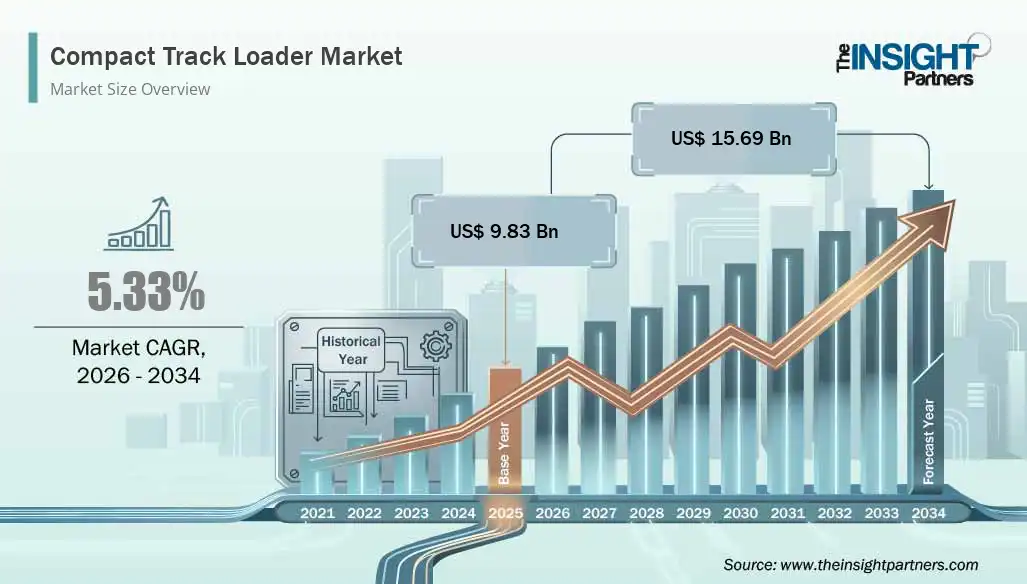
The global construction and material handling equipment landscapes are undergoing rapid transformations, driven by an increased need for efficiency, adaptability, and power on compact jobsites. At the center of this shift is the Compact Track Loader (CTL), a highly versatile machine engineered to excel where traditional wheeled skid steers struggle. Characterized by high-flotation rubber...
For newcomers, playing a roulette online casino may seem daunting at first. A beginner’s guide provides a step-by-step overview of the game rules, betting options, and strategies for building confidence while learning. Starting with free or low-stakes games allows beginners to experiment without risking significant money. Understanding the basics of table layouts, inside and outside bets,...