


Simplifying AI Model Deployment with the Simplismart SDK

Deploying large AI models into production has traditionally been a complex process involving multiple tools, infrastructure management, deployment pipelines, and continuous monitoring. As organizations increasingly adopt generative AI, developers need faster and more reliable ways to move models from experimentation to production without dealing with unnecessary operational complexity.
The Simplismart SDK addresses this challenge by enabling developers to deploy AI models entirely through code. Instead of manually configuring infrastructure or using multiple deployment tools, developers can automate model compilation, deployment, autoscaling, and monitoring using Python, a command-line interface (CLI), or even AI agents.
Why the Simplismart SDK Matters
Modern AI applications require scalable, production-ready inference infrastructure. While building models has become easier, deploying them efficiently remains a significant hurdle.
The Simplismart SDK transforms deployment into a version-controlled, repeatable workflow. Rather than relying on manual dashboard configurations, deployment settings become part of your codebase, making them easier to automate, maintain, and reproduce across environments.
Whether you're working individually or as part of an engineering team, this code-first approach helps streamline MLOps workflows and supports continuous integration and deployment (CI/CD) practices.
Core Features of the Simplismart SDK
The SDK provides a comprehensive set of capabilities that cover the entire deployment lifecycle.
Import Models from Multiple Sources
Developers can import models from several popular repositories, including:
- Hugging Face
- AWS S3
- Google Cloud Storage (GCS)
- Docker Hub
- NVIDIA NIM
- Amazon ECR
- Other supported container registries
This flexibility allows teams to work with models regardless of where they are stored.
Model Compilation and Optimization
Before deployment, the SDK compiles and optimizes models on Simplismart's infrastructure. The optimization process prepares models for the selected target hardware, helping improve inference performance while simplifying deployment.
Deployment Management
Once compilation is complete, the SDK enables developers to create and manage production deployments with just a few API calls. Organizations can deploy using Simplismart-managed infrastructure or Bring Your Own Compute (BYOC), depending on their infrastructure strategy.
Intelligent Autoscaling
Traffic patterns often change throughout the day, making static infrastructure inefficient. The Simplismart SDK supports automatic GPU scaling based on metrics such as:
- GPU utilization
- CPU utilization
- Request latency
- Throughput
- Concurrent requests
This allows applications to maintain performance while using infrastructure efficiently.
Secure Secret Management
The platform also includes secure credential management for services such as Hugging Face, Docker Hub, NVIDIA NIM, Amazon ECR, and other supported registries, eliminating the need to hardcode sensitive information into applications.
From Model Repository to Production Endpoint
One of the strengths of the Simplismart SDK is its straightforward deployment workflow.
A typical deployment begins by authenticating with Playground credentials and the organization ID. After authentication, developers can select a model—for example, a Gemma model hosted on Hugging Face—and submit it for compilation.
The SDK continuously monitors compilation status until the optimized artifact is ready. Once compilation succeeds, the model can immediately be deployed to the selected GPU infrastructure with autoscaling parameters already configured.
Finally, deployment health is monitored until the endpoint becomes fully operational and ready to serve inference requests.
This end-to-end workflow eliminates many manual operational steps that typically slow down AI deployments.
Flexible Deployment Options
Different teams have different development preferences, and the Simplismart platform accommodates multiple workflows.
Python developers can integrate the SDK directly into applications, deployment scripts, or CI/CD pipelines.
Teams that prefer shell scripting can perform the same operations through the CLI, making it easy to integrate deployment into GitHub Actions or other automation platforms.
Both approaches offer identical functionality, allowing organizations to choose whichever workflow best fits their engineering practices.
AI Agent Integration
Beyond traditional SDK and CLI workflows, Simplismart also supports AI-assisted deployments.
Developers using AI coding assistants such as Claude Code can install the Simplismart Skill from the Cookbook repository.
Instead of writing deployment scripts manually, users simply describe the deployment they want. The AI agent then performs the required workflow, including model compilation, deployment, status monitoring, and health verification.
For example, a user can request a deployment with a specified number of replicas, and the AI agent handles the entire deployment sequence automatically.
This conversational deployment model reduces operational overhead while still using the same underlying Simplismart SDK and platform infrastructure.
Built for Automation
One of the biggest advantages of the Simplismart SDK is automation.
Because deployment configurations exist in code, organizations gain several benefits:
- Version-controlled infrastructure
- Repeatable deployments
- Easier collaboration among engineering teams
- Reduced manual configuration errors
- Better integration with CI/CD pipelines
- Faster production rollouts
This infrastructure-as-code philosophy aligns AI deployment with modern software engineering best practices.
Getting Started
Setting up the Simplismart SDK involves only a few basic steps:
- Obtain your Playground authentication token.
- Configure your Playground token and Organization ID as environment variables.
- Install the Simplismart SDK.
- Follow the SDK documentation to compile, deploy, and monitor your models.
From there, developers can automate their complete inference deployment workflow using Python, the CLI, or AI agents.
Final Thoughts
As AI applications continue to move into production, deployment speed, reliability, and scalability become increasingly important. The Simplismart SDK simplifies this process by bringing model deployment, optimization, autoscaling, and monitoring into a unified code-first workflow.
Whether your team prefers Python scripting, command-line automation, or AI-assisted deployment, the platform provides a flexible approach for managing production AI infrastructure. By treating deployment configurations as code, organizations can improve consistency, accelerate releases, and reduce operational complexity while focusing more on building AI-powered applications and less on managing infrastructure.
Categories
Read More
The Dental Instruments, Surgical Sets, and Implant Kits in Modern Dentistry Modern technology and specialized instruments have taken dentistry a step further and have allowed the dental professionals to be precise, efficient and safe when undertaking the procedures. Dental Instruments assist in the diagnosis, treatment, and prevention of oral diseases, surgical sets include structured tools to...

The market research for the global Tablet Coatings market is an accumulation of first-hand facts and quantitative and qualitative evaluation and analysis for the forecast period (2024-2032). The report offers a comprehensive assessment of macro-economic indicators, parent market trends, and several factors influencing the market dynamics. In addition, it also assesses the latest...

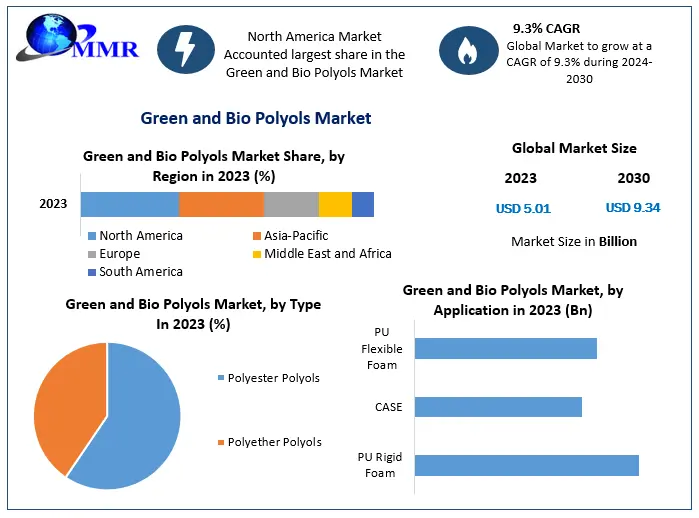
Global Green and Bio Polyols Market Accelerates with Rising Demand for Sustainable Polyurethane Solutions The global Green and Bio Polyols market is witnessing rapid growth driven by increasing demand for sustainable materials, stringent environmental regulations, and rising adoption of bio-based polyurethane products across multiple industries. Green and bio polyols, derived from...
The term situs slot gacor has become widely used in online conversations to describe digital platforms where people explore slot-style entertainment. Although the phrase is popular in Indonesian online communities, its meaning is more general than it may appear. It typically refers to websites that users believe offer reliable performance, smooth gameplay, or favorable outcomes within online...

visa index egypt for uk citizens focuses on how Egypt’s visa accessibility and requirements relate specifically to British passport holders. This visa index information allows UK citizens to review how easily they can obtain an Egyptian visa, the efficiency of the e-Visa platform, and the general approval rates for tourist applications. With Egypt recognized as a destination that welcomes...
