


Acrylic Resins and the Invisible Infrastructure Layer Protecting Cities, Vehicles, Factories and the Next Generation of Low-Carbon Surfaces
A city is repainted long before it is rebuilt
A city notices fading walls, rusting railings, cracked sealants and road markings only after performance declines. Acrylic Resins sit inside this maintenance cycle as binders that convert pigments, fillers and additives into a continuous protective film. In a district containing 10 million square metres of painted exterior surface, a seven-year repaint cycle creates annual treatment demand for roughly 1.43 million square metres. At two coats and 0.20 litres per square metre per coat, that district consumes about 572,000 litres of coating every year.
Semple Request At: https://datavagyanik.com/reports/global-acrylic-resins-market-size-production-sales-average-product-price-market-share/
The American Coatings Association values the global paint and coatings industry at about US$202 billion. If acrylic-based systems touch one-third of that value through architectural, industrial, automotive and specialty formulations, more than US$67 billion of finished coating activity depends partly on acrylic chemistry. This measures the downstream surface economy protected, decorated or bonded by the polymer. One tonne of resin can support several tonnes of formulated product after pigments, water, solvent and additives are included.
The infrastructure equation is measured in square metres
Global building floor area reached 273 billion square metres in 2024 after expanding by 1.7% in one year. The world is adding approximately 12.7 million square metres of floor area each day. Every new wall, roof, panel, window profile and floor creates a future maintenance liability. Acrylic Resins translate part of that liability into scheduled protection. At 0.35 litres of acrylic-containing coating for every square metre receiving one layer, only 5% of one year’s new global floor area would represent more than 81 million litres of coating demand.
The deeper story is the multiplication of repaint cycles. A façade coated in year one may be recoated in year eight, repaired in year twelve and refurbished again in year sixteen. One square metre can generate three or four coating events over a 25-year operating life. Acrylic Resins gain value because ultraviolet resistance, colour retention and water compatibility can extend the interval between interventions. Increasing a repaint cycle from six years to eight years cuts full repaint events over 24 years from four to three, reducing labour, scaffolding and shutdown expenditure by about 25%.
Acrylic Resins market value is a proxy for maintained assets
DataVagyanik’s modeled estimate places the global Acrylic Resins market at US$21.86 billion in 2026 and forecasts it to reach US$32.74 billion by 2035, representing a compound annual growth rate of 4.59%. The forecast assumes volume growth in waterborne coatings, adhesives, construction modifiers and industrial finishes, while value growth is strengthened by low-VOC, self-crosslinking, high-solids and bio-attributed grades. The model separates commodity emulsion growth from higher-value specialty systems used on demanding surfaces.
The factory behind the film is becoming regional
Acrylic chemistry requires more than a polymerization vessel. The chain begins with propylene or ethylene routes, proceeds through acrylic acid or methyl methacrylate, and then moves into esters, emulsions, solution polymers or reactive systems. Storage, nitrogen blanketing, temperature control, wastewater treatment and logistics are essential because production runs continuously while demand arrives in batches. A 100,000-tonne resin complex operating 330 days annually must average 303 tonnes per day. A five-day logistics interruption can delay more than 1,500 tonnes of material.
Röhm’s Bay City facility shows how upstream infrastructure is being redesigned. The plant has 250,000 tonnes of annual methyl methacrylate capacity, employs around 90 people and uses a digital twin updated daily for planning and predictive maintenance. Its technology can lower carbon dioxide emissions by as much as 42% versus conventional routes. At full utilization, the site can supply about 685 tonnes per day. If half flows into resin and coating applications, that volume can support hundreds of millions of litres of downstream products.
The performance story begins at particle scale
Waterborne Acrylic Resins are often supplied as polymer particles dispersed in water. Typical particle sizes can sit near 80–300 nanometres, meaning one millimetre of wet coating contains thousands of particles across its thickness. As water evaporates, particles pack, deform and fuse into a film. The formulator balances glass-transition temperature, minimum film-forming temperature, particle size, surfactant level and crosslinking. A resin that is too hard may crack in cold conditions. A resin that is too soft may collect dirt, block under pressure or lose abrasion resistance.
Raising solids content from 45% to 55% means a tanker carrying 20 tonnes delivers 11 tonnes of polymer instead of 9 tonnes. The same truck moves 22% more useful binder, reducing freight per tonne of polymer. Lowering volatile organic compound content from 100 grams per litre to 25 grams per litre removes 75 kilograms of potential solvent emissions from every 1,000-litre batch. Dow markets acrylic industrial emulsions capable of formulations at or below 25 grams per litre VOC, showing how regulation becomes measurable formulation efficiency.
Roads convert visibility into recurring demand
A 100-kilometre road with two 150-millimetre edge lines contains 30,000 square metres of marked surface before centre lines, arrows and crossings are counted. At 0.6 kilograms of marking material per square metre, the two edge lines require about 18 tonnes per application. If high-traffic sections are renewed every 12 months and lower-traffic sections every 24–36 months, demand behaves more like maintenance consumables than one-time construction materials. Acrylic Resins are valued here for rapid drying, adhesion, bead retention and weather resistance.
The next chapter is more function per kilogram
Arkema’s €130 million modernization at Carling targets a 20% reduction in site carbon dioxide emissions while improving efficiency and capacity. BASF has expanded dispersion production across China, India, Türkiye, the Netherlands and South Africa, positioning output closer to coatings, construction, packaging and adhesive customers. Acrylic Resins are becoming a regional infrastructure product: manufactured near consumption centres, engineered for local regulation and optimized to reduce water, solvent, energy and maintenance hours per protected square metre.
A vehicle carries several resin systems before it carries a passenger
Modern vehicle coating is a layered engineering system rather than one decorative film. A passenger vehicle can carry 15–25 kilograms of coatings across electrodeposition primer, surfacer, basecoat, clearcoat, underbody protection and plastic-part finishes. Acrylic Resins are relevant in clearcoats, refinish systems, plastic coatings and waterborne colour layers because they combine gloss retention, hardness and ultraviolet resistance.
A plant producing 250,000 vehicles annually may process more than 4,000 tonnes of coating at 16 kilograms per vehicle. Reducing film loss and overspray by 5% saves around 200 tonnes. At an applied coating value of US$6 per kilogram, the annual material saving reaches US$1.2 million before waste handling, booth cleaning and energy are counted.
The electric-vehicle transition expands the surface map. Battery enclosures, charging cabinets, sensors, displays and plastic assemblies require electrical insulation, weatherability or chemical resistance. Acrylic Resins therefore move beyond visible body panels into functional layers measured in micrometres. A 40-micrometre coating over 20 square metres creates only 0.8 litres of dry film, yet failure can expose equipment worth thousands of dollars.
Adhesive infrastructure is counted in kilometres of coated web
A pressure-sensitive tape line may operate at 200–600 metres per minute. At 400 metres per minute and 1.5 metres wide, it processes 36,000 square metres every hour. Running for 20 hours produces 720,000 square metres, equal to more than 100 football fields in one day. Acrylic Resins support labels, protective films, medical tapes, construction membranes and automotive attachment products because adhesion can be tuned through molecular weight, crosslink density and monomer selection.
At a dry coat weight of 25 grams per square metre, that daily output consumes 18 tonnes of adhesive. Raising solids from 50% to 60% reduces wet material from 36 tonnes to 30 tonnes. Six tonnes less water or solvent must pass through ovens each day. Across 300 operating days, the reduction reaches 1,800 tonnes, converting formulation changes into lower thermal load and higher line productivity.
One package can contain several invisible acrylic layers
Flexible packaging is judged in seconds on a filling line but must perform for weeks during transport and retail. Acrylic Resins can appear in primers, heat-seal coatings, overprint varnishes, inks and water-based barrier layers. A press producing 300 metres per minute on a one-metre web processes 18,000 square metres per hour. A coating weight of 2 grams per square metre still requires 36 kilograms of dry material every hour.
A plant operating two lines for 6,000 hours annually processes 216 million square metres. Removing 0.5 gram per square metre while maintaining performance saves 108 tonnes of coating. At US$4 per kilogram, that represents US$432,000 in annual material value. The objective is not the cheapest kilogram of Acrylic Resins, but the lowest cost per accepted package after rejects, drying energy and line speed are included.
Roofs turn resin performance into energy infrastructure
A 10,000-square-metre industrial roof receives nearly 10 megawatts of solar energy when irradiance approaches 1,000 watts per square metre. Acrylic Resins are used in roof-tile paints, elastomeric membranes and reflective coatings because exterior durability must survive ultraviolet radiation, standing water and repeated thermal expansion.
Assume a reflective system reduces average absorbed load by 80 watts per square metre during five effective peak-equivalent hours. The roof avoids roughly 4,000 kilowatt-hours of heat gain on a clear day. If only 15% translates into lower electricity use, daily savings reach 600 kilowatt-hours. Across 180 high-load days, the result is 108,000 kilowatt-hours. The coating becomes part of the building’s operating-energy strategy.
Concrete protection begins before cracks become structural costs
Concrete absorbs water through pores and deteriorates through carbonation, chloride penetration, freeze-thaw cycles and reinforcement corrosion. Acrylic Resins used in façade coatings and restoration systems create a controlled barrier while selected grades release water vapour. A bridge containing 50,000 square metres of exposed concrete requires 15,000 litres per coat at 0.30 litres per square metre. A two-coat program consumes about 30,000 litres before primers and repair mortars are included.
If preventive coating costs US$12 per square metre, the project value is US$600,000. Delaying treatment until deeper repair is required can raise intervention cost to US$80–150 per square metre. Protecting only 10% of the surface from such repair avoids US$340,000–690,000 of additional expenditure. Acrylic Resins create their greatest value when procurement compares life-cycle cost rather than initial paint price.
Waterproofing converts millimetres into avoided damage
A two-millimetre dry membrane over 5,000 square metres represents 10 cubic metres of protective structure. At a dry density of 1.3 tonnes per cubic metre, the installed layer weighs about 13 tonnes. Acrylic Resins provide flexibility and adhesion across roofs, balconies and walls where movement is measured in millimetres but leakage losses can reach six or seven figures.
A warehouse storing US$20 million of goods needs only a 0.5% water-damage event to incur US$100,000 of inventory loss. A US$75,000 membrane renewal that extends watertight service by five years carries an annualized cost of US$15,000. The risk logic supports preventive expenditure even before energy or appearance benefits are considered.
The real unit of demand is a protected outcome
Acrylic Resins will continue to be sold by kilogram and tonne, but infrastructure owners buy years of corrosion resistance, square metres of waterproofing, kilometres of road visibility and millions of acceptable packages. A 2% off-specification rate at a 50,000-tonne resin facility creates 1,000 tonnes requiring rework or downgrading. Cutting that rate to 0.5% recovers 750 tonnes. At US$2,000 per tonne, the value reaches US$1.5 million annually.
The strongest formulations will reduce coating weight, curing temperature, solvent content or maintenance frequency without shifting failure risk downstream. That is why Acrylic Resins belong in the infrastructure story. Their physical presence may be only 20–2,000 micrometres thick, but the avoided repaint, rejected package, corroded panel, leaking roof or overheated building makes their value measurable.
Semple Request At: https://datavagyanik.com/reports/global-acrylic-resins-market-size-production-sales-average-product-price-market-share/
Κατηγορίες
Διαβάζω περισσότερα
Online store builder platforms and an ecommerce website builder are helping businesses expand beyond traditional online selling. Modern customers use multiple channels to discover and purchase products, including websites, social media, mobile apps, and messaging platforms. Businesses that connect all these channels create smoother customer experiences and increase long-term growth...

Cricket is not just played with the bat and ball—it is played in the mind. Behind every shot, every delivery, and every decision, there is a thought process shaping the game. What makes cricket unique is the mental challenge it offers. Players must stay focused for long periods, handle pressure calmly, and make quick decisions in changing situations. It’s not always the strongest...

The Automotive Flooring Market is advancing rapidly as automotive interiors become a key differentiator in vehicle design and consumer appeal. From luxurious carpet finishes in premium models to rugged rubber mats in commercial fleets, automotive flooring plays a vital role in enhancing comfort, protection, and overall vehicle aesthetics. With ongoing shifts toward sustainability,...

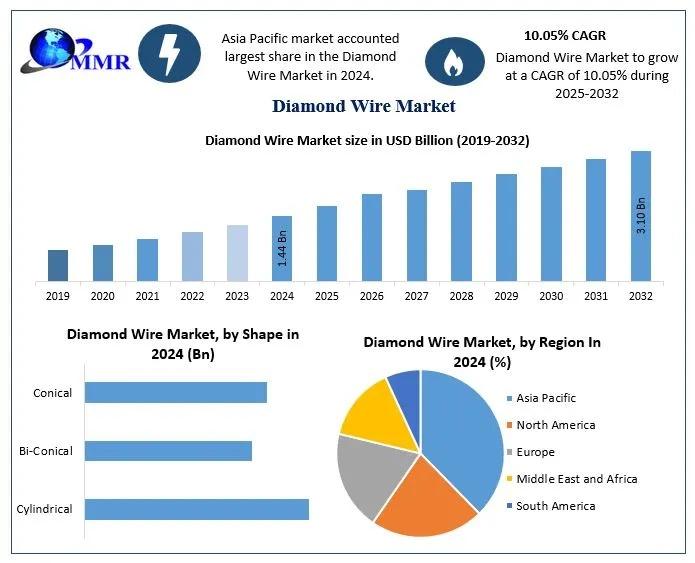
Anticipated Growth in Revenue: The Diamond Wire Market size was valued at USD 1.44 Billion in 2024 and the total Diamond Wire revenue is expected to grow at a CAGR of 10.05% from 2025 to 2032, reaching nearly USD 3.10 Billion. Diamond Wire Market: Driving Precision Cutting Across Modern Industries Market Overview The Diamond Wire Market is gaining strong momentum...
What Is Alpha Honey? Alpha Honey is a premium male health gummy supplement created to support energy, stamina, libido, and overall male vitality. It is designed for men who want to maintain active lifestyles, improve physical endurance, and support confidence naturally. The supplement uses a blend of plant-based ingredients, adaptogens, minerals, and amino acids that work together to support...
