


Pulse Jet Dust Collector Manufacturers in India: Which One Actually Fits Your Plant?

Key Takeaways
-
Pulse jet collectors clean filters with compressed air pulses without pausing airflow, which is why they have largely replaced older shaker style systems in continuous industrial processes
-
India's particulate matter limits are not one size fits all. CPCB's general standard is 150 mg/Nm³, cement plants fall under a separate 250 to 400 mg/Nm³ bracket, and Delhi-NCR's highly polluting industries now face a tighter 50 mg/Nm³ limit under revised CAQM directions
-
Long term performance hinges on air to cloth ratio sizing, correct filter media, and how well calibrated the cleaning cycle is, not on brand recognition alone
-
Techflow Enterprises Pvt Ltd, operating since 1979, is one of the longest running pulse jet manufacturers in India and a sensible first stop for comparison
-
Manufacturers cluster around Gujarat, Maharashtra, and Tamil Nadu, each carrying a different specialty shaped by their original core business
-
A phone call to an existing customer in your own industry will tell you more than any spec sheet
Ask five plant managers why they switched dust collector vendors, and you will rarely hear "the old one was too expensive." More often it is something like: the bags kept clogging within months, the compressed air bill quietly doubled, or a pollution board inspection flagged emissions the "brochure numbers" never warned them about.
That gap between what a manufacturer promises and what actually happens on the shop floor is the real reason this decision deserves more than a quick price comparison. This guide walks through the mechanics worth understanding first, the compliance backdrop shaping 2026 buying decisions in India, and then a closer look at ten manufacturers worth shortlisting, led by Techflow Enterprises Pvt Ltd, one of the oldest names still active in this space.
Start With the Mechanics, Not the Marketing
Every pulse jet dust collector runs on the same basic sequence, regardless of who manufactures it. Dust laden air enters the housing and slows down enough for the heaviest particles to drop out immediately. The finer dust that remains airborne collects on the outside of fabric bags or pleated cartridges, building a thin layer known as the dust cake, which actually improves filtration once it forms. At intervals set by a timer, a solenoid valve fires a short, high pressure pulse of compressed air backward through the filter, flexing it just enough to knock the accumulated dust into a hopper below. Because this cleaning happens section by section rather than across the entire unit, the rest of the system keeps filtering without any break in airflow.
That last detail is the whole point of the technology. Older shaker type and reverse air systems generally need to pause airflow during cleaning, which is workable for batch operations but a real problem for plants running multiple shifts without downtime. Once you understand this mechanism, manufacturer claims about "continuous operation" or "low pressure drop" stop being marketing language and start being things you can actually verify against a spec sheet.
Why 2026 Is a Different Buying Environment Than a Few Years Ago
Emission enforcement in India has shifted noticeably, and it directly changes what "adequate" looks like for a dust collection system. CPCB's general emission standard sets particulate matter at 150 mg/Nm³ for most industrial categories, but that number does not apply uniformly. Cement plants operate under a separate bracket, capped at 250 mg/Nm³ for larger facilities above 200 tonnes per day and 400 mg/Nm³ for smaller ones. The bigger shift has come from the Commission for Air Quality Management, which issued revised directions for Delhi-NCR setting a maximum particulate matter limit of 50 mg/Nm³ for seventeen categories of highly polluting industries identified by CPCB, red category medium and large units, food and textile plants running boilers or thermic fluid heaters, and metal units operating furnaces.
If your facility falls into one of these tighter categories, a system that was correctly specified a few years ago under the older, looser standard may no longer clear the bar. That makes emission sizing, not just unit price, the conversation to have with any manufacturer before signing anything.
The Four Things That Actually Determine Long Term Performance
Air to cloth ratio. This is the relationship between air volume and total filter surface area, and it needs to be matched to your dust type specifically. Push it too hard and pressure drop climbs faster, bags wear out sooner, and running costs rise, no matter how good the manufacturer's reputation is otherwise.
Filter media. Polyester handles general industrial dust well, polypropylene copes better with moisture and certain chemical exposure, cotton is a cost effective choice for non-abrasive dust, and antistatic fabric becomes essential once combustible dust is part of the process. Treat a manufacturer defaulting to one fabric across every industry as a flag worth questioning.
Cleaning cycle tuning. How often the timer fires the solenoid valve affects both compressed air consumption and bag life. Pulse too often and you waste compressed air while wearing bags out faster; pulse too rarely and dust cake builds up until pressure drop crosses acceptable limits.
Spare parts and service reach. Bags, gaskets, diaphragms, and solenoid valves fail on predictable schedules. A manufacturer without local stock or a responsive team can turn a routine bag change into a week of unplanned downtime.
Ten Manufacturers Worth Shortlisting
1. Techflow Enterprises Pvt Ltd
Founded in 1979 in Ahmedabad, Gujarat, Techflow holds one of the longest operating histories in this segment and is often credited as a pioneer of cartridge type pulse jet dust collectors in India, having designed and manufactured them as far back as the 1980s, well before cartridge filtration became mainstream. Its product portfolio extends beyond standard pulse jet bag filters and cartridge collectors to include silo vent filters, fume extraction systems, centrifugal fans and blowers, electrostatic precipitators, and complete pneumatic conveying systems, making it a viable single vendor option for buyers who want an entire air pollution control setup handled by one supplier. Systems are engineered around variables like dust characteristics, airflow volume, and applicable compliance norms, and the company maintains a pan India presence along with export experience suggesting manufacturing consistency at scale.
Where it stands out: nearly five decades of experience with a genuine early claim to cartridge type pulse jet technology in India, a wide product range spanning fume extraction, ESPs, silo vent filters, and pneumatic conveying, pan India and export presence indicating scale, and systems engineered around specific dust and airflow variables rather than a generic template.
Where to dig deeper: as an established, full range manufacturer, pricing flexibility may be lower than smaller regional fabricators, so confirm current lead times and after sales response directly, since these can vary by region, and validate specifications for niche applications independently.
2. Ultra Febtech Private Ltd
Operating out of Vatva, Ahmedabad, Ultra Febtech traces its roots to 1990 as a proprietor firm before growing into its current form. Its core business centers on size reduction and grinding equipment, including pulverizers, pin mills, and air classifier mills, with pulse jet dust collectors offered as a natural extension of that expertise, since grinding operations generate significant fine dust requiring source level control. This gives the company a practical, hands-on understanding of powder handling applications, and some listings indicate ISO 9001 certification. Systems are positioned around compact design, self cleaning through an electronic timer and pneumatic valve setup, and low maintenance.
Where it stands out: strong practical grounding in powder handling and grinding applications, compact self cleaning designs with electronic timer and pneumatic valve control, and a long operating history since 1990 with reported ISO 9001 certification.
Where to dig deeper: dust collection is a secondary line of business rather than a core specialization, which may mean a narrower range compared to dedicated pollution control manufacturers, online documentation is relatively limited so direct consultation may be needed, and this fit works best when your dust source is tied to grinding or powder processing.
3. Mesotech Engineering Systems
Mesotech is recognized for pulse jet dust collectors, multi cyclone dust collectors, and wet scrubbers, operating across several Indian cities including Pune. Its catalogue also spans belt drive blowers, kitchen exhaust blowers, centrifugal blowers, and venturi scrubbers. The company positions itself as both supplier and exporter, suggesting familiarity with international documentation and packaging standards alongside domestic orders, and its marketing material clearly distinguishes baghouse style pulse jet units from cyclone dust collectors that use vortex motion for pre-separation, a distinction that helps first time buyers pick the right configuration. Sector focus includes cement, chemicals, and pharmaceuticals.
Where it stands out: a broad catalogue spanning pulse jet, multi cyclone, and wet scrubber systems, presence in multiple cities including Pune that aids regional service access, clear educational content differentiating baghouse and cyclone configurations, and export oriented positioning.
Where to dig deeper: a wide spread across blowers, ovens, and scrubbers may mean dust collection is one of several focus areas rather than a sole specialization, buyers outside Mesotech's primary service cities should confirm installation and maintenance timelines in advance, and technical claims should be verified against exact process conditions.
4. Varahi Industries
Based in Ahmedabad, Varahi manufactures pulse jet dust collectors designed to capture particles down to roughly one micron, useful for cement, chemical, mineral, and food industry applications where fine powder recovery matters. Systems come with circular or square housing options and allow top or side bag removal depending on plant layout. The company customizes filter bag fabric selection, including polyester, polypropylene, cotton, or antistatic media, based on chemical and thermal conditions, and details its process flow clearly: dust laden air enters at positive or negative pressure, velocity reduces in the hopper for coarse settling, and timer controlled solenoid valves release short compressed air pulses to dislodge dust from the bags. A rotary airlock valve at the hopper outlet, intended to prevent air leakage during continuous discharge, is a practical addition some budget systems skip.
Where it stands out: fine particle capture down to roughly one micron, suitable for demanding food and pharmaceutical grade applications, flexible housing shapes and bag removal options, a transparent and genuinely engineered process description, and practical extras like rotary airlock valves included by design.
Where to dig deeper: as a single facility, regionally based manufacturer, response times for buyers far from Ahmedabad may be longer, less public information is available on export track record compared to larger players, and custom fabric and housing options may extend lead times compared to standard units.
5. Welron Industries
Welron manufactures pulse jet cartridge type and bag type dust collectors aimed at metal fabrication, cement, pharma, food, and chemical industries. Systems are built around continuous automatic cleaning cycles that avoid interrupting airflow, and the product range extends to envelope type bag filters and full baghouse configurations, useful for buyers unsure which style fits their process until they consult the manufacturer's team. The company emphasizes robust construction and low pressure drop, relevant for facilities running collectors continuously across long shifts, since higher pressure drop over time typically means higher energy costs.
Where it stands out: multiple format options, including cartridge, bag, and envelope type filters, under one roof, a continuous automatic cleaning design that avoids process interruption, an emphasis on robust construction and low pressure drop for long term energy control, and relevant experience across metal fabrication, cement, pharma, food, and chemical sectors.
Where to dig deeper: as with several regional Ahmedabad based manufacturers, detailed technical datasheets may need to be requested directly, company scale and export history are less documented publicly, and buyers should confirm warranty terms and spare parts availability upfront.
6. Cleantek
Operating out of Coimbatore, Tamil Nadu, Cleantek is known for pulse jet dust collectors positioned as part of broader pneumatic conveying systems rather than standalone units. Its equipment is commonly used in pharmaceuticals, coal handling, chemicals, minerals, and metal processing. Being based in South India, Cleantek is a relevant option for buyers in Tamil Nadu and neighboring states who prefer a manufacturer within reasonable service distance, since freight and after sales visits can add meaningfully to project cost when equipment travels across the country. The company also markets itself as an exporter.
Where it stands out: a strong regional presence in South India that shortens service distances, systems positioned within pneumatic conveying setups suited to integrated material handling needs, relevant experience in pharmaceuticals, coal handling, and metal processing, and an export oriented business model.
Where to dig deeper: limited presence outside South India may mean longer logistics and service timelines elsewhere, standalone dust collector options may be less emphasized than integrated conveying solutions, and public technical documentation is relatively brief, so direct discussion is advisable.
7. Wintech Supply
Wintech Supply offers a fairly wide variety of dust collector formats, including pulse jet baghouse filters, cartridge type collectors, and cylindrical dust collectors built to handle both internal and external pressure conditions. Its pitch centers on continuous operation without periodic shutdowns for cleaning, and the range suggests a broad rather than narrowly specialized focus. The company also positions itself as a multi cyclone dust collector manufacturer, describing its ability to trap fine material before it escapes into the surrounding environment or settles on nearby equipment, relevant for facilities near residential areas or with strict housekeeping requirements.
Where it stands out: a wide variety of collector formats under one manufacturer, including baghouse, cartridge, and cylindrical designs, clear educational framing of different filter types for buyers new to the terminology, and multi cyclone positioning that adds a pre filtration option for heavier dust loads.
Where to dig deeper: the breadth of formats means buyers need extra time narrowing down the right configuration, company scale, manufacturing location details, and export history are less prominently documented, and direct technical consultation is recommended before finalizing specifications.
8. Blowtech Engineers Private Limited
Based in Vasai, Maharashtra, Blowtech Engineers manufactures mild steel and stainless steel pulse jet dust collectors designed to handle heavy dust loads ranging from smaller capacities up to 40 tons. Systems typically include a blower, dust filter, filter cleaning mechanism, and dust removal receptacle as a complete package, simplifying procurement for buyers who prefer an integrated unit. The broader product line covers centrifugal blowers, axial flow fans, air curtains, motorized roof exhaust fans, and man coolers. The company also lists wet scrubber based systems for handling explosive powders such as aluminum dust, a specialized application not every manufacturer is equipped to advise on.
Where it stands out: a wide capacity range, from smaller units up to 40 ton heavy dust load systems, a complete integrated package of blower, filter, cleaning mechanism, and dust removal receptacle, wet scrubber expertise for explosive powders like aluminum dust as a specialized safety focused option, and a broader ventilation product range that allows bundling of related equipment.
Where to dig deeper: buyers in other regions should factor in freight and service travel time, wet scrubber systems for combustible dust require careful compliance verification so buyers should confirm certifications for their specific hazard classification, and company wide export experience is less documented publicly compared to larger pan India manufacturers.
9. Vayuvents Private Limited
Also based in Vasai, Maharashtra, Vayuvents was established in 2010 and positions itself primarily as an HVAC and pollution control solutions provider, offering engineering design, supply, installation, servicing, and commissioning rather than just manufacturing standalone equipment. Its reverse pulse jet dust collectors sit within a wider catalogue that includes axial and centrifugal fans, roof extractor fans, fume scrubbers, and mist cannon dust suppression systems, with airflow handling capacities that can scale into higher volume ranges. Vayuvents also serves marine and offshore clients in addition to general manufacturing units, pointing to some familiarity with more demanding environmental and corrosion conditions. Some directory listings indicate ISO 9001:2015 certification.
Where it stands out: a full turnkey approach covering design, supply, installation, servicing, and commissioning rather than equipment sale alone, experience with marine and offshore projects suggesting familiarity with harsher, corrosive operating environments, reported ISO 9001:2015 certification and a broad HVAC and pollution control product range, and a relatively newer, growth focused company that may offer more flexibility on customization requests.
Where to dig deeper: founded in 2010, so it has a shorter track record compared to older names on this list, dust collection is one part of a much larger HVAC and ventilation portfolio rather than the company's core specialization, and buyers elsewhere should confirm service and installation logistics in advance.
10. Airfilt Technologies Private Limited
Airfilt Technologies maintains a presence across several Indian cities including Delhi, Bangalore, Mumbai, and Ahmedabad, manufacturing pulse jet filter units alongside centralized dust collectors, portable dust collectors, and centrifugal blowers. This city wise structure appears deliberate, with dedicated local teams for each region that can translate into faster site visits and quicker spare parts turnaround compared to a single base operation. Marketing highlights custom engineering for high temperature or corrosive airflow conditions, along with centralized dust collection setups that route multiple workstation ducts to a single collection point, suited to larger manufacturing floors with several dust generating processes.
Where it stands out: a multi city presence across Delhi, Bangalore, Mumbai, and Ahmedabad that aids faster local service and support, a wide product range including centralized dust collectors, portable units, and centrifugal blowers, a custom engineering focus for high temperature or corrosive airflow conditions, and suitability for larger facilities needing centralized ducting from multiple workstations to one collection point.
Where to dig deeper: a city by city marketing structure can make it harder to verify one consistent, centralized manufacturing standard, long term track record and history are less documented compared to older names on this list, and buyers should confirm which specific city team and facility would handle their project, since capabilities may vary by location.
Where Buyers Usually Go Wrong
-
Anchoring the decision on the lowest quote instead of an air to cloth ratio calculation matched to their actual dust type
-
Assuming a single filter fabric works everywhere, without accounting for moisture, temperature, or combustible dust exposure
-
Discovering spare parts are not available locally only after a valve or bag has already failed
-
Skipping calls to existing customers in a comparable industry, where dust characteristics are genuinely similar
-
Sizing the system against an outdated emission limit instead of the specific CPCB or CAQM category their unit actually falls under today
A Short List to Run Through Before You Sign Anything
-
Confirm documented experience with your specific dust type and industry
-
Ask for the air to cloth ratio calculation used for your process, not a generic industry figure
-
Get the reasoning behind their filter media recommendation, not just the recommendation itself
-
Match the system's designed emission performance against your applicable CPCB or CAQM limit
-
Verify local spare parts stock and typical service response time
-
Request at least one reference site in a comparable industry that you can contact directly
Closing Thoughts
There is no single correct answer to which manufacturer is "best." The right fit depends on your dust characteristics, your compliance category, and how your plant is laid out, matched honestly against what each manufacturer genuinely specializes in rather than what their brochure claims. Techflow's near five decade history gives it real engineering depth worth starting with, but the other nine names each bring a distinct advantage of their own, whether that is regional service reach, powder handling know how, or turnkey installation support. Take the extra week to verify specifications and talk to existing customers before committing. Against years of running costs, that week costs you almost nothing.
Frequently Asked Questions
1. What exactly is a pulse jet dust collector?
It is an industrial air pollution control system that uses short bursts of compressed air to clean filter bags or cartridges, removing dust from process air while the system keeps running without interruption.
2. How does it differ from a shaker type dust collector?
Shaker type systems typically pause airflow during cleaning, while pulse jet systems clean filter sections in sequence without stopping the process, which is why they suit continuous, multi shift operations better.
3. Which industries in India rely most heavily on pulse jet dust collectors? Cement, chemical, pharmaceutical, metal fabrication, food processing, mining, and woodworking industries are among the heaviest users of this technology.
4. Cartridge type or bag type: how do I decide?
Cartridge collectors offer more filter surface area in a smaller footprint thanks to pleated media, which suits space constrained plants, while bag type collectors generally handle larger air volumes or coarser dust more economically.
5. How should I pick filter media for my application?
Base it on particle size, temperature, moisture, and chemical exposure. Polyester, polypropylene, cotton, and antistatic fabrics cover most common industrial scenarios, and combustible dust applications should default to antistatic media.
6. Does Techflow work for pharmaceutical grade requirements?
Techflow manufactures cartridge and bag filter systems that can be customized for stricter air purity needs, though it is worth confirming specifications directly with the manufacturer for your exact process.
7. What does a pulse jet dust collector typically cost in India?
Costs vary widely with airflow capacity, filter media, and customization, ranging from a little over a lakh rupees for smaller units to several lakhs for larger, high capacity systems.
8. How frequently do filter bags need replacing?
It depends on dust load, operating conditions, and media type, though correct media selection and a well calibrated cleaning cycle can meaningfully extend bag life.
9. Are pulse jet systems suitable for high temperature exhaust streams? Yes, provided the filter media and housing are rated for that temperature range, which is why discussing exact operating conditions with the manufacturer upfront matters.
10. What particulate matter standard applies to my plant right now?
It depends on your classification. CPCB's general standard sits at 150 mg/Nm³, cement plants fall under a separate 250 to 400 mg/Nm³ bracket depending on capacity, and highly polluting or red category industries operating in Delhi-NCR now face a tighter 50 mg/Nm³ limit under revised CAQM directions.
Nach Verein filtern
Read More
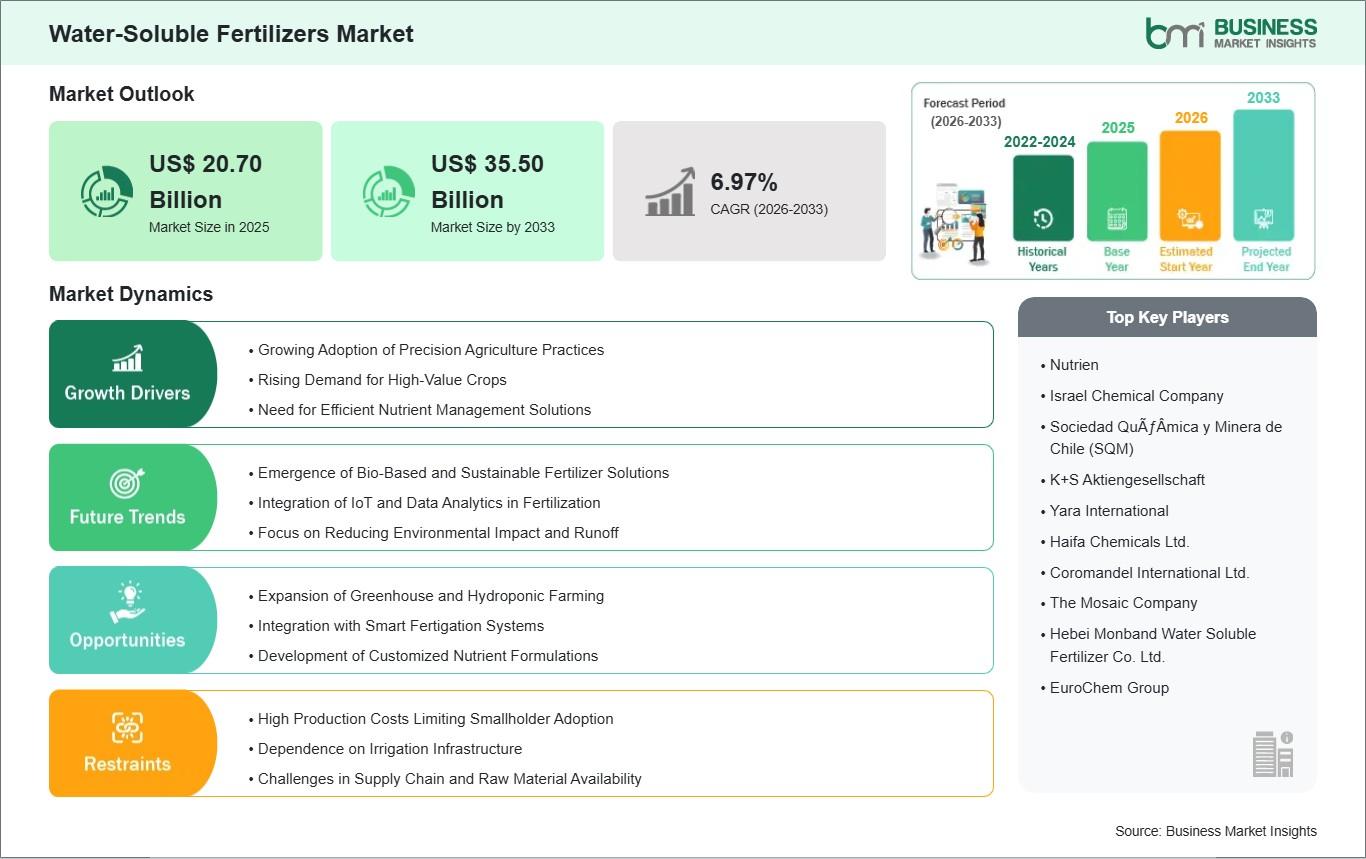
The Water-Soluble Fertilizers Market is undergoing a profound structural evolution, propelled by the global imperative for heightened agricultural productivity, shrinking per capita arable land, and the rapid deployment of precision irrigation infrastructure. By dissolving completely in water, these specialized chemical and organic nutrient formulations facilitate macro and micronutrient...
A lot of businesses still expect search rankings to improve quickly after publishing several articles online. That rarely happens anymore because competition became much heavier during recent years across almost every industry. Search engines evaluate authority signals carefully before rewarding pages with stronger visibility. Content matters obviously, although outside trust signals still...

Competitive Analysis of Executive Summary Organo Mineral Fertilizers Market Size and Share The global organo mineral fertilizers market was valued at USD 1.62 Billion in 2024 and is expected to reach USD 2.08 Billion by 2032. During the forecast period of 2025 to 2032 the market is likely to grow at a CAGR of 3.22%, primarily driven by rising consumer demand...

Introduction The cloud orchestration market is witnessing rapid growth as businesses increasingly adopt cloud computing solutions to enhance operational efficiency and flexibility. Cloud orchestration refers to the automated arrangement, coordination, and management of complex cloud services and resources. By integrating various cloud services, orchestration enables organizations to streamline...
The steady rise of the Digital Pregnancy Test Kit Market highlights a growing consumer preference for private, fast, and highly reliable health solutions. In today's fast-paced environment, individuals value the ability to perform initial health screenings at home with high confidence. Digital test kits address this need perfectly by delivering clear, easy-to-read results on an electronic...