Imidazoles and the Hidden Infrastructure That Makes Electronics Cure Faster, Medicines Possible and Industrial Materials Survive Heat
A five-membered ring containing three carbon atoms and two nitrogen atoms can influence an entire factory. Imidazoles sit inside production decisions involving reactor scheduling, epoxy pot life, semiconductor reliability, pharmaceutical synthesis and corrosion control. Their commercial importance comes from leverage: a small dose can determine whether a resin remains workable for 24–48 hours and then cures rapidly at 100–180°C. BASF identifies this long working window and elevated-temperature cure as core performance advantages.
Semple Request At: https://datavagyanik.com/reports/global-imidazoles-market/
That leverage is visible in the dosing equation. Evonik specifies 1–5 parts per hundred resin for a standard imidazole curing agent. One tonne of epoxy therefore requires 10–50 kilograms. A plant producing 20,000 tonnes of one-component electronic epoxy annually would consume 600 tonnes of Imidazoles at a midpoint loading of 3%. The additive represents little mass, but it can govern the entire value of the finished formulation.
The infrastructure begins with compact, controlled specialty-chemical plants. A conventional route for Imidazoles combines glyoxal, formaldehyde and ammonia to create the aromatic ring. Stoichiometrically, one tonne of parent product corresponds to about 852 kilograms of glyoxal, 441 kilograms of formaldehyde and 500 kilograms of ammonia before yield losses. At a 90% process yield, gross feed demand rises to 947, 490 and 556 kilograms respectively.
For a 10,000-tonne-per-year facility operating 330 days, this translates into 30.3 tonnes of daily output and 60 tonnes of combined daily reactant movement. Such a site needs segregated feed tanks, corrosion-resistant reactors, condensation control, purification, crystallisation or distillation, drying, micronisation and contained packing. Imidazoles are therefore not “one-reactor chemicals”; the saleable grade depends as much on downstream purification and particle control as on ring formation.
A capital model places a 10,000-tonne specialty plant at $40–70 million when installed cost is calculated at $4,000–$7,000 per annual tonne. Approximately 35–45% would sit in reaction and purification equipment, 20–25% in utilities and waste handling, 10–15% in solids finishing and packaging, with the balance in buildings, laboratories, automation and contingency. The investment logic favours multi-grade plants because the same backbone can support higher-value derivatives.
This is why product form matters. BASF’s portfolio spans parent imidazole, aqueous solution, 2-methylimidazole, 2-ethyl-4-methylimidazole, 1-methylimidazole, 2-ethylimidazole and other functional grades. Assays range from about 83% to 99.7%; melting behaviour ranges from liquids below room temperature to solids melting above 140°C. Imidazoles consequently require two factory architectures: pump-metered liquid handling and enclosed solid feeding with dissolution or micronisation.
Packaging reveals the market’s operating scale. Commercial Imidazoles grades are supplied in 50-kilogram, 90-kilogram and 100-kilogram drums rather than in bulk tankers. A 600-tonne annual user may therefore handle 6,000–12,000 drums unless material is transferred through larger intermediate containers. Every drum introduces sampling, warehouse, traceability and exposure-control work, making automated feeding economically relevant in a plant model once consumption exceeds 100 tonnes per year.
Electronics is the clearest infrastructure story. Imidazoles can act as sole curing agents or accelerate dicyandiamide, anhydride and phenolic systems. Shikoku positions its CUREZOL grades primarily for electrical and electronic epoxy applications, while Evonik markets latent grades for solder resists, insulation and structural adhesives. The technical requirement is latency: the formulation must survive storage and coating, then activate within minutes when exposed to assembly temperatures.
The demand timeline shows why this niche chemistry matters. European electronics manufacturing services generated €57.3 billion in printed-circuit-board assembly revenue in 2023. Global wind additions reached a record 117 GW in 2024. Semiconductor sales then reached $795.6 billion in 2025, while global electric-car sales exceeded 20 million. Each expansion adds power modules, sensors, control boards, insulation systems, adhesives and composite structures—applications where controlled epoxy curing creates addressable demand for Imidazoles.
DataVagyanik values the global Imidazoles market at exactly $1.164 billion in 2026 and forecasts it to reach $1.869 billion by 2034, representing a 6.1% compound annual growth rate. The forecast reflects rising consumption in epoxy curing and acceleration, pharmaceutical and agrochemical intermediates, electronic materials, corrosion-control formulations and specialised synthesis, with value growth running ahead of volume as customers shift toward high-purity, latent and application-specific grades.
The semiconductor use case for Imidazoles is especially sensitive to purity. An epoxy encapsulant may represent grams per device, but ionic contamination can undermine insulation resistance and long-term reliability. At 3% loading, a 5,000-tonne encapsulant line consumes 150 tonnes of Imidazoles; reducing rejected output by only 0.5% protects 25 tonnes of formulated material. At an assumed finished-material value of $12 per kilogram, that quality gain preserves $300,000 annually before counting avoided device failures.
For Imidazoles, latency changes factory economics. A formulation with one day of workable life can be mixed centrally and distributed across several coating or moulding stations. If each station otherwise loses 20 minutes per eight-hour shift to small-batch preparation, ten stations surrender more than 1,200 labour hours annually. Imidazoles convert chemistry into equipment utilisation by separating storage stability from rapid thermal cure.
Wind blades and electric vehicles create a different mapping. Their structural epoxies must bond metals, fibres and inserts while tolerating heat and vibration. Not every formulation uses this chemistry, but the decision becomes attractive where high-temperature stability, metal adhesion and rapid activated cure outweigh raw-material price. Imidazoles therefore compete on minutes saved per mould, fewer incomplete cures and lower rework—not simply dollars per kilogram.
The market’s strategic bottleneck is specification fragmentation. Parent material, methylated grades, ethyl-methyl grades, micronised powders and latent adducts are not freely interchangeable. A manufacturer may require six to eighteen months to qualify one grade, locking purification profile, particle size and cure kinetics into the customer’s process. Imidazoles become embedded not through high dosage, but through qualification costs that can exceed the annual value of the additive itself.
That creates a durable industrial theme: a low-volume molecule controlling high-value throughput. The winning producers will not be those shipping the most tonnes. They will be those maintaining multi-region inventories, consistent assay, controlled metal impurities, repeatable particle size and technical laboratories capable of reformulating around a customer’s oven, mould or coating line. For Imidazoles, infrastructure is the product.
From Epoxy Ovens to Pharmaceutical Reactors: Where Imidazoles Create the Next Layer of Industrial Value
The pharmaceutical story begins with molecular familiarity. The imidazole ring appears in medicines used across antifungal, gastrointestinal, cardiovascular, neurological and oncology-related treatment pathways. Its two nitrogen atoms provide multiple bonding positions, allowing medicinal chemists to adjust solubility, receptor interaction and metabolic stability without dramatically increasing molecular weight.
This makes imidazole chemistry valuable long before a medicine reaches a patient. A commercial active pharmaceutical ingredient may require six to twelve reaction stages, and ring-containing intermediates can enter during the second, fourth or final stage. If one intermediate accounts for only 3% of a $300-per-kilogram API production cost, it still represents $9 per kilogram of finished pharmaceutical ingredient.
A 50-tonne API campaign would therefore embed approximately $450,000 of value associated with that single intermediate contribution. The material quantity may be limited, but purity failures can stop the entire batch. Pharmaceutical users consequently purchase documentation, impurity control, change-management discipline and supply continuity alongside the chemical itself.
The economics become more severe when a batch fails late. Consider a 2,000-litre reactor producing 800 kilograms of an advanced pharmaceutical intermediate valued at $120 per kilogram. The contained material value reaches $96,000 before labour, quality testing and equipment time. One failed impurity specification can remove three to seven production days from the annual schedule and create a total loss exceeding $150,000.
For this reason, pharmaceutical-grade Imidazoles require analytical infrastructure beyond conventional industrial production. Gas chromatography, high-performance liquid chromatography, water analysis, residual-solvent testing and trace-metal screening may each be required before release. A plant processing 200 batches annually and conducting eight tests per batch performs 1,600 analytical checks before counting stability studies or customer-specific methods.
Testing capacity can become the actual production constraint. If each release cycle consumes 18 laboratory hours, those 200 batches require 3,600 hours of analytical work. Two full-time analysts can theoretically cover the workload, but instrument maintenance, repeat testing and documentation often push the practical requirement to three or four trained personnel.
Agrochemical manufacturing creates another volume pathway. Imidazole-containing intermediates are used in selected fungicides, plant-protection chemicals and synthesis routes where nitrogen heterocycles improve biological activity. Agricultural demand is seasonal, but chemical production cannot always follow the planting calendar directly. Manufacturers therefore build inventory three to six months before regional application seasons.
A plant supplying 1,200 tonnes of agrochemical intermediate annually may ship 60% of its volume within a four-month window. That means 720 tonnes must be produced, packaged or withdrawn from inventory during approximately 120 days. Average movement rises to six tonnes per day, requiring warehouse capacity, batch traceability and transport planning that remain underused during the rest of the year.
Seasonality changes working capital. At an average inventory value of $8 per kilogram, holding 400 tonnes of finished or semi-finished material ties up $3.2 million. A two-month reduction in inventory duration can release more than $500,000 of working capital, assuming an annual financing cost near 10%.
Corrosion protection provides a smaller but operationally important use case. Nitrogen-containing heterocycles can adsorb onto metal surfaces and reduce electrochemical attack in selected acidic or industrial environments. The commercial value is measured through avoided metal loss, fewer shutdowns and longer maintenance intervals rather than additive volume.
Imagine a processing facility with 20 kilometres of vulnerable piping and an annual corrosion-maintenance budget of $4 million. A treatment program that reduces corrosion-related replacement expenditure by 8% saves $320,000 per year. Even when the inhibitor package costs $100,000, the net operating benefit remains $220,000 before counting reduced downtime.
Downtime can dominate the calculation. A production line generating $50,000 of contribution margin per hour loses $1.2 million during a 24-hour unplanned shutdown. Extending inspection intervals or avoiding one corrosion-triggered outage can therefore justify several years of chemical-treatment expenditure.
Imidazoles also participate in polyurethane, composite and adhesive systems where cure speed must be balanced against storage stability. A faster reaction is not automatically better. If a formulation cures before it fills a mould, the manufacturer gains cycle speed but loses dimensional quality. The optimum catalyst package therefore targets a defined processing window rather than the shortest possible reaction time.
A moulding operation producing 40 components per hour across 5,000 annual operating hours makes 200,000 parts. Cutting the cycle time by 5% raises theoretical capacity to approximately 210,500 parts without purchasing another moulding line. At a contribution margin of $6 per component, the additional annual capacity carries a value of about $63,000.
The benefit becomes larger in high-value electrical parts. If the same improvement applies to 100,000 modules carrying a $40 contribution margin, a 5% throughput increase creates capacity worth $200,000. This is why catalyst selection can receive attention at plant-management level despite representing less than 2% of formulation cost.
The supply chain, however, remains exposed to concentrated intermediate production. Glyoxal, formaldehyde, ammonia derivatives and specialised alkylating agents are connected to broader petrochemical networks. A disruption at one upstream unit can affect multiple downstream grades because manufacturers often share reactors, purification columns and packaging lines across the portfolio.
A producer operating at 85% utilisation has limited recovery flexibility. If an unplanned shutdown removes ten operating days from a 330-day year, theoretical capacity falls by 3%. At a 10,000-tonne plant, that equals 300 tonnes of unavailable output. When specialised grades represent only 15% of capacity, the lost production can absorb the equivalent of several months of high-value customer demand.
Regional inventory is therefore becoming part of technical service. Holding six weeks of stock for a customer consuming 240 tonnes annually requires approximately 28 tonnes of safety inventory. At $12 per kilogram, the inventory value is $336,000. Across 20 major accounts, a supplier may carry more than $6 million of strategically positioned material.
The environmental equation will increasingly influence plant design. Each tonne of saleable product creates wastewater, solvent-recovery requirements, off-spec fractions and packaging waste. If a process generates 4 cubic metres of wastewater per tonne, a 10,000-tonne facility must treat 40,000 cubic metres annually.
Reducing wastewater generation by 25% cuts treatment volume by 10,000 cubic metres. At a combined treatment and handling cost of $12 per cubic metre, annual savings reach $120,000. Recovering an additional 100 tonnes of solvent at $900 per tonne adds another $90,000, producing a combined process-economics benefit of $210,000 per year.
Continuous processing could reshape the next generation of Imidazoles infrastructure. Moving from large batch reactors to smaller continuous units can reduce reaction inventory, improve heat transfer and tighten residence-time control. A continuous reactor holding 500 litres may replace a batch vessel holding several thousand litres while producing comparable daily output through uninterrupted operation.
The strategic advantage is not only productivity. Smaller reaction inventories reduce the financial and safety impact of an off-spec event. If a batch system risks 5 tonnes of material per cycle while a continuous system exposes only 500 kilograms at one time, the maximum contained loss falls by 90%.
The future market will therefore be shaped by three measurable capabilities: purity control at parts-per-million levels, delivery reliability measured in weeks rather than months, and application support that converts laboratory cure profiles into factory cycle-time gains. Producers that only sell standard material will face pricing pressure. Producers that solve process bottlenecks can protect margins.
The larger story is one of industrial leverage. Imidazoles do not need to dominate a formulation by weight to influence its economics. They can determine whether a medicine passes impurity testing, whether an electronic encapsulant survives heat, whether an adhesive remains usable during assembly or whether a factory gains another 5% of annual throughput.
That is why this chemical family belongs in the infrastructure conversation. Its value is hidden inside reactors, ovens, coating lines, analytical laboratories and maintenance systems. The tonnes may remain modest compared with bulk chemicals, but the production capacity, pharmaceutical batches and electronic components dependent on those tonnes represent billions of dollars of downstream activity.
Semple Request At: https://datavagyanik.com/reports/global-imidazoles-market/
Categorias
Leia Mais
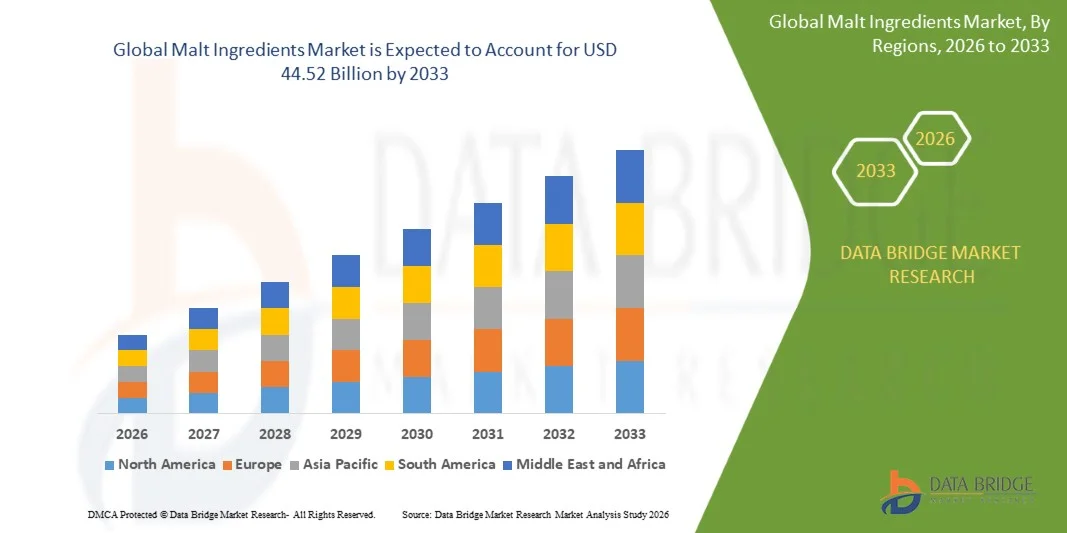
"According to the latest report published by Data Bridge Market Research, the Malt Ingredients Market The global malt ingredients market size was valued at USD 28.94 billion in 2025 and is expected to reach USD 44.52 billion by 2033, at a CAGR of 5.53% during the forecast period The Malt Ingredients Market document has wide-ranging and comprehensive...
The Indian real estate landscape is evolving rapidly, and cities like Palanpur are emerging as promising destinations for residential development. Once considered a quieter regional hub, Palanpur is now witnessing a shift toward modern infrastructure, planned communities, and lifestyle focused housing. Today’s homebuyers are not just looking for four walls they expect comfort,...

Lottery games have remained one of the most widely played forms of entertainment in the United Kingdom and many other countries around the world. The appeal of the lottery lies in its simplicity. Participants choose a set of numbers, purchase a ticket, and wait for the draw in the hope that their numbers match the winning combination. For many people, the excitement comes not only from the...

" According to the latest report published by Data Bridge Market Research, the Europe Semiconductor Manufacturing Equipment Market The Europe semiconductor manufacturing equipment market size was valued at USD 23.89 billion in 2024 and is expected to reach USD 48.31 billion by 2032, at a CAGR of 9.20% during the forecast period. This Europe Semiconductor Manufacturing Equipment...

Depression is one of the most common mental health challenges affecting individuals across all age groups. While it may begin as persistent sadness or emotional fatigue, depression can gradually impact daily functioning, relationships, self-esteem, and physical health. Seeking timely professional support is one of the most important steps toward recovery. If you are searching for the Best...