


Tariff Attorney: When to Hire One
There's a question most importers ask themselves at some point — usually while staring at an unexpected duty bill or waiting on a shipment that's been held at the border longer than it should be. The question is: should I have had a lawyer involved before this happened?
The answer is almost always yes. But the follow-up question — when, exactly, does it make sense to bring in a tariff attorney? — doesn't have a one-size-fits-all answer. It depends on what you're importing, how much volume you're doing, where your goods are coming from, and how much your margins can absorb if Customs disagrees with your classification.
What's consistent across the businesses that get it right is this: they stop treating trade law as something to manage reactively and start treating it as part of their core cost structure. That shift in mindset is where the savings are.
The Real Cost of Getting It Wrong
Let's start with stakes, because the stakes are what make this conversation worth having.
Tariffs are charged as a percentage of the declared value of imported goods. That percentage is determined by how your product is classified under the Harmonized Tariff Schedule — a system with thousands of categories, subcategories, and specific rules for what belongs where. A difference of two or three percentage points in classification might not sound like much. On a $5 million import program, it's $100,000 to $150,000 in additional duties per year. On larger operations, it can reach into the millions.
And that's assuming the dispute is about rates. If Customs questions your country of origin determination — whether because your supply chain has shifted or because your FTA qualification documentation has gaps — the exposure can be retroactive, covering past entries that you thought were settled.
Then there are penalties. Customs enforces not just its own rules but the requirements of a long list of other federal agencies — the FDA, CPSC, EPA, Fish and Wildlife Service, and others. A violation that seems minor can trigger a seizure and a penalty proceeding that's procedurally complex, time-sensitive, and far more expensive than whatever you were trying to save.
What a Tariff Attorney Actually Does
This is worth being specific about, because the work isn't just filing paperwork or showing up to dispute hearings.
A good tariff attorney starts upstream. Before your goods are imported, counsel reviews how your products are classified, identifies the classification codes that carry the most favorable duty rates the law allows, and — where appropriate — pursues a binding ruling from Customs. A binding ruling is exactly what it sounds like: a decision from CBP on how your merchandise will be classified, made in advance of importation, that you can rely on with certainty.
That kind of pre-importation work also demonstrates reasonable care — the standard Customs uses to evaluate whether an importer has done its due diligence. If a dispute arises later, the fact that you sought legal guidance and obtained pre-clearance is meaningful protection.
Beyond classification, trade counsel also looks at valuation methodology (how you're calculating declared value), country of origin documentation (critical for free trade agreement qualification and for navigating Section 301 tariffs), and whether your supply chain is structured in a way that takes advantage of savings provisions in the tariff schedule.
Tariff Engineering: A Legitimate Strategy Most Importers Don't Know Exists
One of the more strategically useful tools in customs and trade law is something called tariff engineering — and it's completely legal. It refers to modifying how a product is manufactured, assembled, or shipped in ways that change its tariff classification to one that carries a lower duty rate.
This might mean shipping a product in component form rather than as a finished assembly. It might mean a minor design modification that moves the product from one HTS category to another. It might mean leveraging a savings provision for goods that will be repaired and re-exported.
These strategies require deep knowledge of the Harmonized Tariff Schedule and of how Customs interprets the relevant rules. A tariff lawyer with experience in classification disputes knows where the legitimate opportunities are — and how to structure them in a way that holds up if Customs reviews the determination.
Free Trade Agreements: Where Savings Are Real and Documentation Is Everything
If your products come from a country that has a free trade agreement with the United States — Canada, Mexico, South Korea, Australia, Colombia, and many others — you may qualify for reduced or zero duty rates under that agreement. For importers doing meaningful volume, FTA savings can be substantial.
The challenge is that FTA qualification requires a genuine origin determination, strict documentation, and ongoing compliance. The rules of origin under each agreement are different, and some are genuinely complex — particularly for products with inputs from multiple countries. Getting it wrong doesn't just mean losing the FTA benefit going forward; it can mean retroactive liability for duties on past shipments that were incorrectly claimed as qualifying.
Businesses that treat FTA qualification as a compliance checkbox rather than an ongoing legal process are the ones that get caught in audits. Working with an import export attorney who understands both the inbound and outbound dimensions of trade law helps you build a qualification framework that's defensible, not just documented.
Export Controls: The Half of Trade Compliance Most Importers Ignore
It's easy to focus entirely on imports when your primary challenge is managing duty costs and Customs compliance. But if your business exports products, components, or technology — even if export is a secondary function — you need to understand whether any of those goods are subject to controls under the Export Administration Regulations or the International Traffic in Arms Regulations.
Export control violations carry significant penalties, and they don't only apply to obvious categories like military equipment or weapons technology. Dual-use items — products with legitimate commercial applications that could also have military or proliferation uses — are subject to licensing requirements that aren't always intuitive. Knowing where your products fall, and having documentation to back up your determination, is basic compliance hygiene for any company with international operations.
How to Know If You Need Counsel Now
Here are the situations where it's worth picking up the phone before your next shipment:
You've received a rate advance or value advance notice from Customs and aren't sure what your options are. You're importing from a country subject to Section 301 tariffs and aren't confident your classification is positioned correctly. You have FTA claims on your entries but your origin documentation isn't current or comprehensive. You've had a seizure notice or penalty proceeding initiated. You're growing your import volume significantly and haven't had your classification reviewed in a few years. Or you've never had pre-importation legal review and you're moving meaningful quantities of goods across U.S. borders.
Any one of these is a good reason to get a tariff attorney involved.
About Stein Shostak Shostak Pollack & O'Hara, LLP
SSSPO has been practicing customs and international trade law since 1933. The firm's attorneys represent importers, exporters, customs brokers, bonded warehouse operators, and foreign trade zones across the full range of customs law matters — from pre-importation planning and tariff classification through seizure defense, FTA qualification, and export compliance. The firm is based in Los Angeles and also serves clients with operations in Shanghai.
Decades of work in this space have built relationships with U.S. Customs officials and the broader trade community that translate into practical, effective advocacy for clients — both before a problem arises and when one needs to be resolved.
Nach Verein filtern
Read More
Matthew Tkachuk knows what it's like to get the better of Leon Draisaitl. The star is playing for Team USA at the Olympics, and the Oilers' superstar Draisaitl represents Germany. On Monday, the United States routed the Germans Dexter McDonald Jersey , 5-1. During the game, picked up a savage line from Tkachuk to Draisaitl: "Always the bridesmaid, eh, Leon? Always the bridesmaid, never the...

NEWARK, Del., July 7, 2026 — The global Specialty Egg Market is entering a period of robust expansion as consumers increasingly prioritize premium nutrition, animal welfare, clean-label food products, and sustainable farming practices. According to Future Market Insights (FMI), the market is projected to grow from USD 21.1 billion in 2026 to USD 68.4 billion by 2036, registering a strong...

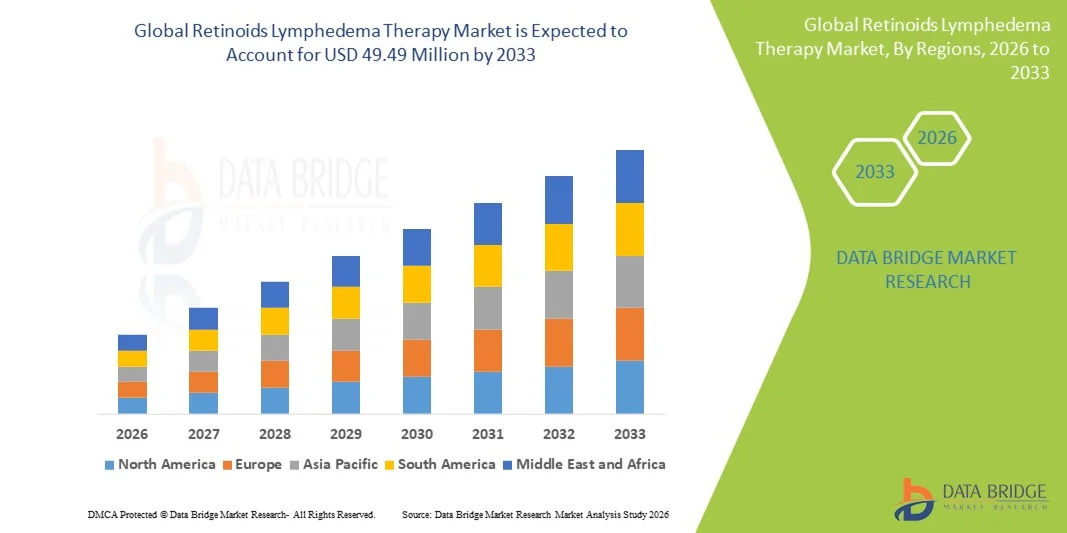
"Retinoids Lymphedema Therapy Market Summary: According to the latest report published by Data Bridge Market Research, the Retinoids Lymphedema Therapy Market The global retinoids lymphedema therapy market size was valued at USD 24.53 million in 2025 and is expected to reach USD 49.49 million by 2033, at a CAGR of 9.17% during the forecast period This...
In modern optical engineering, production precision and material stability determine the final performance of optical components, and a Lenses Factory functions as the central industrial environment where advanced material science and precision manufacturing systems are integrated to produce high-quality optical products for global applications. Within this controlled environment, engineers...

"Cloud Communication Platform Market Summary: According to the latest report published by Data Bridge Market Research, the Cloud Communication Platform Market Global cloud communication platform market size was valued at USD 9.35 billion in 2024 and is projected to reach USD 64.45 billion by 2032, with a CAGR of 27.30% during the forecast period of 2025 to 2032. Quality and...