


Inside the Silicon on Insulator Market: What's Driving Semiconductor Innovation
Silicon on Insulator Market: Growth Trends, Applications, and Regional Outlook
The Silicon on Insulator Market is experiencing rapid expansion as semiconductor demand accelerates across mobile communications, automotive electronics, and next-generation computing infrastructure. Industry research indicates the global silicon on insulator market was valued at USD 1.6 billion in 2023 and is expected to grow at a CAGR of 15.5% during the forecast period, with figures projected to climb from USD 1.84 billion in 2024 to USD 5.83 billion by 2032. This remarkable growth trajectory reflects how SOI technology has become central to powering faster, smaller, and more energy-efficient electronic devices.
Understanding Silicon on Insulator Technology
Silicon on Insulator technology fundamentally improves semiconductor performance by inserting an insulating layer between a thin silicon film and the underlying substrate, reducing parasitic capacitance and enabling faster, more power-efficient chips. The Silicon on Insulator Market is closely tied to broader semiconductor industry growth, as SOI wafers serve as foundational components across a wide range of electronic products. Demand for servers supporting applications like AI and cloud computing could drive growth of 4 to 6 percent in the computing and data-storage market, according to McKinsey research, underscoring how SOI technology intersects with some of today's most significant digital infrastructure trends.
Smartphones represent a major growth catalyst for the Silicon on Insulator Market, particularly as emerging markets transition from lower to mid-tier device segments alongside continued 5G rollout. SOI technology plays a critical role in enabling energy-efficient, high-performance electronics across smartphones, tablets, and laptops that consumers demand worldwide.
5G, 6G, and the Role of RF-SOI Technology
The transition to 5G networks has been a defining driver for the Silicon on Insulator Market. 5G services launched in 2019, offering ten times the response and data transmission speeds of 4G, with 6G anticipated around 2030. RF silicon-on-insulator technology allows mobile devices to maintain clear connections across a broader range of environments, and SOI wafers remain widely used in mobile applications due to their low insertion loss, minimal harmonics, and high linearity across a broad frequency range at accessible price points. Emerging technologies like FD-SOI and RF-SOI are particularly well suited to systems requiring high speed and bandwidth at minimal power consumption, reinforcing their growing adoption as 5G expands globally.
Automotive Applications Fuel Additional Growth
Beyond mobile communications, the Silicon on Insulator Market is benefiting significantly from rising automotive demand, particularly as manufacturers invest in autonomous driving technologies such as Advanced Driver Assistance Systems. Audi, for example, has been working to integrate FD-SOI technology with components and sensors used in its self-driving vehicles, reflecting the automotive industry's need for high-speed, compact, and low-power electronic equipment that SOI wafers are well positioned to deliver.
𝐄𝐱𝐩𝐥𝐨𝐫𝐞 𝐓𝐡𝐞 𝐂𝐨𝐦𝐩𝐥𝐞𝐭𝐞 𝐂𝐨𝐦𝐩𝐫𝐞𝐡𝐞𝐧𝐬𝐢𝐯𝐞 𝐑𝐞𝐩𝐨𝐫𝐭 𝐇𝐞𝐫𝐞:
https://www.polarismarketresearch.com/industry-analysis/silicon-on-insulator-market
Segment Insights: 300mm Wafers and FD-SOI Lead Innovation
Within the Silicon on Insulator Market, the 300mm wafer size segment captured the largest revenue share in 2022, as manufacturers ramp up production capacity to meet rising demand, with foundries across multiple countries expanding their 300mm wafer processes. On the wafer type front, FD-SOI technology is expected to see accelerated growth thanks to benefits including high flexibility, simple implementation, lower costs, and improved power-performance tradeoffs. In August 2022, Google and Skywater Technology extended their open-source chip development work to 90 nm FD-SOI technology, illustrating growing industry investment in this wafer category.
The MEMS devices segment is projected to post the strongest CAGR among product categories, as SOI wafers provide the insulation and reduced parasitic capacitance that improve the performance of accelerometers, gyroscopes, and pressure sensors used across smartphones, automotive systems, and industrial applications. Meanwhile, consumer electronics remains a leading application segment, with SOI-based wafers helping reduce device size, cut power consumption, and extend battery life across smartphones, tablets, wearables, and laptops.
Regional Dynamics: Asia Pacific Poised for Fastest Growth
Asia Pacific is expected to register the highest CAGR within the Silicon on Insulator Market, driven by surging demand for consumer devices including smartphones, tablets, and smart wearables. The region's growth is further supported by expanding semiconductor foundries, favorable government initiatives, and rising awareness of energy-efficient technology. Rapid urbanization and industrialization across the region are also expected to fuel continued demand for electronic devices built on SOI technology.
Competitive Landscape and Recent Developments
Major players shaping the Silicon on Insulator Market include Soitec, Shin-Etsu Chemical, GlobalWafers, SUMCO Corporation, GlobalFoundries, STMicroelectronics, and NXP Semiconductors. Recent developments highlight the sector's rapid pace of innovation: in June 2025, Soitec and PSMC announced a transistor layer-transfer partnership targeting 5 nm-class 3D stacking, while GlobalWafers expanded its total U.S. investment to USD 7.5 billion to boost 300mm SOI production capacity in Texas. Earlier, Atomera launched its Mears Silicon Technology to enhance RF-SOI substrates for 5G and 6G applications, and Soitec extended its collaboration with UMC to develop 3D IC solutions for RF-SOI technology, achieving a 45% reduction in die size to support 5G bandwidth requirements.
Challenges and Outlook
Despite strong growth momentum, the Silicon on Insulator Market faces challenges related to self-heating effects in SOI-based devices, which can impact performance and reliability in certain high-power applications. Companies that can address these technical limitations while continuing to innovate across wafer types and manufacturing processes are best positioned to capture the market's substantial growth potential.
Silicon on Insulator Market growth in the years ahead will be shaped by continued 5G and 6G rollout, expanding automotive electrification, and rising demand for MEMS-based consumer devices. With 300mm wafers and FD-SOI technology leading current innovation, and Asia Pacific positioned for the fastest regional growth, industry stakeholders have strong incentive to invest in next-generation SOI manufacturing capacity that supports the semiconductor industry's accelerating demands.
More Trending Latest Reports By Polaris Market Research:
Europe Textile Chemicals Market
Europe Textile Chemicals Market
Automotive Collision Repair Market
Categorii
Citeste mai mult
1. Welcome to Char Dham Yatra and Comfortable Travel. Bisht Tour and Travels, Hire Tempo Traveller for Char Dham Yatra and make sure that your pilgrimage is not only fulfilled spiritually, but also physically and without any stress. Char Dham Yatra is considered one of the most sacred pilgrimages in India involving four sacred shrines namely Yamunotri, Gangotri, Kedarnath and...

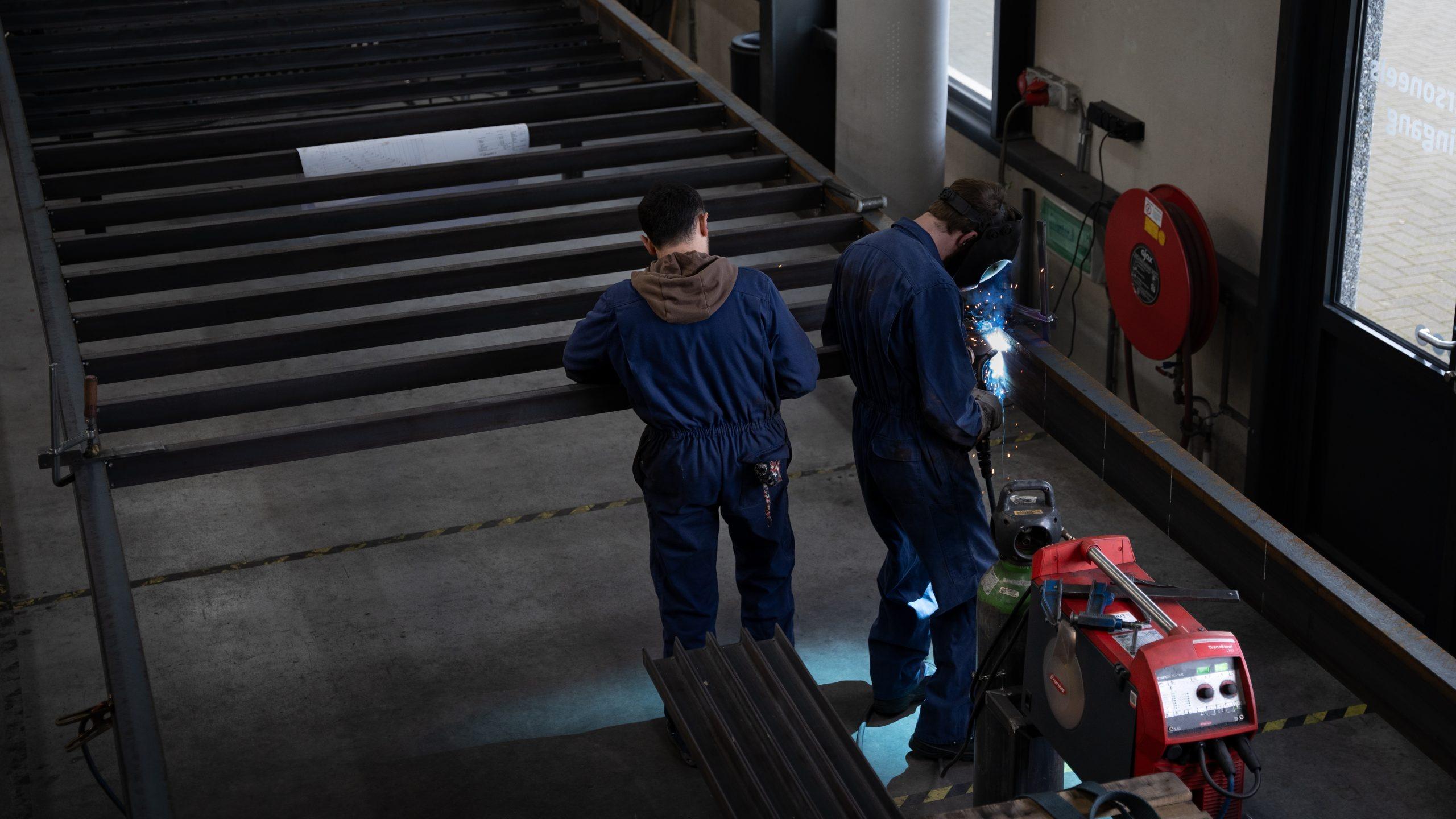
In veel industriële projecten zijn standaard staalproducten niet altijd voldoende. Bedrijven hebben vaak constructies of onderdelen nodig die precies passen binnen hun machines, installaties of productielijnen. In zulke situaties biedt maatwerk staal de ideale oplossing. Door staal volledig volgens specifieke afmetingen en technische eisen te produceren, ontstaat een constructie die...
The global power electronics market is entering a transformative phase, driven by rapid advancements in energy-efficient technologies, electric mobility, renewable energy systems, and industrial automation. According to market estimates, the industry is projected to grow from US$ 40.25 Billion in 2025 to US$ 65.73 Billion by 2033, registering a CAGR of 6.32% from 2026 to 2033. 𝗗𝗼𝘄𝗻𝗹𝗼𝗮𝗱 𝗦𝗮𝗺𝗽𝗹𝗲...
Beta Carotene Extraction from Carrot plays a vital role in the nutraceutical, food, cosmetic, and pharmaceutical industries. Beta carotene is a naturally occurring pigment that gives carrots their orange color and acts as a powerful antioxidant. It is also a key precursor of vitamin A, supporting vision, immune health, and skin wellness. With growing demand for plant-based, clean-label...

The demand for personalized products continues to grow as businesses and creators look for affordable ways to sell unique merchandise online. One of the most effective business models supporting this trend is Print POD, which allows products to be printed only after a customer places an order. This approach removes the need for large inventory investments while giving brands the flexibility to...
