Anti-Yellowing Agents and the Invisible Color-Stability Infrastructure Protecting White Plastics, Textiles, Vehicles and Coatings
A white sneaker, a cream automotive dashboard and a clear protective coating appear unrelated. Yet all three are exposed to the same economic risk: a small shift toward yellow can make a technically functional product look old, contaminated or poorly manufactured. Anti-Yellowing Agents therefore sit inside a hidden quality infrastructure where milligrams of chemistry protect kilograms of finished material.
Semple Request At: https://datavagyanik.com/reports/global-anti-yellowing-agents-market-size-production-sales-average-product-price-market-share/
The scale of that infrastructure is larger than the additive dose suggests. Global plastics production reached 413.8 million tonnes in 2023, while global fibre production rose to 132 million tonnes in 2024, including 78 million tonnes of polyester. Global vehicle production reached 96.4 million units in 2025. Even when only 10–20% of these material flows require strict colour retention, the addressable substrate base runs into tens of millions of tonnes each year.
For Anti-Yellowing Agents, the technical problem starts between 290 and 400 nanometres, the ultraviolet range absorbed by many polymer structures. Heat, oxygen and light create free radicals and hydroperoxides; these reactions generate chromophores that move a product from white to cream, then yellow and eventually brown. In manufacturing, the same shift can begin during high-temperature curing; one commercial powder-coating system specifies 10 minutes at 180–200°C.
Anti-Yellowing Agents do not represent one molecule. They are formulated systems combining ultraviolet absorbers, hindered-amine light stabilisers, antioxidants, phosphites, optical brighteners and anti-NOx chemistries. UV absorbers intercept radiation; HALS deactivate radicals; antioxidants interrupt thermal oxidation; anti-phenolic finishes reduce reactions between packaging-derived phenols and atmospheric nitrogen oxides. The commercial advantage comes from combining two or three mechanisms rather than increasing one additive indefinitely.
Consider automotive interiors. If one vehicle contains 15 kilograms of colour-sensitive visible polymers across seat foams, instrument-panel skins, trim, headliners and adhesive layers, the 2025 production base represents about 1.45 million tonnes of exposed material. At a modelled treatment rate of 0.35%, Anti-Yellowing Agents consumption equals roughly 5,060 tonnes annually, or 52 grams per vehicle. That small package protects surfaces designed around a 10–15-year service horizon and exposed to cabin temperatures that can reach 70°C or more under strong sunlight.
The economics of Anti-Yellowing Agents are asymmetric. At an additive cost of USD 6–10 per kilogram, the anti-yellowing package in a vehicle may cost only USD 0.31–0.52. Replacing one discoloured interior component under warranty can cost tens or hundreds of dollars after labour, logistics and dealer handling. The chemistry may represent less than 0.01% of a vehicle’s selling price while influencing the perceived quality of every light-coloured interior surface.
Footwear creates a different stress map. White polyurethane midsoles and thermoplastic polyurethane components face UV exposure, heat during moulding and nitrogen-oxide contact during storage. Commercial PU anti-yellowing systems are commonly recommended at 0.5–1% for some soft foams and 2–4% for more demanding soft or rigid foam formulations. A factory processing 20,000 tonnes of white PU at a 1.5% average dose would consume 300 tonnes of Anti-Yellowing Agents each year.
Textiles add another layer: the product can yellow without direct sunlight. Polyamide, polyester, elastane and polyurethane bra padding may react with phenolic compounds from packaging materials, warehouse pollutants or finishing chemicals. If only 8% of the 132-million-tonne global fibre stream receives a specialised anti-yellowing treatment at 0.25%, the implied treatment demand is 26,400 tonnes. This is not a market total; it is an infrastructure calculation showing how quickly low-dose finishing chemistry scales across global textile mills.
Anti-Yellowing Agents also operate inside quality-control laboratories. Yellowness is measured through instrumental colour coordinates, commonly using ASTM E313 calculations, while total colour movement is tracked through ΔE. A production line making 50 tonnes per day and rejecting 1% for colour drift loses 0.5 tonne daily. At USD 2,000 per tonne of finished compound, that equals USD 1,000 per day, or about USD 300,000 across 300 operating days.
Coatings reveal how formulation thickness changes the economics. A producer making 10 million litres of clear and pale industrial coating at a modelled average density of 1.1 kilograms per litre handles 11,000 tonnes of formulation. At a combined stabiliser loading of 0.8%, the line requires 88 tonnes of Anti-Yellowing Agents. If that coating is applied at 150 grams per square metre, the annual output protects about 73 million square metres—roughly the exposed area of 10,000 football pitches. A one-point reduction in colour-related rework would save 110 tonnes of coating before labour, solvent, energy and disposal costs are counted.
Investment in Anti-Yellowing Agents is moving upstream. BASF announced additional European HALS capacity in 2022 and expanded standard and NOR-HALS capacity again in April 2026. SONGWON introduced expanded coating-stabiliser offerings in 2024, then announced polymer-stabiliser and coatings price increases of 12–20% effective April 2026. These events show two simultaneous pressures: demand for longer-lasting materials is increasing, while specialised feedstocks and manufacturing capacity remain cost-sensitive.
DataVagyanik values the global Anti-Yellowing Agents market at USD 1.34 billion in 2026 and forecasts it to reach USD 2.29 billion by 2035, representing a 6.14% compound annual growth rate. The forecast is built from treated polymer, polyurethane, textile, coating and adhesive volumes; application-specific dosage rates; and the price premium for blended UV, thermal and gas-fading protection systems. Growth is expected to outpace underlying material volumes because white and transparent products require tighter colour tolerances, recycled polymers need stronger stabilisation packages, and manufacturers are extending warranties and outdoor service-life targets.
The next growth engine is not simply more plastic. It is more demanding plastic. Recycled resin can carry depleted stabilisers, impurities and wider batch variability, requiring stronger packages to recover processing and surface quality. A converter moving from a 0.25% package to 0.40% increases Anti-Yellowing Agents consumption by 60% without producing one additional tonne of plastic.
That is why the category should be viewed as preservation infrastructure rather than cosmetic chemistry. Anti-Yellowing Agents protect the visual contract between manufacturer and buyer: white should remain white, clear should remain clear, and premium surfaces should not advertise their exposure history. The dose is measured in fractions of a percent; the value protected is measured across factories, warranties, brands and multi-year product lifecycles.
When Anti-Yellowing Agents Move from Additive Chemistry to Industrial Asset Protection
The construction industry demonstrates how colour stability becomes an infrastructure issue. White sealants, roof coatings, window profiles, insulation foams and decorative panels are exposed to sunlight for 5,000–8,000 hours over a ten-year period. A visible colour shift during the first two years can trigger replacement even when the material retains its mechanical strength.
Consider a commercial building using 18 tonnes of light-coloured sealants, adhesives and exposed polymer components. At an average stabiliser dose of 0.7%, the project contains approximately 126 kilograms of Anti-Yellowing Agents. At USD 8 per kilogram, the chemical cost is close to USD 1,000. Replacing only 2% of visibly discoloured material could cost USD 20,000–40,000 after access equipment, labour, removal and reinstallation are included.
This creates a protection multiplier of roughly 20–40 times the original additive expenditure. The value is not generated by increasing structural strength. It is generated by preventing a building from appearing prematurely aged.
Packaging Turns Colour Stability into a Shelf-Life Calculation
Transparent and white packaging materials face a difficult combination of heat, light, oxygen and contact with the packaged product. Cosmetic bottles, pharmaceutical containers, food trays and personal-care dispensers must remain visually neutral throughout manufacturing, transport, storage and retail display.
A packaging converter producing 50,000 tonnes of clear and pale polymer packaging annually may use Anti-Yellowing Agents at an average loading of 0.15–0.35%. At a midpoint of 0.25%, annual consumption reaches 125 tonnes. If the package weighs 25 grams, that production volume corresponds to two billion individual units.
At this scale, one kilogram of additive protects approximately 16,000 packages. An additive cost of USD 8 per kilogram therefore adds only USD 0.0005 per package. Yet a yellow tint across a shampoo bottle, medical container or premium cream jar can reduce consumer acceptance far more than the additive cost.
The cost logic becomes sharper in cosmetics. A USD 0.20 package may contain a USD 20 formulation. If colour degradation causes only 0.5% of two billion packages to be rejected, ten million units become commercially vulnerable. At an average filled-product value of USD 5, the exposed inventory value reaches USD 50 million.
Synthetic Leather Is Becoming a High-Pressure Use Case
Synthetic leather combines polyurethane layers, pigments, plasticisers, adhesives and surface coatings. Each layer can age at a different rate. This creates a risk that a white seat, handbag, shoe upper or furniture panel develops uneven yellowing rather than a uniform colour change.
A synthetic-leather plant processing 30,000 tonnes annually may dedicate 35% of production to white, cream and pastel grades. That creates 10,500 tonnes of colour-sensitive material. At an average Anti-Yellowing Agents dose of 0.8%, the facility consumes approximately 84 tonnes per year.
Automotive synthetic leather requires the highest protection because cabin surfaces experience repeated heating and cooling cycles. A vehicle may contain 6–12 square metres of synthetic leather across seats, door panels, consoles and trims. At 800 grams per square metre, each vehicle uses 4.8–9.6 kilograms of coated material.
Across one million vehicles, the colour-sensitive substrate demand can exceed 7,000 tonnes. A 0.7% stabiliser package translates into around 49 tonnes of Anti-Yellowing Agents. The chemistry expenditure may remain below USD 0.50 per vehicle, while the seat system can represent several hundred dollars of installed value.
Recycled Polymers Change the Dosage Equation
Recycled polymers are expanding the technical role of Anti-Yellowing Agents because recycled feedstock carries a processing history. Each previous extrusion cycle consumes part of the original antioxidant package and exposes the polymer to heat, oxygen and contamination.
A virgin polymer grade may achieve the required colour stability with a 0.20% stabilisation package. A recycled-content formulation may require 0.35–0.50%, depending on polymer history, impurity load and target colour.
Moving from 0.20% to 0.40% doubles additive consumption without increasing finished-product volume. A compounder producing 100,000 tonnes annually would increase stabiliser demand from 200 tonnes to 400 tonnes.
This shift is commercially important because recycled-content targets are usually measured by weight, while visual performance is judged by the human eye. A product can meet a 30% recycled-content specification and still fail commercially if it appears yellow, grey or inconsistent beside a virgin-polymer alternative.
The value of Anti-Yellowing Agents therefore rises as brands move recycled polymers from hidden components into visible surfaces. Packaging, appliances, furniture, vehicle interiors and consumer electronics all require recycled materials to look deliberate rather than degraded.
Factory Infrastructure Determines Whether the Chemistry Works
Anti-Yellowing Agents cannot compensate for uncontrolled processing. Their performance depends on dosing accuracy, mixing quality, residence time, temperature control and storage conditions.
A gravimetric feeder operating with a dosing error of ±0.05 percentage points can create substantial variation when the target loading is only 0.30%. At the lower extreme, the actual dose may fall to 0.25%, creating a 16.7% under-treatment. At the upper extreme, the dose may rise to 0.35%, creating 16.7% excess consumption.
For a plant using 300 tonnes of additive annually, a 10% average overdosing rate wastes 30 tonnes. At USD 8 per kilogram, the annual loss reaches USD 240,000.
A colour-stability programme therefore requires more than additive procurement. It requires calibrated feeders, closed material handling, controlled drying, spectrophotometers, accelerated-weathering chambers and batch-traceability software.
A medium-sized laboratory setup may require USD 100,000–300,000 across instruments and testing infrastructure. However, a plant producing USD 100 million of pale or transparent materials needs to prevent only 0.2% of sales from becoming colour-related waste to recover USD 200,000 annually.
Anti-Yellowing Agents Are Becoming Part of Product Design
Historically, colour-stability packages were frequently adjusted after yellowing appeared during trials. The more efficient model introduces Anti-Yellowing Agents during product design.
Engineers can map the expected temperature, UV exposure, service duration and contaminant contact for each application. A warehouse-stored textile may require anti-phenolic protection. An outdoor coating may require a UV absorber and HALS combination. A polyurethane foam may require stronger thermal and gas-fading protection.
This application mapping reduces unnecessary chemistry. A universal 1% dose across every product wastes additive on low-risk applications and may still under-protect the highest-risk grades.
Suppose a plant produces three product classes: 40,000 tonnes of low-risk material requiring 0.20%, 30,000 tonnes of medium-risk material requiring 0.50%, and 10,000 tonnes of high-risk material requiring 1.20%. Application-specific dosing requires 350 tonnes of additive.
Applying a universal 1% dose would consume 800 tonnes. The targeted approach saves 450 tonnes, equivalent to USD 3.6 million at USD 8 per kilogram, while delivering stronger protection where it is actually needed.
The Next Competitive Metric Is Colour Retention per Dollar
The future of Anti-Yellowing Agents will not be determined only by tonnes sold. Performance will increasingly be measured through colour retention achieved per dollar, per kilogram of additive and per year of product life.
A formulation that costs 20% more but extends acceptable appearance from three years to five years improves service life by 67%. For a building panel, automotive trim or outdoor coating, this creates a stronger economic outcome than choosing the lowest-cost additive package.
Manufacturers will also compete on processing compatibility. Low-volatility systems reduce migration and fogging. Liquid grades improve dosing in continuous processes. Polymer-bound stabilisers reduce extraction. Multi-functional packages simplify inventories by combining thermal, UV and colour protection.
The commercial story is therefore moving from “prevent yellowing” to “protect designed appearance throughout the product lifecycle.” That change makes Anti-Yellowing Agents part of warranty planning, recycled-content strategy, premium-brand positioning and manufacturing yield improvement.
A fraction of a percentage point in formulation can preserve millions of finished products. In that equation, colour stability is not decoration. It is an operating metric, a quality system and an increasingly valuable layer of industrial infrastructure.
Semple Request At: https://datavagyanik.com/reports/global-anti-yellowing-agents-market-size-production-sales-average-product-price-market-share/
Catégories
Lire la suite
Imagine this. You’re the Head of Strategy at a mid-sized company. One morning, your CEO walks in and says: We need to expand into Southeast Asia. Where do we start? You don’t yet have survey results. You don’t have time for focus groups or interviews. But you do have something that is potentially very powerful at your fingertips: Desk Research. Desk Research: The Hidden...

According to the latest report published by Data Bridge Market Research, the Coconut Water Market The global coconut water market size was valued at USD 5.80 billion in 2025 and is expected to reach USD 14.06 billion by 2033, at a CAGR of 11.71% during the forecast period The market research data included in this Coconut Water Market document is analysed and forecasted...
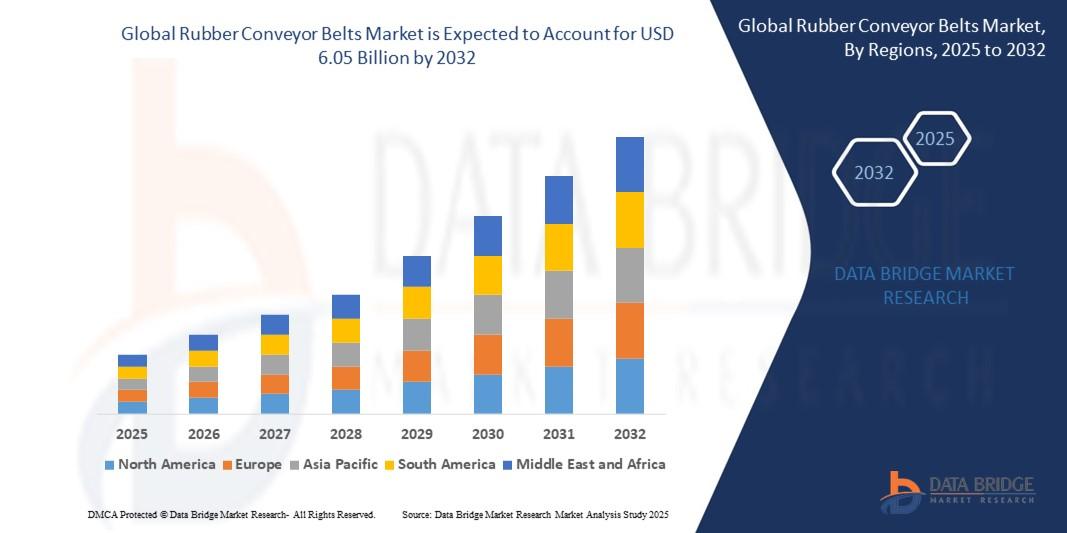
"Competitive Analysis of Executive Summary Rubber Conveyor Belts Market Size and Share The global rubber conveyor belts market size was valued at USD 4.49 billion in 2024 and is expected to reach USD 6.05 billion by 2032, at a CAGR of 3.80% during the forecast period To stand apart from the competition, a careful idea about the competitive landscape,...
In the modern digital landscape, the way customers find services has shifted dramatically. If you run a company in South Yorkshire, your visibility in local search results is no longer optional; it is a necessity. Many business owners struggle to stand out in a crowded market, but the solution often lies in optimizing your presence on the right platforms. Utilizing a reliable Sheffield...

Casablanca Casablanca is a luxury label that combines relaxed elegance with vibrant, artistic design. Inspired by travel, leisure, and a refined lifestyle, the brand is known for its rich color palettes, detailed prints, and high-quality materials. Casablanca brings together comfort and sophistication, creating clothing that feels both elevated and easy to wear. Casablanca ShirtThe...