


Polyquaternium-7 and the Invisible Conditioning Infrastructure Behind Billions of Bottles, Better Foam and Lower-Cost Sensory Performance
A Polymer Measured in Milligrams but Experienced in Seconds
A 300-millilitre shampoo bottle may contain less than 3 grams of Polyquaternium-7 solution, yet that small dose can determine whether wet hair feels snagged or smooth within the first 10 seconds of rinsing.
Semple Request At: https://datavagyanik.com/reports/global-polyquaternium-7-market-size-production-sales-average-product-price-market-share/
The material is a water-soluble cationic copolymer made from acrylamide and diallyldimethylammonium chloride. Damaged hair and cleansed skin carry negatively charged sites, allowing the polymer to deposit as a conditioning film instead of disappearing with rinse water.
This is why Polyquaternium-7 sits between chemistry and consumer psychology. A shopper cannot see a 50–300 milligram active-polymer deposit, but can feel combing resistance, foam creaminess and post-wash tightness.
In a £3–£6 product, that difference costs fractions of a penny per use, making the ingredient hidden infrastructure for repeat purchase.
The 90% Water Supply Chain
Commercial grades are commonly supplied as aqueous liquids containing approximately 8.5%–9.8% active polymer. Lubrizol lists grades in the Merquat 550 family around this solids range and a molecular weight near 1.6 million, while SNF markets an 8.8%–9.8% active grade for bath and shower formulations. BASF also supplies conditioning grades through its personal-care portfolio.
The consequence is logistical. Every tonne of active Polyquaternium-7 can require moving approximately 10–11 tonnes of finished liquid.
That ratio shapes the factory map. A practical 25-cubic-metre polymerisation vessel can release approximately 23–25 tonnes of saleable solution per batch after accounting for headspace and process losses.
At 240 batches annually, one multipurpose line can produce approximately 5,500–6,000 tonnes of commercial liquid, equivalent to only 500–570 tonnes of active polymer.
This is a network of specialised reactors, residual-monomer controls, filters, bulk tanks and 1-tonne containers positioned near personal-care clusters.
Water limits economic shipping distance: moving 20 tonnes of product may mean transporting more than 18 tonnes of water. At a road-freight cost of £0.08–£0.14 per tonne-kilometre, a 1,000-kilometre journey adds £80–£140 per tonne before packaging, handling and distributor margins.
That arithmetic rewards regional production or finishing in China, India, Europe and North America, even when the polymer technology belongs to a smaller group of multinational suppliers.
From One Reactor Batch to More Than a Million Bottles
Dosage varies significantly by application. Lubrizol indicates 1%–5% as-supplied use levels for selected hair-care grades, while SNF lists only 0.1%–0.25% for its bath and shower grade.
At a 1% dosage, one tonne of Polyquaternium-7 solution conditions 100 tonnes of shampoo. That equals approximately 333,000 bottles containing 300 millilitres each.
At a 0.25% dosage, the same tonne supports 400 tonnes of body wash, equivalent to approximately 1.6 million 250-millilitre packs.
At an as-supplied price of US$3.50–US$4.20 per kilogram, a 300-millilitre shampoo using 1% solution carries only US$0.0105–US$0.0126 of this polymer.
Even after formulation wastage and quality-control expenditure, Polyquaternium-7 can provide slip, detangling and foam enhancement for approximately one cent per bottle.
That cost-to-performance ratio explains why formulators continue using it despite competition from cationic guar, Polyquaternium-10, silicone emulsions and emerging biodegradable conditioning polymers.
The Exact 2026 Value Hidden Inside the Bottle Economy
According to DataVagyanik, the global Polyquaternium-7 market is valued at US$62.8 million in 2026, based on approximately 16,900 tonnes of commercial aqueous product sold at a weighted average realisation of US$3.72 per kilogram. The market is forecast to reach US$92.4 million by 2035, representing a 4.38% compound annual growth rate. The calculation is tied to rinse-off product manufacturing rather than finished beauty-product retail value. Approximately 63% of 2026 revenue is mapped to shampoos, conditioners and hair treatments, 27% to body wash, facial cleansers and liquid soaps, and 10% to styling, grooming and specialised cleansing applications. Growth will come from greater liquid-cleanser penetration in emerging economies and demand for premium sensory performance, while concentration improvements and substitution by bio-based polymers will keep growth below that of finished beauty-product sales.
Why Hair Remains the Anchor Use Case
Hair becomes more negatively charged after cleansing, colouring, bleaching and heat damage. Polyquaternium-7 deposits at those sites, creating lubrication where friction is highest.
The commercial effect can be measured through wet-combing force, dry-combing force, static reduction and panel-scored softness. A formulation reducing combing resistance by 10%–20% can support detangling or smoothness positioning without requiring a costly oil phase.
Hair care also provides the largest addressable spending pool. Cosmetics Europe recorded European retail sales of €18.1 billion for hair care and €24.7 billion for toiletries in 2024, within a €104 billion cosmetics and personal-care market.
Its current industry dashboard places the European market at €110 billion, representing an increase of approximately 5.8% from the 2024 base. These categories combine high purchase frequency, billions of annual product units and immediate sensory judgement during use.
One Chemistry Supporting Four Product Stories
In shampoo, Polyquaternium-7 is a friction-management tool. In body wash, it is a foam-and-after-feel tool. In facial cleansers, it reduces the perception of tightness. In liquid soap, it provides a softer hand feel after repeated washing.
One polymer therefore supports four consumer stories while using the same manufacturing asset, quality tests and supply drum.
The technical balancing act is compatibility. Anionic surfactants carry a negative charge, while the polymer is cationic. Poorly controlled addition order, salt concentration or charge density can cause haze, precipitation or viscosity drift.
Manufacturers address this through controlled molecular weight, buffered grades and tightly defined solids content. Lubrizol describes the Merquat 550 platform as being designed for compatibility and clarity in anionic systems, while COSMILE Europe identifies the ingredient’s principal functions as antistatic and film-forming.
The 2026 Scrutiny Point
Performance is only half of the infrastructure. The other half is purity.
Because acrylamide is one of the production monomers, manufacturers must manage residual content through conversion efficiency, stripping, analytical testing and formal batch release.
The Cosmetic Ingredient Review programme placed Polyquaternium-7 on the agenda of its 176th Expert Panel meeting, held on 15–16 June 2026. The development demonstrates that even established cosmetic ingredients remain subject to continuing scientific reassessment rather than receiving permanent regulatory immunity.
For a 25-tonne production batch, a specification measured in parts per million can decide whether the complete output is released, reprocessed or rejected.
One failed batch can immobilise tens of thousands of pounds in inventory, occupy several days of reactor capacity and delay enough conditioning polymer for millions of finished bottles.
The Formulation Line Is Where Value Is Won or Lost
A personal-care factory rarely treats Polyquaternium-7 as a headline raw material. It may represent only 0.2%–2.0% of a formulation, but it influences mixing sequence, clarity, viscosity and filling consistency across the entire batch.
Consider a 10-tonne shampoo run using the ingredient at 1%. The batch requires 100 kilograms of polymer solution. If the operator adds it too quickly into a highly concentrated anionic surfactant phase, local charge interactions can create small polymer-surfactant complexes.
A 1% loss of batch uniformity can affect 100 kilograms of finished shampoo. At a factory transfer value of US$1.20–US$2.00 per kilogram, that creates US$120–US$200 of immediate exposure before rework, laboratory testing and delayed filling are counted.
The solution is controlled infrastructure rather than additional chemistry. Manufacturers use metered pumps, moderate-shear mixing, staged dilution and temperature-controlled addition.
A plant producing 40 million bottles annually may operate 300–500 formulation batches. Saving only 20 minutes per batch through a more stable addition process releases 100–167 production hours each year.
That capacity can be worth more than the annual expenditure on the polymer itself.
Application Mapping Begins with the Consumer’s Hands
Use-case selection depends on where friction is experienced.
In a shampoo, friction occurs between wet hair fibres. In a body wash, it occurs between skin and the cleansing film. In a facial cleanser, the critical moment arrives 30–60 seconds after rinsing, when the consumer judges tightness. In hand wash, performance is reassessed after repeated exposure throughout the day.
This makes Polyquaternium-7 unusually versatile. A single ingredient can support mechanical conditioning, foam modification, antistatic behaviour and sensory differentiation.
A mass-market shampoo may use 0.5%–1.5% of commercial solution. A premium conditioning cleanser can move towards 2%–3%, particularly where silicone reduction is part of the product brief.
At a 1% dose, a 250-millilitre bottle contains approximately 2.5 grams of solution. Assuming 9% active content, the consumer receives only 225 milligrams of active polymer across the entire package.
If the bottle delivers 25 washes, each use involves roughly 9 milligrams of active material.
This means a performance claim experienced across several weeks may depend on less active polymer than the mass of a small paper clip.
The Silicone-Reduction Opportunity Is Larger Than a Simple Substitution
The move towards silicone-free hair care does not mean formulators remove one ingredient and add another at the same concentration.
Silicones provide slip, shine and fibre lubrication through hydrophobic deposition. A cationic polymer works through charge attraction and film formation. The sensory result is related, but the mechanism is different.
Replacing 1% of a silicone emulsion may require a combination of Polyquaternium-7, fatty alcohols, esters and deposition aids rather than a single one-for-one change.
That creates a formulation opportunity larger than the displaced silicone volume.
Suppose 5% of the world’s conditioning shampoos are reformulated over five years. If 4 billion affected bottles contain an additional 1.5 grams of polymer solution, incremental demand reaches 6,000 tonnes.
Spread across five years, that equals 1,200 tonnes of annual demand progression, enough to support approximately one-fifth of the output from a dedicated medium-scale production line.
The opportunity is strongest in products positioned around light conditioning, clear formulations and daily cleansing. Heavy repair masks and highly damaged-hair treatments still require richer lipid, silicone or protein systems.
The polymer therefore expands through formulation layering rather than total ingredient replacement.
Packaging Size Changes the Economics
The same formula behaves differently when sold in a 100-millilitre travel pack, a 300-millilitre retail bottle or a 1-litre salon container.
A 300-millilitre shampoo using 1% polymer solution consumes 3 grams. A 1-litre pack consumes 10 grams. However, packaging, distribution and retailer margins decline per millilitre as pack size rises.
The ingredient’s share of factory cost therefore becomes slightly more visible in family packs and professional formats.
At US$3.80 per kilogram, the polymer cost is approximately US$0.0114 in a 300-millilitre bottle and US$0.038 in a 1-litre container.
Even in the larger format, the material remains below four cents. A brand can therefore improve wet combing or foam feel without materially changing a US$6–US$15 retail price.
This low cost explains why reformulation decisions are driven more by compatibility, claims and regulatory confidence than by the absolute purchase price of Polyquaternium-7.
Regional Demand Follows Bottle Production, Not Beauty Headlines
The commercial geography is shaped by where shampoos, liquid soaps and body washes are manufactured.
Asia accounts for the largest physical production base because China, India, Indonesia, Thailand and South Korea combine large domestic consumption with export-oriented contract manufacturing.
A factory producing 100,000 tonnes of rinse-off products annually would consume approximately 500–1,500 tonnes of polymer solution if 50% of its output used the ingredient at an average concentration of 1%–3%.
Only a limited number of sites operate at this scale, but hundreds of smaller plants collectively create the demand base.
Europe and North America generate higher value per tonne because customers often purchase tighter specifications, enhanced documentation, smaller delivery lots and technical support.
A 15%–25% price difference between standard regional supply and premium multinational grades can therefore coexist within the same country.
The buyer is not paying only for polymer. The invoice also covers batch consistency, toxicology files, formulation assistance, audit readiness and reduced probability of production failure.
The Sustainability Equation Starts with Transported Water
The low active concentration that makes the material easy to handle also creates an environmental inefficiency.
A truck carrying 20 tonnes of commercial Polyquaternium-7 solution may transport only 1.8 tonnes of active polymer and more than 18 tonnes of water.
Reducing average delivery distance from 1,200 kilometres to 400 kilometres cuts 16,000 tonne-kilometres from each truckload.
Across 500 annual deliveries, that removes 8 million tonne-kilometres from the logistics chain.
This is why regionalisation can reduce emissions more quickly than redesigning the polymer molecule. Local production, bulk-tank delivery and returnable intermediate containers can lower both freight and packaging intensity.
A switch from forty 200-kilogram drums to four 1-tonne containers for an 8-tonne order can eliminate dozens of individual handling movements and reduce warehouse space requirements.
The next efficiency frontier is higher-solids material, but concentration is technically constrained. Greater solids can increase viscosity, complicate pumping and change dispersion behaviour at the customer’s plant.
The most sustainable product is not automatically the most concentrated one. It is the grade that reduces total energy, rejects and reprocessing across the complete value chain.
Quality Control Operates at Parts-Per-Million Precision
A commercial batch must be evaluated for solids, viscosity, pH, appearance, microbial control and residual monomers.
In a 25-tonne batch, a 10-parts-per-million impurity level represents 250 grams. That is a small physical quantity, but it can determine whether the entire batch meets a customer specification.
Analytical infrastructure therefore has disproportionate economic importance.
A high-performance liquid chromatography system may process dozens of release samples each week. If laboratory turnaround falls from 24 hours to 8 hours, a producer can release inventory 16 hours earlier.
For a plant holding 1,000 tonnes of finished solution at an average value of US$3,800 per tonne, inventory worth US$3.8 million is continuously tied to laboratory approval, storage capacity and shipment planning.
Quality is not a supporting function in this market. It is part of production capacity.
The Next Growth Phase Will Be Built Around Measurable Sensory Efficiency
The future of Polyquaternium-7 will not be determined by whether it is an old or new ingredient. It will depend on how efficiently it delivers measurable performance inside modern formulations.
Brands increasingly want sulfate-free cleansing, silicone reduction, transparent formulations, lower rinse times and fewer ingredients on the label.
These demands can conflict. Mild surfactants may produce weaker foam. Clear products restrict the use of opaque conditioning agents. Ingredient reduction can remove supporting stabilisers.
A successful formulation must solve several problems simultaneously.
If the polymer allows a brand to reduce surfactant content by 0.5 percentage points while preserving foam perception, a 10,000-tonne product line can avoid 50 tonnes of surfactant use.
If it reduces consumer rinse time by just 5 seconds per wash across 100 million uses, the accumulated saving reaches nearly 139,000 hours of running-water time.
The numbers explain the ingredient’s enduring position.
It is not the largest input in the bottle, the most expensive item in the formula or the most visible claim on the label. It is a small cationic layer connecting reactors, laboratories, formulation tanks, filling lines and the consumer’s final sensory judgement.
That is the real infrastructure story: a few milligrams of polymer, multiplied across billions of washes, becoming a measurable industrial system.
Semple Request At: https://datavagyanik.com/reports/global-polyquaternium-7-market-size-production-sales-average-product-price-market-share/
Categorias
Leia mais
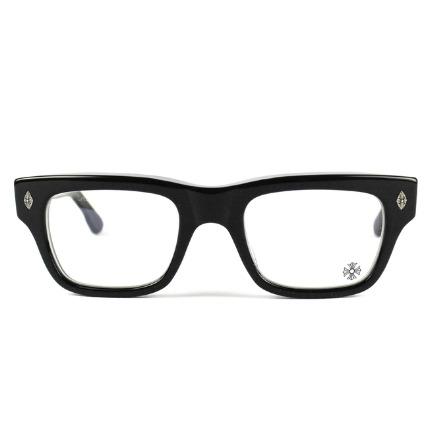
Chrome Hearts Glasses have become one of the most desirable luxury eyewear products in modern fashion because they combine handcrafted craftsmanship, premium materials, and strong visual identity. In today’s fashion industry, consumers are increasingly attracted to exclusive accessories that help them stand out and express individuality. Eyewear has become a major part of this...
The city of Bangalore, the technological center of India, faces traffic congestion, secondary to its phenomenal development. The city presents daily commuting challenges, which create stressful situations. They require extended travel times and result in high expenses for students and working professionals. And also for tourists who attempt to travel through the packed streets. The need for...

In today’s fast-moving digital world, visual storytelling has become one of the most powerful ways to connect with audiences. Businesses need content that is engaging, easy to understand, and memorable. That’s where Diginautical steps in. As a creative animation studio, we specialize in professional 2D animation services and high-impact whiteboard animation video services designed...

The decision to transition from renting to owning is rarely a simple emotional choice; it is a complex financial maneuver that requires a deep understanding of market dynamics and long-term fiscal planning. At the core of this transition is the traditional mortgage which serves as the primary engine for property acquisition in the current economy. By analyzing the structural...

The global Advanced-Surface Movement Guidance and Control System (A-SMGCS) market is witnessing significant growth as airports across the world increasingly focus on improving operational efficiency, enhancing safety, and managing growing air traffic volumes. According to The Insight Partners, the global advanced-surface movement guidance and control system market...
