Why Excimer Lamp Infrastructure Is Becoming the Silent Engine Behind the Next Generation of Clean Manufacturing, Water Treatment, and Semiconductor Innovation

Why Excimer Lamp Infrastructure Is Becoming the Silent Engine Behind the Next Generation of Clean Manufacturing, Water Treatment, and Semiconductor Innovation
Industrial technology rarely changes because of a single breakthrough. It evolves when one enabling platform begins solving multiple problems across different sectors at the same time. Excimer lamp technology has quietly entered this phase. Once viewed as a specialized ultraviolet source for laboratories and niche industrial processes, the Excimer lamp is now supporting semiconductor manufacturing, drinking water purification, precision surface modification, healthcare sterilization, advanced packaging, food processing, and electronics production.
The growth story surrounding the Excimer lamp is not simply about replacing conventional UV sources. It is about infrastructure modernization. Manufacturing plants are redesigning sterilization lines, water treatment facilities are adopting mercury-free ultraviolet systems, semiconductor fabs are demanding cleaner photochemical processing, and healthcare institutions are investing in chemical-free disinfection technologies. Together, these changes are creating measurable demand for Excimer lamp installations across both developed and emerging economies.
The technical advantage is easy to quantify. Depending on the gas mixture used, an Excimer lamp produces narrow-band ultraviolet radiation, typically between 172 nm and 308 nm, with extremely high photon energy. Unlike conventional mercury lamps, many Excimer lamp systems operate without hazardous mercury while providing rapid start-up and consistent spectral output. These characteristics reduce maintenance cycles by nearly 20–35% in several industrial applications while improving process consistency for ultraviolet-driven manufacturing.
Infrastructure investment is following application diversity rather than a single industry cycle. Water treatment facilities, electronics manufacturers, pharmaceutical cleanrooms, printing companies, automotive component suppliers, and medical equipment manufacturers all require ultraviolet processing, but each uses it differently. That diversity makes Excimer lamp adoption more resilient than technologies dependent upon one manufacturing segment.
One of the strongest infrastructure stories involves municipal and industrial water treatment. Growing urbanization means larger treatment capacity is needed every year. Modern ultraviolet treatment systems increasingly integrate Excimer lamp modules because they can generate advanced oxidation reactions capable of degrading persistent organic contaminants. A medium-sized treatment facility processing around 50 million litres per day may install dozens of ultraviolet reactors, each containing multiple ultraviolet sources operating continuously throughout the year. Even incremental replacement of legacy systems creates substantial equipment demand over long operating cycles.
Surface engineering represents another major growth engine. Manufacturers producing electronic displays, lithium battery separators, optical films, medical polymers, automotive interiors, and flexible electronics increasingly depend on ultraviolet surface activation instead of chemical primers. A single production line manufacturing specialty polymer films may process several thousand square metres every hour. Integrating an Excimer lamp allows manufacturers to increase surface energy uniformly, improving coating adhesion while reducing chemical consumption by measurable percentages. Lower chemical usage simultaneously reduces emissions, wastewater treatment requirements, and production variability.
The semiconductor ecosystem provides perhaps the most technically demanding environment for Excimer lamp deployment. Semiconductor fabs increasingly require contamination-free ultraviolet exposure during wafer cleaning, photoresist processing, substrate preparation, and advanced packaging operations. As integrated circuits continue shrinking below advanced process nodes, even microscopic organic contamination becomes increasingly expensive. Consequently, ultraviolet precision supplied by an Excimer lamp contributes directly to manufacturing yield improvement, where even a one-percent yield increase may translate into millions of dollars of annual production value for a high-volume fabrication facility.
Healthcare infrastructure is also changing rapidly. Hospitals are expanding ultraviolet-based disinfection beyond operating theatres into intensive care units, laboratories, pharmaceutical preparation rooms, and medical equipment sterilization centres. Chemical-free sterilization reduces operator exposure while shortening turnaround time between procedures. Several healthcare networks now evaluate ultraviolet sterilization systems based on operating efficiency, energy consumption, maintenance intervals, and microbial reduction performance rather than simply equipment purchase price.
Food processing illustrates another practical use case. Fresh produce, packaging materials, conveyor belts, dairy equipment, beverage filling systems, and bakery production lines increasingly require continuous microbial control without altering food quality. Since ultraviolet treatment leaves no chemical residue, an Excimer lamp supports high-speed production environments where hygiene standards continue becoming stricter. Food manufacturers processing hundreds of tonnes daily benefit from automated sterilization systems that operate during production rather than requiring repeated chemical shutdown procedures.
According to Staticker, the global Excimer lamp market in 2026 establishes the foundation for sustained expansion through the forecast period as industrial ultraviolet infrastructure accelerates across semiconductor manufacturing, advanced healthcare sterilization, water purification, precision electronics, specialty polymers, and food processing applications. Staticker indicates that the Excimer lamp market continues gaining momentum because investments increasingly prioritize mercury-free ultraviolet platforms, higher process efficiency, longer operational reliability, and compliance with evolving environmental regulations rather than conventional ultraviolet technologies alone.
Investment patterns further explain why adoption continues expanding. Semiconductor manufacturers routinely allocate billions toward fabrication facilities where contamination control systems represent a critical infrastructure category. Water authorities worldwide continue upgrading ageing treatment facilities. Pharmaceutical manufacturers are expanding sterile production capacity. Electronics assembly plants are investing in automated optical manufacturing. Every one of these sectors benefits from reliable ultraviolet infrastructure, positioning the Excimer lamp as an enabling technology rather than an isolated industrial component.
The manufacturing ecosystem supporting Excimer lamp production has also matured considerably. High-purity quartz processing, precision electrode fabrication, specialized noble gas handling, ceramic insulation technologies, power electronics, optical engineering, and advanced thermal management all contribute to performance improvements. Manufacturers today increasingly focus on extending operational lifetime beyond several thousand operating hours while maintaining stable ultraviolet intensity throughout production cycles. This reliability lowers lifecycle costs and increases return on investment for industrial users.
Regional infrastructure tells an equally interesting story. East Asia remains the largest manufacturing centre for semiconductor devices, electronic displays, precision optics, and battery materials, naturally supporting higher Excimer lamp deployment. Europe continues investing heavily in sustainable water treatment, environmental technologies, and advanced medical manufacturing. North America emphasizes semiconductor reshoring, pharmaceutical production, biotechnology, and high-value industrial automation. India is steadily expanding electronics manufacturing, pharmaceutical production, municipal water treatment capacity, and medical device manufacturing, creating additional opportunities for ultraviolet processing technologies over the coming decade.
Another important theme involves energy efficiency. Traditional sterilization methods often require chemicals, elevated temperatures, or extended processing durations. Modern ultraviolet systems equipped with Excimer lamp technology frequently reduce processing time while consuming comparatively lower operational energy for equivalent treatment objectives. Even modest reductions in processing time across continuous manufacturing operations translate into substantial annual productivity improvements when facilities operate around the clock.
Request for customization: https://staticker.com/reports/excimer-lamp-market/
Kategoriler
Read More
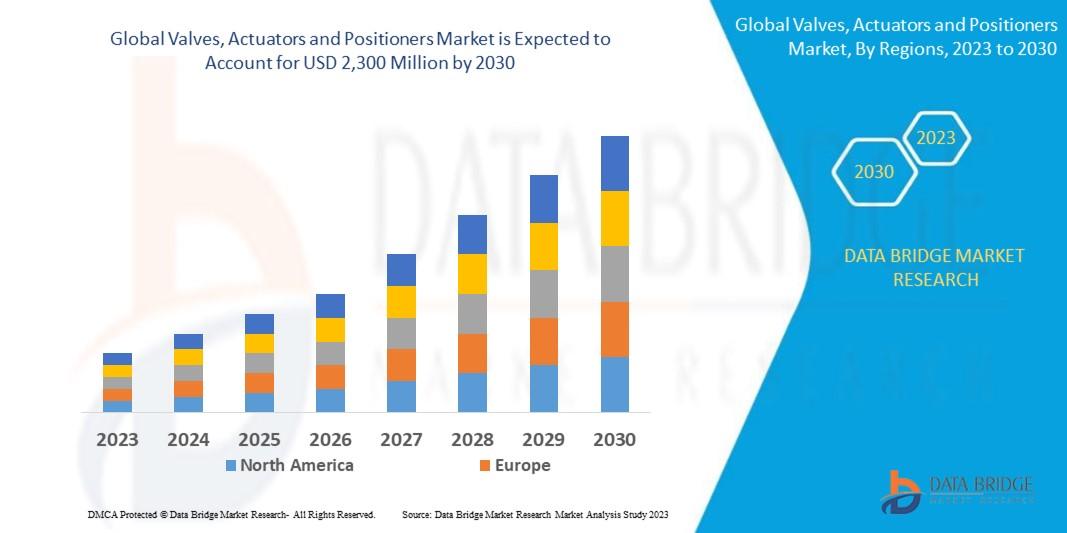
"Executive Summary Valves, Actuators and Positioners Market Size and Share Across Top Segments CAGR Value Data Bridge Market Research analyses that the valves, actuators and positioners market which was USD 1,600 million in 2022, would rocket up to USD 2,300 million by 2030 and is expected to undergo a CAGR of 8.3% during the forecast period. This Valves, Actuators and Positioners...
Handling customer messages across many channels can be hard when information is spread out in different places. SAN Softwares Omnichannel Contact Center brings voice calls, email, live chat, social media and other channels into one platform. This helps support teams track conversations, reply in a better way, and give customers a smooth experience. By keeping all communication in one place,...

A new growth forecast report titled Immersive Analytics Market Size, Share, Trends, Industry Analysis Report: By Component (Hardware, Solutions, and Services), Application, End Use, and Region (North America, Europe, Asia Pacific, Latin America, and Middle East & Africa) – Market Forecast, 2025–2034 introduced by Polaris Market Research represents conclusive data on...

Medical Grade Polypropylene: The Quiet Workhorse of Modern Healthcare Introduction Behind nearly every syringe, IV bag, and surgical instrument tray in a modern hospital sits a material that rarely gets mentioned by name but plays an outsized role in patient safety: medical polypropylene resin. Valued for its strength, chemical resistance, and compatibility with sterilization processes, this...
Seasonal discounts offered by escorts in Dubai are among the most common perks, as many enjoy a loyal clientele. These discounts are often a way to retain customers and ensure their satisfaction by offering additional benefits. More importantly, they allow escorts to build a solid client base. Escorts with an established clientele have a promising and prosperous future as independent sex...