Zipprr Predicts: What AI Chat Will Look Like for Businesses by 2028
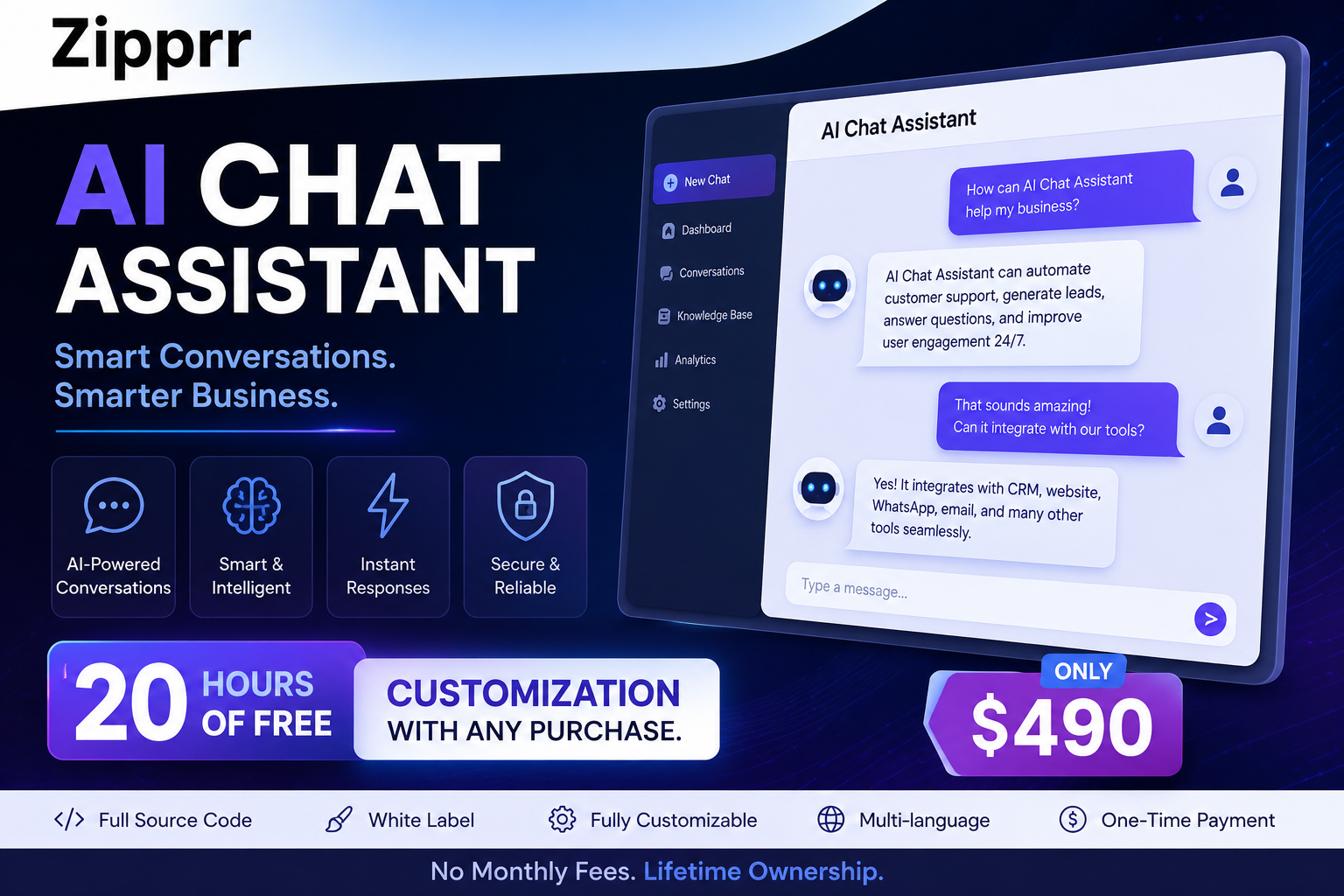
Picture a customer messaging a business at 2 a.m. and getting a reply that actually solves their problem, not a canned line that dodges the question. That's not a stretch anymore. It's already happening, and it's only going to get more common as the technology matures.
Right now, most chatbots still work off scripted flows. Ask something outside the script and the conversation falls apart. That's changing fast. Large language models have given chat tools the ability to understand context, remember earlier parts of a conversation, and respond the way a trained human agent would. The gap between "chatbot" and "digital employee" is closing quickly.
Over the next couple of years, expect the future of AI chatbots to lean heavily into prediction rather than reaction. Instead of waiting for a customer to ask "where's my order," a well-built system will notice a delivery delay and message the customer first. This shift from reactive to proactive support is where the real value shows up, and it's a trend businesses using tools like Zipprr are already positioning themselves for.
Voice and text are also going to blend together. A customer might start a conversation by voice on a call, continue it over WhatsApp, and finish it on a website widget, all without repeating themselves. Memory across channels will stop being a premium feature and start being the baseline expectation. Businesses that adopt this kind of future-ready AI chatbot setup early will have a real edge over competitors still running siloed, channel-specific bots.
Personalization is going to get sharper too. Today, a chatbot might use a first name. Soon, it will reference past purchases, flag loyalty status, and adjust tone based on how a customer has interacted before — all pulled from CRM and order history in real time. This is where next-generation AI chatbots stop feeling like software and start feeling like a genuinely helpful staff member who remembers you.
Here's a direct answer for anyone wondering where this is all heading: by 2028, AI chat systems will function less like FAQ bots and more like always-on digital teammates that can hold context, take action inside other business tools, and hand off to a human only when the situation truly needs one.
Automation will also stretch further into action-taking, not just answering. Booking appointments, processing simple refunds, updating shipping addresses, and rescheduling deliveries will happen inside the chat window itself. Fewer clicks, fewer forms, fewer transfers between departments. That kind of frictionless resolution is a major reason more companies are exploring where AI chat is headed instead of sticking with static live chat plugins.
Regulation and trust will shape this future just as much as the technology. Customers are increasingly aware when they're talking to a bot, and transparency about that will matter more, not less. Businesses that are upfront about AI involvement, while still delivering fast and accurate answers, will earn more trust than those that try to disguise automation as a human agent.
Small and mid-sized businesses stand to gain the most from these shifts. Enterprise support teams already have staffing and budget to throw at customer service. Smaller teams don't, and that's exactly where the future of AI chatbots closes the gap, handling volume that would otherwise require hiring several more support staff.
WhatsApp will likely remain the dominant channel for this evolution in most parts of the world, given how deeply it's embedded in daily communication. Expect deeper integrations between AI chat and WhatsApp Business API, richer message formats, and faster resolution times as businesses lean into this AI chatbots of the future approach rather than treating it as a passing trend.
None of this means human agents disappear. It means their time gets spent on conversations that actually need judgment, empathy, or negotiation, while the future-ready AI chatbot layer absorbs the repetitive volume. Zipprr has built its AI Chat product around that exact balance, giving teams automation where it helps and a smooth handoff where it doesn't.
Data quality is going to matter more than model size. A chatbot connected to messy, outdated product information will still give wrong answers no matter how advanced its underlying model is. Businesses preparing for this shift are already cleaning up knowledge bases, tagging FAQs properly, and syncing inventory data so the future of AI chatbots actually delivers accurate answers instead of confident-sounding guesses.
Cost structures will shift too. Many teams price support around headcount and shift coverage today. As automation absorbs more first-response volume, the cost conversation moves toward platform capability and integration depth instead. That makes choosing the right foundation now, rather than patching disconnected tools together later, a strategic decision rather than a minor operational one.
The businesses that win this next stretch won't be the ones with the flashiest bot. They'll be the ones that use next-generation AI chatbots to make every customer interaction feel faster, more personal, and less like talking to a machine at all.
FAQ
1. What will AI chatbots be able to do by 2028 that they can't do today?
They'll take real actions like processing refunds, rescheduling deliveries, and updating account details directly inside the chat, not just answering questions. They'll also remember context across channels like voice, web chat, and WhatsApp.
2. Will AI chatbots replace human customer support agents?
No. They'll absorb repetitive, high-volume questions so human agents can focus on complex or emotionally sensitive conversations. Most businesses use a hybrid model where AI handles first response and humans handle escalations.
3. How is generative AI changing chatbot conversations?
Generative AI lets bots understand intent and context instead of matching keywords to scripts. This means fewer dead-end conversations and more natural back-and-forth exchanges that feel human.
4. Why is WhatsApp central to the future of AI chatbots?
WhatsApp already has massive daily usage across many countries, making it a natural channel for automated business conversations. Businesses get higher open and response rates on WhatsApp than email or SMS.
5. What industries will adopt predictive AI chat first?
E-commerce, logistics, healthcare scheduling, and financial services are early adopters because they deal with high message volume and time-sensitive updates. These industries benefit most from proactive, prediction-based messaging.
6. Is proactive messaging considered spam?
Not when it's relevant and expected, like a delivery update or appointment reminder. Proactive messaging becomes a problem only when it's unsolicited promotional content sent without consent.
7. How do businesses prepare for this shift in AI chat technology?
Start by connecting existing CRM and order data to the chat platform so responses can be personalized. Choosing a flexible platform now avoids a painful migration later as capabilities expand.
8. Does adopting AI chat now put a business ahead of competitors?
Yes, largely because customer expectations around instant responses are already set by larger brands. Businesses that adopt early build habits, data, and workflows that are hard for slower-moving competitors to catch up on.
CTA
Curious how your business could look with a chat system built for what's coming, not just what's here now? Reach out to Zipprr and see it in action.---
Categories
Read More
Visit Our Website - https://sharmacosmoclinic.com/ Contact us - 9810622372 Hair loss has become a common concern for both men and women due to stress, hormonal changes, poor nutrition, genetics, and environmental factors. While many products claim to stop hair fall, they often provide temporary results. This is why PRP Hair Treatment has become one of the most trusted solutions for...

Season 2 of XO, Kitty Announced Get ready, fans! The beloved spin-off from the "To All the Boys" universe is making its highly anticipated return on January 16. The second season of the popular series featuring Anna Cathcart as the lovable Kitty Song Covey is just around the corner, with an exciting trailer now available for viewing. The upcoming season brings a delightful surprise for longtime...

The handheld laser welder machine has emerged as a game-changer for professionals seeking high-quality welding without the constraints of bulky equipment. Whether in jewelry making, automotive repair, or industrial applications, this innovative tool is redefining the way metalwork is performed. What Makes a Handheld Laser Welder Machine Stand Out? Unlike traditional welding methods,...

Looking for a watch that perfectly blends style, functionality, and affordability? Joeme Online Watches Store is your go-to destination for the latest trends in timepieces, and their collection featuring Knax watches is redefining what it means to wear a statement accessory. Whether you are dressing up for a formal occasion or adding a stylish touch to your casual look, Knax watches at Joeme...
In today’s digital-first world, the demand for skilled digital marketers is growing rapidly. Businesses of all sizes are investing in online marketing to reach their target audience, generate leads, and increase revenue. This has created countless opportunities for individuals who want to build a career in this dynamic field. If you are searching for the best online digital marketing...