


Section 8 Company Registration in India: A Practical Guide for Building a Credible Non-Profit
For organisations planning to work in education, healthcare, environmental protection, research, sports, rural development, charity or social welfare, Section 8 Company Registration offers a structured way to operate as a non-profit in India.
A Section 8 Company combines charitable objectives with corporate governance. It can enter contracts, own assets, open bank accounts and continue independently of changes in its membership. Founders can review this detailed guide to Section 8 Company registration before preparing their application.
What Is a Section 8 Company?
A Section 8 Company is incorporated under the Companies Act, 2013 for specified public-benefit objectives. Its income and profits must be applied towards its stated objects, and it cannot distribute dividends to its members.
Permitted objects may include commerce, art, science, sports, education, research, social welfare, religion, charity and environmental protection. The legal conditions are set out under Section 8 of the Companies Act, 2013.
Unlike an informal charitable group, the company receives a distinct legal identity and is governed through its Memorandum of Association, Articles of Association and board processes.
Why Do Founders Choose This Structure?
A Section 8 Company is often selected by organisations that want formal governance and long-term credibility.
Its main advantages include:
-
Separate legal identity
-
Limited liability for members
-
Perpetual succession
-
Defined roles for directors and members
-
Better continuity when office bearers change
-
Structured accounting and statutory reporting
-
Greater comfort for institutional donors and partners
Registration itself does not automatically grant income-tax exemption, donor deduction or CSR eligibility. Those approvals require separate applications and continuing compliance.
Basic Eligibility Requirements
The proposed organisation must have genuine non-profit objects and should intend to use its income only for those objects.
For a private-company form, founders generally plan for at least two directors and two members. The same individuals may act in both capacities, subject to legal requirements. At least one director must satisfy the applicable resident-director condition.
Foreign nationals and non-residents may participate, but their documents can require notarisation, apostille or consular authentication. FCRA requirements apply separately where foreign contributions are proposed.
Documents Required for Registration
Document accuracy has a direct impact on the application. Names, addresses and personal details should match across all records.
| Category | Common Documents |
|---|---|
| Directors and subscribers | PAN, Aadhaar or passport, photograph, email, mobile number and residential address proof |
| Registered office | Recent utility bill, ownership proof or rent agreement, and owner’s NOC where applicable |
| Incorporation papers | Proposed names, charitable objects, MOA, AOA, declarations and consent documents |
| Digital filing | Digital Signature Certificates for the persons signing the forms |
Foreign-issued documents may need additional authentication. Office documents should be recent, readable and consistent with the address entered in the application.
Step-by-Step Registration Process
The registration process is completed electronically through the Ministry of Corporate Affairs system.
1. Define the Charitable Objects
The objects should explain what the organisation will do, who will benefit and how its activities support a public purpose. Avoid adding unrelated clauses only to keep future options open.
2. Select an Appropriate Name
The proposed name should be distinctive, lawful and aligned with the organisation’s non-profit purpose. Keep alternative names ready in case the preferred option is unavailable.
3. Obtain Digital Signatures
The proposed subscribers and directors who sign the electronic documents need valid Digital Signature Certificates.
4. Draft the MOA and AOA
The Memorandum defines the objects and permitted activities. The Articles establish governance rules covering directors, meetings, voting, membership, accounts and administration.
5. File the Incorporation Application
The application is filed through the integrated company-incorporation system with identity records, office proof, declarations and constitutional documents. Current forms and filing updates should be checked through the official MCA incorporation and filing portal.
6. Respond to Clarifications
The Registrar of Companies may request corrections or additional information. A clear response should be submitted within the permitted period.
7. Receive the Certificate of Incorporation
Once approved, the company receives its Certificate of Incorporation and corporate identity.
Common Reasons for Delay
Most delays arise from documentation or drafting issues.
Common problems include:
-
Mismatch between PAN and address proof
-
Outdated registered-office utility bill
-
Missing or incomplete owner’s NOC
-
Objects that appear commercial or unclear
-
Name resembling an existing entity or trademark
-
Unsigned declarations
-
Incorrect subscriber or director details
-
Poor-quality document scans
A final document review before filing can prevent repeated resubmissions.
What Comes After Incorporation?
The company should open its bank account, maintain statutory registers, conduct board meetings and establish proper bookkeeping controls. It must also complete applicable annual filings and income-tax obligations.
Depending on its activities and eligibility, it may later apply for 12A, 80G, CSR-1, NGO Darpan and FCRA registration. Founders can study broader non-profit registration and compliance resources while planning these post-incorporation requirements.
Conclusion
Section 8 Company Registration is suitable for founders who want to combine a charitable mission with professional governance. The structure offers legal continuity, defined accountability and a credible framework for working with donors, institutions and communities.
Successful incorporation depends on clear objects, consistent documents and careful drafting. When these foundations are prepared properly, the organisation is better positioned to maintain compliance, attract responsible support and create sustainable social impact.
Categorie
Leggi tutto
"Massive Multiple-Input, Multiple-Output (MIMO) Market Summary According to the latest report published by Data Bridge Market Research, the Massive Multiple-Input, Multiple-Output (MIMO) Market The global massive multiple-input, multiple-output (MIMO) market size was valued at USD 19.76 billion in 2025 and is expected to reach USD 343.56 billion by 2033, at...

Astrology is more than predicting future events—it is a traditional practice that helps individuals understand their strengths, challenges, and opportunities. Santoshi Krupa Jyotish offers personalized Vedic astrology consultations for those seeking guidance in love, marriage, career, education, business, finances, and family life. If you are searching for the Best Astrologer in Vadodara,...

Birmingham has quietly ended up one of the UK's most dynamic virtual business hubs. From independent shops at the High Street to fast-scaling fintech start-ups in the Colmore Business District, businesses throughout the city are rethinking how they reach, serve, and keep customers. At the centre of this shift is a single, powerful device: the cellular app. Customers today expect on the spot...

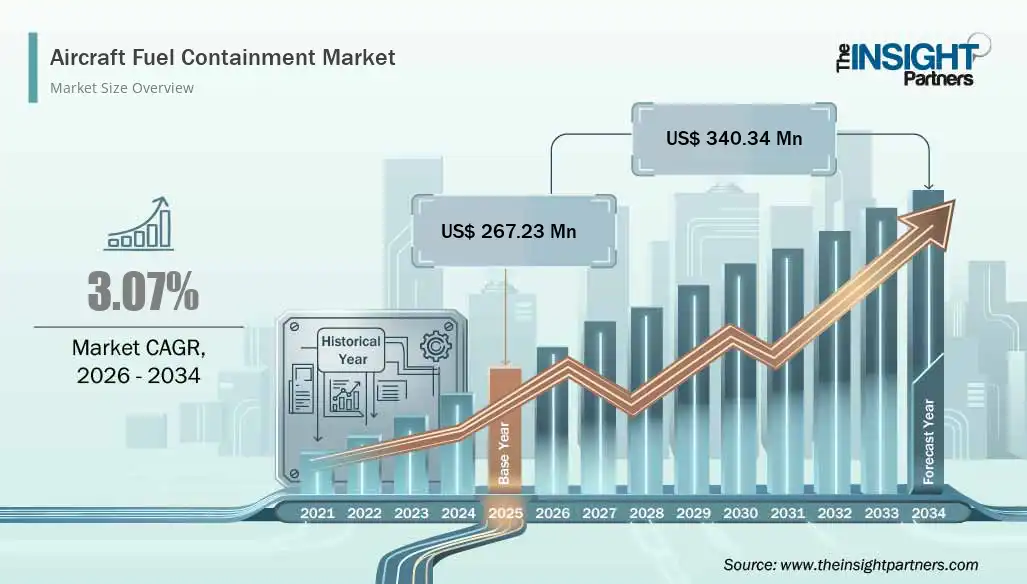
The Aircraft Fuel Containment Market is witnessing steady growth as the aviation industry continues to focus on safety, operational efficiency, and aircraft performance. Aircraft fuel containment systems play a critical role in storing, managing, and protecting fuel during flight operations. These systems include fuel tanks, fuel bladders, fuel cells, and associated containment components...
Best VPNs for US Streaming If TBS sends you to its international site when you’re abroad, that’s regional restrictions at work — the channel is normally available only to viewers connecting from US IP addresses. The easiest way to appear as if you’re in the United States and keep streaming your shows while traveling is to use a VPN. How a VPN helps: A VPN encrypts...
