How to Ensure Data Integrity During EDC System Migration

Introduction
Migrating clinical trial data from one Electronic Data Capture system to another is a complex process that requires careful planning, validation, and documentation. Clinical trial databases may contain thousands of subject records, audit trail entries, queries, forms, coding details, and supporting documents. Any error during migration can affect data reliability, regulatory compliance, and the credibility of study results.
For sponsors, CROs, and clinical data management teams, protecting data integrity must therefore remain the primary objective throughout an EDC migration. A well-controlled migration ensures that the transferred data remains complete, accurate, consistent, traceable, and accessible in the new EDC software.
Develop a Detailed Migration Plan
A successful migration begins with a documented plan that defines the scope, responsibilities, timelines, validation activities, and acceptance criteria. The plan should identify which studies and data elements will be migrated, including active studies, completed studies, subject records, metadata, audit trails, queries, medical coding, and attachments.
The team should also document whether the migration involves a complete system replacement or the transfer of selected studies to new electronic data capture software. Clear governance helps prevent uncontrolled decisions and ensures that clinical operations, data management, quality assurance, biostatistics, regulatory, and information technology teams remain aligned.
A risk assessment should be completed before migration begins. High-risk data, such as primary endpoint information, safety records, informed consent dates, and adverse event data, may require additional verification.
Create a Comprehensive Data Inventory
Before extracting data, organizations should create a complete inventory of the information stored in the legacy system. This inventory should include:
-
Subject and site data
-
Electronic case report forms
-
Data queries and query status
-
Audit trail records
-
User roles and access history
-
Medical coding information
-
Laboratory data
-
External data integrations
-
Form versions and amendments
-
Supporting files and attachments
The inventory allows the migration team to confirm that all required information is included. It also helps identify obsolete, duplicated, or incomplete records before they are transferred into the new data capture software.
Without a detailed inventory, important contextual information may be overlooked, particularly when migrating studies that have undergone multiple protocol amendments.
Define Data Mapping Rules
Data mapping determines how each field in the source database will correspond to a field in the target system. Differences may exist in field names, formats, units, coding dictionaries, validation rules, and database structures.
For example, a date stored as DD-MM-YYYY in the source system may need to be converted to YYYY-MM-DD in the target system. Similarly, a numerical response in the legacy database may correspond to a text value in the new electronic data capture software for clinical trials.
Every transformation rule should be documented and approved before migration. The mapping specification should include source fields, target fields, transformation logic, handling of null values, and expected outputs. Unapproved manual changes should be avoided because they reduce traceability and increase the risk of inconsistencies.
Preserve the Original Audit Trail
Audit trails are essential for demonstrating who created, changed, reviewed, or approved clinical trial data. During migration, organizations must ensure that historical audit trail information is preserved or made accessible in a validated archive.
The migrated record should not create the false impression that historical data originated in the new system. Original timestamps, user identities, reasons for changes, and previous values should remain traceable.
When assessing EDC software vendors, sponsors should examine how the platform handles imported audit trail information. Some systems can display legacy audit trails directly, while others require the historical records to be retained in a separate, validated repository.
Perform Trial Migrations
A trial migration, also called a mock migration, should be completed before the final production transfer. It allows the team to test extraction scripts, transformation logic, data mappings, loading procedures, and reconciliation reports.
Representative datasets should be selected from different sites, subjects, visits, forms, and protocol versions. The trial migration should also include unusual scenarios such as missing values, discontinued subjects, reopened forms, unresolved queries, and special characters.
Issues identified during testing should be documented, corrected, and retested. Multiple trial migrations may be required when the source database is complex or when the target electronic data collection software has a significantly different architecture.
Validate the Migration Process
The migration process must be validated to demonstrate that it performs consistently and produces the intended results. Validation documentation may include requirements specifications, risk assessments, test scripts, test evidence, deviation records, and final approval reports.
For organizations using EDC software clinical research teams should verify both technical and functional requirements. Technical testing confirms that records are transferred correctly, while functional testing ensures that users can view, search, review, and report the migrated data as expected.
Validation should follow the organization’s computerized system validation procedures and applicable regulatory expectations, including FDA 21 CFR Part 11, Good Clinical Practice, ALCOA+ principles, and risk-based quality management practices.
Reconcile Source and Target Data
Reconciliation is one of the most important controls in an EDC migration. The migration team should compare the source and target databases to confirm that no information has been lost, duplicated, or incorrectly transformed.
Reconciliation may include record counts, field-level comparisons, subject counts, visit counts, query counts, checksum verification, and review of critical variables. Automated comparisons are preferable for large datasets, while targeted manual review may be used for high-risk data.
A dependable clinical trial data collection software platform should support reports that allow the team to investigate discrepancies efficiently. Every identified difference should be explained, corrected, or formally accepted before the migration is approved.
Control Access and Maintain Security
Data security must be maintained during extraction, transfer, testing, and loading. Migration files should be encrypted, access should be restricted, and temporary files should be securely deleted after use.
Only authorized personnel should be permitted to handle production data. Role-based access controls should also be verified in the new clinical trial data capture software to ensure that users receive permissions appropriate to their responsibilities.
Security controls are particularly important when data is transferred across environments, countries, vendors, or cloud platforms.
Document Final Approval and Archive Legacy Records
After reconciliation and validation are complete, the migration team should prepare a final migration report. The report should summarize the scope, testing performed, deviations identified, reconciliation results, unresolved limitations, and approval decisions.
The legacy system should not be decommissioned until the organization confirms that all required data and audit trail information are available in the new EDC clinical trial software or in an approved archive.
A secure retention strategy should also be established for migration specifications, validation records, source extracts, reconciliation reports, and approvals. These documents provide evidence that the migration was controlled and that the reliability of the clinical trial data was maintained.
Conclusion
This boycat article must have given you a clear understanding of the topic. Data integrity during EDC system migration depends on structured planning, accurate data mapping, validated transfer processes, comprehensive reconciliation, and complete documentation. Sponsors and CROs should treat migration as a regulated data transformation project rather than a simple technical transfer.
By preserving audit trails, testing migration logic, protecting data security, and verifying every critical record, organizations can move studies to a new EDC environment without compromising the accuracy, traceability, or regulatory reliability of their clinical trial data.
Categorieën
Read More
The global X Ray Inspection System Market is witnessing a substantial surge in demand as stringent consumer safety regulations reshape manufacturing priorities globally. In an era where product liability can irreparably damage a brand's reputation, businesses are leaving no stone unturned to eliminate internal anomalies during production. X-ray imaging technology provides an unmatched mechanism...

The moment someone meets your team, their opinion begins to form. A professionally designed id card is far more than a simple identification tool—it becomes a symbol of credibility, trust, and professionalism. Businesses that invest in high-quality identification solutions often leave a stronger impression on clients, visitors, and partners. Waiting to upgrade outdated employee...

The aviation industry is currently experiencing a transformative phase where specialized aircraft are becoming increasingly vital for both commercial and recreational sectors. The autogyro, often referred to as a gyroplane or gyrocopter, stands at the forefront of this shift due to its unique mechanical advantages and cost efficiency. As per the latest industrial research, The Autogyro...

The global industrial landscape is witnessing a significant shift toward energy efficiency and sustainable thermal management. Central to this evolution is the cooling towers market, which plays a critical role in removing heat from buildings and industrial processes. As industries expand and environmental regulations tighten, the demand for advanced cooling solutions continues to rise....

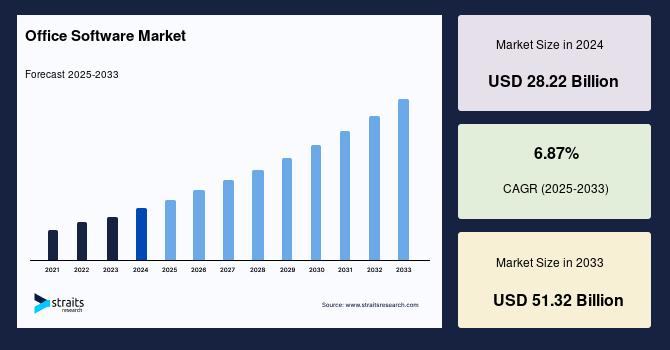
Office Software Industry Outlook: Straits Research has introduced a detailed analytical study on the Office Software Market, offering insights into market valuation, segmentation framework, and long-term growth trajectory. The publication delivers a structured overview of market drivers, constraints, technological advancements, and strategic developments shaping the industry. In addition,...