Which Dry Cleaning Machine Is Best for a Garment Factory in India?
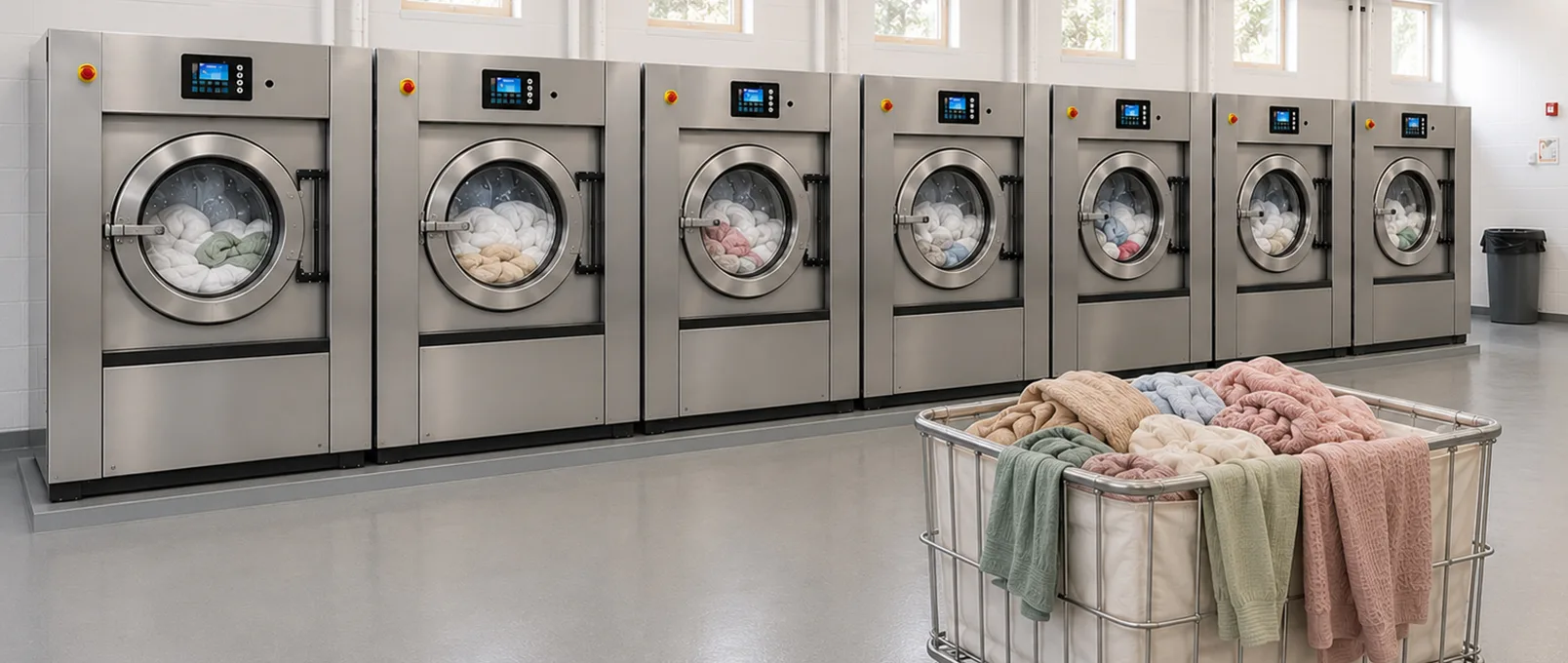
Not every fabric or garment can go through a standard wash cycle — delicate materials, certain finishes, and specific garment categories require dry cleaning as part of the production or finishing process. For garment factories in India, choosing the right dry cleaning machine, alongside a properly matched industrial clothes dryer, is a decision that affects both fabric quality outcomes and production throughput.
Why Dry Cleaning and Drying Equipment Matter Together in a Garment Factory
Garment factories use dry cleaning machines for pre-production fabric treatment, finishing delicate or specialty garments that can't tolerate standard washing, and handling samples or specific client requirements around fabric care. Because these steps often sit alongside a high-volume production schedule, the dry cleaning line including the industrial clothes dryer that supports it needs to keep pace without becoming a bottleneck in the broader workflow.
Key Factors in Choosing a Dry Cleaning Machine
Solvent Compatibility and Handling
Different dry cleaning machines are built around different solvent types, and the choice affects both cleaning performance and compliance with environmental and safety regulations. Factories need equipment that handles solvent recovery and filtration efficiently, both for cost control and for regulatory compliance around solvent handling and disposal.
Load Capacity Matched to Production Volume
A dry cleaning machine sized incorrectly for factory volume either creates a processing bottleneck or sits underutilized relative to its capital cost. Matching machine capacity to realistic daily or weekly dry cleaning volume, not just total factory output is essential for getting the right-sized equipment.
Cycle Efficiency
Faster, well-optimized cycles matter in a factory environment where dry cleaning is often one step within a larger, time-sensitive production process. Machines that pair efficiently with a properly sized industrial clothes dryer reduce total processing time per batch considerably.
Fabric Care and Consistency
Garment factories dealing with delicate or specialty fabrics need dry cleaning and drying equipment that deliver consistent results without fabric damage — since inconsistent output at this stage can mean rework or rejected batches, both of which are costly in a production environment.
Solvent Recovery and Environmental Compliance
Modern dry cleaning machines should include efficient solvent recovery systems, both to control operating costs and to meet environmental compliance requirements that Indian regulations increasingly emphasize.
Why the Industrial Clothes Dryer Matters Just as Much
A dry cleaning machine's output is only as good as the drying stage that follows it. An industrial clothes dryer that's undersized or poorly calibrated for the fabric types being processed can undo the benefits of a well-chosen dry cleaning machine causing shrinkage, texture damage, or extended processing times. Selecting drying equipment with precise temperature and moisture control, matched specifically to the fabric range a factory works with, is essential to protecting output quality.
How Supershine Laundry Supports Garment Factories
Supershine Laundry manufactures and supplies dry cleaning machines and industrial clothes dryers suited to the production demands of garment factories, with capacity options designed to match different scales of operation from smaller specialty finishing lines to larger factories with significant daily volume.
Beyond the equipment itself, Supershine works with garment factories on capacity assessment based on actual production volume, ensuring the dry cleaning and drying line doesn't become a bottleneck relative to the rest of the factory's output. Installation and commissioning support ensures machines are properly calibrated for the factory's specific fabric types, and AMC coverage helps maintain consistent performance over the equipment's operating life.
Questions to Ask When Selecting Dry Cleaning and Drying Equipment
-
What solvent type does the dry cleaning machine use, and what does compliant handling and disposal require?
-
Is the industrial clothes dryer's capacity matched to the dry cleaning machine's output, or will it create a downstream bottleneck?
-
How efficient is the solvent recovery system, both for cost and environmental compliance?
-
What's the expected cycle time under real production conditions?
-
What installation, commissioning, and maintenance support does the supplier provide?
Common Mistakes Garment Factories Make
-
Choosing a dry cleaning machine based on price alone, without evaluating solvent recovery efficiency and long-term operating costs
-
Undersizing the industrial clothes dryer relative to dry cleaning output, creating a bottleneck
-
Overlooking compliance requirements around solvent handling until after installation
-
Skipping proper commissioning and calibration, leading to inconsistent fabric results
Final Thoughts
Selecting the right dry cleaning machine and industrial clothes dryer for a garment factory comes down to matching solvent handling, capacity, cycle efficiency, and fabric care capability to actual production requirements — not simply choosing the largest or cheapest available option. Supershine Laundry's dry cleaning and drying equipment, combined with capacity planning, installation, and AMC support, gives garment factories in India a dependable path to consistent fabric care without disrupting production schedules.
الأقسام
إقرأ المزيد
As organizations continue to embrace cloud computing, hybrid workplaces and digital transformation, identity security has become one of the most critical pillars of cybersecurity. Businesses need intelligent identity governance solutions that automate user access, strengthen compliance and reduce security risks. This is where SailPoint Identity Now becomes highly valuable for IT professionals,...

There's a phrase you'll hear from engineering teams that have been burned by poor architectural decisions: "we built it wrong the first time." It's one of the most expensive sentences in software development, often signaling months of rework, budget overruns, and integration headaches that slow down every subsequent feature release. The most common root cause of that problem isn't bad code....

" According to the latest report published by Data Bridge Market Research, the Maternal Blood Test Market Data Bridge Market Research analyses that the maternal blood test market which was USD 3.807 billion in 2022, is expected to reach USD 10.12 billion by 2030, at a CAGR of 13.00% during the forecast period 2023 to 2030.Maternal Blood Test Market is the world-class market...

Inclusion is often thought of as something big and strategic, but in reality, it is built through small everyday habits. The way people greet each other, listen in meetings, share information, and respond to ideas all shape whether a workplace feels inclusive or not. This is where diverse matters supports organisations as a specialist Diversity and Inclusion consultancy. Why Everyday...
Zhejiang University is one of the most prestigious and research-driven institutions in China, known for its academic excellence, global collaborations, and modern infrastructure. Located in Hangzhou, a vibrant and technologically advanced city, the university attracts thousands of international students every year. It has built a strong reputation for offering world-class education,...