


Octanol and the Hidden Infrastructure Behind Flexible Materials, Precision Formulations and the Next Generation of Carbon-Efficient Chemical Manufacturing
A C8 Molecule With an Industrial Footprint Far Larger Than Its Tank
Octanol rarely appears on a consumer label, yet it sits several conversion steps behind coatings, specialty esters, surfactants, lubricants, extraction systems, fragrances and selected personal-care formulations. The molecule most commonly discussed as 1-octanol contains eight carbon atoms, 18 hydrogen atoms and one oxygen atom, giving it a molecular weight of 130.23 grams per mole. One metric tonne therefore represents about 7,678 moles, or roughly 4.62 × 10²⁷ molecules available for downstream reactions.
Semple Request At: https://datavagyanik.com/reports/global-octanol-market-size-production-sales-average-product-price-market-share/
Its physical behaviour explains why Octanol functions as an industrial bridge. It is a liquid with a relative density near 0.83, boils at approximately 195°C and has very limited water solubility. This combination creates three practical advantages: it can remain liquid in conventional ambient storage, it offers slower evaporation than light alcohols, and it provides useful compatibility with oil-rich or organic systems. It also means production sites require heated distillation, controlled ventilation and disciplined separation from aqueous waste streams.
The Production Story Begins With Gases, Catalysts and Separation Columns
A modern synthetic route converts a C7 olefin into an aldehyde using carbon monoxide and hydrogen, then hydrogenates that intermediate into Octanol. The industrial architecture is not a single reactor. It is a chain of feed purification, syngas compression, hydroformylation, catalyst management, hydrogenation, fractionation, quality control and bulk storage. Johnson Matthey reports that its LP Oxo technology platform has been licensed at 52 plants over more than 50 years, illustrating how deeply standardized oxo infrastructure has become.
Consider a 100,000-tonne-per-year Octanol facility operating for 330 days. It must produce about 303 tonnes per day, or 12.6 tonnes per hour. At a density of 0.83 tonne per cubic metre, one 1,000-cubic-metre tank could physically hold around 830 tonnes. Applying an 85% operating fill limit reduces usable inventory to about 706 tonnes, equal to only 2.3 days of production. A resilient site therefore needs multiple tanks, redundant pumps, loading bays and enough buffer capacity to absorb shipping delays.
Outbound logistics are equally measurable. Moving 303 tonnes daily through 25-tonne road tankers requires approximately 12 full dispatches every day. A 30-day customer buffer would represent more than 9,000 tonnes of distributed inventory across terminals, warehouses and downstream factories. The commercial strength of Octanol therefore depends not only on reactor economics, but also on the reliability of storage networks, transport permits, drum-filling lines and regional distributors.
Application Value Is Created Through Molecular Multiplication
The most important use case is not direct consumption; it is chemical transformation. When Octanol reacts with acetic acid to form octyl acetate, one tonne can theoretically generate about 1.32 tonnes of ester because the finished molecule incorporates mass from both reactants. At a practical net yield of 92%, output becomes approximately 1.22 tonnes. This is why a relatively modest alcohol stream can support a larger finished-solvent and fragrance-intermediate business.
Ethoxylation creates an even stronger multiplication effect. Adding three ethylene oxide units to one Octanol molecule raises molecular weight from about 130 to roughly 262 grams per mole. One tonne of alcohol can therefore support about 2.01 tonnes of three-mole ethoxylate at theoretical conversion, or around 1.91 tonnes at 95% net yield. The resulting non-ionic surfactant can be designed for wetting, emulsification or cleaning performance, depending on the number of ethylene oxide units and the final formulation.
In personal care, the economics work through dilution. At a 1% formulation rate, 10,000 tonnes of Octanol-derived ingredient can support one million tonnes of finished creams, cleansers, conditioners or technical emulsions. At 0.25%, the same ingredient volume can influence four million tonnes of formulated output. This explains why specialty-grade demand can generate high commercial value without requiring commodity-scale tonnage.
The 2026 Value of the Network
DataVagyanik estimates the specifically defined global Octanol market at USD 1.86 billion in 2026 and forecasts it to reach USD 2.79 billion by 2035, representing a 4.6% compound annual growth rate. The forecast is tied to the expansion of specialty esters, surfactants, personal-care intermediates, high-boiling solvents and geographically diversified chemical manufacturing rather than to a single end-use industry.
Investment Is Moving Closer to Feedstock and Downstream Customers
The infrastructure trend is visible in India’s refinery-to-chemicals strategy. In September 2025, IndianOil’s ₹5,894-crore acrylics and oxo-alcohol complex at Gujarat Refinery was inaugurated after generating approximately 2.7 million construction man-days. Although its named product slate centres on acrylic acid, butyl acrylate and n-butanol, the project demonstrates the capital logic surrounding Octanol-related value chains: convert refinery olefins into higher-value intermediates, reduce imports and place alcohol production beside coatings, adhesives, plastics and textile customers.
A second transition is emerging around carbon sourcing. BASF and LanzaTech demonstrated a route in which microorganisms convert carbon monoxide and hydrogen from industrial off-gases into n-octanol. The carbon arithmetic is significant. Carbon accounts for about 73.8% of the molecule’s mass, meaning one tonne contains approximately 738 kilograms of carbon. In theoretical terms, that carbon corresponds to about 1.72 tonnes of carbon monoxide before conversion losses. Capturing even part of this requirement from waste gas could shift Octanol from a purely petrochemical narrative toward industrial carbon recycling.
The Real Theme Is Infrastructure Leverage
Octanol is valuable because each tonne activates several layers of assets: olefin supply, syngas systems, catalyst technology, hydrogenation, distillation, tank farms, accredited laboratories and downstream formulation plants. A 100,000-tonne facility is not merely producing alcohol; it can enable more than 120,000 tonnes of ester output or nearly 190,000 tonnes of selected ethoxylated products under realistic conversion assumptions.
That multiplier makes Octanol a useful indicator of industrial depth. Regions that only import drums capture distribution margin. Regions that esterify, ethoxylate, sulfate and formulate capture several additional value steps. The strategic opportunity is therefore not simply to manufacture Octanol, but to build an integrated corridor in which every tonne is converted, blended and sold repeatedly before it reaches the final user.
The Molecule That Tests How Other Molecules Will Behave
One of the most unusual Octanol use cases sits outside large reactors and formulation vessels. The C8 alcohol is the reference liquid behind the octanol–water partition coefficient, commonly expressed as log P or log Kow. This value indicates whether a chemical prefers an oil-like phase or an aqueous phase, influencing environmental testing, pharmaceutical screening, agrochemical development and chemical safety assessment.
The arithmetic is simple but powerful. A log P of 2 represents a 100:1 concentration preference for the organic phase. A log P of 3 raises that ratio to 1,000:1, while a value of 5 represents 100,000:1. A change of only one log unit therefore indicates a tenfold difference in partitioning behaviour.
Testing infrastructure extends from shake-flask systems for moderate partition values to high-performance liquid chromatography and slow-stirring methods for highly hydrophobic substances. OECD procedures collectively support measurements ranging from negative log values to approximately 8.2. At the upper limit, the theoretical concentration ratio reaches nearly 160 million to one.
A laboratory screening 300 chemical candidates in triplicate creates 900 separate tests. Using two 20-millilitre phases per test would require 36 litres of combined testing liquids before allowing for calibration, repeats and quality-control blanks. Multiplied across pharmaceutical, crop-protection and specialty-chemical development pipelines, the laboratory role becomes a recurring demand stream rather than a one-time industrial purchase.
Purity Creates Different Commercial Layers
A bulk chemical plant and an analytical laboratory may purchase the same molecule but are not buying the same commercial product. Industrial grades are optimized for reaction yield and cost. Laboratory grades may exceed 99.5% purity and require tightly controlled water, acidity, colour and trace-impurity specifications.
The numerical difference between 98% and 99.5% appears small until volume is considered. In a 100-tonne shipment, 98% material permits two tonnes of substances other than the desired molecule. At 99.5%, the allowance falls to 0.5 tonne. The 1.5-tonne difference can affect odour, colour, catalyst performance and the stability of sensitive downstream formulations.
Purity also reshapes packaging economics. A 20-tonne road tanker spreads testing and handling costs across one bulk movement. Supplying the same quantity in 200-litre drums could require about 135 drums, assuming 90% fill and a liquid density near 0.83 tonne per cubic metre. Laboratory packs divide the quantity further into one-litre, 2.5-litre or five-litre containers, increasing packaging, certification and distribution cost per kilogram.
This creates a value ladder. The reactor producer earns from tonnes. A specialty distributor earns from inventory availability and documentation. An analytical supplier earns from verified purity, small-pack convenience and lot-level traceability. The molecule remains chemically identical, but the supporting service infrastructure multiplies its commercial value.
Formulation Economics Depend on Low Inclusion Rates
In crop-protection, coating and cleaning formulations, a high-boiling alcohol or its derivative may serve as a carrier, solubility aid, wetting component or intermediate. The volume impact can be calculated from inclusion rates rather than headline product tonnage.
A formulation facility producing 40,000 tonnes annually and using a C8-based component at 1.5% would consume 600 tonnes per year. Over 300 operating days, daily demand would average two tonnes. This requirement is large enough for bulk or intermediate-bulk-container supply but small enough to be disrupted by a delayed tanker, failed quality test or unavailable import clearance.
At 600 tonnes, the physical liquid volume is approximately 723 cubic metres. Transporting the annual requirement in 1,000-litre containers filled to 90% would require around 803 units. The same quantity could be moved through only 30 conventional 20-tonne tankers. The choice between these two systems changes labour, warehouse area, handling loss and working capital.
A manufacturer choosing containers gains flexibility but manages hundreds of individual movements. Bulk delivery reduces handling but requires dedicated tanks, pumps and unloading safeguards. For many medium-sized formulators, the infrastructure decision can be as important as the negotiated price per tonne.
Extraction Systems Turn Solvent Recovery Into Profit
The oil-like behaviour of the molecule also supports liquid–liquid separation and extraction research. In these systems, commercial performance depends on solvent circulation rather than solvent consumption. A well-operated circuit repeatedly reuses its organic phase, replacing only evaporation, entrainment and processing losses.
Consider an extraction unit holding 50 cubic metres of organic liquid. At a density of 0.83, the circulating inventory equals approximately 41.5 tonnes. A daily loss of 2% would require 0.83 tonne of replacement material. Across 250 operating days, annual makeup demand would reach about 208 tonnes.
Reducing the loss rate from 2% to 0.75% lowers annual replacement demand to roughly 78 tonnes. The 130-tonne saving illustrates why settlers, phase separators, condensers and recovery columns can produce measurable financial returns. At an illustrative delivered cost of USD 2,000 per tonne, the reduction would preserve USD 260,000 annually.
This is the hidden business case behind solvent engineering. Better separation equipment does not merely improve environmental performance. It converts avoided chemical loss into recurring operating savings.
Energy Efficiency Begins Inside the Distillation Column
With a boiling point near 195°C, separation requires considerably more thermal input than handling lighter alcohols. Heating one tonne from 25°C to its boiling region creates a temperature rise of approximately 170°C. Using an indicative liquid heat capacity of 2.2 kilojoules per kilogram per degree Celsius, sensible heating alone represents about 374 megajoules, equivalent to roughly 104 kilowatt-hours.
That figure excludes vaporization, heat loss, reflux and inefficiencies. A commercial distillation system can therefore consume several times the theoretical sensible-heating requirement. Heat exchangers that recover energy from hot outgoing streams become economic assets rather than optional sustainability equipment.
For a plant processing 100,000 tonnes annually, saving only 50 kilowatt-hours per tonne would avoid five million kilowatt-hours each year. At an industrial electricity-equivalent value of USD 0.08 per kilowatt-hour, the annual benefit would approach USD 400,000. The same improvement would reduce utility demand without changing production capacity.
Safety Infrastructure Scales With Inventory
The liquid has a flash point around 81–83°C, substantially above normal room temperature but low enough to require combustible-liquid controls. Storage design must therefore address ignition sources, ventilation, spill containment, grounding and emergency response.
A 1,000-cubic-metre tank filled to 85% would contain about 706 tonnes. A containment system designed for 110% of the tank’s liquid volume would need approximately 1,100 cubic metres of capacity. Even a one-millimetre corrosion loss across a large tank floor can become a maintenance concern when hundreds of tonnes sit above it.
Monitoring investment is small relative to inventory exposure. Installing level sensors, temperature instruments, gas detection and automated shutdown equipment may represent a fraction of total project capital, yet these systems protect several days of production and downstream customer supply.
The Competitive Advantage Is Conversion Density
The future of Octanol will not be determined only by who owns the largest reactor. Advantage will move toward industrial clusters that connect feedstock, conversion, recovery, formulation, laboratories and customers within a compact geographic radius.
A tonne shipped as an undifferentiated bulk liquid creates one transaction. The same tonne converted into esters, surfactants, extraction media or analytical-grade packages can generate several product streams and hundreds of customer invoices. Every additional conversion step adds equipment, technical employment, testing activity and margin.
That is why Octanol should be viewed as industrial infrastructure in liquid form. Its importance is not defined by how visible it is to consumers, but by how many factories, laboratories and formulations can operate more effectively because the molecule is available at the required purity, quantity and time.
Semple Request At: https://datavagyanik.com/reports/global-octanol-market-size-production-sales-average-product-price-market-share/
Catégories
Lire la suite
Powerica IPO Review: Complete Breakdown, GMP Trends & Investor Guide | Firstock Introduction IPOs often create excitement in the market, and the Powerica IPO is quickly gaining attention among investors. But before jumping in, it’s important to ask—does it truly deserve your investment? Imagine investing in a company at the ground level, like planting a seed and waiting...

Disperse dyes are a cornerstone of synthetic fiber coloration, enabling vibrant and durable colors on materials like polyester, nylon, and acetate. Unlike natural fibers, synthetic fibers are hydrophobic and require specialized dyes that can penetrate their dense molecular structure. SD International, a leading disperse dyes manufacturer, leverages advanced science and technology to...

A professional paint job can dramatically improve the appearance and value of any property. Whether you are updating your home's interior, refreshing your business, or protecting your exterior from the elements, choosing experienced Painters in Western NY is one of the most important decisions you can make. Skilled painters combine quality materials with expert craftsmanship to...

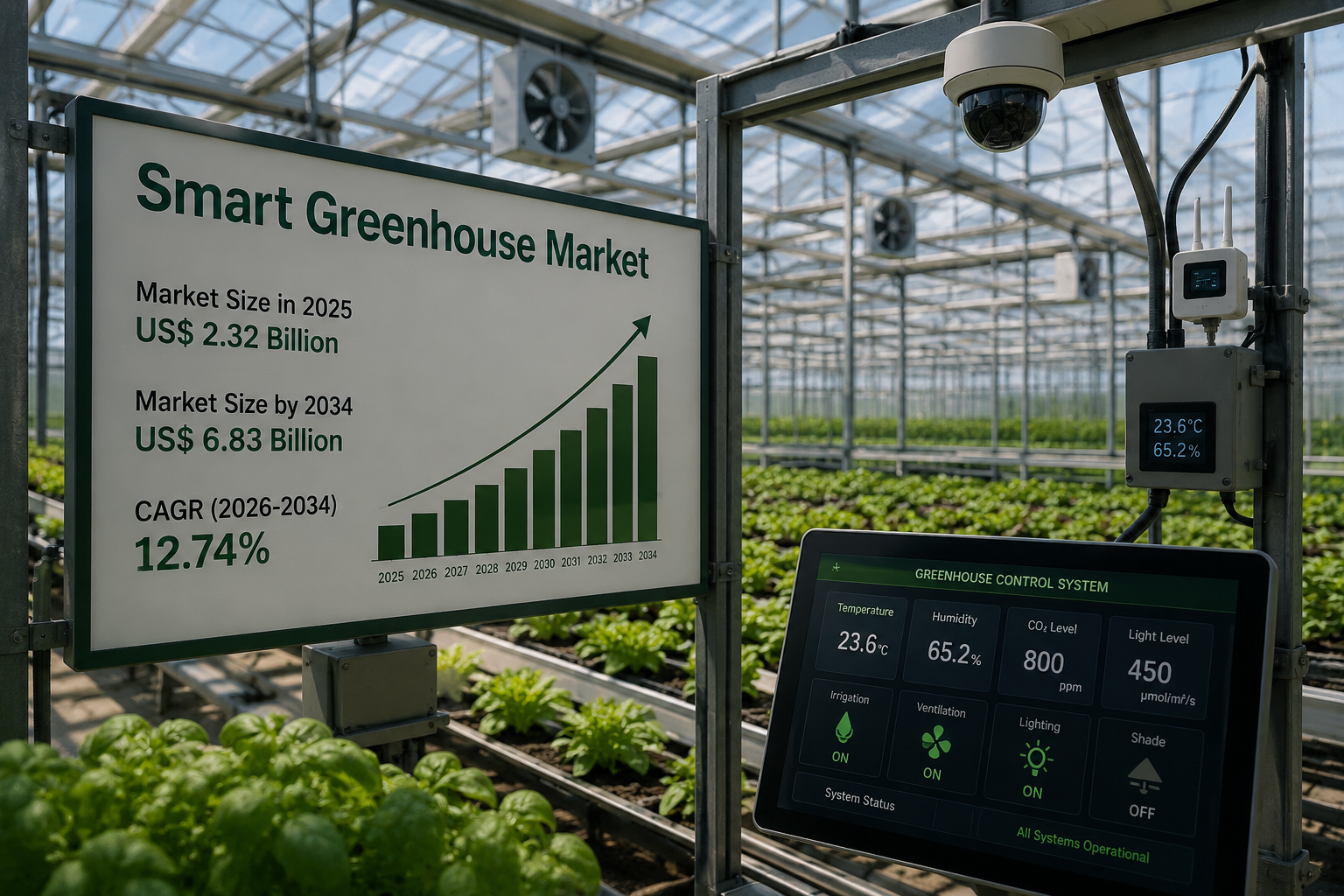
Smart greenhouse technologies are transforming agricultural practices by enabling growers to monitor and control environmental conditions with greater precision. These advanced cultivation systems integrate sensors, automation platforms, climate control solutions, and data analytics to optimize crop production while reducing resource consumption. By managing factors such as temperature,...
Executive Summary Asia-Pacific Surgical Staplers Market : Data Bridge Market Research analyses that the surgical staplers market growing at a CAGR of 10.08% in the forecast period of 2022-2029 and would likely to reach USD 1.17 billion by 2029. Clients get clear understanding of the market place with a nice combination of best industry insight, practical solutions, talent solutions and...
