


How to Build a Balanced IB Subject Portfolio

Most IB students think about subject selection in terms of individual subjects. They ask: Should I take Biology or Chemistry? Should I do Economics or History? Is Maths AA or Maths AI better for me?
These are reasonable questions. But they're the wrong starting point.
The right starting point is the portfolio as a whole.
Your six IB subjects don't exist in isolation. They interact with each other — in terms of workload, cognitive demands, assessment timelines, and the story they collectively tell to universities. A subject combination that looks reasonable on paper can be genuinely unsustainable in practice if the overall balance is wrong. And a combination that looks unconventional can be exceptionally strong if the balance is right.
Building a balanced IB subject portfolio is one of the most important strategic decisions you'll make in your entire IB journey. It shapes your workload across two years, your IA and EE experience, your exam preparation demands, and ultimately your total score and university outcomes.
After working with hundreds of Singapore IB students through this exact decision, one thing becomes consistently clear: the students who thrive are almost never the ones who picked the most impressive-sounding combination. They're the ones who built their portfolio with genuine self-awareness, strategic clarity, and an honest understanding of what balance actually means in practice.
If you're looking for ib economics tuition support and simultaneously trying to figure out how Economics fits into your broader subject portfolio, this guide will help you think through the full picture — not just the individual subject decision.
What "Balance" Actually Means in the IB
The word "balance" gets used constantly in IB advice. It's rarely defined precisely. Let's fix that.
In the IB context, balance operates across four distinct dimensions — and understanding all four is essential for building a portfolio that genuinely works.
1. Cognitive Balance
Your six subjects should not all demand identical types of thinking. A portfolio of pure mathematical and scientific subjects places enormous strain on one cognitive mode. A portfolio with some variety — analytical writing, mathematical reasoning, memorisation-based learning, structured argumentation — distributes mental load more sustainably across two years.
2. Workload Balance
The HL versus SL split must be genuinely manageable. Three extremely demanding HL subjects alongside three moderately demanding SLs creates a very different workload profile than a combination with some natural breathing room built in.
3. Assessment Balance
IB Internal Assessments, the Extended Essay, and final exams create predictable peaks of academic pressure. A balanced portfolio distributes this pressure so that IA deadlines and EE milestones don't land simultaneously in one unmanageable window.
4. Strategic Balance
Your portfolio should serve your university goals without overreaching. It should meet prerequisites, signal the right academic preparation, and demonstrate intellectual breadth — without spreading you so thin that performance suffers across the board.
When a Singapore student tells us their IB feels genuinely unmanageable, it's almost always because one or more of these four dimensions is out of alignment.
The Six-Subject Framework: What You're Actually Building
Before discussing balance strategies, it helps to understand the structural constraints you're working within.
You must take one subject from each of the following groups:
|
IB Subject Group |
Common Examples |
|
Group 1: Studies in Language and Literature |
English Literature, English Language and Literature |
|
Group 2: Language Acquisition |
Mandarin B, French B, Malay B, Spanish B |
|
Group 3: Individuals and Societies |
Economics, History, Geography, Psychology |
|
Group 4: Sciences |
Biology, Chemistry, Physics, Computer Science |
|
Group 5: Mathematics |
Mathematics AA, Mathematics AI |
|
Group 6: The Arts |
Visual Arts, Music, Theatre — or a second subject from Groups 1–4 |
Three of your six subjects must be at Higher Level. Three are at Standard Level.
The real decisions — and where balance either succeeds or fails — are:
-
Which subjects you choose within each group
-
Which three you take at HL versus SL
-
Whether you replace Group 6 Arts with an additional academic subject
These choices collectively determine your portfolio's balance across all four dimensions above.
The Most Common Balance Mistakes Singapore Students Make
Mistake 1: Overloading HL With Three Maximally Demanding Subjects
This is the most frequent balance error we see among Singapore IB students. Under family or peer pressure, students choose the three "hardest" possible HL subjects simultaneously.
The classic version: Biology HL, Chemistry HL, Physics HL.
All three are high-content, high-demand subjects. All three require laboratory Internal Assessments. All three have demanding final exams. And all three require different types of scientific preparation — systematic content review for Biology, mathematical problem-solving for Physics, and a combination for Chemistry.
The result is a portfolio where three out of six subjects are simultaneously at their most demanding. There is no cognitive relief. There is no HL subject where a student can recover time and mental energy when the others get particularly intense.
Students who successfully manage triple science HL exist — but they are the exception. And even those who manage it often describe Year 12 as a period of sustained exhaustion that visibly affected their overall performance.
For students currently navigating this biology and science-heavy combination, getting targeted ib biology tuition support early — rather than waiting until mock exams reveal the gaps — makes a measurable difference to both performance and manageability.
Mistake 2: Treating SL Subjects as Unimportant
The flip side of HL overload is SL neglect. Students who pour every available hour into HL subjects often let SL subjects slide — and discover in mock or final exams that SL performance is dragging their total score down significantly.
Each SL subject contributes to your total score on the same scale as each HL subject. A 4 in an SL subject costs you just as many points as a 4 in an HL subject. The difference between a 5 and a 7 in an SL subject represents two points that could move a total score from 38 to 40.
Balanced portfolios treat SL subjects as genuine scoring opportunities — not afterthoughts.
Mistake 3: Ignoring How IA Deadlines Interact Across Subjects
This is a balance mistake that almost never appears in generic subject selection advice — but it causes enormous stress for students who didn't anticipate it.
A student with Biology HL, Chemistry HL, and Physics HL will often find themselves executing three laboratory-based IAs in overlapping windows in Year 12 — while simultaneously beginning Extended Essay research. This creates an assessment intensity that is genuinely difficult to manage alongside regular class preparation.
Choosing a portfolio where not all three HL subjects have heavy IA requirements in the same window significantly reduces this pressure — and often leads to better IA scores across the board, because students have the cognitive space to do each one properly.
Mistake 4: Choosing All Subjects in the Same Cognitive Mode
Some Singapore students end up with portfolios where five of their six subjects require essentially the same type of analytical thinking. A full science and mathematics portfolio — Biology HL, Chemistry HL, Physics SL, Maths AA HL, English SL, Chinese B SL — has four subjects in Group 4 and 5 alone.
There's nothing inherently wrong with this for specific university pathways. But it creates a portfolio with very limited cognitive variety. Students frequently describe this as mentally exhausting in a way that's qualitatively different from the normal demands of IB — because there's no subject that offers genuine intellectual relief or a different mode of thinking.
Tutor Insight: What Balanced Portfolios Actually Look Like at 40+
"After working with Singapore IB students for many years, the portfolios that consistently produce scores of 40 and above share a specific structural characteristic: they have no weak link."
"Not a single subject where the student is genuinely struggling. Not a single HL taken for the wrong reasons that drains time and confidence throughout Year 12 and 13. The students who score 40+ aren't always the ones who took the three hardest HL subjects — more often, they're the ones who took three HL subjects they could genuinely excel in, managed their SLs efficiently, and had enough cognitive and time resources left to produce strong IA and EE work."
"That last part — having enough resources left — is what portfolio balance is actually about. It's not about taking less challenging subjects. It's about taking the right challenging subjects in the right combination."
Building Your Portfolio: A Step-by-Step Framework
Step 1: Anchor Your Portfolio Around Two Non-Negotiable HLs
Start by identifying the two HL subjects directly required for your target university course. These are your anchors — everything else is built around them.
For medicine: Biology HL + Chemistry HL
For engineering: Physics HL + Mathematics AA HL
For economics: Economics HL + Mathematics AA HL
For law or humanities: English HL + History HL
These two subjects will receive the most preparation time. They should also be subjects where you have genuine aptitude — because you'll need to score 6 or 7 in both to meet university grade thresholds.
For students anchoring around Physics and Maths, understanding the specific mathematical demands of both subjects — including how to use the ib physics data booklet effectively from early in the course — is one of the most practical ways to stay ahead of the workload before it becomes unmanageable.
Step 2: Choose Your Third HL Strategically
This is where balance becomes critical — and where most students either get it right or get it badly wrong.
Your third HL should satisfy at least two of these three criteria:
-
Complementary to your university goal — it adds breadth or direct relevance to your application
-
A genuine personal strength — you can perform at a high level in this subject consistently
-
Cognitively different from your first two HLs — it provides meaningful variety in how you think and prepare
Applying these criteria practically:
A medicine student with Biology HL and Chemistry HL anchors might choose:
-
Mathematics AA HL — complementary and typically a genuine strength for science-oriented students
-
Economics HL — less directly complementary, but highly achievable if the student is strong here, and provides real cognitive variety
-
Physics HL — complementary but cognitively similar; only worth choosing if it's a genuine strength, not just a theoretical fit
An engineering student with Physics HL and Mathematics AA HL anchors might choose:
-
Chemistry HL — directly complementary for chemical or materials engineering
-
Economics HL — provides cognitive variety and strong scoring potential
-
Computer Science HL — directly complementary for software or systems engineering pathways
The critical question: Can I genuinely achieve a 6 or 7 in this third HL — and does it either strengthen my application or provide cognitive balance in my portfolio?
Step 3: Design Your SL Subjects for Maximum Score Contribution
Once your three HLs are fixed, your SL subjects should be chosen for two things above all else:
Score achievability — can you realistically score 6 or 7 at SL?
Workload manageability — can you maintain strong SL performance without compromising HL preparation?
Group 1 (English or Mother Tongue) and Group 2 (Language B) are often among the most achievable SL subjects for Singapore students. Mandarin B SL, in particular, is frequently a genuine strength for students with strong home language competency.
Mathematics is the one SL subject where the choice between AA and AI still has significant university admissions implications — as covered in earlier articles in this series. Don't default to Mathematics AI SL purely because it seems more manageable. Check what your target programmes actually expect.
Step 4: Map Your IA Landscape Before Finalising
Once you have a draft portfolio, map the IAs you'll need to complete and when:
|
Subject |
IA Type |
Typical Year 12 Load |
|
Biology HL |
Individual Investigation (lab-based) |
High — original experiment required |
|
Chemistry HL |
Individual Investigation (lab-based) |
High — original experiment required |
|
Physics HL |
Individual Investigation (lab-based) |
High — original experiment required |
|
Economics HL |
Three commentaries on news articles |
Moderate — staggered through year |
|
History HL |
Historical Investigation |
Moderate — research-based |
|
Mathematics AA HL |
Mathematical Exploration |
Moderate — independent investigation |
|
English Literature HL |
Individual Oral |
Lower — structured but not lab-based |
If your portfolio has three lab-science HLs, you'll be managing three laboratory IAs simultaneously in Year 12 — on top of Extended Essay research and regular class preparation. This is feasible, but it requires exceptional time management and advance planning.
If your portfolio has two lab-science HLs and one non-lab HL, your IA burden is significantly more distributed — and the quality of individual IAs often improves because you have more cognitive space for each one.
Step 5: Assess Cognitive Variety Across Your Full Six
Look at your draft portfolio and categorise each subject by its primary cognitive demand:
|
Cognitive Mode |
Subjects in This Mode |
|
Systematic memory + biological application |
Biology |
|
Mathematical problem-solving + abstraction |
Physics, Mathematics AA |
|
Structured argumentation + diagram analysis |
Economics |
|
Analytical literary writing |
English Literature |
|
Research-based historical analysis |
History |
|
Language production and comprehension |
Language B subjects |
|
Laboratory investigation + data analysis |
Sciences generally |
A portfolio with at least three different cognitive modes distributes mental load sustainably. A portfolio where five subjects fall into one or two categories creates cognitive narrowness — even when individual subjects are well-chosen for university purposes.
Case Study 1: Building Balance From the Ground Up
Student Profile: Siti, Year 11, IB school in Singapore
University Goal: Biomedical Sciences or Life Sciences — targeting NUS and several UK universities
Initial Draft Portfolio: Biology HL, Chemistry HL, Physics HL, Mathematics AA SL, English SL, Malay B SL
Balance Assessment:
-
Cognitive balance: Poor — three science HLs in similar cognitive modes
-
Workload balance: High risk — three lab IA timelines overlapping in Year 12
-
Assessment balance: Severe IA pressure concentrated in one period
-
Strategic balance: Physics HL not required for her target programmes
Revised Portfolio After Discussion: Biology HL, Chemistry HL, Economics HL, Mathematics AA SL, English SL, Malay B SL
Why the Change:
-
Economics HL replaced Physics HL as the third HL
-
Siti had consistently strong Economics performance and genuine interest in health economics
-
This removed one lab IA entirely from her Year 12 assessment load
-
Economics provided real cognitive variety alongside her two sciences
-
No target programme required Physics HL for Life Sciences or Biomedical Sciences
Outcome: Siti graduated with 41 points. Biology HL: 7, Chemistry HL: 7, Economics HL: 6. Accepted into Life Sciences at NUS. In her own words: "Dropping Physics HL was the best decision I made in IB. Economics gave me something completely different to think about, and I actually looked forward to those classes when I was exhausted from Biology lab work."
Case Study 2: Correcting an Imbalanced Portfolio Mid-Course
Student Profile: Jun Wei, Year 12, Singapore international school
Original Portfolio: Physics HL, Mathematics AA HL, Chemistry HL, Biology SL, Economics SL, English SL
Problem Identified: By mid-Year 12, Jun Wei was severely behind in Chemistry HL. He had assumed the overlap with Physics would make Chemistry manageable. In practice, Chemistry HL's content demands — particularly organic chemistry and energetics — were consuming disproportionate preparation time. Mock results: Physics HL 7, Mathematics AA HL 6, Chemistry HL 4.
Chemistry HL at 4 would drag his predicted total to approximately 35 — well below his 40+ ambition. More critically, his target engineering universities only required Physics HL and Maths AA HL. Chemistry HL was not a prerequisite.
Solution: Jun Wei moved Chemistry from HL to SL at the start of the second semester of Year 12, before his school's subject change deadline. This significantly reduced his Chemistry assessment burden while keeping Chemistry on his transcript at SL.
The freed preparation time was redirected into deepening his Physics HL and Mathematics AA HL performance, and into properly engaging with his Economics SL — which had been neglected.
Outcome: Jun Wei graduated with 39 points. Physics HL: 7, Mathematics AA HL: 7, Chemistry SL: 6, Economics SL: 7. He received an offer from the University of Edinburgh for Mechanical Engineering.
Lesson: Portfolio balance is not permanently fixed at subject selection. If a clear imbalance emerges in Year 12, addressing it promptly is almost always the right decision. Grinding through two years of underperformance in a mismatched subject helps nobody.
The 40+ Score Blueprint: Common Portfolio Patterns Among Top Scorers
After working with students who have achieved 40 points and above, several consistent patterns emerge in how their portfolios were structured.
Pattern 1: Two Core HLs and One Strength HL
The most common pattern among 40+ scorers is two HL subjects that directly serve their university goals, and one HL subject that represents their strongest academic area — even if it's slightly outside their core pathway.
A medicine student who takes Biology HL, Chemistry HL, and Economics HL — because Economics is their strongest subject — often outscores a student who takes Biology HL, Chemistry HL, and Physics HL because Physics feels more appropriate for medicine but isn't a genuine strength.
Pattern 2: SL Subjects Treated as Scoring Opportunities
High scorers consistently achieve 6s and 7s in SL subjects. Language B SL, English SL, and Mathematics SL are frequent sources of strong scores that contribute significantly to overall totals.
The arithmetic is worth understanding concretely: a student scoring 7,7,6 in HLs and 7,7,6 in SLs totals 40 points. A student scoring 7,7,7 in HLs but only 5,5,5 in SLs — because SLs were neglected — totals 36. The entire four-point difference comes from SL management.
Pattern 3: A Strong EE and TOK Combination
The combined EE and TOK bonus — maximum 3 points — appears disproportionately often in 40+ score profiles. Students who choose their EE subject carefully, in a topic they're genuinely curious about within a subject they're strong in, consistently pick up 2 or 3 bonus points.
These points matter enormously. They are often the difference between 38 and 40, or between 40 and 42.
Pattern 4: No Weak Link
The single most consistent characteristic of 40+ portfolios is the absence of a genuinely struggling subject. A portfolio with five subjects at 6–7 and one subject at 4 will almost always produce a lower total than a portfolio where all six subjects perform at 5–6.
Building a balanced portfolio means eliminating weak links before they have two years to drag performance down.
A Workload Reality Check: The Numbers Behind Balance
The IB provides guidance on expected study hours per subject. The approximate breakdown:
|
Subject Level |
Estimated Study Hours Across Two Years |
|
HL Subject |
240 hours |
|
SL Subject |
150 hours |
|
Full Portfolio Total |
~1,170 hours |
Across approximately 90 weeks of the Diploma Programme, that's roughly 13 hours per week dedicated to IB academics — before CCAs, family commitments, university application work, and the ordinary demands of being a teenager in Singapore.
This is why balance matters mathematically, not just philosophically. If one of your three HLs is a genuine strength where preparation is efficient, you can redistribute those hours more effectively. If all three HLs are constant struggles, those 720 hours of HL preparation will perpetually compete with each other — and something always loses.
What the IB Data Booklets Tell You About Subject Demands
One practical, underused strategy for evaluating subject demands before committing is spending time with the relevant data booklets.
The ib biology data booklet reveals immediately how much content is provided in Biology exams — and by implication, how much must be committed to memory. Biology's data booklet is relatively sparse, which tells you something important: the content load that must be memorised is substantial. Students who understand this early plan their review systems accordingly.
The ib chemistry data booklet similarly signals the balance between what's provided and what must be known — helping students calibrate the memorisation demands of Chemistry HL versus the conceptual and mathematical demands of Physics HL.
The ib math data booklet makes it clear that Mathematics AA HL provides formulas but demands the mathematical fluency to know when and how to apply them. Students who review this early gain a realistic picture of what Maths AA HL actually requires — and whether it genuinely fits their portfolio as an HL or SL subject.
Using these resources as portfolio evaluation tools — before subject selection is finalised — is one of the most practical steps a Singapore student can take.
Portfolio Balance Checklist: Run This Before You Finalise
|
Balance Dimension |
Question |
Green Flag |
Red Flag |
|
Cognitive Variety |
Do my subjects demand different thinking styles? |
At least 3 different cognitive modes |
All subjects require identical thinking |
|
HL Strength |
Can I genuinely score 6–7 in all three HLs? |
Yes, with focused preparation |
One HL is a significant aspirational stretch |
|
IA Load |
How many lab-based IAs do I have? |
1–2 maximum |
3 lab IAs overlapping in Year 12 |
|
SL Achievability |
Can I score 6–7 in all three SLs? |
Yes, with manageable effort |
SLs feel like a constant burden |
|
University Alignment |
Do my HLs meet my target prerequisites? |
All prerequisites covered |
One or more missing |
|
EE Readiness |
Is my EE subject within my six? |
Yes — topic area of genuine interest |
No clear EE subject identified |
|
Burnout Risk |
Is this sustainable for two full years? |
Demanding but manageable |
Requires peak performance constantly with no recovery |
Case Study 3: The Student Who Got Balance Right From Day One
Student Profile: Isabelle, Year 11, Singapore IB school
University Goal: Law — targeting Bristol, Durham, and Edinburgh
Portfolio Design Process: Isabelle worked with her school counsellor and an IB tutor before finalising her subjects. She mapped university prerequisites, assessed her genuine strengths honestly, and thought carefully about cognitive variety.
Final Portfolio: English Literature HL, History HL, Economics HL, Mathematics AA SL, French B SL, Biology SL
Why It Worked:
-
English Literature HL and History HL both develop strong analytical essay skills — directly relevant to law
-
Economics HL provided a different analytical mode — diagrams and structured argument — while remaining complementary to law
-
No lab-based IAs — her assessment load was English Individual Oral, History Investigation, and Economics commentaries
-
Mathematics AA SL met university requirements without HL burden
-
French B SL and Biology SL were achievable for consistently strong scores
-
Her EE was in History — an area of deep personal interest
Outcome: Isabelle graduated with 42 points. English Lit HL: 7, History HL: 7, Economics HL: 7, Maths AA SL: 6, French B SL: 7, Biology SL: 6. Received offers from all three target law schools. Accepted Durham.
What Isabelle Reflected Afterwards: "I never felt like I was drowning. I had genuinely intense periods — especially during IA season and when the EE draft was due — but I always had subjects I could rely on for some recovery time. That's what balance actually felt like."
Singapore-Specific Considerations for Portfolio Balance
Singapore IB students face a unique combination of pressures that affects how portfolio balance plays out in practice.
CCA commitments are substantial. Many Singapore students are involved in demanding CCAs — competitive sports, performance-level music, student leadership roles. These commitments don't disappear when the IB starts. A portfolio that would be manageable for a student with minimal extracurriculars can become genuinely unsustainable for a student representing their school in national-level competitions. Factor this in honestly.
Family expectations require navigation. Many Singapore families have strong views about which IB subjects signal academic seriousness. A student who wants to take Economics HL instead of Physics HL as their third subject may face real resistance from parents who associate Physics with rigour. Managing this dynamic — while still making the decision that's right for you academically — is something many Singapore students navigate, and it's worth having an honest, evidence-based conversation with parents rather than simply defaulting to family expectations.
University aspirations are often highly specific. This is actually an advantage for portfolio building. Specific aspirations mean prerequisites are knowable well in advance. The students who get into difficulty are almost always those who didn't research prerequisites early enough — not those who had clear goals.
Your Final Portfolio Building Action Plan
This week:
-
Write down your top two or three realistic university course directions
-
Identify the two non-negotiable HL anchors those directions require
-
Research prerequisites at your top five target universities — official admissions pages only
This month:
-
Apply the three-criteria test to your potential third HL
-
Map your full IA landscape with your draft six subjects
-
Run the Portfolio Balance Checklist above against your draft
Before submitting your subject selection:
-
Confirm every prerequisite is met at the correct level
-
Confirm at least two SL subjects are genuine scoring opportunities
-
Confirm your EE subject is within your six and reflects genuine intellectual interest
-
Ask yourself honestly: Can I sustain high performance across all six of these subjects for two full years?
If you can answer that last question with genuine confidence, your portfolio is in good shape. If you have doubts about any subject — take those doubts seriously before selection closes. Changing your mind is far easier in Year 10 than in Year 12.
The IB is genuinely demanding. But it is manageable — consistently, sustainably manageable — when your portfolio is built with clarity, honesty, and strategic purpose. The students who build their combination around who they actually are and where they actually want to go will almost always outperform the students who built their combination around what sounds most impressive.
Build deliberately. Build honestly. Build a portfolio you can genuinely own for two years — and one that takes you exactly where you want to go.
Κατηγορίες
Διαβάζω περισσότερα
As businesses increasingly depend on digital accounting systems for financial management and compliance, enrolling in the best institute for tally course in Chandigarh can help students and professionals develop practical accounting skills that are highly valued in today's job market. Tally remains one of the most widely used accounting software platforms in India, making it an essential tool...

The gambling industry has evolved rapidly in recent years, driven largely by technology. Modern gambling platforms, including online casinos, mobile apps, and live dealer bandar togel systems, offer players new ways to enjoy games, bet on sports, and experience the thrill of gambling without visiting a physical casino. While these platforms provide numerous benefits, they also...

Diabetes management is a long-term, ongoing need for most patients, which is part of why anti-diabetic products in a PCD company setting tend to see steady, repeat demand rather than seasonal spikes. For pharma professionals evaluating a franchise opportunity, understanding what this segment actually includes, and what to look for in a manufacturing partner, makes the decision considerably...

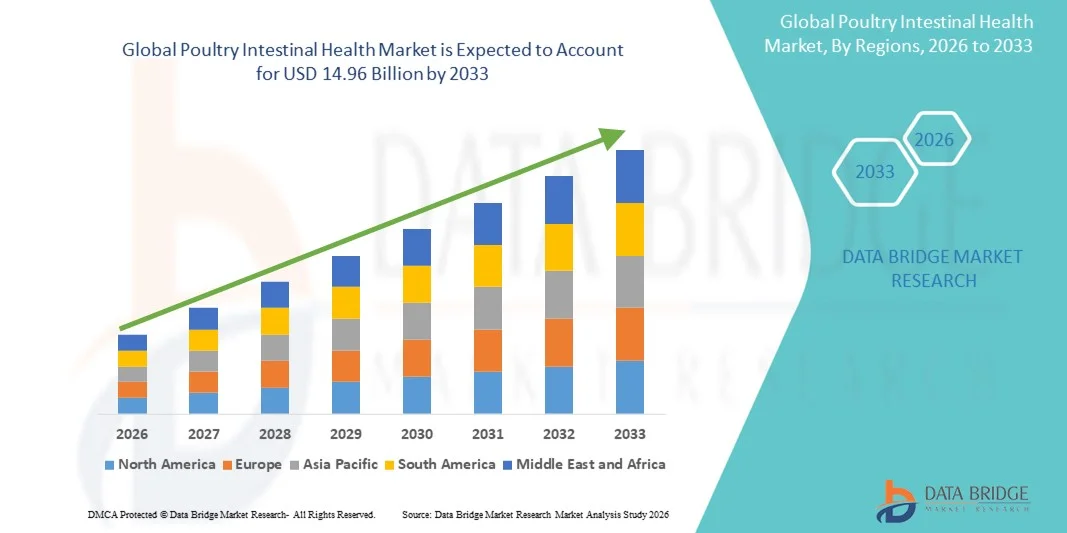
According to the latest report published by Data Bridge Market Research, the Poultry Intestinal Health Market The global poultry intestinal health market size was valued at USD 8.32 billion in 2025 and is expected to reach USD 14.96 billion by 2033, at a CAGR of 7.60% during the forecast period The market growth is largely fueled by the increasing...
DME Billing Solutions: Simplifying Medical Equipment Reimbursement Durable Medical Equipment (DME) plays a critical role in patient care. Items such as wheelchairs, oxygen equipment, hospital beds, and CPAP machines help patients manage chronic conditions and recover at home. However, billing for these services is complex and requires strict compliance with insurance and Medicare guidelines....