Why Every Second Student I Meet Is Suddenly Asking About BSc CS with AI & Data Science

A few months ago, almost nobody asked me about this course. Now it's the first question in every college counseling session I sit through. Parents want to know if it's "just another IT degree with a fancy name." Students want to know if they'll actually build something real, or just memorize theory for three years and hope for the best.
So let's talk about it properly, without the brochure language.
It's Not Just Coding, and It's Not Just Data
Here's the thing most people get wrong about a BSc in Computer Science with Artificial Intelligence and Data Science. They assume it's a computer science degree with two extra subjects bolted on. It's really the opposite. The whole structure is built around one question: how do you take raw information and turn it into something a machine can learn from, and then use that machine to solve an actual problem?
That means you're not just learning to write code that follows instructions. You're learning to build systems that adapt, predict, and improve over time. One day you're deep in Python and data structures, the next you're elbow deep in statistics trying to figure out why your model keeps overfitting, and the day after that you're learning how databases store and retrieve information at scale.
If you're still fuzzy on what the course actually covers day to day, this breakdown of what a BSc in CS with AI and Data Science really involves lays it out far better than any prospectus will.
The Subjects Sound Scary. They're Not, Once You're In
I'll be honest, the subject list can look intimidating on paper. Machine learning, neural networks, big data systems, probability and statistics, natural language processing. It reads like a list designed to scare off anyone who isn't already a genius.
But that's not how it actually feels once you're sitting in class. Good programs build these subjects in layers. You start with the fundamentals of programming and math, then slowly move into the AI and data-heavy parts once you have the base to actually understand them. Nobody throws you into deep learning in your first semester and expects you to swim.
If you want the honest, subject by subject rundown of what you'll be studying and in what order, there's a detailed guide on the core subjects covered in AI and data science programs that's worth reading before you commit to anything.
So Where Does This Actually Take You?
This is the part people care about most, and honestly, the part that gets exaggerated the most too. So let's keep it grounded.
Companies across nearly every industry are trying to figure out how to use their data better and where AI can save them time or money. That creates real openings for roles like machine learning engineer, data analyst, data scientist, AI application developer, and business intelligence specialist. Some graduates go straight into product companies. Others end up in research-adjacent roles, banking, healthcare tech, or startups building AI tools from scratch.
What makes this degree interesting is the flexibility. You're not locked into one narrow lane. Someone who's strong in statistics might lean toward data science. Someone who loves building things might drift toward AI engineering or software development with an AI focus. That range is one of the biggest reasons students are choosing this path over a plain computer science degree right now.
For a proper look at where this course can realistically lead in terms of jobs, salaries, and growth, this piece on the career scope after a BSc in CS with AI and Data Science covers it in a lot more depth than a quick summary can.
What Nobody Tells You Before You Join
You will hit a wall at some point. Probably around the time linear algebra and probability show up together in the same semester as your first machine learning project. That's normal. Every student who's ever done well in this field has a story about the month they almost gave up on a concept before it suddenly clicked.
The students who do well aren't necessarily the ones who find it easy. They're the ones who keep showing up to labs, keep debugging their code at 1am instead of giving up, and actually get curious about why something works instead of just copying a solution from the internet.
Also, and this matters more than people admit, the college and the way the course is taught make a real difference. A syllabus on paper looks the same everywhere. What actually varies is whether you get hands on project work, real datasets to play with, mentors who've worked in the industry, and enough flexibility to explore whether you like the AI side more or the data side more.
What a Regular Week Actually Looks Like
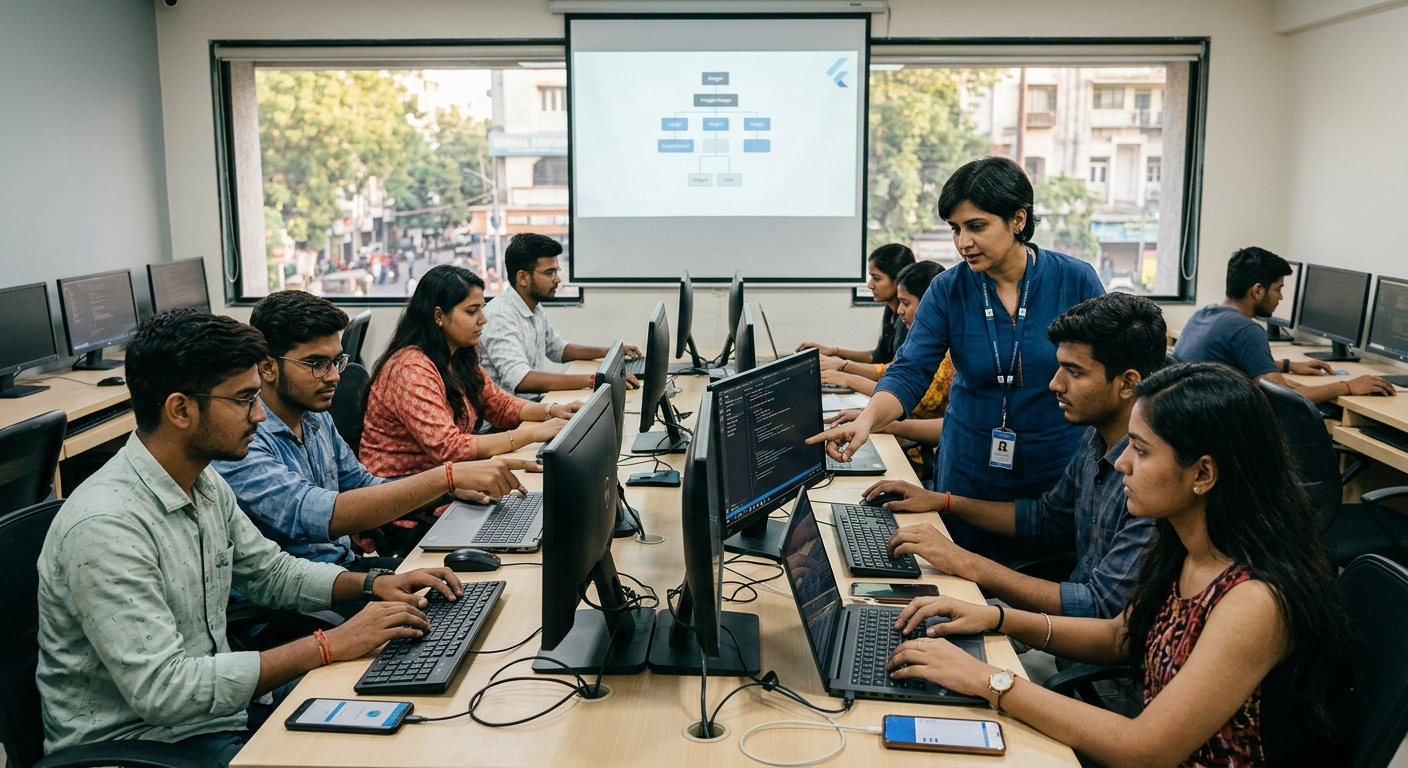
People imagine this course as sitting in front of a laptop all day, typing code while sipping coffee like in the movies. The reality is messier and honestly more interesting. A typical week might have you attending a stats lecture in the morning, moving to a lab session where you're cleaning a messy dataset that has missing values and duplicate entries everywhere, and then spending your evening reading documentation because a library update broke half your code.
There's also a good chunk of group work. Real world AI and data projects are rarely solo efforts, so you'll get used to working with teammates who think differently than you do. Someone's great at model building but terrible at presenting results. Someone else can explain a complex idea in one sentence but struggles to debug their own code. Learning to work around those differences is honestly as valuable as anything you learn from a textbook.
How This Compares to a Plain Computer Science Degree
This question comes up constantly, so let's address it directly. A traditional computer science degree gives you a broad foundation. You'll touch on networking, operating systems, software engineering, databases, and general programming across many domains. It's a solid, flexible degree that keeps a lot of doors open.
A BSc in CS with AI and Data Science narrows that focus deliberately. You still get the core computer science fundamentals, but a much bigger chunk of your time goes into statistics, machine learning, and working with real datasets. Think of it less as choosing a "harder" or "easier" path and more as choosing where you want your specialization to start. If you already know you're drawn to how machines learn and how data tells stories, this focused path saves you time compared to picking up AI skills as an afterthought later.
Skills You Walk Away With, Beyond the Technical Stuff
It's easy to list technical skills like Python, SQL, machine learning frameworks, and data visualization tools. Those matter, obviously. But there are a few skills this course builds that don't show up on a syllabus line item.
You get genuinely better at breaking a big, vague problem into smaller pieces you can actually solve. You get comfortable with being wrong, because half of working with data involves testing an idea, watching it fail, and figuring out why. You also pick up a habit of asking better questions before jumping into a solution, which sounds small but ends up being one of the most valuable things employers notice.
Communication ends up mattering more than most students expect too. Building a good model is only half the job. Explaining what it means, and why it matters, to someone who isn't technical is a skill you'll be forced to practice constantly, whether through presentations, reports, or team discussions.
Common Myths That Need to Go Away
A few myths keep circulating around this course, and they're worth clearing up. The first is that you need to already be a math genius to survive it. You need to be willing to work at math, not born gifted at it. Plenty of students who struggled with math in school end up doing fine once they see it applied to real problems instead of abstract exercises.
The second myth is that AI will somehow make this degree pointless because "AI will just replace itself." That misunderstands how the field actually works. Someone still has to build, train, test, and maintain these systems, and that someone needs exactly the kind of foundation this course provides.
The third myth is that data science and AI are basically the same thing, so the subjects overlap completely and you're wasting time. In reality they complement each other closely but involve different skills, and having both under one degree gives you a genuinely broader base than picking just one.
A Few Honest Things to Consider Before You Enroll
Ask yourself if you actually enjoy problem solving, not just the idea of working with cool technology. This course rewards patience and curiosity more than raw talent. If you're someone who gives up the moment code throws an error, this will frustrate you at first. If you're someone who gets a little obsessed trying to fix that error, you'll probably love it.
Also look closely at what the institution offers beyond the syllabus. Internship tie-ups, live projects, access to proper computing resources, and faculty who are actually current with the field matter more than the college's name alone.
Final Thought
A BSc in Computer Science with Artificial Intelligence and Data Science isn't a trend degree you pick because it sounds impressive at family gatherings. It's a genuinely demanding, genuinely rewarding path if you go in with curiosity and a willingness to struggle through the hard parts.
If you're still weighing your options or want to explore the course structure, career paths, and everything else in one place, MH Cognition has put together resources that go deeper than a standard prospectus, worth a look before you make your decision.
Categorías
Read More
Looking for a delightful mix of humor and heart this Valentine's Day weekend? Or perhaps just seeking some lighthearted entertainment any time? Netflix has you covered with the addition of a nostalgic gem that fans have been eagerly awaiting. The beloved sitcom starring Amanda Bynes, What I Like About You, is now streaming, offering a perfect dose of early 2000s charm. Many remember Amanda...

The Global Food Grade Lubricants Market, valued at USD 3.90 billion in 2023, is projected to reach USD 7.48 billion by 2032, growing at a compound annual growth rate (CAGR) of 7.67% during the forecast period 2024–2032. Rising demand for safe, high-performance lubricants in food, beverage, and pharmaceutical manufacturing—combined with stringent global regulations on hygiene...

Overview Ludo continues to be one of the exciting board games, which combines the luck of the draw with a smart approach to decision-making. While rolling the dice is a crucial factor but experienced players are aware that strategy is often the deciding factor in determining the winner. If you love the game on Kheloyaar Sports, learning effective strategies for playing can help you improve your...

The demand for mobile applications continues to rise as businesses shift toward digital platforms. From start-ups to established companies, everyone is investing in mobile apps to connect with users, improve services, and increase engagement. This growing demand has created strong career opportunities for developers who can build fast, responsive, and scalable applications. One of the...
Amaravati stands as one of the most ambitious urban development visions in Andhra Pradesh, designed to function as a planned capital region. Unlike organically grown cities, it is built on a structured master plan that includes residential zones, commercial areas, institutional corridors, and green spaces. This planned approach makes it a unique and future-focused real estate...