Cyclopentyl Methyl Ether and the Infrastructure Shift from Commodity Solvents to High-Performance Process Chemistry
The solvent industry is entering a phase where the value of a solvent is increasingly determined by what happens after it enters a reactor, not simply by its price per kilogram. Cyclopentyl Methyl Ether is a useful example of this transition. With a molecular weight of 100.16 g/mol and a boiling point of about 106°C, it occupies a practical operating window between low-boiling ethers and higher-boiling process solvents. That difference becomes important when plants are designed around reaction control, solvent recovery, crystallization and waste reduction.
Semple Request At: https://datavagyanik.com/reports/global-cyclopentyl-methyl-ether-market/
The industrial story of Cyclopentyl Methyl Ether begins with infrastructure rather than consumption. Zeon commercialized the solvent in 2005, creating a dedicated commercial route for a material that could function in reactions, extraction and crystallization. Today, the infrastructure surrounding it includes bulk drums, laboratory packaging, solvent-handling systems, recovery equipment and high-purity process controls. Zeon specifies commercial packaging including 170-kg drums and 16-kg pails, illustrating that the material can move from kilogram-scale laboratory validation toward hundreds-of-kilograms manufacturing campaigns.
Why 106°C Changes the Reactor Economics
A boiling point of 106°C gives Cyclopentyl Methyl Ether a very different operating profile from tetrahydrofuran, whose boiling point is approximately 66°C. In a process running at 70–90°C, the difference can translate into a simpler solvent-management problem because the solvent has considerably more thermal headroom before boiling.
For a 1,000-liter reactor charged with 500 liters of solvent, even a 5% reduction in solvent loss represents 25 liters retained in the process. At 10 comparable production campaigns, that becomes 250 liters. The economic value therefore comes from process architecture rather than from solvent substitution alone.
This is one reason Cyclopentyl Methyl Ether is relevant to facilities pursuing closed-loop solvent recovery. Its low heat of vaporization can also reduce the energy burden associated with distillation. The practical objective is straightforward: recover a larger fraction of solvent, return it to production and reduce the volume requiring disposal.
The Infrastructure Map: From Drum Storage to Solvent Recovery
A modern specialty-chemical plant using Cyclopentyl Methyl Ether can be visualized as a five-stage infrastructure chain:
- Storage: drums or bulk containers with controlled flammable-solvent handling.
- Metering: pumps and mass-flow systems sized to reactor batches.
- Reaction: glass-lined or stainless-steel reactors depending on chemistry.
- Separation: filtration, extraction, crystallization and distillation.
- Recovery: condensers and solvent-recovery systems returning usable solvent to storage.
If a plant operates 4 reactors with an average 2,000-liter working volume and conducts 3 campaigns per day, the theoretical processing envelope reaches 24,000 liters of reactor volume per day. Even when solvent represents only 20% of a campaign volume, approximately 4,800 liters of solvent can circulate through the system daily.
That scale changes the investment conversation. A recovery system capable of reclaiming 90% rather than 80% of solvent could recover an additional 480 liters per day in this illustrative configuration. Across 300 operating days, that equals 144,000 liters of solvent circulation captured rather than lost.
Cyclopentyl Methyl Ether Market Size: 2026 Quantification
DataVagyanik places the 2026 global Cyclopentyl Methyl Ether market at [insert exact DataVagyanik 2026 market-size figure], with the market forecast to reach [insert exact DataVagyanik forecast-year figure] by [insert forecast year]. The figures should be presented exactly as reported by DataVagyanik rather than as a rounded or ballpark estimate, because the market remains a specialized solvent category where differences in application coverage, purity grade and geographic scope can materially change the absolute valuation.
Pharmaceutical Manufacturing Is the First Major Use-Case Engine
Pharmaceutical synthesis is particularly compatible with the technical profile of Cyclopentyl Methyl Ether. The solvent can support Grignard reactions, Suzuki coupling, Buchwald amination, reductions and reactions involving strong bases or organometallic reagents. It is also useful in extraction and crystallization.
Consider a pharmaceutical plant running 100 batches annually. If a single process uses 800 liters of reaction solvent per batch, annual solvent circulation reaches 80,000 liters. If the process can recover 85%, approximately 68,000 liters can theoretically return to the solvent loop, leaving 12,000 liters requiring replacement or further treatment.
The value proposition becomes even more relevant when the solvent affects downstream purification. A solvent that supports both reaction and crystallization can eliminate one transfer between unit operations. If that removes only 30 minutes from a 12-hour batch cycle, a 100-batch operation saves approximately 50 reactor-hours annually.
That is not a dramatic number on a single batch. At multi-reactor pharmaceutical sites, however, the cumulative effect can become material.
Extraction Turns Solvent Selection into a Separation Strategy
Extraction is another infrastructure-intensive use case. Cyclopentyl Methyl Ether is hydrophobic and can form an azeotrope with water, characteristics that make phase-management and recovery particularly relevant.
Imagine a process producing 2,000 kg of intermediate annually and using a 3:1 solvent-to-product ratio during extraction. The operation would circulate roughly 6,000 kg of solvent. If solvent recovery improves from 70% to 90%, the amount requiring fresh replacement falls from 1,800 kg to 600 kg.
The difference is 1,200 kg of solvent per year for one process.
Multiply that across 10 production campaigns and the avoided fresh-solvent requirement reaches 12 tonnes annually. The infrastructure required to achieve that saving—condensation, phase separation, storage and quality monitoring—therefore becomes part of the economic case for adoption.
Agrochemicals Add a Second Manufacturing Layer
The agrochemical sector extends the use-case map beyond pharmaceutical chemistry. Cyclopentyl Methyl Ether can be used as a solvent in pesticide and herbicide synthesis and extraction. Here, the economics are driven by formulation complexity, active-ingredient compatibility and manufacturing consistency.
A formulation plant producing 10,000 tonnes of finished crop-protection products annually might use solvents at different concentrations depending on formulation type. At a hypothetical 5% solvent contribution, the solvent requirement would equal 500 tonnes annually. A 10% improvement in solvent recovery or formulation efficiency would represent 50 tonnes of material flow.
That illustrates why even a specialty solvent with a comparatively narrow user base can influence plant infrastructure when it enters high-throughput production systems.
Electronics and Precision Processing Raise the Purity Requirement
Electronics manufacturing creates a different opportunity because the critical metric is no longer simply solvent volume. Purity becomes the infrastructure constraint.
Zeon positions Cyclopentyl Methyl Ether within specialty solvents used for electronics and precision applications. Its commercial specification includes purity of at least 99.90%, with water limited to 100 ppm and peroxide content specified at 50 wt ppm or below.
Those numbers explain why high-purity solvent infrastructure requires additional controls. A facility handling 1,000 kg of solvent cannot treat water contamination as a minor issue when the specification is measured in parts per million. A 100-ppm water limit corresponds to approximately 100 grams of water per metric tonne of solvent.
The same principle applies to peroxide management. At 50 wt ppm, a tonne of solvent corresponds to a maximum specification level of roughly 50 grams under the stated product specification.
For semiconductor and precision-component operations, that turns storage, sampling, filtration and analytical testing into part of the application itself.
The Strategic Theme: Solvent Infrastructure Is Becoming Circular
The larger theme behind Cyclopentyl Methyl Ether is not simply substitution. It is circularity.
A plant that purchases solvent once and disposes of it after one batch has a linear model. A plant that purchases 10 tonnes, recovers 8.5 tonnes, purifies the recovered stream and returns it to production is operating a fundamentally different infrastructure.
At an 85% recovery rate, 10 tonnes of initial solvent theoretically supports 66.7 tonnes of cumulative solvent usage before accounting for process losses and quality constraints. At a 95% recovery rate, the same initial inventory could support approximately 200 tonnes of cumulative circulation under the simplified assumption of identical losses each cycle.
The physical solvent requirement has therefore not disappeared. Instead, the same solvent inventory performs more work.
That is where Cyclopentyl Methyl Ether becomes more than a chemical specification. It becomes an infrastructure choice linking reaction engineering, solvent recovery, energy consumption, purification, waste management and production throughput.
The next stage of adoption will consequently be determined less by whether plants can buy the solvent and more by whether their reactors, recovery systems and quality infrastructure are designed to extract its full process value.
Cyclopentyl Methyl Ether and the Next Layer of Process Infrastructure: Recovery, Safety, Logistics and Application Economics
Recovery Infrastructure Becomes the Hidden Multiplier
The most important infrastructure opportunity around Cyclopentyl Methyl Ether is not necessarily a larger storage tank. It is the recovery loop connecting the reactor, condenser, separation unit and solvent warehouse.
Consider a specialty-chemical facility operating a 5,000-liter reactor with a 60% working fill. If 3,000 liters of Cyclopentyl Methyl Ether are circulated through a campaign and the plant performs 150 comparable campaigns annually, total annual solvent circulation reaches 450,000 liters. A recovery rate of 80% would theoretically return 360,000 liters to the process, while a 92% recovery rate would return 414,000 liters.
The difference is 54,000 liters of annual solvent circulation.
This creates a measurable infrastructure case for investment in condensers, receivers, vacuum systems, distillation columns and storage capacity. A recovery system does not create demand by itself; it changes how much value a plant can extract from every tonne already purchased.
Distillation Capacity Determines the Real Circularity Ceiling
Solvent recovery becomes practical only when distillation infrastructure matches production throughput. If a plant generates 1,500 liters of recoverable solvent per batch and completes four batches per day, approximately 6,000 liters enter the recovery stream daily.
A recovery still designed for 3,000 liters per day becomes a bottleneck within two production shifts. The plant would either accumulate solvent for later processing or send part of the stream outside the recovery loop.
A 7,500-liter-per-day recovery capacity, by comparison, provides approximately 25% nominal headroom over the daily 6,000-liter stream.
That spare capacity matters because production rarely operates at exactly 100% utilization. Campaign changes, cleaning cycles and emergency batches can push solvent loads above the average.
Cyclopentyl Methyl Ether therefore interacts directly with the sizing of downstream infrastructure. A solvent strategy without corresponding recovery capacity can leave half of the theoretical efficiency opportunity unrealized.
Batch Manufacturing Creates a Different Demand Curve
Continuous chemical manufacturing often receives attention because of its high throughput, but batch plants remain critical users of specialty solvents. Batch production creates repeated cycles of charging, reaction, cooling, extraction, filtration and cleaning.
Suppose a plant operates 6 reactors and each reactor completes 40 campaigns annually. The facility would execute 240 campaigns. If each campaign uses 1,000 liters of Cyclopentyl Methyl Ether, annual gross solvent circulation reaches 240,000 liters.
A 10% increase in campaign utilization would add another 24,000 liters of annual circulation without requiring a new reactor.
This is why solvent demand can rise even when installed reactor capacity remains unchanged. The infrastructure is being used more intensively.
For chemical producers, the key indicator is consequently not only installed capacity but solvent throughput per reactor-hour.
Crystallization Can Reduce the Number of Unit Operations
One of the less visible advantages of Cyclopentyl Methyl Ether is its relevance to crystallization and isolation workflows. When a solvent can participate in reaction, extraction and subsequent isolation, the process may require fewer intermediate transfers.
A conventional route might use one solvent for reaction, another for extraction and a third solvent system for crystallization. If every transfer adds 20 minutes of preparation and cleaning time, three additional transfers could add approximately one hour to a production cycle.
Across 200 batches, that becomes 200 hours of accumulated operating time.
Reducing even part of this transfer burden can improve asset utilization without adding physical reactor capacity.
The infrastructure theme therefore moves beyond chemical compatibility. Solvent selection can influence how many pumps, tanks, filtration steps and cleaning cycles are needed around a reactor.
Worker Safety Shapes Storage Architecture
Cyclopentyl Methyl Ether is a flammable organic solvent, so storage and handling infrastructure must be designed accordingly. The relevant infrastructure includes grounding and bonding, suitable electrical equipment, ventilation, fire detection, spill containment and controlled transfer systems.
Suppose a facility holds 20 drums of 170 kg each. The inventory equals approximately 3.4 tonnes. A 100-drum inventory would represent approximately 17 tonnes.
As inventory rises, the engineering challenge changes from simple drum storage to systematic bulk-liquid management.
A plant consuming 2 tonnes per month could theoretically operate with a substantially smaller working inventory than a plant consuming 20 tonnes per month. The second facility would need stronger replenishment planning, larger storage buffers and more formalized transfer procedures.
This is where logistics becomes part of chemical economics.
Packaging Determines the Entry Point for Adoption
Specialty solvents generally enter manufacturing through several packaging scales. Laboratory and pilot users may work with pails or smaller containers, while commercial plants move toward drums or bulk systems.
For a laboratory consuming 5 liters per month, a 16-kg package may already represent a long operating period. A production line consuming 2,000 kg per month would require more than 11 equivalent 170-kg drums each month.
At 10,000 kg monthly consumption, that requirement rises to almost 59 equivalent drums.
The resulting infrastructure progression is clear:
Laboratory → pilot plant → drum-based production → bulk storage → closed-loop recovery.
Each step changes the procurement model, warehouse footprint and handling requirements.
Supply Security Becomes More Important at Higher Utilization
A plant consuming 500 kg annually can tolerate a much longer replenishment cycle than one consuming 50 tonnes annually.
At 500 kg annual consumption, a one-month supply interruption affects roughly 42 kg of average monthly requirement. At 50 tonnes annual consumption, the equivalent monthly exposure rises to approximately 4.17 tonnes.
That 100-fold increase in consumption changes how procurement teams manage safety stock.
A manufacturer carrying 30 days of inventory for a 50-tonne annual requirement would need approximately 4.2 tonnes of working stock before accounting for lead-time uncertainty. A 60-day buffer would double the requirement to roughly 8.3 tonnes.
For Cyclopentyl Methyl Ether users, the shift from laboratory-scale purchasing to production-scale consumption therefore creates a parallel shift in supply-chain infrastructure.
The Technical Case Extends into Process Optimization
The value of Cyclopentyl Methyl Ether can also be quantified through reaction concentration. If a process operates at 0.5 mol/L and requires 1,000 mol of substrate, approximately 2,000 liters of reaction solvent are required.
If process development increases the working concentration to 0.8 mol/L while maintaining reaction performance, the same 1,000 mol charge requires only 1,250 liters.
That is a reduction of 750 liters per batch, or 37.5%.
Across 100 batches, the theoretical reduction reaches 75,000 liters.
This illustrates an important distinction: solvent efficiency does not necessarily require using less solvent simply by reducing the quantity charged. It can also come from increasing reaction concentration, improving phase separation or reducing the number of solvent-intensive washing steps.
Pharmaceutical Scale-Up Is a Quantification Exercise
During laboratory development, a chemist may work with 100 mL or 1 L of solvent. At pilot scale, the same chemistry can move to 50–100 L, and commercial manufacturing may require several hundred or several thousand liters per batch.
A 100 mL laboratory experiment scaled linearly by a factor of 10,000 corresponds to 1,000 liters.
That scale-up relationship explains why solvent properties that appear minor in a laboratory become major infrastructure variables in commercial production.
A 2°C difference in operating temperature may have limited financial significance for a 100 mL experiment. At 2,000 liters, repeated over hundreds of batches, heat-transfer requirements and solvent-recovery loads become considerably more consequential.
Electronics Requires a Quality Infrastructure Rather Than Just Volume
The electronics application has a different economics model because contamination can be more expensive than solvent itself.
If a production process uses 500 kg of high-purity solvent and contamination forces rejection of even 2% of the material, 10 kg becomes unusable for the intended process.
At 100 production lots annually, a comparable 2% loss could represent 1,000 kg of material.
This is why high-purity applications require analytical infrastructure such as Karl Fischer moisture testing, gas chromatography, peroxide monitoring and controlled storage.
In this segment, the solvent purchase price can become secondary to batch integrity.
The Infrastructure Theme Is Moving Toward Digital Monitoring
The next layer of solvent management is digital. Flow meters, tank-level sensors, batch records and recovery-system monitoring can turn solvent consumption into a measurable production KPI.
A plant that records 1,000 liters of solvent charged per batch but recovers only 700 liters has a 70% recovery ratio. If process engineering raises recovery to 85%, the recovered quantity becomes 850 liters.
The improvement is 150 liters per batch.
Across 300 batches, the additional recovered volume becomes 45,000 liters.
Digital measurement therefore creates a direct bridge between operational data and chemical consumption.
Where the Next Adoption Gains Can Come From
The strongest future use cases for Cyclopentyl Methyl Ether are likely to emerge where several infrastructure advantages overlap: reaction compatibility, manageable boiling characteristics, extraction performance, crystallization utility and solvent recovery.
A process using 2,000 liters per campaign provides a much larger optimization opportunity than a process using 20 liters. At 100 campaigns, the annual circulation difference is 198,000 liters.
This is why industrial adoption should be assessed through solvent intensity rather than simply counting end users.
The important question is not how many companies use Cyclopentyl Methyl Ether. The more useful question is how many liters move through each production system, how frequently that inventory is recovered, and how many unit operations depend on its physical and chemical properties.
From Solvent Product to Manufacturing Asset
Cyclopentyl Methyl Ether ultimately sits at the intersection of chemistry and infrastructure. Its role can extend from the reaction vessel to the separation train, from the warehouse to the recovery still and from procurement planning to analytical quality control.
A facility processing 100,000 liters of solvent annually has one economic profile. A facility processing 1 million liters has another. The tenfold increase in throughput can require larger storage, more recovery capacity, additional analytical controls and stronger supply continuity.
That is the central infrastructure story.
The future of specialty-solvent adoption will increasingly be determined by whether manufacturers can convert solvent properties into measurable operating gains: fewer unit operations, higher reaction concentration, better recovery, shorter cycle times, lower fresh-solvent consumption and more predictable product quality.
In that framework, Cyclopentyl Methyl Ether is not simply another solvent entering a production line. It becomes one component of a wider process architecture in which every liter is measured, recovered, reused and connected to a specific manufacturing outcome.
Semple Request At: https://datavagyanik.com/reports/global-cyclopentyl-methyl-ether-market/
Kategoriler
Read More
Experience the perfect blend of tradition, innovation, and natural beauty with a Japan tour package from India designed to create unforgettable memories. Japan is a fascinating destination where ancient temples stand alongside modern skyscrapers, offering travelers a unique cultural experience. From the bustling streets of Tokyo and the historic charm of Kyoto to the scenic beauty of...

Plastic antioxidants are essential additives that enhance the durability and performance of plastic materials by preventing degradation caused by heat, oxygen, and light exposure. These additives are widely used in industries such as packaging, automotive, construction, and consumer goods to ensure product stability and extend lifespan. Increasing reliance on high-performance plastics is...

The Blockchain in Insurance Market is witnessing exponential growth as insurers increasingly adopt decentralized technologies to enhance transparency, security, and operational efficiency. Blockchain technology is transforming traditional insurance processes by enabling secure data sharing, automating claims management, and reducing fraud through immutable records. The Blockchain in Insurance...

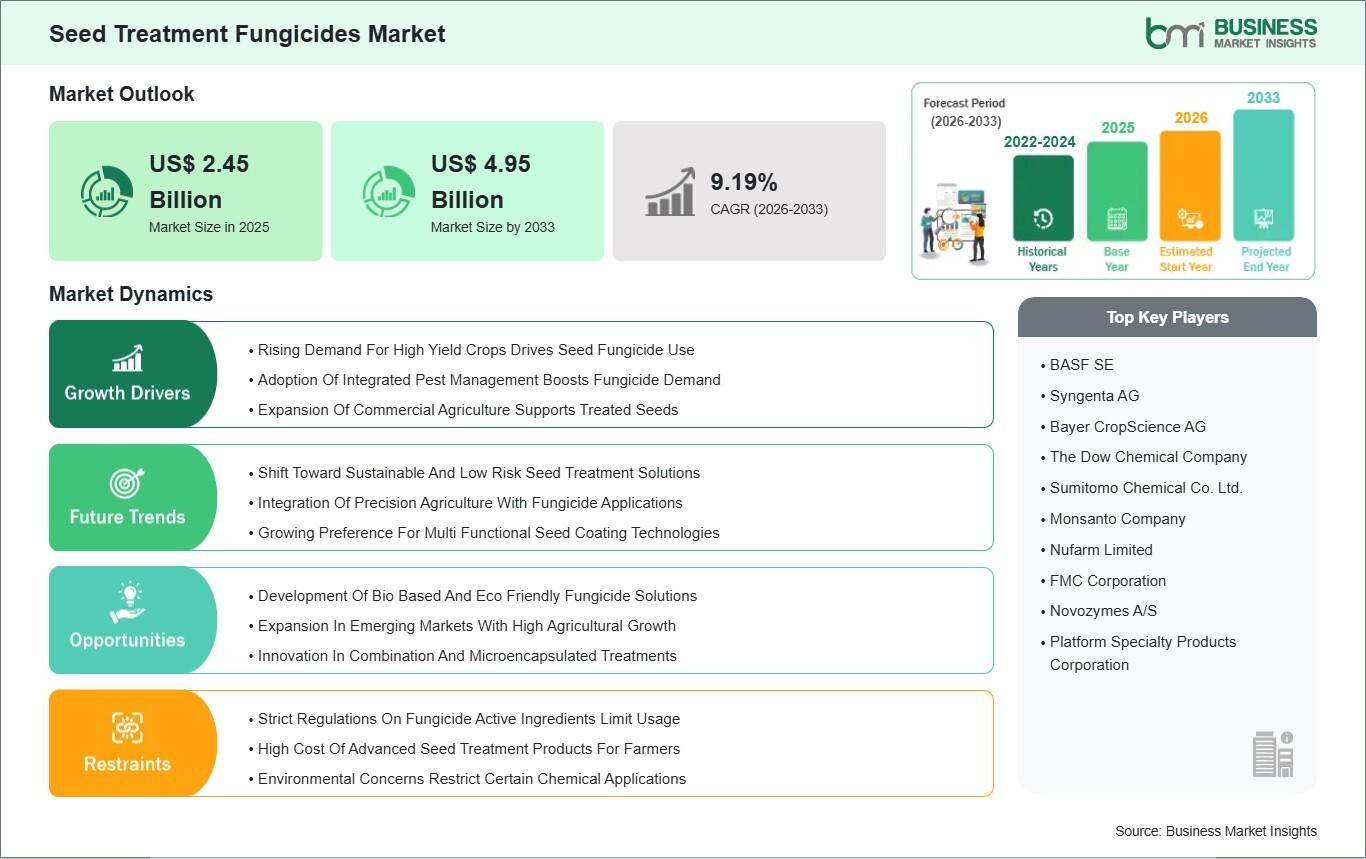
The Seed Treatment Fungicides Industry is experiencing steady growth worldwide, driven by the rising need to protect seeds and emerging seedlings from soil-borne and seed-borne fungal pathogens, improve crop establishment, and support higher agricultural productivity across major crop systems. According to Business Market Insights, the global Seed Treatment Fungicides Market is projected to...
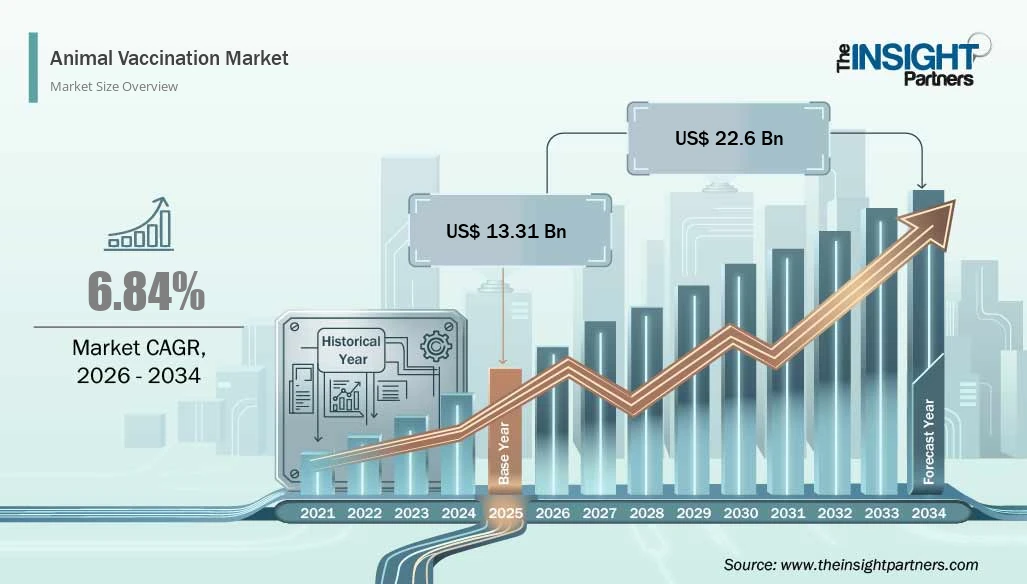
North America continues to dominate the Animal Vaccination Market owing to its advanced veterinary healthcare infrastructure, widespread adoption of preventive animal healthcare practices, and increasing awareness regarding zoonotic disease prevention. The region benefits from well-established livestock farming, a growing companion animal population, and strong government support for disease...