Evaluating Competitive Dynamics and Regional US Managed Services Market Share

The distribution of US Managed Services Market Share is currently a contest between established global systems integrators and a rapidly growing class of "super-MSPs" that have expanded through regional consolidation. While companies like CDW, IBM, and DXC Technology maintain a significant share of the enterprise market due to their scale and deep relationships, their dominance is being challenged by agile, mid-sized firms that leverage cloud-native tools to provide more efficient services. These "super-MSPs" are often formed by private equity-backed roll-ups, where several regional providers are combined to create a national entity with localized support capabilities. This shift is particularly evident in tech hubs like Silicon Valley, New York, and Austin, where the density of businesses creates a high-stakes environment for service providers. The competitive dynamics are therefore evolving from a battle over hardware sales to a battle over "service quality" and "customer retention," as the subscription-based model makes it easier for clients to switch providers.
Regionally, the market share is heavily concentrated in major metropolitan areas, but there is significant growth in the "secondary markets" of the Midwest and Southeast. As businesses move away from expensive coastal hubs, the demand for high-quality managed services in cities like Nashville, Charlotte, and Columbus is skyrocketing. These regions offer a lower cost of operation for MSPs, allowing them to provide competitive pricing while tapping into a growing pool of local tech talent. The analysis of market share also reveals a significant "vertical" concentration, with specific providers dominating the healthcare or financial sectors due to their specialized knowledge of HIPAA or FINRA compliance. This specialization creates a powerful "moat" around their business, making it difficult for generalist providers to capture share in these highly regulated markets. As the domestic economy becomes more decentralized, the ability to provide consistent service across multiple states while maintaining local relationships will be the key to capturing and maintaining market share.
Within the competitive landscape, the impact of "cloud-native" MSPs cannot be overstated. These firms do not own any hardware and instead focus entirely on managing their clients' environments in AWS, Azure, or Google Cloud. By avoiding the overhead of physical infrastructure, they can operate with higher margins and focus their resources on developing proprietary automation tools. These providers are capturing significant share from traditional MSPs that have been slow to transition away from on-premise hardware management. The battle for market share is now being fought on the front of "cloud expertise," with providers vying for the highest levels of certification from the major cloud vendors. The "marketplace" model, where clients can buy managed services directly through their cloud provider’s platform, is also a growing trend, creating a new distribution channel that challenges traditional sales models. As the cloud continues to swallow the IT world, the definition of an MSP will continue to shift toward that of a cloud-native service orchestrator.
Finally, the impact of "cybersecurity insurance" on market share is a significant and growing trend in the US. Insurance providers are increasingly requiring their clients to use a professional managed security provider to qualify for coverage. This has created a massive influx of new customers for MSPs that can prove their security credentials through third-party audits and certifications like SOC 2. The ability to act as a "guarantor" of security has become a major differentiator, allowing top-tier MSPs to capture share from smaller providers that lack the resources to implement enterprise-grade security frameworks. As the legal and financial stakes of IT management continue to rise, the market share will likely continue to consolidate toward those providers who can offer the highest levels of risk mitigation and professional reliability. The pursuit of market share is therefore no longer just about growth, but about building a resilient and trusted brand that can navigate the complexities of the modern digital world.
Top Report :
Categories
Read More
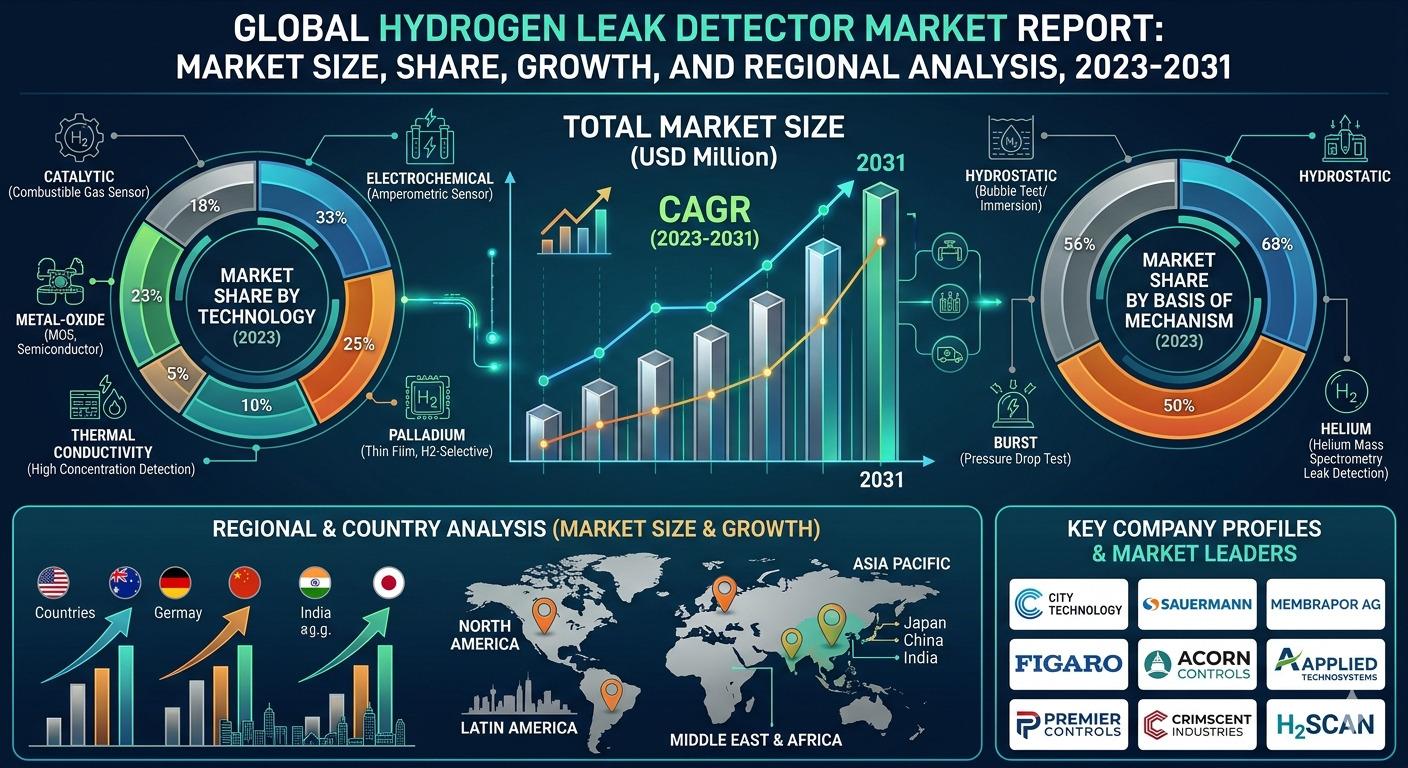
The hydrogen ecosystem is rapidly gaining traction across industries such as energy, automotive, chemicals, and aerospace, creating a strong need for advanced safety solutions. Hydrogen, being highly flammable and difficult to detect due to its colorless and odorless nature, requires precise monitoring systems. Leak detection technologies have therefore become a critical component in ensuring...
Introduction If you're searching for an easy method for you to connect your account on your phone, YOLO247 Club APK is among the top choices among people who bet on sports online. It enables Android users to connect to betting markets, games at casinos as well as live games and account features right through their mobile devices. No matter if you're new to placing your first cricket...

If you've started looking into care for an aging parent, you already know there's no simple formula. Your dad isn't the same as your neighbor's dad. Your mom's arthritis flares differently than her sister's. So when someone hands you a generic care package and calls it a day, it's fair to feel a little skeptical. A good home care agency in Gaithersburg, MD works differently. Instead of fitting...

According to the latest report published by Data Bridge Market Research, the Actinic Keratosis Treatment Market CAGR Value The idea of this Actinic Keratosis Treatment Market research document is high level analysis of major market segments and recognition of opportunities in Actinic Keratosis Treatment Market industry. Experienced and innovative industry experts...
Why Bangalore Is Becoming India’s AI Hub Have you noticed how Bangalore is suddenly mentioned everywhere in tech news?Or why most AI startups and global tech giants are setting up their offices here? The answer is simple: Bangalore has become one of the biggest Artificial Intelligence (AI) hubs in India. From global tech giants to fast-growing startups, the city is driving innovation in...